|
|
|
|
||
|
|
|
|
||
| Navigation Menus |
|
Military Art Index |
Aviation Art Index |
Naval Art Index |
Artists Index |
Aviation History Archive |
Naval History Archive |
|
| HALF PRICE AND FREE PRINT SPECIAL OFFERS | ||||||
|
|
James Castagnola |
 Name : James Castagnola Born : 1922 Died : unknown Service Number : 169585 Awards : Distinguished Service Order Distinguished Flying Cross |
Joining the RAF in 1941 he graduated as a pilot after completing his training in America. Returning to England he joined 51 Squadron in early 1943 flying from RAF Snaith. Joining 617 Squadron in early 1944 he took part in many of the squadrons successes including attacks on U-boat pens and all three raids against the Tirpitz. Born in 1922 in Islington, Cass as he was known to all, enlisted in 1941 and trained in North America. Returning to England he crewed up at OTU and after completing their HCU course the crew, captained by a newly commissioned Cass, joined 57 Squadron in December 1943 for their first tour of operations. They were to be blooded with a series of attacks against Berlin, completing three operations against this target in four nights during January 1944. In all Cass was to visit the Big City eight times during his tour. During the Nuremberg operation of 30/31 March 1944 his Lancaster's rear turret guns froze up but a burst from the mid-upper caused an approaching Me 210 to break away. On return his gunners also claimed one Ju 88 destroyed and another damaged. On 5 April 1944 the crew were one of six attached along with their aircraft to the Squadron at Woodhall Spa, to provide an H2S capability. After an initial trip as passenger with Fg Off Fearn for the attack against the Luftwaffe Depot at St Cyr on 10 April to observe the Squadron's methods, Cass found himself non-operational for a month as the Squadron trained intensively for Operation Taxable. Teamed up with Nick Knilans he completed the D-Day deception operation and three nights later he was operating against the Saumur railway tunnel. Unable to carry Tallboy, his H2S equipped aircraft was loaded with thousand pounders to be aimed at the adjacent railway bridge across the Loire. His next three trips were as an additional member of Knilans'crew. By July Cass had been posted back to 57 Sqn at East Kirkby and would complete his first tour with them.He was not away from Woodhall for long, arriving back on the Squadron on 15 August to start his second tour. This was to be much more satisfying. With his trademark 'operationally battered' cap, Cass and his crew soon proved themselves a popular and valuable asset to the Squadron. Starting with a trip to Brest on 27 August and now carrying Tallboy they were part of the high level force for the attack on the Kembs Dam, and took part in all three operations against Tirpitz, claiming a direct hit in the middle of the superstructure during the final attack. During the attack on Bergen on 12 January 1945 his aircraft came under fighter attack and Cass dived to within the range of the flak batteries; the fighter deigned to follow. Heading out to sea he spotted Ian Ross' aircraft at low level, on fire and under fighter attack. With his bomb aimer manning the front turret and without thinking of his own safety Cass dived to offer whatever assistance he could. He was successful in driving the fighter away, but Ross was forced to ditch, while Cass circled overhead dropping an emergency radio wrapped in Mae Wests when it was seen that Ross' dinghy had not deployed. Climbing to 500 feet they signalled the ditched Lancaster's position and remained in the area, seeking cloud cover when a German fighter came too close. With fuel running low he was eventually forced to leave the stricken crew to their fate. The remaining months saw a new routine develop, railway viaducts replacing U-boat pens as targets during February and March, before returning to April's target list, along with other naval targets during the last month of hostilities. After a total of 62 operations Cass' war came to an end on 19 April 1945 with an attack on the island fortress of Heligoland. The latter part of 1945 saw him as the Squadron's Inspector Pilot as they worked up for 'Tiger Force' – the RAF's projected contribution to the Pacific War but, with the squadron prepared to go overseas to India, in January 1946 he was posted to RAF Snaith, to conduct aircrew training. Having been awarded the DFC for his time on 57 Sqn, Cass was to receive a bar in March 1945 for his service with 617 and a further award of the DSO in October 1945.Awarded a permanent commission in 1947, he was posted to the Central Flying Establishment, RAF West Raynham, flying Mosquitos, Vampires and Meteors, before transferring to the Empire Test Pilots School, RAE Farnborough, in March 1950. After qualifying as a test pilot his experience was put to good use for four years at the Aeroplane and Armament Experimental Establishment, Boscombe Down. Cass transferred to fighters in April 1954 and served in the Middle East and Germany before becoming Officer Commanding No. 41 Sqn, Biggin Hill, flying the Hunter F 5. In keeping with a number of pilots following their fighter tour, at the beginning of 1958 he was sent on a radar control course prior to being posted to Neatishead radar station, Norfolk, as Control Executive. After a final tour as a Staff Officer with HQ No. 13 Group, at Ouston, he left the RAF in November 1961 as a Squadron Leader, joining British Airways as a captain on Comets and Tridents until his retirement in 1980. |
Known Service Details : | |||||||
Squadron | Rank | Start of Service | End of Service | Known Dates | Aircraft | Airframes | Notes |
unknown | unknown | ||||||
unknown | unknown | ||||||
unknown | unknown | ||||||
unknown | unknown | ||||||
Artwork signed by this Pilot or Aircrew |
  Strike and Return by Robert Taylor (D) |   Target Bearing 270 by Robert Taylor (B) |   Summer Harvest by Gerald Coulson. |
  A Lincolnshire Sunset 1944 by Gerald Coulson. |   The Sinking of the Tirpitz by Frank Wootton (B) |   Lancaster Attack by David Pritchard. (C) |
Photos Submitted Through Our Directory |
 James Castagnola |
| Aircraft for : James Castagnola | ||
| A list of all aircraft associated with James Castagnola. A profile page including a list of all art prints for the aircraft is available by clicking the aircraft name. | ||
| Aircraft | Info | |
Comet 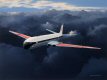
Manufacturer : De Havilland Production Began : 1952 | Comet Full profile not yet available. | |
Hunter 
Manufacturer : Hawker Retired : 1971 Number Built : 1972 | Hunter Hawker Hunter F-1 to Fr-10 jet fighter and fighter reconnaissance aircraft first flew with No43 squadron Royal Air Force in July 1954. The Hawker Hunter continued service until 1971. The Hunters were used by two RAF display units, the Black Arrows of No. 111 Squadron who set a record by looping and barrel rolling in formation 22 Hunters, and later the Blue Diamonds of 92 Squadron that used 16 Hunters. A total of 1,972 Hunters were produced by Hawker Siddeley and under licence. | |
Lancaster 
Manufacturer : Avro Production Began : 1942 Retired : 1963 Number Built : 7377 | Lancaster The Avro Lancaster arose from the avro Manchester and the first prototype Lancaster was a converted Manchester with four engines. The Lancaster was first flown in January 1941, and started operations in March 1942. By March 1945 The Royal Air Force had 56 squadrons of Lancasters with the first squadron equipped being No.44 Squadron. During World War Two the Avro Lancaster flew 156,000 sorties and dropped 618,378 tonnes of bombs between 1942 and 1945. Lancaster Bomberss took part in the devastating round-the-clock raids on Hamburg during Air Marshall Harris' Operation Gomorrah in July 1943. Just 35 Lancasters completed more than 100 successful operations each, and 3,249 were lost in action. The most successful survivor completed 139 operations, and the Lancaster was scrapped after the war in 1947. A few Lancasters were converted into tankers and the two tanker aircraft were joined by another converted Lancaster and were used in the Berlin Airlift, achieving 757 tanker sorties. A famous Lancaster bombing raid was the 1943 mission, codenamed Operation Chastise, to destroy the dams of the Ruhr Valley. The operation was carried out by 617 Squadron in modified Mk IIIs carrying special drum shaped bouncing bombs designed by Barnes Wallis. Also famous was a series of Lancaster attacks using Tallboy bombs against the German battleship Tirpitz, which first disabled and later sank the ship. The Lancaster bomber was the basis of the new Avro Lincoln bomber, initially known as the Lancaster IV and Lancaster V. (Becoming Lincoln B1 and B2 respectively.) Their Lancastrian airliner was also based on the Lancaster but was not very successful. Other developments were the Avro York and the successful Shackleton which continued in airborne early warning service up to 1992. | |
Meteor 
Manufacturer : Gloster Production Began : 1944 Number Built : 3947 | Meteor The Gloster Meteor was the first British jet fighter and the Allies' first operational jet. Designed by George Carter, and built by the Gloster Aircraft Company, Armstrong-Whitworth, the Meteor first flew in 1943 and commenced operations on 27 July 1944 with 616 Squadron of the Royal Air Force (RAF). The Gloster Meteor was not an aerodynamically advanced aircraft but the Gloster design team succeeded in producing an effective jet fighter that served the RAF and other air forces for decades. Meteors saw action with the Royal Australian Air Force (RAAF) in the Korean War and other air forces used the Meteor. The Royal Danish Air Force, The Belgian Air Force and Isreali Air Force kept the Meteor in service until the early 1970's. A Total of 3947 meteors were built and two Meteors, WL419 and WA638, remain in service with the Martin-Baker company as ejection seat testbeds. | |
Mosquito 
Manufacturer : De Havilland Production Began : 1940 Retired : 1955 Number Built : 7781 | Mosquito Used as a night fighter, fighter bomber, bomber and Photo-reconnaissance, with a crew of two, Maximum speed was 425 mph, at 30,300 feet, 380mph at 17,000ft. and a ceiling of 36,000feet, maximum range 3,500 miles. the Mosquito was armed with four 20mm Hospano cannon in belly and four .303 inch browning machine guns in nose. Coastal strike aircraft had eight 3-inch Rockets under the wings, and one 57mm shell gun in belly. The Mossie at it was known made its first flight on 25th November 1940, and the mosquito made its first operational flight for the Royal Air Force as a reconnaissance unit based at Benson. In early 1942, a modified version (mark II) operated as a night fighter with 157 and 23 squadron's. In April 1943 the first De Haviland Mosquito saw service in the Far east and in 1944 The Mosquito was used at Coastal Command in its strike wings. Bomber Commands offensive against Germany saw many Mosquitos, used as photo Reconnaissance aircraft, Fighter Escorts, and Path Finders. The Mosquito stayed in service with the Royal Air Force until 1955. and a total of 7781 mosquito's were built. | |
Trident 
| Trident Full profile not yet available. | |
Vampire 
| Vampire Full profile not yet available. | |
| Squadrons for : James Castagnola | ||
| A list of all squadrons known to have been served with by James Castagnola. A profile page is available by clicking the squadron name. | ||
| Squadron | Info | |
No.41 Sqn RAF Country : UK Founded : 15th April 1916 Seek and destroy | No.41 Sqn RAF Founded in 1916, 41 Squadron was disbanded at the end of World War One, but reformed on 1st April 1923. | |
No.51 Sqn RAF Country : UK Founded : 15th May 1916 Swift and sure | No.51 Sqn RAF Full profile not yet available. | |
No.57 Sqn RAF Country : UK Founded : 8th June 1916 Corpus non animum muto - I change my body not my spirit | No.57 Sqn RAF Full profile not yet available. | |
No.617 Sqn RAF Country : UK Founded : 23rd March 1943 Apres mois, le deluge - After me, the flood | No.617 Sqn RAF Full profile not yet available. | |
Return to Aviation Directory Search Home
|
Contact Details |
Sign Up To Our Newsletter!
This website is owned by Cranston Fine Arts. Torwood House, Torwoodhill Road, Rhu, Helensburgh, Scotland, G848LE Contact: Tel: (+44) (0) 1436 820269. Email: cranstonorders -at- outlook.com |

