|
The Long Short Days by Robert Taylor.
It was known as the Jagdverbande, the fighter arm of the Luftwaffe, and by June 1940 it boasted some of the world's greatest fighter pilots. With tactics honed to perfection, these battle-seasoned veterans dominated the skies of Europe. But as the war progressed, the Luftwaffe fighter pilots faced another battle, the increasingly desperate war of attrition as the Allied air forces slowly, but inevitably, ground the German war machine into defeat. By early 1945 Allied air supremacy was overwhelming. And yet despite overwhelming odds, from within their ranks came the most successful air Aces ever to fly in combat - names such as Hans-Joachim Marseille, the top-scoring fighter pilot in the West, the legendary Erich Rudorffer who scored more multiple victories than any other pilot and of course the Fighter General, Adolf Galland, who achieved all of his 104 victories in the West. In total more than 100 Luftwaffe fighter pilots are known to have scored 100 or more victories, and 5.........
More Text... |
| | Item Code : DHM6391 | The Long Short Days by Robert Taylor. - Editions Available | |
| | DESCRIPTION | SIZE | SIGNATURES | OFFERS | PRICE | PURCHASING | PACKS | | Limited Edition : Signed limited edition of 250 prints. | Paper size 32 inches x 24 inches (82cm x 61cm) Image size 25.5 inches x 16.5 inches (65cm x 42cm) |
Pflaum, Hubert-Ludwig | | Stabsgefreiter Hubert-Ludwig Pflaum |
| After joining the Luftwaffe and completing his flight training, he originally flew Heinkel 111 bombers with IV./KG 27 Boelcke. Towards the end of the war, however, he transferred to train as a fighter pilot, and after qualifying joined II./JG53 PikAs where he flew Bf109s with 6 Staffel in the Defence of the Reich. |
|
Radlauer, Heinz | | Heinz Radlauer learnt to fly gliders in 1940, aged 17, and joined the Luftwaffe in August 1941. After Fighter School, in June 1944 he was posted to join JG51 Molders then fighting on the Eastern Front near Minsk, scoring his first victory in October of that year. Heinz Radlauer fleew the Bf109G, the Fw190A, and at the end of the war the Fw190D, by which time he had notched up over 100 combat missions, flying his last combat mission on 30th April 1945. Credited with 15 air victories, all on th |
|
+ Artist : Robert Taylor |  | £215.00 | |
In 1 Pack
View | | Collectors Edition : Limited edition of 25 artist proofs. | Paper size 32 inches x 24 inches (82cm x 61cm) Image size 25.5 inches x 16.5 inches (65cm x 42cm) |
Pflaum, Hubert-Ludwig | | Stabsgefreiter Hubert-Ludwig Pflaum |
| After joining the Luftwaffe and completing his flight training, he originally flew Heinkel 111 bombers with IV./KG 27 Boelcke. Towards the end of the war, however, he transferred to train as a fighter pilot, and after qualifying joined II./JG53 PikAs where he flew Bf109s with 6 Staffel in the Defence of the Reich. |
|
Radlauer, Heinz | | Heinz Radlauer learnt to fly gliders in 1940, aged 17, and joined the Luftwaffe in August 1941. After Fighter School, in June 1944 he was posted to join JG51 Molders then fighting on the Eastern Front near Minsk, scoring his first victory in October of that year. Heinz Radlauer fleew the Bf109G, the Fw190A, and at the end of the war the Fw190D, by which time he had notched up over 100 combat missions, flying his last combat mission on 30th April 1945. Credited with 15 air victories, all on th |
|
Ballewski, Helmut | | Leutnant Helmut Ballewski (deceased) |
| Helmut Ballewski was one of the 'younger' generation flyers, not joining the Luftwaffe until November 1942. Posted to JG53 PIK AS he flew all of his 47 missions in the west. With IV./JG53 from January 1945, Helmut Ballewski was Helmut Bennemann's wingman on Operation Bodenplatte. He also flew fighter bomber operations on the Bridge at Remagen operation. He was awarded the Iron Cross. He died on 27th June 2015. |
|

Giefing, Ernest | | Ernest Giefing was born on February 7th, 1924 in Stockerau, Austria. After graduating from flight school he joined the training unit Jagdschule 107 in July, 1943 and later joined Jagdschule 107 as a flying instructor. Five months later, Giefing was posted to Jagdgeschwader 2 Richthofen (JG2) followed by a posting to JG7 in December 1944. Ernest Giefing held the rank of Flight Sergeant by the end of the war, having flown approximately 75 combat missions including 12 in Me262 jets, and gaining fou |
|
Hannig, Norbert | | Leutnant Norbert Hannig (deceased) |
| Norbert Hannig began operations with JG54 on the Eastern Front near Leningrad in early 1943, flying first the Messerschmitt Bf109G, later converting to the Fw190. He became a Staffelkapitan with JG54, notching up an impressive 42 victories. Towards the end of the war, in early 1945, he converted to fly the new jet fighter, the Me262, and flew it in combat with III./JG7 from their airfield base at Brandenberg-Briest. Norbert Hannig died on 21st February 2014. |
|
Kott, Gerhard | | Unteroffizier Gerhard Kott |
| Luftwaffe Fw190 with 8 victories. Kott joined III./JG3 in 1943 flying Me109s on the Eastern front. Transferring to IV./JG3 he converted to the Fw190 Sturm, before joining JG4 Sturmgruppe, also on Fw190s. Here he shot down four B-17s and one B-24. After a period instructing he returned to the East, adding to his score. He finished the war with a total of 8 victories. |
|
Rudorffer, Erich | | Major Erich Rudorffer (deceased) |
| Erich Rudorffer was born on November 1st 1917 in the town of Zwickau in Saxony. Erich Rudorffer joined the Luftwaffes I./JG2 Richthofen in November 1939, and was soon flying combat patrols in January 1940 and was assigned to I/JG 2 Richthofen with the rank of Oberfeldwebel. He took part in the Battle of France, scoring the first of his many victories over a French Hawk 75 on May 14th, 1940. He went on to score eight additional victories during the Battle of France and the Battle of Britain. |
|
Reschke, Willi | | Oberfeldwebel Willi Reschke (deceased) |
| One of the outstanding younger Luftwaffe pilots, Willi Reschke was one of the leading members of JG300 Wilde Sau flying the Fw190A in the 'Defence of the Reich'. Towards the latter months of the war he transferred to the Stabsschwarm of JG301, still flying the Fw190A. Awarded the Knight's Crossin April 1945, he was credited with 26 victories - all in the west - including 18 four engined bombers. He died on 5th July 2017. |
|
Krupinski, Walter | | General Walter Krupinski (deceased) |
| Walter Krupinski first saw combat against the RAF on the Western Front. Transferring to the east, he became a Squadron Commander in the legendary JG52. In 1943 his victories reached 150 but, in March 1944 with 177 victories to his name, he was transferred to Germany to command JG11. Flying high altitude Me109s, he chalked up another 12 victories before being wounded. In September 1944 he was promoted Kommandeur of III./JG26 and led them on Operation Bodenplatte before joining Galland's f |
|
+ Artist : Robert Taylor | £40 Off! | Now : £425.00 | | | Collectors Edition : Signed limited edition of 225 prints.
Great value : Value of signatures exceeds price of item! | Paper size 32 inches x 24 inches (82cm x 61cm) Image size 25.5 inches x 16.5 inches (65cm x 42cm) |
Pflaum, Hubert-Ludwig | | Stabsgefreiter Hubert-Ludwig Pflaum |
| After joining the Luftwaffe and completing his flight training, he originally flew Heinkel 111 bombers with IV./KG 27 Boelcke. Towards the end of the war, however, he transferred to train as a fighter pilot, and after qualifying joined II./JG53 PikAs where he flew Bf109s with 6 Staffel in the Defence of the Reich. |
|
Radlauer, Heinz | | Heinz Radlauer learnt to fly gliders in 1940, aged 17, and joined the Luftwaffe in August 1941. After Fighter School, in June 1944 he was posted to join JG51 Molders then fighting on the Eastern Front near Minsk, scoring his first victory in October of that year. Heinz Radlauer fleew the Bf109G, the Fw190A, and at the end of the war the Fw190D, by which time he had notched up over 100 combat missions, flying his last combat mission on 30th April 1945. Credited with 15 air victories, all on th |
|
Ballewski, Helmut | | Leutnant Helmut Ballewski (deceased) |
| Helmut Ballewski was one of the 'younger' generation flyers, not joining the Luftwaffe until November 1942. Posted to JG53 PIK AS he flew all of his 47 missions in the west. With IV./JG53 from January 1945, Helmut Ballewski was Helmut Bennemann's wingman on Operation Bodenplatte. He also flew fighter bomber operations on the Bridge at Remagen operation. He was awarded the Iron Cross. He died on 27th June 2015. |
|

Giefing, Ernest | | Ernest Giefing was born on February 7th, 1924 in Stockerau, Austria. After graduating from flight school he joined the training unit Jagdschule 107 in July, 1943 and later joined Jagdschule 107 as a flying instructor. Five months later, Giefing was posted to Jagdgeschwader 2 Richthofen (JG2) followed by a posting to JG7 in December 1944. Ernest Giefing held the rank of Flight Sergeant by the end of the war, having flown approximately 75 combat missions including 12 in Me262 jets, and gaining fou |
|
Hannig, Norbert | | Leutnant Norbert Hannig (deceased) |
| Norbert Hannig began operations with JG54 on the Eastern Front near Leningrad in early 1943, flying first the Messerschmitt Bf109G, later converting to the Fw190. He became a Staffelkapitan with JG54, notching up an impressive 42 victories. Towards the end of the war, in early 1945, he converted to fly the new jet fighter, the Me262, and flew it in combat with III./JG7 from their airfield base at Brandenberg-Briest. Norbert Hannig died on 21st February 2014. |
|
Kott, Gerhard | | Unteroffizier Gerhard Kott |
| Luftwaffe Fw190 with 8 victories. Kott joined III./JG3 in 1943 flying Me109s on the Eastern front. Transferring to IV./JG3 he converted to the Fw190 Sturm, before joining JG4 Sturmgruppe, also on Fw190s. Here he shot down four B-17s and one B-24. After a period instructing he returned to the East, adding to his score. He finished the war with a total of 8 victories. |
|
Rudorffer, Erich | | Major Erich Rudorffer (deceased) |
| Erich Rudorffer was born on November 1st 1917 in the town of Zwickau in Saxony. Erich Rudorffer joined the Luftwaffes I./JG2 Richthofen in November 1939, and was soon flying combat patrols in January 1940 and was assigned to I/JG 2 Richthofen with the rank of Oberfeldwebel. He took part in the Battle of France, scoring the first of his many victories over a French Hawk 75 on May 14th, 1940. He went on to score eight additional victories during the Battle of France and the Battle of Britain. |
|
Reschke, Willi | | Oberfeldwebel Willi Reschke (deceased) |
| One of the outstanding younger Luftwaffe pilots, Willi Reschke was one of the leading members of JG300 Wilde Sau flying the Fw190A in the 'Defence of the Reich'. Towards the latter months of the war he transferred to the Stabsschwarm of JG301, still flying the Fw190A. Awarded the Knight's Crossin April 1945, he was credited with 26 victories - all in the west - including 18 four engined bombers. He died on 5th July 2017. |
|
Krupinski, Walter | | General Walter Krupinski (deceased) |
| Walter Krupinski first saw combat against the RAF on the Western Front. Transferring to the east, he became a Squadron Commander in the legendary JG52. In 1943 his victories reached 150 but, in March 1944 with 177 victories to his name, he was transferred to Germany to command JG11. Flying high altitude Me109s, he chalked up another 12 victories before being wounded. In September 1944 he was promoted Kommandeur of III./JG26 and led them on Operation Bodenplatte before joining Galland's f |
|
+ Artist : Robert Taylor | £40 Off! | Now : £250.00 | | | | Tribute Edition : Limited edition of 15 prints. | Paper size 32 inches x 24 inches (82cm x 61cm) Image size 25.5 inches x 16.5 inches (65cm x 42cm) |
Pflaum, Hubert-Ludwig | | Stabsgefreiter Hubert-Ludwig Pflaum |
| After joining the Luftwaffe and completing his flight training, he originally flew Heinkel 111 bombers with IV./KG 27 Boelcke. Towards the end of the war, however, he transferred to train as a fighter pilot, and after qualifying joined II./JG53 PikAs where he flew Bf109s with 6 Staffel in the Defence of the Reich. |
|
Radlauer, Heinz | | Heinz Radlauer learnt to fly gliders in 1940, aged 17, and joined the Luftwaffe in August 1941. After Fighter School, in June 1944 he was posted to join JG51 Molders then fighting on the Eastern Front near Minsk, scoring his first victory in October of that year. Heinz Radlauer fleew the Bf109G, the Fw190A, and at the end of the war the Fw190D, by which time he had notched up over 100 combat missions, flying his last combat mission on 30th April 1945. Credited with 15 air victories, all on th |
|
Ballewski, Helmut | | Leutnant Helmut Ballewski (deceased) |
| Helmut Ballewski was one of the 'younger' generation flyers, not joining the Luftwaffe until November 1942. Posted to JG53 PIK AS he flew all of his 47 missions in the west. With IV./JG53 from January 1945, Helmut Ballewski was Helmut Bennemann's wingman on Operation Bodenplatte. He also flew fighter bomber operations on the Bridge at Remagen operation. He was awarded the Iron Cross. He died on 27th June 2015. |
|
Giefing, Ernest | | Ernest Giefing was born on February 7th, 1924 in Stockerau, Austria. After graduating from flight school he joined the training unit Jagdschule 107 in July, 1943 and later joined Jagdschule 107 as a flying instructor. Five months later, Giefing was posted to Jagdgeschwader 2 Richthofen (JG2) followed by a posting to JG7 in December 1944. Ernest Giefing held the rank of Flight Sergeant by the end of the war, having flown approximately 75 combat missions including 12 in Me262 jets, and gaining fou |
|
Hannig, Norbert | | Leutnant Norbert Hannig (deceased) |
| Norbert Hannig began operations with JG54 on the Eastern Front near Leningrad in early 1943, flying first the Messerschmitt Bf109G, later converting to the Fw190. He became a Staffelkapitan with JG54, notching up an impressive 42 victories. Towards the end of the war, in early 1945, he converted to fly the new jet fighter, the Me262, and flew it in combat with III./JG7 from their airfield base at Brandenberg-Briest. Norbert Hannig died on 21st February 2014. |
|
Kott, Gerhard | | Unteroffizier Gerhard Kott |
| Luftwaffe Fw190 with 8 victories. Kott joined III./JG3 in 1943 flying Me109s on the Eastern front. Transferring to IV./JG3 he converted to the Fw190 Sturm, before joining JG4 Sturmgruppe, also on Fw190s. Here he shot down four B-17s and one B-24. After a period instructing he returned to the East, adding to his score. He finished the war with a total of 8 victories. |
|
Rudorffer, Erich | | Major Erich Rudorffer (deceased) |
| Erich Rudorffer was born on November 1st 1917 in the town of Zwickau in Saxony. Erich Rudorffer joined the Luftwaffes I./JG2 Richthofen in November 1939, and was soon flying combat patrols in January 1940 and was assigned to I/JG 2 Richthofen with the rank of Oberfeldwebel. He took part in the Battle of France, scoring the first of his many victories over a French Hawk 75 on May 14th, 1940. He went on to score eight additional victories during the Battle of France and the Battle of Britain. |
|
Reschke, Willi | | Oberfeldwebel Willi Reschke (deceased) |
| One of the outstanding younger Luftwaffe pilots, Willi Reschke was one of the leading members of JG300 Wilde Sau flying the Fw190A in the 'Defence of the Reich'. Towards the latter months of the war he transferred to the Stabsschwarm of JG301, still flying the Fw190A. Awarded the Knight's Crossin April 1945, he was credited with 26 victories - all in the west - including 18 four engined bombers. He died on 5th July 2017. |
|
Krupinski, Walter | | General Walter Krupinski (deceased) |
| Walter Krupinski first saw combat against the RAF on the Western Front. Transferring to the east, he became a Squadron Commander in the legendary JG52. In 1943 his victories reached 150 but, in March 1944 with 177 victories to his name, he was transferred to Germany to command JG11. Flying high altitude Me109s, he chalked up another 12 victories before being wounded. In September 1944 he was promoted Kommandeur of III./JG26 and led them on Operation Bodenplatte before joining Galland's f |
|
Wolfrum, Walter (companion print) | | Walter Wolfrum (deceased) |
| Walter Wolfrum first saw combat in the Crimea with 5/JG52. He was shot down three times, and wounded twice before scoring his first victory. With his score at 70 he was again wounded, but returned to take command of 1/JG52 in May 1944, taking part in the fiercely fought defence of the Ploesti oilfields. he was again wounded, but returned to command 1/JG52 until the end of the war. he had flown 423 missions, achieved 137 victories, and was awarded the Knights Cross. Sadly, Walter Wolfrum pas |
|
Schuck, Walter (companion print) | | Oberleutnant Walter Schuck (deceased) |
| Initially with JG3, Walter Schuck was posted north to 7./JG5 in April 1942. On 15 June 1944 he chalked up his 100th victory during a day when he shot down 6 aircraft. Two days later he had his most successful day, achieving 12 victories in twenty-four hours, a feat never surpassed in JG5. On 1 August, he assumed command of 10./JG5. Walter Schuck transferred to fly the Me262 as Staffelkapitan of 3./JG7, and achieved 8 further victories flying the new jet. His final tally was 206 air victorie |
|
Boesch, Oscar (companion print) | | Feldwebel Oscar Boesch (deceased) |
| Already a pilot of gliders, he joined the Luftwaffe in 1943 and after training was eventually posted to JG3. He volunteered for the Sturmstaffel 1 unit, a specialist anti-bomber unit flying modified Fw190s with better armour. After just a few days, his unit was merged into a unit of JG3. He scored his first victory on 29th April 1944 claiming a Flying Fortress, immediately followed by another of the bombers targetting Berlin. By November he had claimed another five bombers. The rest of his |
|
Marquardt, Heinz (companion print) | | Oberfeldwebel Heinz Marquardt (deceased) |
| In late 1941 Heinz Marquardt was with a training squadron south of Paris. In August 1943 he was posted to join IV./JG51 in Russia, achieving his first victory two months later. Shot down eight times, he once achieved twelve victories in a single day. Awarded the Knight's Cross in November 1944, he flew a total of 320 missions, and scored 121 victories. Sadly, Heinz Marquardt died 19th December 2003, aged 80. |
|
Bob, Hans-Ekkehard (companion print) | | Major Hans-Ekkehard Bob (deceased) |
| After success in the Battle of Britain, Hans-Ekkehard Bob took over leadership of 9./JG54 in 1940. The following year he was awarded the Knights Cross. Transferring to the Eastern Front his victories rose steadily to 50 by September 1942. His Group later transferred back to the West for a short period, where in April 1943, he rammed a B-17 Fortress. Returning to the Eastern Front as Kommander of IV./JG3, he ended the war as Adjutant of Gallands JV44 in the West. In his 700 missions he score |
|
Galland, Adolf (matted on companion print) | | General Adolf Galland (deceased) |
| Adolf Galland fought in the great Battles of Poland, France and Britain, leading the famous JG26 Abbeville Boys. He flew in combat against the RAFs best including Douglas Bader, Bob Stanford Tuck and Johnnie Johnson. In 1941, at the age of 29, he was promoted to Inspector of the Fighter Arm. In 1942 Hitler personally selected Galland to organise the fighter escort for the Channel Dash. He became the youngest General in the German High Command but open disagreements with Goering led to his di |
|
Reinert, Ernst Wilhelm (matted on companion print) | | Hauptmann Ernst Wilhelm Reinert (deceased) |
| Ernst Wilhelm Reinert flew with JG77, before transferring to the Eastern Front in 1941. He was posted to Tunisia in January 1943 where he became the most successful Luftwaffe Ace in North Africa during that period. On January 2nd 1945 he was given the leadership of IV./JG27. In March he transferred to III./JG7 flying the Me262. In his 715 missions Reinert scored 174 aerial victories. he was awarded the Knight's Cross with Oak Leaves and Swords. Born 2nd February 1919 in Lindenthal, die |
|
Haibock, Josef (matted on companion print) | | Generalmajor Josef Haibock |
| Flew Me109s & Fw190s in the West & East with JG26, JG52 & JG3 scoring 77 victories. |
|
Dahmer, Hugo (matted on companion print) | | Hauptmann Hugo Dahmer (deceased) |
| Hugo Dahmer . Flying with Adolf Galland's 6./JG26, Hugo Dahmer was one of II Gruppe's most successful pilots. By Feb 1941 Hugo Dahmer had in total 12 victories, built up during the Battles in France and Britain. He then served in Norway with 1./JG77 Dahmer was awarded the Knight's Cross during the invasion of Russia. For a short while back with JG26, then III./JG2. He scored 57 victories, flying a total of 309 missions. Hugo Dahmer passed away on 1st August 2008. |
|
Naumann, Johannes (matted on companion print) | | Oberst Johannes Naumann (deceased) |
| With III./JG26 at the outbreak of war, Johannes flew in all the campaigns of 1939 - 40, including the Battle of Britain. He led 6./JG26 on the Channel Front, and later 7./JG26. In March 1944 he became Kommandeur of II./JG26, and in August Kommandeur II./JG6. He flew 450 missions, scored 45 victories, all in the West, and was awarded the Knight's Cross in 1944. He died on 22nd March 2010. |
|
Bennemann, Helmut (matted on companion print) | | Oberstleutnant Helmut Bennemann (deceased) |
| Helmut Bennemann was born 16th March 1915. During the Battle of Britain Helmut Bennemann was Gruppenadjutant with I./JG52 on the Channel Front. In April 1942 he was Staffelkapitan of 3./JG52 in the east and was appointed Kommandeur of I./JG52 from June 1942 until October 1943. Posted to Italy in November 1943, he was promoted to Kommodore of JG53 (Ace of Spades) in this theatre and in the defence of Germany. He commanded JG53 on Operation Bodenplatte. Helmut Bennemann flew over 400 missions |
|
+ Artist : Robert Taylor | | SOLD
OUT | NOT
AVAILABLE | | | Remarque Edition : Limited edition of 15 remarques. | Paper size 32 inches x 24 inches (82cm x 61cm) Image size 25.5 inches x 16.5 inches (65cm x 42cm) |
Pflaum, Hubert-Ludwig | | Stabsgefreiter Hubert-Ludwig Pflaum |
| After joining the Luftwaffe and completing his flight training, he originally flew Heinkel 111 bombers with IV./KG 27 Boelcke. Towards the end of the war, however, he transferred to train as a fighter pilot, and after qualifying joined II./JG53 PikAs where he flew Bf109s with 6 Staffel in the Defence of the Reich. |
|
Radlauer, Heinz | | Heinz Radlauer learnt to fly gliders in 1940, aged 17, and joined the Luftwaffe in August 1941. After Fighter School, in June 1944 he was posted to join JG51 Molders then fighting on the Eastern Front near Minsk, scoring his first victory in October of that year. Heinz Radlauer fleew the Bf109G, the Fw190A, and at the end of the war the Fw190D, by which time he had notched up over 100 combat missions, flying his last combat mission on 30th April 1945. Credited with 15 air victories, all on th |
|
Ballewski, Helmut | | Leutnant Helmut Ballewski (deceased) |
| Helmut Ballewski was one of the 'younger' generation flyers, not joining the Luftwaffe until November 1942. Posted to JG53 PIK AS he flew all of his 47 missions in the west. With IV./JG53 from January 1945, Helmut Ballewski was Helmut Bennemann's wingman on Operation Bodenplatte. He also flew fighter bomber operations on the Bridge at Remagen operation. He was awarded the Iron Cross. He died on 27th June 2015. |
|
Giefing, Ernest | | Ernest Giefing was born on February 7th, 1924 in Stockerau, Austria. After graduating from flight school he joined the training unit Jagdschule 107 in July, 1943 and later joined Jagdschule 107 as a flying instructor. Five months later, Giefing was posted to Jagdgeschwader 2 Richthofen (JG2) followed by a posting to JG7 in December 1944. Ernest Giefing held the rank of Flight Sergeant by the end of the war, having flown approximately 75 combat missions including 12 in Me262 jets, and gaining fou |
|
Hannig, Norbert | | Leutnant Norbert Hannig (deceased) |
| Norbert Hannig began operations with JG54 on the Eastern Front near Leningrad in early 1943, flying first the Messerschmitt Bf109G, later converting to the Fw190. He became a Staffelkapitan with JG54, notching up an impressive 42 victories. Towards the end of the war, in early 1945, he converted to fly the new jet fighter, the Me262, and flew it in combat with III./JG7 from their airfield base at Brandenberg-Briest. Norbert Hannig died on 21st February 2014. |
|
Kott, Gerhard | | Unteroffizier Gerhard Kott |
| Luftwaffe Fw190 with 8 victories. Kott joined III./JG3 in 1943 flying Me109s on the Eastern front. Transferring to IV./JG3 he converted to the Fw190 Sturm, before joining JG4 Sturmgruppe, also on Fw190s. Here he shot down four B-17s and one B-24. After a period instructing he returned to the East, adding to his score. He finished the war with a total of 8 victories. |
|
Rudorffer, Erich | | Major Erich Rudorffer (deceased) |
| Erich Rudorffer was born on November 1st 1917 in the town of Zwickau in Saxony. Erich Rudorffer joined the Luftwaffes I./JG2 Richthofen in November 1939, and was soon flying combat patrols in January 1940 and was assigned to I/JG 2 Richthofen with the rank of Oberfeldwebel. He took part in the Battle of France, scoring the first of his many victories over a French Hawk 75 on May 14th, 1940. He went on to score eight additional victories during the Battle of France and the Battle of Britain. |
|
Reschke, Willi | | Oberfeldwebel Willi Reschke (deceased) |
| One of the outstanding younger Luftwaffe pilots, Willi Reschke was one of the leading members of JG300 Wilde Sau flying the Fw190A in the 'Defence of the Reich'. Towards the latter months of the war he transferred to the Stabsschwarm of JG301, still flying the Fw190A. Awarded the Knight's Crossin April 1945, he was credited with 26 victories - all in the west - including 18 four engined bombers. He died on 5th July 2017. |
|
Krupinski, Walter | | General Walter Krupinski (deceased) |
| Walter Krupinski first saw combat against the RAF on the Western Front. Transferring to the east, he became a Squadron Commander in the legendary JG52. In 1943 his victories reached 150 but, in March 1944 with 177 victories to his name, he was transferred to Germany to command JG11. Flying high altitude Me109s, he chalked up another 12 victories before being wounded. In September 1944 he was promoted Kommandeur of III./JG26 and led them on Operation Bodenplatte before joining Galland's f |
|
+ Artist : Robert Taylor | | SOLD
OUT | NOT
AVAILABLE | | | Remarque Edition : Limited edition of 10 double remarques. | Paper size 32 inches x 24 inches (82cm x 61cm) Image size 25.5 inches x 16.5 inches (65cm x 42cm) |
Pflaum, Hubert-Ludwig | | Stabsgefreiter Hubert-Ludwig Pflaum |
| After joining the Luftwaffe and completing his flight training, he originally flew Heinkel 111 bombers with IV./KG 27 Boelcke. Towards the end of the war, however, he transferred to train as a fighter pilot, and after qualifying joined II./JG53 PikAs where he flew Bf109s with 6 Staffel in the Defence of the Reich. |
|
Radlauer, Heinz | | Heinz Radlauer learnt to fly gliders in 1940, aged 17, and joined the Luftwaffe in August 1941. After Fighter School, in June 1944 he was posted to join JG51 Molders then fighting on the Eastern Front near Minsk, scoring his first victory in October of that year. Heinz Radlauer fleew the Bf109G, the Fw190A, and at the end of the war the Fw190D, by which time he had notched up over 100 combat missions, flying his last combat mission on 30th April 1945. Credited with 15 air victories, all on th |
|
Ballewski, Helmut | | Leutnant Helmut Ballewski (deceased) |
| Helmut Ballewski was one of the 'younger' generation flyers, not joining the Luftwaffe until November 1942. Posted to JG53 PIK AS he flew all of his 47 missions in the west. With IV./JG53 from January 1945, Helmut Ballewski was Helmut Bennemann's wingman on Operation Bodenplatte. He also flew fighter bomber operations on the Bridge at Remagen operation. He was awarded the Iron Cross. He died on 27th June 2015. |
|
Giefing, Ernest | | Ernest Giefing was born on February 7th, 1924 in Stockerau, Austria. After graduating from flight school he joined the training unit Jagdschule 107 in July, 1943 and later joined Jagdschule 107 as a flying instructor. Five months later, Giefing was posted to Jagdgeschwader 2 Richthofen (JG2) followed by a posting to JG7 in December 1944. Ernest Giefing held the rank of Flight Sergeant by the end of the war, having flown approximately 75 combat missions including 12 in Me262 jets, and gaining fou |
|
Hannig, Norbert | | Leutnant Norbert Hannig (deceased) |
| Norbert Hannig began operations with JG54 on the Eastern Front near Leningrad in early 1943, flying first the Messerschmitt Bf109G, later converting to the Fw190. He became a Staffelkapitan with JG54, notching up an impressive 42 victories. Towards the end of the war, in early 1945, he converted to fly the new jet fighter, the Me262, and flew it in combat with III./JG7 from their airfield base at Brandenberg-Briest. Norbert Hannig died on 21st February 2014. |
|
Kott, Gerhard | | Unteroffizier Gerhard Kott |
| Luftwaffe Fw190 with 8 victories. Kott joined III./JG3 in 1943 flying Me109s on the Eastern front. Transferring to IV./JG3 he converted to the Fw190 Sturm, before joining JG4 Sturmgruppe, also on Fw190s. Here he shot down four B-17s and one B-24. After a period instructing he returned to the East, adding to his score. He finished the war with a total of 8 victories. |
|
Rudorffer, Erich | | Major Erich Rudorffer (deceased) |
| Erich Rudorffer was born on November 1st 1917 in the town of Zwickau in Saxony. Erich Rudorffer joined the Luftwaffes I./JG2 Richthofen in November 1939, and was soon flying combat patrols in January 1940 and was assigned to I/JG 2 Richthofen with the rank of Oberfeldwebel. He took part in the Battle of France, scoring the first of his many victories over a French Hawk 75 on May 14th, 1940. He went on to score eight additional victories during the Battle of France and the Battle of Britain. |
|
Reschke, Willi | | Oberfeldwebel Willi Reschke (deceased) |
| One of the outstanding younger Luftwaffe pilots, Willi Reschke was one of the leading members of JG300 Wilde Sau flying the Fw190A in the 'Defence of the Reich'. Towards the latter months of the war he transferred to the Stabsschwarm of JG301, still flying the Fw190A. Awarded the Knight's Crossin April 1945, he was credited with 26 victories - all in the west - including 18 four engined bombers. He died on 5th July 2017. |
|
Krupinski, Walter | | General Walter Krupinski (deceased) |
| Walter Krupinski first saw combat against the RAF on the Western Front. Transferring to the east, he became a Squadron Commander in the legendary JG52. In 1943 his victories reached 150 but, in March 1944 with 177 victories to his name, he was transferred to Germany to command JG11. Flying high altitude Me109s, he chalked up another 12 victories before being wounded. In September 1944 he was promoted Kommandeur of III./JG26 and led them on Operation Bodenplatte before joining Galland's f |
|
+ Artist : Robert Taylor | | SOLD
OUT | NOT
AVAILABLE | |
|

|
Jet Hunters by Robert Taylor.
On 10th April 1945, thirteen hundred bombers of the Mighty Eighth set out to destroy the last of the Luftwaffe's jet force. But, unknown to the bomber crews and their fighter escort, the enemy jets were already airborne and waiting to spring their deadly trap. As the war in mainland Europe entered its final, bloody phase, the German Armies defending Berlin fought on with a savage determination, slowly disintegrating before the mighty weapon of war unleashed against them. What remained of the Luftwaffe was mercilessly pounded from the air, their airfields hammered relentlessly. Aircraft, fuel, spare parts, ammunition and pilots all in short supply but still they fought on, with deadly effect. At the forefront of the German offensive and pivotal during the defence of the Reich, were the highly advanced jet fighters of the Luftwaffe, and in particular the legendary Me262. B17s of the First Air Division with streaming contrails in the cold clear air as they turn for home. Severa.........
More Text... |
| | Item Code : DHM6092 | Jet Hunters by Robert Taylor. - Editions Available | |
| | DESCRIPTION | SIZE | SIGNATURES | OFFERS | PRICE | PURCHASING | PACKS | | Signed limited edition of 400 prints. | Paper size 35 inches x 25 inches (89cm x 64cm) Image size 28.5 inches x 17 inches (73cm x 43cm) |
Gatlin, Wayne | | Major General Wayne C Gatlin |
| Wayne Gatlin flew with the 360th Fighter Squadron, 356th Fighter Group based at Martlesham Heath. From September 1944 he undertook 55 combat missions before the end of the war, six in P-47s and the rest in P-51Ds. On 10 April 1945 he destroyed an Me262 jet before immediately damaging another. |
|
Mencel, Jurek | | Sqn Ldr Jurek Mencel DFC, KM*** AFM*** |
| Flying with the French Air Force he fought in the Battle of France but was hospitalised after breaking his back in a crash in mid-1940. Returning to operations with 317 Polish Sqn, his first mission was on Spitfires escorting the RAF Bombers taking part in the engagement that lead to the German 'Channel Dash'. He flew Spitfires throughout the Normandy Invasion also flying Hurricanes and Mustangs with 308 and 309 Sqn's scoring victories against Me109's and Me108's and on the 9 |
|
Peterburs, Joseph | | Joe Peterburs enlisted in the US Army Air Corps on the 30th of November, 1942 and was called to active duty as an Aviation Cadet on 26th January, 1943. On 15th April, 1944 after a rigorous flying training program, he received his pilots wings and commission as a 2nd Lieutenant. After graduation he flew the P-40N and A-24 during combat replacement training. On 6th November, 1944 Lt. Peterburs arrived in England and was assigned to the 55th Fighter Squadron of the 20th Fighter Group. He was 19 y |
|
+ Artist : Robert Taylor | £50 Off! | Now : £215.00 | | In 2 Pairs
View | Pilot's edition of 25 artist proofs.
Great value : Value of signatures exceeds price of item! | Paper size 35 inches x 25 inches (89cm x 64cm) Image size 28.5 inches x 17 inches (73cm x 43cm) |
Gatlin, Wayne | | Major General Wayne C Gatlin |
| Wayne Gatlin flew with the 360th Fighter Squadron, 356th Fighter Group based at Martlesham Heath. From September 1944 he undertook 55 combat missions before the end of the war, six in P-47s and the rest in P-51Ds. On 10 April 1945 he destroyed an Me262 jet before immediately damaging another. |
|
Mencel, Jurek | | Sqn Ldr Jurek Mencel DFC, KM*** AFM*** |
| Flying with the French Air Force he fought in the Battle of France but was hospitalised after breaking his back in a crash in mid-1940. Returning to operations with 317 Polish Sqn, his first mission was on Spitfires escorting the RAF Bombers taking part in the engagement that lead to the German 'Channel Dash'. He flew Spitfires throughout the Normandy Invasion also flying Hurricanes and Mustangs with 308 and 309 Sqn's scoring victories against Me109's and Me108's and on the 9 |
|
Peterburs, Joseph | | Joe Peterburs enlisted in the US Army Air Corps on the 30th of November, 1942 and was called to active duty as an Aviation Cadet on 26th January, 1943. On 15th April, 1944 after a rigorous flying training program, he received his pilots wings and commission as a 2nd Lieutenant. After graduation he flew the P-40N and A-24 during combat replacement training. On 6th November, 1944 Lt. Peterburs arrived in England and was assigned to the 55th Fighter Squadron of the 20th Fighter Group. He was 19 y |
|
Cummings, Donald | | Colonel Donald Cummings (deceased) |
| Joining the USAAF in 1941, Don Cummings saw action in England, Africa and Italy, taking part in the Battle of Anzio. Flying first with the 12th Air Force and then posted to the 8th Air Force in England, flying with the 39th Fighter Squadron, 55th Fighter Group out of Wormingford. Don Cummings flew a total of 150 combat missions and on 25th February, 1945, became one of only two fighter Aces to shoot down two Me262 jet fighters on a single mission. He then served in occupied Germany after the |
|
Jeffrey, Arthur | | Colonel Arthur Jeffrey (deceased) |
| Colonel Arthur Jeffrey was born in Brewer, Arkansas on the 17th of November, 1919. Arthur Jeffrey enlisted in the Army on August 18th, 1939, and two years later in September, he entered aviation cadet training and graduated at Kelly Field, Texas in April of 1942. Jeffrey was assigned to the newly-formed 479th Fighter Group flying P-38s, and after a training period, his group was sent to England to become a part of the 8th Air Force. The year was 1944, and eleven days after arrival, the group |
|
Coleman, Wayne L | | Captain Wayne L Coleman (deceased) |
| Joining the service in January 1943, Wayne Coleman was posted to the 82nd Squadron, 78th Fighter Group at Duxford, near Cambridge in July 1944. He flew the first of his 75 combat missions a few days later on August 2nd in P-47s, dive-bombing and strafing in support of the Normandy invasion before converting to P-51s at the end of the year. Wayne shot down three Fw190s in a single mission and later on 31st March 1945, an Me262 jet. He flew continuously until the end of the war. He died on 1st |
|
Lamb, Huie | | Lieutenant Colonel Huie Lamb |
| Flying P-47s out of Duxford with the 82nd Fighter Squadron, 78th Fighter Group, he shot down an Me262 on 15th October 1944, one of the few P-47 pilots to achieve a jet victory. After converting to P51s he became one of an elite few by shooting down a second jet when he shared in the destruction of an Arado Ar234 blitz-bomber on 19th March 1945.
|
|
Rudorffer, Erich (companion print) | | Major Erich Rudorffer (deceased) |
| Erich Rudorffer was born on November 1st 1917 in the town of Zwickau in Saxony. Erich Rudorffer joined the Luftwaffes I./JG2 Richthofen in November 1939, and was soon flying combat patrols in January 1940 and was assigned to I/JG 2 Richthofen with the rank of Oberfeldwebel. He took part in the Battle of France, scoring the first of his many victories over a French Hawk 75 on May 14th, 1940. He went on to score eight additional victories during the Battle of France and the Battle of Britain. |
|
Schuck, Walter (companion print) | | Oberleutnant Walter Schuck (deceased) |
| Initially with JG3, Walter Schuck was posted north to 7./JG5 in April 1942. On 15 June 1944 he chalked up his 100th victory during a day when he shot down 6 aircraft. Two days later he had his most successful day, achieving 12 victories in twenty-four hours, a feat never surpassed in JG5. On 1 August, he assumed command of 10./JG5. Walter Schuck transferred to fly the Me262 as Staffelkapitan of 3./JG7, and achieved 8 further victories flying the new jet. His final tally was 206 air victorie |
|
Bob, Hans-Ekkehard (companion print) | | Major Hans-Ekkehard Bob (deceased) |
| After success in the Battle of Britain, Hans-Ekkehard Bob took over leadership of 9./JG54 in 1940. The following year he was awarded the Knights Cross. Transferring to the Eastern Front his victories rose steadily to 50 by September 1942. His Group later transferred back to the West for a short period, where in April 1943, he rammed a B-17 Fortress. Returning to the Eastern Front as Kommander of IV./JG3, he ended the war as Adjutant of Gallands JV44 in the West. In his 700 missions he score |
|
Giefing, Ernest (companion print) | | Ernest Giefing was born on February 7th, 1924 in Stockerau, Austria. After graduating from flight school he joined the training unit Jagdschule 107 in July, 1943 and later joined Jagdschule 107 as a flying instructor. Five months later, Giefing was posted to Jagdgeschwader 2 Richthofen (JG2) followed by a posting to JG7 in December 1944. Ernest Giefing held the rank of Flight Sergeant by the end of the war, having flown approximately 75 combat missions including 12 in Me262 jets, and gaining fou |
|
Hannig, Norbert (companion print) | | Leutnant Norbert Hannig (deceased) |
| Norbert Hannig began operations with JG54 on the Eastern Front near Leningrad in early 1943, flying first the Messerschmitt Bf109G, later converting to the Fw190. He became a Staffelkapitan with JG54, notching up an impressive 42 victories. Towards the end of the war, in early 1945, he converted to fly the new jet fighter, the Me262, and flew it in combat with III./JG7 from their airfield base at Brandenberg-Briest. Norbert Hannig died on 21st February 2014. |
|
Giller, Edward | | Major General Edward Giller |
| Edward Giller flew P-51s with the 55th Fighter Group and commanded the 343rd Fighter Squadron. His P-51s were all named 'The Millie G' after his wife Mildred and his first Mustang is now a preserved and well known warbird. Flying 120 missions he scored 3 confirmed victories including an Me262 on 9th April 1945.
|
|
Gross, Clayton | | Captian Clayton Gross (deceased) |
| Clayton Gross was one of 12 original pilots to fly with the 355th fighter Squadron, 354th Fighter Group. He first saw combat in 1943, and took part in the great D-Day air operations on 6th June 1944. He flew over 100 combat missions in two combat tours on P51s, was credited with 6 confirmed kills (including an Me262 jet), 14 damaged, multiple ground vehicles destroyed, including 8 locomotives. He survived one bail-out behind enemy lines, and flew continuously in the ETO until VE Day. Captain ( |
|
+ Artist : Robert Taylor | £80 Off! | Now : £395.00 | | | Pilot's edition of 200 prints.
Great value : Value of signatures exceeds price of item! | Paper size 35 inches x 25 inches (89cm x 64cm) Image size 28.5 inches x 17 inches (73cm x 43cm) |
Gatlin, Wayne | | Major General Wayne C Gatlin |
| Wayne Gatlin flew with the 360th Fighter Squadron, 356th Fighter Group based at Martlesham Heath. From September 1944 he undertook 55 combat missions before the end of the war, six in P-47s and the rest in P-51Ds. On 10 April 1945 he destroyed an Me262 jet before immediately damaging another. |
|
Mencel, Jurek | | Sqn Ldr Jurek Mencel DFC, KM*** AFM*** |
| Flying with the French Air Force he fought in the Battle of France but was hospitalised after breaking his back in a crash in mid-1940. Returning to operations with 317 Polish Sqn, his first mission was on Spitfires escorting the RAF Bombers taking part in the engagement that lead to the German 'Channel Dash'. He flew Spitfires throughout the Normandy Invasion also flying Hurricanes and Mustangs with 308 and 309 Sqn's scoring victories against Me109's and Me108's and on the 9 |
|
Peterburs, Joseph | | Joe Peterburs enlisted in the US Army Air Corps on the 30th of November, 1942 and was called to active duty as an Aviation Cadet on 26th January, 1943. On 15th April, 1944 after a rigorous flying training program, he received his pilots wings and commission as a 2nd Lieutenant. After graduation he flew the P-40N and A-24 during combat replacement training. On 6th November, 1944 Lt. Peterburs arrived in England and was assigned to the 55th Fighter Squadron of the 20th Fighter Group. He was 19 y |
|
Cummings, Donald | | Colonel Donald Cummings (deceased) |
| Joining the USAAF in 1941, Don Cummings saw action in England, Africa and Italy, taking part in the Battle of Anzio. Flying first with the 12th Air Force and then posted to the 8th Air Force in England, flying with the 39th Fighter Squadron, 55th Fighter Group out of Wormingford. Don Cummings flew a total of 150 combat missions and on 25th February, 1945, became one of only two fighter Aces to shoot down two Me262 jet fighters on a single mission. He then served in occupied Germany after the |
|
Jeffrey, Arthur | | Colonel Arthur Jeffrey (deceased) |
| Colonel Arthur Jeffrey was born in Brewer, Arkansas on the 17th of November, 1919. Arthur Jeffrey enlisted in the Army on August 18th, 1939, and two years later in September, he entered aviation cadet training and graduated at Kelly Field, Texas in April of 1942. Jeffrey was assigned to the newly-formed 479th Fighter Group flying P-38s, and after a training period, his group was sent to England to become a part of the 8th Air Force. The year was 1944, and eleven days after arrival, the group |
|
Coleman, Wayne L | | Captain Wayne L Coleman (deceased) |
| Joining the service in January 1943, Wayne Coleman was posted to the 82nd Squadron, 78th Fighter Group at Duxford, near Cambridge in July 1944. He flew the first of his 75 combat missions a few days later on August 2nd in P-47s, dive-bombing and strafing in support of the Normandy invasion before converting to P-51s at the end of the year. Wayne shot down three Fw190s in a single mission and later on 31st March 1945, an Me262 jet. He flew continuously until the end of the war. He died on 1st |
|
Lamb, Huie | | Lieutenant Colonel Huie Lamb |
| Flying P-47s out of Duxford with the 82nd Fighter Squadron, 78th Fighter Group, he shot down an Me262 on 15th October 1944, one of the few P-47 pilots to achieve a jet victory. After converting to P51s he became one of an elite few by shooting down a second jet when he shared in the destruction of an Arado Ar234 blitz-bomber on 19th March 1945.
|
|
Rudorffer, Erich (companion print) | | Major Erich Rudorffer (deceased) |
| Erich Rudorffer was born on November 1st 1917 in the town of Zwickau in Saxony. Erich Rudorffer joined the Luftwaffes I./JG2 Richthofen in November 1939, and was soon flying combat patrols in January 1940 and was assigned to I/JG 2 Richthofen with the rank of Oberfeldwebel. He took part in the Battle of France, scoring the first of his many victories over a French Hawk 75 on May 14th, 1940. He went on to score eight additional victories during the Battle of France and the Battle of Britain. |
|
Schuck, Walter (companion print) | | Oberleutnant Walter Schuck (deceased) |
| Initially with JG3, Walter Schuck was posted north to 7./JG5 in April 1942. On 15 June 1944 he chalked up his 100th victory during a day when he shot down 6 aircraft. Two days later he had his most successful day, achieving 12 victories in twenty-four hours, a feat never surpassed in JG5. On 1 August, he assumed command of 10./JG5. Walter Schuck transferred to fly the Me262 as Staffelkapitan of 3./JG7, and achieved 8 further victories flying the new jet. His final tally was 206 air victorie |
|
Bob, Hans-Ekkehard (companion print) | | Major Hans-Ekkehard Bob (deceased) |
| After success in the Battle of Britain, Hans-Ekkehard Bob took over leadership of 9./JG54 in 1940. The following year he was awarded the Knights Cross. Transferring to the Eastern Front his victories rose steadily to 50 by September 1942. His Group later transferred back to the West for a short period, where in April 1943, he rammed a B-17 Fortress. Returning to the Eastern Front as Kommander of IV./JG3, he ended the war as Adjutant of Gallands JV44 in the West. In his 700 missions he score |
|
Giefing, Ernest (companion print) | | Ernest Giefing was born on February 7th, 1924 in Stockerau, Austria. After graduating from flight school he joined the training unit Jagdschule 107 in July, 1943 and later joined Jagdschule 107 as a flying instructor. Five months later, Giefing was posted to Jagdgeschwader 2 Richthofen (JG2) followed by a posting to JG7 in December 1944. Ernest Giefing held the rank of Flight Sergeant by the end of the war, having flown approximately 75 combat missions including 12 in Me262 jets, and gaining fou |
|
Hannig, Norbert (companion print) | | Leutnant Norbert Hannig (deceased) |
| Norbert Hannig began operations with JG54 on the Eastern Front near Leningrad in early 1943, flying first the Messerschmitt Bf109G, later converting to the Fw190. He became a Staffelkapitan with JG54, notching up an impressive 42 victories. Towards the end of the war, in early 1945, he converted to fly the new jet fighter, the Me262, and flew it in combat with III./JG7 from their airfield base at Brandenberg-Briest. Norbert Hannig died on 21st February 2014. |
|
+ Artist : Robert Taylor | £50 Off! | Now : £295.00 | | | Jet Hunters' edition of 150 prints.
Great value : Value of signatures exceeds price of item! | Paper size 35 inches x 25 inches (89cm x 64cm) Image size 28.5 inches x 17 inches (73cm x 43cm) |
Gatlin, Wayne | | Major General Wayne C Gatlin |
| Wayne Gatlin flew with the 360th Fighter Squadron, 356th Fighter Group based at Martlesham Heath. From September 1944 he undertook 55 combat missions before the end of the war, six in P-47s and the rest in P-51Ds. On 10 April 1945 he destroyed an Me262 jet before immediately damaging another. |
|
Mencel, Jurek | | Sqn Ldr Jurek Mencel DFC, KM*** AFM*** |
| Flying with the French Air Force he fought in the Battle of France but was hospitalised after breaking his back in a crash in mid-1940. Returning to operations with 317 Polish Sqn, his first mission was on Spitfires escorting the RAF Bombers taking part in the engagement that lead to the German 'Channel Dash'. He flew Spitfires throughout the Normandy Invasion also flying Hurricanes and Mustangs with 308 and 309 Sqn's scoring victories against Me109's and Me108's and on the 9 |
|
Peterburs, Joseph | | Joe Peterburs enlisted in the US Army Air Corps on the 30th of November, 1942 and was called to active duty as an Aviation Cadet on 26th January, 1943. On 15th April, 1944 after a rigorous flying training program, he received his pilots wings and commission as a 2nd Lieutenant. After graduation he flew the P-40N and A-24 during combat replacement training. On 6th November, 1944 Lt. Peterburs arrived in England and was assigned to the 55th Fighter Squadron of the 20th Fighter Group. He was 19 y |
|
Cummings, Donald | | Colonel Donald Cummings (deceased) |
| Joining the USAAF in 1941, Don Cummings saw action in England, Africa and Italy, taking part in the Battle of Anzio. Flying first with the 12th Air Force and then posted to the 8th Air Force in England, flying with the 39th Fighter Squadron, 55th Fighter Group out of Wormingford. Don Cummings flew a total of 150 combat missions and on 25th February, 1945, became one of only two fighter Aces to shoot down two Me262 jet fighters on a single mission. He then served in occupied Germany after the |
|
Jeffrey, Arthur | | Colonel Arthur Jeffrey (deceased) |
| Colonel Arthur Jeffrey was born in Brewer, Arkansas on the 17th of November, 1919. Arthur Jeffrey enlisted in the Army on August 18th, 1939, and two years later in September, he entered aviation cadet training and graduated at Kelly Field, Texas in April of 1942. Jeffrey was assigned to the newly-formed 479th Fighter Group flying P-38s, and after a training period, his group was sent to England to become a part of the 8th Air Force. The year was 1944, and eleven days after arrival, the group |
|
Coleman, Wayne L | | Captain Wayne L Coleman (deceased) |
| Joining the service in January 1943, Wayne Coleman was posted to the 82nd Squadron, 78th Fighter Group at Duxford, near Cambridge in July 1944. He flew the first of his 75 combat missions a few days later on August 2nd in P-47s, dive-bombing and strafing in support of the Normandy invasion before converting to P-51s at the end of the year. Wayne shot down three Fw190s in a single mission and later on 31st March 1945, an Me262 jet. He flew continuously until the end of the war. He died on 1st |
|
Lamb, Huie | | Lieutenant Colonel Huie Lamb |
| Flying P-47s out of Duxford with the 82nd Fighter Squadron, 78th Fighter Group, he shot down an Me262 on 15th October 1944, one of the few P-47 pilots to achieve a jet victory. After converting to P51s he became one of an elite few by shooting down a second jet when he shared in the destruction of an Arado Ar234 blitz-bomber on 19th March 1945.
|
|
Rudorffer, Erich (companion print) | | Major Erich Rudorffer (deceased) |
| Erich Rudorffer was born on November 1st 1917 in the town of Zwickau in Saxony. Erich Rudorffer joined the Luftwaffes I./JG2 Richthofen in November 1939, and was soon flying combat patrols in January 1940 and was assigned to I/JG 2 Richthofen with the rank of Oberfeldwebel. He took part in the Battle of France, scoring the first of his many victories over a French Hawk 75 on May 14th, 1940. He went on to score eight additional victories during the Battle of France and the Battle of Britain. |
|
Schuck, Walter (companion print) | | Oberleutnant Walter Schuck (deceased) |
| Initially with JG3, Walter Schuck was posted north to 7./JG5 in April 1942. On 15 June 1944 he chalked up his 100th victory during a day when he shot down 6 aircraft. Two days later he had his most successful day, achieving 12 victories in twenty-four hours, a feat never surpassed in JG5. On 1 August, he assumed command of 10./JG5. Walter Schuck transferred to fly the Me262 as Staffelkapitan of 3./JG7, and achieved 8 further victories flying the new jet. His final tally was 206 air victorie |
|
Bob, Hans-Ekkehard (companion print) | | Major Hans-Ekkehard Bob (deceased) |
| After success in the Battle of Britain, Hans-Ekkehard Bob took over leadership of 9./JG54 in 1940. The following year he was awarded the Knights Cross. Transferring to the Eastern Front his victories rose steadily to 50 by September 1942. His Group later transferred back to the West for a short period, where in April 1943, he rammed a B-17 Fortress. Returning to the Eastern Front as Kommander of IV./JG3, he ended the war as Adjutant of Gallands JV44 in the West. In his 700 missions he score |
|
Giefing, Ernest (companion print) | | Ernest Giefing was born on February 7th, 1924 in Stockerau, Austria. After graduating from flight school he joined the training unit Jagdschule 107 in July, 1943 and later joined Jagdschule 107 as a flying instructor. Five months later, Giefing was posted to Jagdgeschwader 2 Richthofen (JG2) followed by a posting to JG7 in December 1944. Ernest Giefing held the rank of Flight Sergeant by the end of the war, having flown approximately 75 combat missions including 12 in Me262 jets, and gaining fou |
|
Hannig, Norbert (companion print) | | Leutnant Norbert Hannig (deceased) |
| Norbert Hannig began operations with JG54 on the Eastern Front near Leningrad in early 1943, flying first the Messerschmitt Bf109G, later converting to the Fw190. He became a Staffelkapitan with JG54, notching up an impressive 42 victories. Towards the end of the war, in early 1945, he converted to fly the new jet fighter, the Me262, and flew it in combat with III./JG7 from their airfield base at Brandenberg-Briest. Norbert Hannig died on 21st February 2014. |
|
Giller, Edward | | Major General Edward Giller |
| Edward Giller flew P-51s with the 55th Fighter Group and commanded the 343rd Fighter Squadron. His P-51s were all named 'The Millie G' after his wife Mildred and his first Mustang is now a preserved and well known warbird. Flying 120 missions he scored 3 confirmed victories including an Me262 on 9th April 1945.
|
|
Gross, Clayton | | Captian Clayton Gross (deceased) |
| Clayton Gross was one of 12 original pilots to fly with the 355th fighter Squadron, 354th Fighter Group. He first saw combat in 1943, and took part in the great D-Day air operations on 6th June 1944. He flew over 100 combat missions in two combat tours on P51s, was credited with 6 confirmed kills (including an Me262 jet), 14 damaged, multiple ground vehicles destroyed, including 8 locomotives. He survived one bail-out behind enemy lines, and flew continuously in the ETO until VE Day. Captain ( |
|
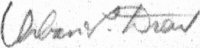
Drew, Urban | | Maj Urban L Drew USAF (deceased) |
| Urban 'Ben' Drew was born in Detroit, Michigan in 1924. Three months after the attack on Pearl Harbor, at the age of eighteen, Drew joined the USAAF and commenced pilot training. He earned his wings and a commission at Mariana, Florida in October 1943. He remained in the States honing his flying skills as an instructor pilot for the North American P-51 Mustang at Bartow, Florida. In May of 1944 he received his first overseas combat assignment, sailing to England on the Queen Elizabeth. H |
|
Bryan, Donald | | Lt Col Donald S Bryan (deceased) |
| Originally a P-40 instructor with the 79th Fighter Squadron, 20th Fighter Group, Don Bryan then transferred to the 328th Fighter Squadron, 352nd Fighter Group as a flight leader flying P-47s. Moving to Bodney, England, in June, he flew with the group on its first combat mission in September, flying his P-47 'Little One', named after his girlfriend Frances Norman. In April 1944, he transferred to P-51s, 'Little One II' and 'Little One III', and completed his first combat |
|
Delgado, Ralph | | Lieutenant Colonel Ralph Delgado |
| Called to active duty in January 1943, Ralph Delgado flew 49 missions in Europe with the 355th Fighter Squadron, 354th Fighter Group. Whilst flying a P-51 he shot down an Me262 on 2nd March 1945. |
|
Ananian, Stephen | | First Lieutenant Stephen Ananian |
| Flying with the 505th Fighter Squadron, 339th Fighter Group based at Fowlmere near Cambridge, Stephen Ananian shot down an Me262 on 9th February 1945 whilst flying a P-51 Mustang. In April 1945 the 339th became the only group in the 8th Air Force to claim over a hundred strafing victories on two separate occasions and Ananian notched up a tally of 4 air victories during 63 combat missions with the unit. |
|
Fitch, John | | Joining the Army Air Corps in 1941 he began his service flying the A-20 Havoc in North Africa. Volunteering for a second tour in 1944 he joined the 335th Fighter Squadron, 4th Fighter Group initially flying P-47s and on 18th November 1944 he shot down an Me262 over Germany. Transferring to P-51s he was shot down in March 1945 whilst strafing a train, and was taken prisoner. After the war he became a successful Grand Prix racing driver and an icon of the racing industry. |
|
Czypionka, Jorg (companion print) | | Very few Luftwaffe pilots flew the Me262 jet as a night-fighter. Jorg Czypionka was one of them. In 1944 he flew Fw190 and Me109 night fighters before moving to 10./NJG11 flying high altitude Me109s. In January 1945 he joined a new unit - Kommando Welter - which was formed within 10./NJG11 to counter the RAF Mosquitos flying fast intruder operations. Equipped with single seat Me262 fighters he flew his jet 'Red 6' alongside the top scoring jet ace of all time, Kurt Welter, scoring tw |
|
+ Artist : Robert Taylor | | £465.00 | | | | Tribute edition of 35 prints. | Paper size 35 inches x 25 inches (89cm x 64cm) Image size 28.5 inches x 17 inches (73cm x 43cm) |
Gatlin, Wayne | | Major General Wayne C Gatlin |
| Wayne Gatlin flew with the 360th Fighter Squadron, 356th Fighter Group based at Martlesham Heath. From September 1944 he undertook 55 combat missions before the end of the war, six in P-47s and the rest in P-51Ds. On 10 April 1945 he destroyed an Me262 jet before immediately damaging another. |
|
Mencel, Jurek | | Sqn Ldr Jurek Mencel DFC, KM*** AFM*** |
| Flying with the French Air Force he fought in the Battle of France but was hospitalised after breaking his back in a crash in mid-1940. Returning to operations with 317 Polish Sqn, his first mission was on Spitfires escorting the RAF Bombers taking part in the engagement that lead to the German 'Channel Dash'. He flew Spitfires throughout the Normandy Invasion also flying Hurricanes and Mustangs with 308 and 309 Sqn's scoring victories against Me109's and Me108's and on the 9 |
|
Peterburs, Joseph | | Joe Peterburs enlisted in the US Army Air Corps on the 30th of November, 1942 and was called to active duty as an Aviation Cadet on 26th January, 1943. On 15th April, 1944 after a rigorous flying training program, he received his pilots wings and commission as a 2nd Lieutenant. After graduation he flew the P-40N and A-24 during combat replacement training. On 6th November, 1944 Lt. Peterburs arrived in England and was assigned to the 55th Fighter Squadron of the 20th Fighter Group. He was 19 y |
|
Cummings, Donald | | Colonel Donald Cummings (deceased) |
| Joining the USAAF in 1941, Don Cummings saw action in England, Africa and Italy, taking part in the Battle of Anzio. Flying first with the 12th Air Force and then posted to the 8th Air Force in England, flying with the 39th Fighter Squadron, 55th Fighter Group out of Wormingford. Don Cummings flew a total of 150 combat missions and on 25th February, 1945, became one of only two fighter Aces to shoot down two Me262 jet fighters on a single mission. He then served in occupied Germany after the |
|
Jeffrey, Arthur | | Colonel Arthur Jeffrey (deceased) |
| Colonel Arthur Jeffrey was born in Brewer, Arkansas on the 17th of November, 1919. Arthur Jeffrey enlisted in the Army on August 18th, 1939, and two years later in September, he entered aviation cadet training and graduated at Kelly Field, Texas in April of 1942. Jeffrey was assigned to the newly-formed 479th Fighter Group flying P-38s, and after a training period, his group was sent to England to become a part of the 8th Air Force. The year was 1944, and eleven days after arrival, the group |
|
Coleman, Wayne L | | Captain Wayne L Coleman (deceased) |
| Joining the service in January 1943, Wayne Coleman was posted to the 82nd Squadron, 78th Fighter Group at Duxford, near Cambridge in July 1944. He flew the first of his 75 combat missions a few days later on August 2nd in P-47s, dive-bombing and strafing in support of the Normandy invasion before converting to P-51s at the end of the year. Wayne shot down three Fw190s in a single mission and later on 31st March 1945, an Me262 jet. He flew continuously until the end of the war. He died on 1st |
|
Lamb, Huie | | Lieutenant Colonel Huie Lamb |
| Flying P-47s out of Duxford with the 82nd Fighter Squadron, 78th Fighter Group, he shot down an Me262 on 15th October 1944, one of the few P-47 pilots to achieve a jet victory. After converting to P51s he became one of an elite few by shooting down a second jet when he shared in the destruction of an Arado Ar234 blitz-bomber on 19th March 1945.
|
|
Rudorffer, Erich (companion print) | | Major Erich Rudorffer (deceased) |
| Erich Rudorffer was born on November 1st 1917 in the town of Zwickau in Saxony. Erich Rudorffer joined the Luftwaffes I./JG2 Richthofen in November 1939, and was soon flying combat patrols in January 1940 and was assigned to I/JG 2 Richthofen with the rank of Oberfeldwebel. He took part in the Battle of France, scoring the first of his many victories over a French Hawk 75 on May 14th, 1940. He went on to score eight additional victories during the Battle of France and the Battle of Britain. |
|
Schuck, Walter (companion print) | | Oberleutnant Walter Schuck (deceased) |
| Initially with JG3, Walter Schuck was posted north to 7./JG5 in April 1942. On 15 June 1944 he chalked up his 100th victory during a day when he shot down 6 aircraft. Two days later he had his most successful day, achieving 12 victories in twenty-four hours, a feat never surpassed in JG5. On 1 August, he assumed command of 10./JG5. Walter Schuck transferred to fly the Me262 as Staffelkapitan of 3./JG7, and achieved 8 further victories flying the new jet. His final tally was 206 air victorie |
|
Bob, Hans-Ekkehard (companion print) | | Major Hans-Ekkehard Bob (deceased) |
| After success in the Battle of Britain, Hans-Ekkehard Bob took over leadership of 9./JG54 in 1940. The following year he was awarded the Knights Cross. Transferring to the Eastern Front his victories rose steadily to 50 by September 1942. His Group later transferred back to the West for a short period, where in April 1943, he rammed a B-17 Fortress. Returning to the Eastern Front as Kommander of IV./JG3, he ended the war as Adjutant of Gallands JV44 in the West. In his 700 missions he score |
|
Giefing, Ernest (companion print) | | Ernest Giefing was born on February 7th, 1924 in Stockerau, Austria. After graduating from flight school he joined the training unit Jagdschule 107 in July, 1943 and later joined Jagdschule 107 as a flying instructor. Five months later, Giefing was posted to Jagdgeschwader 2 Richthofen (JG2) followed by a posting to JG7 in December 1944. Ernest Giefing held the rank of Flight Sergeant by the end of the war, having flown approximately 75 combat missions including 12 in Me262 jets, and gaining fou |
|
Hannig, Norbert (companion print) | | Leutnant Norbert Hannig (deceased) |
| Norbert Hannig began operations with JG54 on the Eastern Front near Leningrad in early 1943, flying first the Messerschmitt Bf109G, later converting to the Fw190. He became a Staffelkapitan with JG54, notching up an impressive 42 victories. Towards the end of the war, in early 1945, he converted to fly the new jet fighter, the Me262, and flew it in combat with III./JG7 from their airfield base at Brandenberg-Briest. Norbert Hannig died on 21st February 2014. |
|
Giller, Edward | | Major General Edward Giller |
| Edward Giller flew P-51s with the 55th Fighter Group and commanded the 343rd Fighter Squadron. His P-51s were all named 'The Millie G' after his wife Mildred and his first Mustang is now a preserved and well known warbird. Flying 120 missions he scored 3 confirmed victories including an Me262 on 9th April 1945.
|
|
Gross, Clayton | | Captian Clayton Gross (deceased) |
| Clayton Gross was one of 12 original pilots to fly with the 355th fighter Squadron, 354th Fighter Group. He first saw combat in 1943, and took part in the great D-Day air operations on 6th June 1944. He flew over 100 combat missions in two combat tours on P51s, was credited with 6 confirmed kills (including an Me262 jet), 14 damaged, multiple ground vehicles destroyed, including 8 locomotives. He survived one bail-out behind enemy lines, and flew continuously in the ETO until VE Day. Captain ( |
|
Drew, Urban | | Maj Urban L Drew USAF (deceased) |
| Urban 'Ben' Drew was born in Detroit, Michigan in 1924. Three months after the attack on Pearl Harbor, at the age of eighteen, Drew joined the USAAF and commenced pilot training. He earned his wings and a commission at Mariana, Florida in October 1943. He remained in the States honing his flying skills as an instructor pilot for the North American P-51 Mustang at Bartow, Florida. In May of 1944 he received his first overseas combat assignment, sailing to England on the Queen Elizabeth. H |
|
Bryan, Donald | | Lt Col Donald S Bryan (deceased) |
| Originally a P-40 instructor with the 79th Fighter Squadron, 20th Fighter Group, Don Bryan then transferred to the 328th Fighter Squadron, 352nd Fighter Group as a flight leader flying P-47s. Moving to Bodney, England, in June, he flew with the group on its first combat mission in September, flying his P-47 'Little One', named after his girlfriend Frances Norman. In April 1944, he transferred to P-51s, 'Little One II' and 'Little One III', and completed his first combat |
|
Delgado, Ralph | | Lieutenant Colonel Ralph Delgado |
| Called to active duty in January 1943, Ralph Delgado flew 49 missions in Europe with the 355th Fighter Squadron, 354th Fighter Group. Whilst flying a P-51 he shot down an Me262 on 2nd March 1945. |
|
Ananian, Stephen | | First Lieutenant Stephen Ananian |
| Flying with the 505th Fighter Squadron, 339th Fighter Group based at Fowlmere near Cambridge, Stephen Ananian shot down an Me262 on 9th February 1945 whilst flying a P-51 Mustang. In April 1945 the 339th became the only group in the 8th Air Force to claim over a hundred strafing victories on two separate occasions and Ananian notched up a tally of 4 air victories during 63 combat missions with the unit. |
|
Fitch, John | | Joining the Army Air Corps in 1941 he began his service flying the A-20 Havoc in North Africa. Volunteering for a second tour in 1944 he joined the 335th Fighter Squadron, 4th Fighter Group initially flying P-47s and on 18th November 1944 he shot down an Me262 over Germany. Transferring to P-51s he was shot down in March 1945 whilst strafing a train, and was taken prisoner. After the war he became a successful Grand Prix racing driver and an icon of the racing industry. |
|
Czypionka, Jorg (companion print) | | Very few Luftwaffe pilots flew the Me262 jet as a night-fighter. Jorg Czypionka was one of them. In 1944 he flew Fw190 and Me109 night fighters before moving to 10./NJG11 flying high altitude Me109s. In January 1945 he joined a new unit - Kommando Welter - which was formed within 10./NJG11 to counter the RAF Mosquitos flying fast intruder operations. Equipped with single seat Me262 fighters he flew his jet 'Red 6' alongside the top scoring jet ace of all time, Kurt Welter, scoring tw |
|
Groce, Walter | | Flying with the 63rd Fighter Squadron, 56th Fighter Group, Walter Groce flew the first of his 73 combat missions shortly after D-Day, 1944. He flew the longest combat mission in a P-47 without landing, after bailing out on his return. Scoring 3.5 victories he was one of the rare breed of fighter pilots to have shot down an Me262 jet in combat, claiming a share of one on 1st November 1944. |
|
Brown, Roscoe | | After graduating for pilot training from the Tuskegee Army Air base in March 1944, he was deployed to Italy to join the 100th Fighter Squadron, 332nd Fighter Group - the Tuskegee Airmen - flying their famous red tailed P-51 Mustangs on bomber escort duties. On 24th March 1945 whilst escorting B-17s on a bombing mission to Berlin he shot down an Me262 after the formation was attacked by the German jets and a week later also shot down an Me109. Promoted to command the 100th Fighter Squadron, he |
|
Galland, Adolf (matted on companion print) | | General Adolf Galland (deceased) |
| Adolf Galland fought in the great Battles of Poland, France and Britain, leading the famous JG26 Abbeville Boys. He flew in combat against the RAFs best including Douglas Bader, Bob Stanford Tuck and Johnnie Johnson. In 1941, at the age of 29, he was promoted to Inspector of the Fighter Arm. In 1942 Hitler personally selected Galland to organise the fighter escort for the Channel Dash. He became the youngest General in the German High Command but open disagreements with Goering led to his di |
|
Steinhoff, Johannes (matted on companion print) | | General Johannes Steinhoff (deceased) |
| By early 1940 Macky Steinhoff was leading 4 / JG-52 during the Battle of Britain. He was then transferred to the eastern front where his success continued. In the final stages of the defence of the Reich he joined JV-44 flying the ME 262 in which he scored 6 victories before being seriously burned in a crash. He flew 939 missions scored 178 victories and was awarded the Knights Cross with Oak leaves and swords. |
|
Krupinski, Walter (matted on companion print) | | General Walter Krupinski (deceased) |
| Walter Krupinski first saw combat against the RAF on the Western Front. Transferring to the east, he became a Squadron Commander in the legendary JG52. In 1943 his victories reached 150 but, in March 1944 with 177 victories to his name, he was transferred to Germany to command JG11. Flying high altitude Me109s, he chalked up another 12 victories before being wounded. In September 1944 he was promoted Kommandeur of III./JG26 and led them on Operation Bodenplatte before joining Galland's f |
|
Ambs, Alfred (matted on companion print) | | Leutnant Alfred Ambs (deceased) |
| Born in Gladbeck on the 23rd January 1923, Alfred Ambs joined the Luftwaffe on the 10th July 1942. Initiqally attached to a training unit, he flew Ju88s, Me110s, Me109 and Fw190 aircraft. He was in the following units : Flg.Rgt. 53, Luftkriegsschule 3, Flugzeugführerschule C14 in Prague. Flugzeugführerschule B33 (Prague-Rusin), and Zerstörergeschwader 101. As the war situation worsened, Ambs was transferred to train on the new Messerschmitt 262 fighter with JG7 in Lechfeld. Flying with t |
|
Csurusky, Georg (matted on companion print) | | After completing his pilot training, Georg was posted in January, 1943, to 1.KG51 on the eastern front, flying the JU-88 all-weather medium bomber. In August, 1943, he converted to fly the ME-410 Hornet. On October 3rd 1943 Hauptmann Georg Csurusky was awarded the Deutsches Kreuz in Gold (The German Cross in Gold). In 1944, 1 Gruppe KG51 converted to train on the ME-262 jet fighter-bomber for the Western Front. Georg flew the 262 on the attack on the Ludendorff Bridge. At the war's end he |
|
+ Artist : Robert Taylor | | SOLD
OUT | NOT
AVAILABLE | | | Ace of Aces edition of 5 prints. | Paper size 35 inches x 25 inches (89cm x 64cm) Image size 28.5 inches x 17 inches (73cm x 43cm) |
Gatlin, Wayne | | Major General Wayne C Gatlin |
| Wayne Gatlin flew with the 360th Fighter Squadron, 356th Fighter Group based at Martlesham Heath. From September 1944 he undertook 55 combat missions before the end of the war, six in P-47s and the rest in P-51Ds. On 10 April 1945 he destroyed an Me262 jet before immediately damaging another. |
|
Mencel, Jurek | | Sqn Ldr Jurek Mencel DFC, KM*** AFM*** |
| Flying with the French Air Force he fought in the Battle of France but was hospitalised after breaking his back in a crash in mid-1940. Returning to operations with 317 Polish Sqn, his first mission was on Spitfires escorting the RAF Bombers taking part in the engagement that lead to the German 'Channel Dash'. He flew Spitfires throughout the Normandy Invasion also flying Hurricanes and Mustangs with 308 and 309 Sqn's scoring victories against Me109's and Me108's and on the 9 |
|
Peterburs, Joseph | | Joe Peterburs enlisted in the US Army Air Corps on the 30th of November, 1942 and was called to active duty as an Aviation Cadet on 26th January, 1943. On 15th April, 1944 after a rigorous flying training program, he received his pilots wings and commission as a 2nd Lieutenant. After graduation he flew the P-40N and A-24 during combat replacement training. On 6th November, 1944 Lt. Peterburs arrived in England and was assigned to the 55th Fighter Squadron of the 20th Fighter Group. He was 19 y |
|
Cummings, Donald | | Colonel Donald Cummings (deceased) |
| Joining the USAAF in 1941, Don Cummings saw action in England, Africa and Italy, taking part in the Battle of Anzio. Flying first with the 12th Air Force and then posted to the 8th Air Force in England, flying with the 39th Fighter Squadron, 55th Fighter Group out of Wormingford. Don Cummings flew a total of 150 combat missions and on 25th February, 1945, became one of only two fighter Aces to shoot down two Me262 jet fighters on a single mission. He then served in occupied Germany after the |
|
Jeffrey, Arthur | | Colonel Arthur Jeffrey (deceased) |
| Colonel Arthur Jeffrey was born in Brewer, Arkansas on the 17th of November, 1919. Arthur Jeffrey enlisted in the Army on August 18th, 1939, and two years later in September, he entered aviation cadet training and graduated at Kelly Field, Texas in April of 1942. Jeffrey was assigned to the newly-formed 479th Fighter Group flying P-38s, and after a training period, his group was sent to England to become a part of the 8th Air Force. The year was 1944, and eleven days after arrival, the group |
|
Coleman, Wayne L | | Captain Wayne L Coleman (deceased) |
| Joining the service in January 1943, Wayne Coleman was posted to the 82nd Squadron, 78th Fighter Group at Duxford, near Cambridge in July 1944. He flew the first of his 75 combat missions a few days later on August 2nd in P-47s, dive-bombing and strafing in support of the Normandy invasion before converting to P-51s at the end of the year. Wayne shot down three Fw190s in a single mission and later on 31st March 1945, an Me262 jet. He flew continuously until the end of the war. He died on 1st |
|
Lamb, Huie | | Lieutenant Colonel Huie Lamb |
| Flying P-47s out of Duxford with the 82nd Fighter Squadron, 78th Fighter Group, he shot down an Me262 on 15th October 1944, one of the few P-47 pilots to achieve a jet victory. After converting to P51s he became one of an elite few by shooting down a second jet when he shared in the destruction of an Arado Ar234 blitz-bomber on 19th March 1945.
|
|
Schuck, Walter (companion print) | | Oberleutnant Walter Schuck (deceased) |
| Initially with JG3, Walter Schuck was posted north to 7./JG5 in April 1942. On 15 June 1944 he chalked up his 100th victory during a day when he shot down 6 aircraft. Two days later he had his most successful day, achieving 12 victories in twenty-four hours, a feat never surpassed in JG5. On 1 August, he assumed command of 10./JG5. Walter Schuck transferred to fly the Me262 as Staffelkapitan of 3./JG7, and achieved 8 further victories flying the new jet. His final tally was 206 air victorie |
|
Bob, Hans-Ekkehard (companion print) | | Major Hans-Ekkehard Bob (deceased) |
| After success in the Battle of Britain, Hans-Ekkehard Bob took over leadership of 9./JG54 in 1940. The following year he was awarded the Knights Cross. Transferring to the Eastern Front his victories rose steadily to 50 by September 1942. His Group later transferred back to the West for a short period, where in April 1943, he rammed a B-17 Fortress. Returning to the Eastern Front as Kommander of IV./JG3, he ended the war as Adjutant of Gallands JV44 in the West. In his 700 missions he score |
|
Giefing, Ernest (companion print) | | Ernest Giefing was born on February 7th, 1924 in Stockerau, Austria. After graduating from flight school he joined the training unit Jagdschule 107 in July, 1943 and later joined Jagdschule 107 as a flying instructor. Five months later, Giefing was posted to Jagdgeschwader 2 Richthofen (JG2) followed by a posting to JG7 in December 1944. Ernest Giefing held the rank of Flight Sergeant by the end of the war, having flown approximately 75 combat missions including 12 in Me262 jets, and gaining fou |
|
Hannig, Norbert (companion print) | | Leutnant Norbert Hannig (deceased) |
| Norbert Hannig began operations with JG54 on the Eastern Front near Leningrad in early 1943, flying first the Messerschmitt Bf109G, later converting to the Fw190. He became a Staffelkapitan with JG54, notching up an impressive 42 victories. Towards the end of the war, in early 1945, he converted to fly the new jet fighter, the Me262, and flew it in combat with III./JG7 from their airfield base at Brandenberg-Briest. Norbert Hannig died on 21st February 2014. |
|
Giller, Edward | | Major General Edward Giller |
| Edward Giller flew P-51s with the 55th Fighter Group and commanded the 343rd Fighter Squadron. His P-51s were all named 'The Millie G' after his wife Mildred and his first Mustang is now a preserved and well known warbird. Flying 120 missions he scored 3 confirmed victories including an Me262 on 9th April 1945.
|
|
Gross, Clayton | | Captian Clayton Gross (deceased) |
| Clayton Gross was one of 12 original pilots to fly with the 355th fighter Squadron, 354th Fighter Group. He first saw combat in 1943, and took part in the great D-Day air operations on 6th June 1944. He flew over 100 combat missions in two combat tours on P51s, was credited with 6 confirmed kills (including an Me262 jet), 14 damaged, multiple ground vehicles destroyed, including 8 locomotives. He survived one bail-out behind enemy lines, and flew continuously in the ETO until VE Day. Captain ( |
|
Drew, Urban | | Maj Urban L Drew USAF (deceased) |
| Urban 'Ben' Drew was born in Detroit, Michigan in 1924. Three months after the attack on Pearl Harbor, at the age of eighteen, Drew joined the USAAF and commenced pilot training. He earned his wings and a commission at Mariana, Florida in October 1943. He remained in the States honing his flying skills as an instructor pilot for the North American P-51 Mustang at Bartow, Florida. In May of 1944 he received his first overseas combat assignment, sailing to England on the Queen Elizabeth. H |
|
Bryan, Donald | | Lt Col Donald S Bryan (deceased) |
| Originally a P-40 instructor with the 79th Fighter Squadron, 20th Fighter Group, Don Bryan then transferred to the 328th Fighter Squadron, 352nd Fighter Group as a flight leader flying P-47s. Moving to Bodney, England, in June, he flew with the group on its first combat mission in September, flying his P-47 'Little One', named after his girlfriend Frances Norman. In April 1944, he transferred to P-51s, 'Little One II' and 'Little One III', and completed his first combat |
|
Delgado, Ralph | | Lieutenant Colonel Ralph Delgado |
| Called to active duty in January 1943, Ralph Delgado flew 49 missions in Europe with the 355th Fighter Squadron, 354th Fighter Group. Whilst flying a P-51 he shot down an Me262 on 2nd March 1945. |
|
Ananian, Stephen | | First Lieutenant Stephen Ananian |
| Flying with the 505th Fighter Squadron, 339th Fighter Group based at Fowlmere near Cambridge, Stephen Ananian shot down an Me262 on 9th February 1945 whilst flying a P-51 Mustang. In April 1945 the 339th became the only group in the 8th Air Force to claim over a hundred strafing victories on two separate occasions and Ananian notched up a tally of 4 air victories during 63 combat missions with the unit. |
|
Fitch, John | | Joining the Army Air Corps in 1941 he began his service flying the A-20 Havoc in North Africa. Volunteering for a second tour in 1944 he joined the 335th Fighter Squadron, 4th Fighter Group initially flying P-47s and on 18th November 1944 he shot down an Me262 over Germany. Transferring to P-51s he was shot down in March 1945 whilst strafing a train, and was taken prisoner. After the war he became a successful Grand Prix racing driver and an icon of the racing industry. |
|
Czypionka, Jorg (companion print) | | Very few Luftwaffe pilots flew the Me262 jet as a night-fighter. Jorg Czypionka was one of them. In 1944 he flew Fw190 and Me109 night fighters before moving to 10./NJG11 flying high altitude Me109s. In January 1945 he joined a new unit - Kommando Welter - which was formed within 10./NJG11 to counter the RAF Mosquitos flying fast intruder operations. Equipped with single seat Me262 fighters he flew his jet 'Red 6' alongside the top scoring jet ace of all time, Kurt Welter, scoring tw |
|
Groce, Walter | | Flying with the 63rd Fighter Squadron, 56th Fighter Group, Walter Groce flew the first of his 73 combat missions shortly after D-Day, 1944. He flew the longest combat mission in a P-47 without landing, after bailing out on his return. Scoring 3.5 victories he was one of the rare breed of fighter pilots to have shot down an Me262 jet in combat, claiming a share of one on 1st November 1944. |
|
Brown, Roscoe | | After graduating for pilot training from the Tuskegee Army Air base in March 1944, he was deployed to Italy to join the 100th Fighter Squadron, 332nd Fighter Group - the Tuskegee Airmen - flying their famous red tailed P-51 Mustangs on bomber escort duties. On 24th March 1945 whilst escorting B-17s on a bombing mission to Berlin he shot down an Me262 after the formation was attacked by the German jets and a week later also shot down an Me109. Promoted to command the 100th Fighter Squadron, he |
|
Galland, Adolf (matted on companion print) | | General Adolf Galland (deceased) |
| Adolf Galland fought in the great Battles of Poland, France and Britain, leading the famous JG26 Abbeville Boys. He flew in combat against the RAFs best including Douglas Bader, Bob Stanford Tuck and Johnnie Johnson. In 1941, at the age of 29, he was promoted to Inspector of the Fighter Arm. In 1942 Hitler personally selected Galland to organise the fighter escort for the Channel Dash. He became the youngest General in the German High Command but open disagreements with Goering led to his di |
|
Steinhoff, Johannes (matted on companion print) | | General Johannes Steinhoff (deceased) |
| By early 1940 Macky Steinhoff was leading 4 / JG-52 during the Battle of Britain. He was then transferred to the eastern front where his success continued. In the final stages of the defence of the Reich he joined JV-44 flying the ME 262 in which he scored 6 victories before being seriously burned in a crash. He flew 939 missions scored 178 victories and was awarded the Knights Cross with Oak leaves and swords. |
|
Krupinski, Walter (matted on companion print) | | General Walter Krupinski (deceased) |
| Walter Krupinski first saw combat against the RAF on the Western Front. Transferring to the east, he became a Squadron Commander in the legendary JG52. In 1943 his victories reached 150 but, in March 1944 with 177 victories to his name, he was transferred to Germany to command JG11. Flying high altitude Me109s, he chalked up another 12 victories before being wounded. In September 1944 he was promoted Kommandeur of III./JG26 and led them on Operation Bodenplatte before joining Galland's f |
|
Ambs, Alfred (matted on companion print) | | Leutnant Alfred Ambs (deceased) |
| Born in Gladbeck on the 23rd January 1923, Alfred Ambs joined the Luftwaffe on the 10th July 1942. Initiqally attached to a training unit, he flew Ju88s, Me110s, Me109 and Fw190 aircraft. He was in the following units : Flg.Rgt. 53, Luftkriegsschule 3, Flugzeugführerschule C14 in Prague. Flugzeugführerschule B33 (Prague-Rusin), and Zerstörergeschwader 101. As the war situation worsened, Ambs was transferred to train on the new Messerschmitt 262 fighter with JG7 in Lechfeld. Flying with t |
|
Csurusky, Georg (matted on companion print) | | After completing his pilot training, Georg was posted in January, 1943, to 1.KG51 on the eastern front, flying the JU-88 all-weather medium bomber. In August, 1943, he converted to fly the ME-410 Hornet. On October 3rd 1943 Hauptmann Georg Csurusky was awarded the Deutsches Kreuz in Gold (The German Cross in Gold). In 1944, 1 Gruppe KG51 converted to train on the ME-262 jet fighter-bomber for the Western Front. Georg flew the 262 on the attack on the Ludendorff Bridge. At the war's end he |
|
Buchner, Hermann (companion print) | | Oberst Hermann Buchner (deceased) |
| Hermann Buchner was born in Salzburg, Austria, 30th October 1919. Hermann Buchners first combat role was ground attack. After 215 combat missions he was badly injured when his Me109 exploded at 22,000ft. Returning to action in 1943, he flew a further 200 missions before again being wounded. Back in action a third time, he fought in the Crimea and Romania. After 500 ground attack missions he transferred to join Nowotny, the Me262 jet trials unit, and then 9./JG7. He was the first jet pilot |
|
Petermann, Viktor (companion print) | | Leutnant Viktor Petermann (deceased) |
| Joining III./JG-52, Viktor Petermann flew in Russia as an Oberfeldwebel and became skilled in low-level attacks, sinking a gun boat and 50 troop ferries. On one of these missions, after being hit by ground fire, his left arm was amputated and he was hospitalized for a long period. After his recovery he was sent back into combat in 1945 with II./JG-52, with an artificial arm, and scored another 4 victories! He finished the war with JG-7, and a total of 64 victories. Viktor Petermann was awarded t |
|
Rudorffer, Erich (companion print) | | Major Erich Rudorffer (deceased) |
| Erich Rudorffer was born on November 1st 1917 in the town of Zwickau in Saxony. Erich Rudorffer joined the Luftwaffes I./JG2 Richthofen in November 1939, and was soon flying combat patrols in January 1940 and was assigned to I/JG 2 Richthofen with the rank of Oberfeldwebel. He took part in the Battle of France, scoring the first of his many victories over a French Hawk 75 on May 14th, 1940. He went on to score eight additional victories during the Battle of France and the Battle of Britain. |
|
Roell, Werner (companion print) | | Major Werner Roell (deceased) |
| Werner Roell flew initially in Norway, and was one of the first pilots to land in Norway during that campaign. He later flew operations in Yugoslavia and Crete as Staffelkapitan of 4./St77, subsequently flying in Russia. Transferring to the Ju87, he flew over 400 combat missions in the Stuka, destroying a Soviet cruiser near the Crimea. In early 1945 he was summoned by Adolf Galland to join his famous Me262 Squadron of Experts in JV44, where he served until the end of the war. Werner Roell f |
|
Reinert, Ernst Wilhelm (companion print) | | Hauptmann Ernst Wilhelm Reinert (deceased) |
| Ernst Wilhelm Reinert flew with JG77, before transferring to the Eastern Front in 1941. He was posted to Tunisia in January 1943 where he became the most successful Luftwaffe Ace in North Africa during that period. On January 2nd 1945 he was given the leadership of IV./JG27. In March he transferred to III./JG7 flying the Me262. In his 715 missions Reinert scored 174 aerial victories. he was awarded the Knight's Cross with Oak Leaves and Swords. Born 2nd February 1919 in Lindenthal, die |
|
Rudorffer, Erich (companion print) | | Major Erich Rudorffer (deceased) |
| Erich Rudorffer was born on November 1st 1917 in the town of Zwickau in Saxony. Erich Rudorffer joined the Luftwaffes I./JG2 Richthofen in November 1939, and was soon flying combat patrols in January 1940 and was assigned to I/JG 2 Richthofen with the rank of Oberfeldwebel. He took part in the Battle of France, scoring the first of his many victories over a French Hawk 75 on May 14th, 1940. He went on to score eight additional victories during the Battle of France and the Battle of Britain. |
|
Nowotny, Walter (matted on companion print) | | Major Walter Nowotny (deceased) |
| Walter Nowotny was one of the most popular Luftwaffe leaders. Joining 9./JG54 in 1941, he achieved his first victories in July, but was forced to ditch in the Baltic, spending three days adrift. In 1942 he took command of 9./JG54, and in June 1943 he downed 41 enemy aircraft in one month, another 49 in August, and 45 in September. By 4th September his tally was past 200, and on 14th October he reached 250, at the time the leading Luftwaffe fighter pilot. In August 1943 he was appointed Komma |
|
Yeager, Charles E (matted on companion print) | | Brigadier General Charles E Yeager (deceased) |
| Born February 13th 1923. He enlisted as a private in the United States Army. Chalres Yaeger became a aircraft mechanic at George Air Force Base in California. Yaeger showed a talent as a pilot and became a Flight Officer on March 10th 1943 and joined the 357th Fighter Group. He trained on the P-39 Airocobras and in November 1943 went to Britain with his Squadron. He was stationed at RAF Leiston and flew P 51 Mustangs, his aircraft being Glamoras Glen. His first air victory was on March 5th |
|
Barkhorn, Gerhard (matted on companion print) | | Gerhard Barkhorn (deceased) |
| Gerhard Barkhorn joined II/JG52 in August 1940. In June 1943 he was promoted Kommandeur II/JG52, and in November that year he became only the fifth fighter pilot to reach 200 victories. He achieved his 300th victory on 5th January 1945. Promoted Komodore of JG6 near the end of the war, he was then summoned by Galland to join JV44. Barkhorn flew 1104 missions, and with 301 victories was the second highest scoring Ace in history. He was awarded the Knights Cross with Oak Leaves and Swords. B |
|
Kaiser, Herbert (matted on companion print) | | Leutnant Herbert Kaiser (deceased) |
| Herbert Kaiser joined the Luftwaffe before the war, and by 1938 he was a fighter pilot with II./JG186. He flew in the invasion of Poland and then during the Battle of France, scoring his first victory in May 1940. He took part in the Battle of Britain before transferring to the Balkans. In August 1941 he was posted to the Russian Front, then North Africa followed by Italy and the Dolomites. In March 1944 he joined JG1 in the defence of the Reich. Seriously wounded in a parachute jump in Aug |
|
Fahrmann, Gottfried (matted on companion print) | | Leutnant Gottfried Fahrmann (deceased) |
| Gottfried Fahrmann had been Macky Steinhoff's longstanding wingman and adjutant in their time together with JG77, which Steinhoff had commanded in Italy. Steinhoff had insisted that Fahrmann be brought into Galland's JV44 unit to continue as his wingman and was one of the original members of the squadron of experts. Together they led the first formation of JV44s Me262s on their journey south to Munich on March 31st 1945. After surviving being shot down by a P51 Mustang, Gottfried was |
|
Tegtmeier, Fritz (matted on companion print) | | Leutnant Fritz Tegtmeier (deceased) |
| Born in 1917 he joined 2/JG-54 in October 1940, but after being injured in a crash it wasn't until 1941 that he achieved his first victory. A brief time as a fighter Instructor in 1943 he returned to the Russian Front and his score soon started to mount, By May 1944 he had over 100 victories. August 1944 saw his appointment as Staffelkapitan of 3/JG-54. In March 1945 he transferred to JG-7 flying Me262 Jet. By the end of the war he had flown 700 combat missions and had 146 victories. He was |
|
Haeffner, Heiner (matted on companion print) | | Oberleutnant Heiner Haeffner |
| After flying with II./KG51 Heiner Haeffner transferred to JG7 flying the Me262 and flew the jet on 58 combat missions over Holland, France, Belgium, Germany and Czechoslovakia. He was one of the pilots who flew the Me262 'Yellow 7' now in the Smithsonian Museum. |
|
Winks, Robert P (matted on companion print) | | Captain Robert P Winks (deceased) |
| Robert Winks joined the service in 1943, and after training was posted to England. Flying his first combat mission in July 1944, he served with the 364th Fighter Squadron, 357th Fighter Group. His year long tour in Europe took in the heavy fighting over the Battle of the Bulge, the missions to support the Arnhem operations, and the Battle of Berlin, when the 357th destroyed 56 enemy aircraft. During this time he flew some 69 combat missions. His personal P-51D was 'Trusty Rusty'. Hi |
|
Weaver, Charles E (matted on companion print) | | Captain Charles E Weaver (deceased) |
| American WW2 pilot with eight victories, including : 19th Sep 1944, an Me109; 17th Nov 1944, 2 Fw190s; 23rd Dec 1944, an Me109; 14th January 1945, an Me109 and an Fw190; 24th Mar 1945, an Me109; 18th Apr 1945, an Me262. He died 19th November 2008. |
|
+ Artist : Robert Taylor | | SOLD
OUT | NOT
AVAILABLE | |
|
|
|

|
Running the Gauntlet by Robert Taylor.
Though some 1400 of Germanys remarkable Me262 jet aircraft were built, fewer than 300 ever saw action during its short 10 month combat career, the 550 mph fighter-bomber arriving in service too late to make any impression on the course of the war. Most famous of all Me262 units was Jagdverband 44, commanded by General Adolf Galland. Instructed by Hitler to set up a small defensive fighter unit to make the most of the new Me262, Gallands JV44 attracted other top-scoring pilots, including top aces Macky Steinhoff and Walter Krupinski, and the unit soon became dubbed Gallands Squadron of Experts. Though doing their best to repel daylight attacks on jet production plants in Southern Germany, JV44 were fighting a losing battle. During a raid on 9 April 1945 the unit lost nine aircraft - a pattern that was to continue. Also, American fighter pilots, unable to catch the 262 in the air, found success taking the jets out as they took off or landed, catching them while at their most vulnerabl.........
More Text... |
| | Item Code : DHM1751 | Running the Gauntlet by Robert Taylor. - Editions Available | |
| | DESCRIPTION | SIZE | SIGNATURES | OFFERS | PRICE | PURCHASING | PACKS | | Aces Edition : signed limited edition of 400 prints. | Paper size 33 inches x 25 inches (83cm x 64cm) |
Hannig, Norbert | | Leutnant Norbert Hannig (deceased) |
| Norbert Hannig began operations with JG54 on the Eastern Front near Leningrad in early 1943, flying first the Messerschmitt Bf109G, later converting to the Fw190. He became a Staffelkapitan with JG54, notching up an impressive 42 victories. Towards the end of the war, in early 1945, he converted to fly the new jet fighter, the Me262, and flew it in combat with III./JG7 from their airfield base at Brandenberg-Briest. Norbert Hannig died on 21st February 2014. |
|
Schuck, Walter | | Oberleutnant Walter Schuck (deceased) |
| Initially with JG3, Walter Schuck was posted north to 7./JG5 in April 1942. On 15 June 1944 he chalked up his 100th victory during a day when he shot down 6 aircraft. Two days later he had his most successful day, achieving 12 victories in twenty-four hours, a feat never surpassed in JG5. On 1 August, he assumed command of 10./JG5. Walter Schuck transferred to fly the Me262 as Staffelkapitan of 3./JG7, and achieved 8 further victories flying the new jet. His final tally was 206 air victorie |
|
Strait, Donald | | Major General Donald Strait (deceased) |
| Don Strait was born on April 28th, 1918 and grew up in Verona, New Jersey. From an early age Don Strait wanted to be a pilot, and after working for Prudential Insurance Company for a short period Don Strait enlisted in 1940 in the 119th Observation Squadron of the New Jersey National Guard. Initially Don Strait was an armorer and moved up to become an aerial gunner in the two-seater O-46 and O-47 observation planes. He qualified as an aviation cadet in early 1942 and started his training at |
|
East, Clyde B | | Lieutenant Colonel Clyde B East (deceased) |
| Born in Pittsylvania County, Virginia on July 19, 1921, raised on a rural family farm. At 19, Clyde East traveled to Hamilton, Ontario, Canada and enlisted into the Royal Canadian Air Force. Soon after, East was admitted to pilot training and completed his training in 1942. Clyde East went on active servcie to England, where he flew interdiction missions in the P-51A Mustang, attacking ground targets in France, Belgium, and Holland. He also searched for U-boats over the water. Clyde East f |
|
+ Artist : Robert Taylor | £60 Off! | Now : £215.00 | | In 2 Pairs
and 3 Packs
View | | War in Europe Edition - signed limited edition of 25 artist proofs. | Paper size 33 inches x 25 inches (83cm x 64cm) |
Rudorffer, Erich | | Major Erich Rudorffer (deceased) |
| Erich Rudorffer was born on November 1st 1917 in the town of Zwickau in Saxony. Erich Rudorffer joined the Luftwaffes I./JG2 Richthofen in November 1939, and was soon flying combat patrols in January 1940 and was assigned to I/JG 2 Richthofen with the rank of Oberfeldwebel. He took part in the Battle of France, scoring the first of his many victories over a French Hawk 75 on May 14th, 1940. He went on to score eight additional victories during the Battle of France and the Battle of Britain. |
|
Olds, Robin | | Brigadier General Robin Olds (deceased) |
| After leaving West Point in June 1943, Robin Olds was posted to the 479th Fighter Group in England, joining 434 Squadron. Based at Wattisham in East Anglia, and flying P-38s, he was involved in heavy bomber escort duties and fighter sweeps until the Normandy invasion, soon after which his Squadron converted to P51 Mustangs. by early 1945 Robin Olds was in command of 434 Squadron taking part in the Battle of the Bulge, flying escort missions, and providing air support to the airborne attack acr |
|
Cummings, Donald | | Colonel Donald Cummings (deceased) |
| Joining the USAAF in 1941, Don Cummings saw action in England, Africa and Italy, taking part in the Battle of Anzio. Flying first with the 12th Air Force and then posted to the 8th Air Force in England, flying with the 39th Fighter Squadron, 55th Fighter Group out of Wormingford. Don Cummings flew a total of 150 combat missions and on 25th February, 1945, became one of only two fighter Aces to shoot down two Me262 jet fighters on a single mission. He then served in occupied Germany after the |
|
Ambs, Alfred | | Leutnant Alfred Ambs (deceased) |
| Born in Gladbeck on the 23rd January 1923, Alfred Ambs joined the Luftwaffe on the 10th July 1942. Initiqally attached to a training unit, he flew Ju88s, Me110s, Me109 and Fw190 aircraft. He was in the following units : Flg.Rgt. 53, Luftkriegsschule 3, Flugzeugführerschule C14 in Prague. Flugzeugführerschule B33 (Prague-Rusin), and Zerstörergeschwader 101. As the war situation worsened, Ambs was transferred to train on the new Messerschmitt 262 fighter with JG7 in Lechfeld. Flying with t |
|
Hannig, Norbert | | Leutnant Norbert Hannig (deceased) |
| Norbert Hannig began operations with JG54 on the Eastern Front near Leningrad in early 1943, flying first the Messerschmitt Bf109G, later converting to the Fw190. He became a Staffelkapitan with JG54, notching up an impressive 42 victories. Towards the end of the war, in early 1945, he converted to fly the new jet fighter, the Me262, and flew it in combat with III./JG7 from their airfield base at Brandenberg-Briest. Norbert Hannig died on 21st February 2014. |
|
Schuck, Walter | | Oberleutnant Walter Schuck (deceased) |
| Initially with JG3, Walter Schuck was posted north to 7./JG5 in April 1942. On 15 June 1944 he chalked up his 100th victory during a day when he shot down 6 aircraft. Two days later he had his most successful day, achieving 12 victories in twenty-four hours, a feat never surpassed in JG5. On 1 August, he assumed command of 10./JG5. Walter Schuck transferred to fly the Me262 as Staffelkapitan of 3./JG7, and achieved 8 further victories flying the new jet. His final tally was 206 air victorie |
|
Strait, Donald | | Major General Donald Strait (deceased) |
| Don Strait was born on April 28th, 1918 and grew up in Verona, New Jersey. From an early age Don Strait wanted to be a pilot, and after working for Prudential Insurance Company for a short period Don Strait enlisted in 1940 in the 119th Observation Squadron of the New Jersey National Guard. Initially Don Strait was an armorer and moved up to become an aerial gunner in the two-seater O-46 and O-47 observation planes. He qualified as an aviation cadet in early 1942 and started his training at |
|
East, Clyde B | | Lieutenant Colonel Clyde B East (deceased) |
| Born in Pittsylvania County, Virginia on July 19, 1921, raised on a rural family farm. At 19, Clyde East traveled to Hamilton, Ontario, Canada and enlisted into the Royal Canadian Air Force. Soon after, East was admitted to pilot training and completed his training in 1942. Clyde East went on active servcie to England, where he flew interdiction missions in the P-51A Mustang, attacking ground targets in France, Belgium, and Holland. He also searched for U-boats over the water. Clyde East f |
|
+ Artist : Robert Taylor | | SOLD
OUT | NOT
AVAILABLE | | War in Europe Edition - signed limited edition of 200 prints.
Great value : Value of signatures exceeds price of item! | Paper size 33 inches x 25 inches (83cm x 64cm) |
Rudorffer, Erich | | Major Erich Rudorffer (deceased) |
| Erich Rudorffer was born on November 1st 1917 in the town of Zwickau in Saxony. Erich Rudorffer joined the Luftwaffes I./JG2 Richthofen in November 1939, and was soon flying combat patrols in January 1940 and was assigned to I/JG 2 Richthofen with the rank of Oberfeldwebel. He took part in the Battle of France, scoring the first of his many victories over a French Hawk 75 on May 14th, 1940. He went on to score eight additional victories during the Battle of France and the Battle of Britain. |
|
Olds, Robin | | Brigadier General Robin Olds (deceased) |
| After leaving West Point in June 1943, Robin Olds was posted to the 479th Fighter Group in England, joining 434 Squadron. Based at Wattisham in East Anglia, and flying P-38s, he was involved in heavy bomber escort duties and fighter sweeps until the Normandy invasion, soon after which his Squadron converted to P51 Mustangs. by early 1945 Robin Olds was in command of 434 Squadron taking part in the Battle of the Bulge, flying escort missions, and providing air support to the airborne attack acr |
|
Cummings, Donald | | Colonel Donald Cummings (deceased) |
| Joining the USAAF in 1941, Don Cummings saw action in England, Africa and Italy, taking part in the Battle of Anzio. Flying first with the 12th Air Force and then posted to the 8th Air Force in England, flying with the 39th Fighter Squadron, 55th Fighter Group out of Wormingford. Don Cummings flew a total of 150 combat missions and on 25th February, 1945, became one of only two fighter Aces to shoot down two Me262 jet fighters on a single mission. He then served in occupied Germany after the |
|
Ambs, Alfred | | Leutnant Alfred Ambs (deceased) |
| Born in Gladbeck on the 23rd January 1923, Alfred Ambs joined the Luftwaffe on the 10th July 1942. Initiqally attached to a training unit, he flew Ju88s, Me110s, Me109 and Fw190 aircraft. He was in the following units : Flg.Rgt. 53, Luftkriegsschule 3, Flugzeugführerschule C14 in Prague. Flugzeugführerschule B33 (Prague-Rusin), and Zerstörergeschwader 101. As the war situation worsened, Ambs was transferred to train on the new Messerschmitt 262 fighter with JG7 in Lechfeld. Flying with t |
|
Hannig, Norbert | | Leutnant Norbert Hannig (deceased) |
| Norbert Hannig began operations with JG54 on the Eastern Front near Leningrad in early 1943, flying first the Messerschmitt Bf109G, later converting to the Fw190. He became a Staffelkapitan with JG54, notching up an impressive 42 victories. Towards the end of the war, in early 1945, he converted to fly the new jet fighter, the Me262, and flew it in combat with III./JG7 from their airfield base at Brandenberg-Briest. Norbert Hannig died on 21st February 2014. |
|
Schuck, Walter | | Oberleutnant Walter Schuck (deceased) |
| Initially with JG3, Walter Schuck was posted north to 7./JG5 in April 1942. On 15 June 1944 he chalked up his 100th victory during a day when he shot down 6 aircraft. Two days later he had his most successful day, achieving 12 victories in twenty-four hours, a feat never surpassed in JG5. On 1 August, he assumed command of 10./JG5. Walter Schuck transferred to fly the Me262 as Staffelkapitan of 3./JG7, and achieved 8 further victories flying the new jet. His final tally was 206 air victorie |
|
Strait, Donald | | Major General Donald Strait (deceased) |
| Don Strait was born on April 28th, 1918 and grew up in Verona, New Jersey. From an early age Don Strait wanted to be a pilot, and after working for Prudential Insurance Company for a short period Don Strait enlisted in 1940 in the 119th Observation Squadron of the New Jersey National Guard. Initially Don Strait was an armorer and moved up to become an aerial gunner in the two-seater O-46 and O-47 observation planes. He qualified as an aviation cadet in early 1942 and started his training at |
|
East, Clyde B | | Lieutenant Colonel Clyde B East (deceased) |
| Born in Pittsylvania County, Virginia on July 19, 1921, raised on a rural family farm. At 19, Clyde East traveled to Hamilton, Ontario, Canada and enlisted into the Royal Canadian Air Force. Soon after, East was admitted to pilot training and completed his training in 1942. Clyde East went on active servcie to England, where he flew interdiction missions in the P-51A Mustang, attacking ground targets in France, Belgium, and Holland. He also searched for U-boats over the water. Clyde East f |
|
+ Artist : Robert Taylor | £50 Off! | Now : £295.00 | | | | War in Europe Edition - signed limited edition of 25 remarques. | Paper size 33 inches x 25 inches (83cm x 64cm) |
Rudorffer, Erich | | Major Erich Rudorffer (deceased) |
| Erich Rudorffer was born on November 1st 1917 in the town of Zwickau in Saxony. Erich Rudorffer joined the Luftwaffes I./JG2 Richthofen in November 1939, and was soon flying combat patrols in January 1940 and was assigned to I/JG 2 Richthofen with the rank of Oberfeldwebel. He took part in the Battle of France, scoring the first of his many victories over a French Hawk 75 on May 14th, 1940. He went on to score eight additional victories during the Battle of France and the Battle of Britain. |
|
Olds, Robin | | Brigadier General Robin Olds (deceased) |
| After leaving West Point in June 1943, Robin Olds was posted to the 479th Fighter Group in England, joining 434 Squadron. Based at Wattisham in East Anglia, and flying P-38s, he was involved in heavy bomber escort duties and fighter sweeps until the Normandy invasion, soon after which his Squadron converted to P51 Mustangs. by early 1945 Robin Olds was in command of 434 Squadron taking part in the Battle of the Bulge, flying escort missions, and providing air support to the airborne attack acr |
|
Cummings, Donald | | Colonel Donald Cummings (deceased) |
| Joining the USAAF in 1941, Don Cummings saw action in England, Africa and Italy, taking part in the Battle of Anzio. Flying first with the 12th Air Force and then posted to the 8th Air Force in England, flying with the 39th Fighter Squadron, 55th Fighter Group out of Wormingford. Don Cummings flew a total of 150 combat missions and on 25th February, 1945, became one of only two fighter Aces to shoot down two Me262 jet fighters on a single mission. He then served in occupied Germany after the |
|
Ambs, Alfred | | Leutnant Alfred Ambs (deceased) |
| Born in Gladbeck on the 23rd January 1923, Alfred Ambs joined the Luftwaffe on the 10th July 1942. Initiqally attached to a training unit, he flew Ju88s, Me110s, Me109 and Fw190 aircraft. He was in the following units : Flg.Rgt. 53, Luftkriegsschule 3, Flugzeugführerschule C14 in Prague. Flugzeugführerschule B33 (Prague-Rusin), and Zerstörergeschwader 101. As the war situation worsened, Ambs was transferred to train on the new Messerschmitt 262 fighter with JG7 in Lechfeld. Flying with t |
|
Hannig, Norbert | | Leutnant Norbert Hannig (deceased) |
| Norbert Hannig began operations with JG54 on the Eastern Front near Leningrad in early 1943, flying first the Messerschmitt Bf109G, later converting to the Fw190. He became a Staffelkapitan with JG54, notching up an impressive 42 victories. Towards the end of the war, in early 1945, he converted to fly the new jet fighter, the Me262, and flew it in combat with III./JG7 from their airfield base at Brandenberg-Briest. Norbert Hannig died on 21st February 2014. |
|
Schuck, Walter | | Oberleutnant Walter Schuck (deceased) |
| Initially with JG3, Walter Schuck was posted north to 7./JG5 in April 1942. On 15 June 1944 he chalked up his 100th victory during a day when he shot down 6 aircraft. Two days later he had his most successful day, achieving 12 victories in twenty-four hours, a feat never surpassed in JG5. On 1 August, he assumed command of 10./JG5. Walter Schuck transferred to fly the Me262 as Staffelkapitan of 3./JG7, and achieved 8 further victories flying the new jet. His final tally was 206 air victorie |
|
Strait, Donald | | Major General Donald Strait (deceased) |
| Don Strait was born on April 28th, 1918 and grew up in Verona, New Jersey. From an early age Don Strait wanted to be a pilot, and after working for Prudential Insurance Company for a short period Don Strait enlisted in 1940 in the 119th Observation Squadron of the New Jersey National Guard. Initially Don Strait was an armorer and moved up to become an aerial gunner in the two-seater O-46 and O-47 observation planes. He qualified as an aviation cadet in early 1942 and started his training at |
|
East, Clyde B | | Lieutenant Colonel Clyde B East (deceased) |
| Born in Pittsylvania County, Virginia on July 19, 1921, raised on a rural family farm. At 19, Clyde East traveled to Hamilton, Ontario, Canada and enlisted into the Royal Canadian Air Force. Soon after, East was admitted to pilot training and completed his training in 1942. Clyde East went on active servcie to England, where he flew interdiction missions in the P-51A Mustang, attacking ground targets in France, Belgium, and Holland. He also searched for U-boats over the water. Clyde East f |
|
+ Artist : Robert Taylor | | SOLD
OUT | NOT
AVAILABLE | | | Generals Edition : signed limited edition of 120 prints. | Paper size 33 inches x 25 inches (83cm x 64cm) |
Rudorffer, Erich | | Major Erich Rudorffer (deceased) |
| Erich Rudorffer was born on November 1st 1917 in the town of Zwickau in Saxony. Erich Rudorffer joined the Luftwaffes I./JG2 Richthofen in November 1939, and was soon flying combat patrols in January 1940 and was assigned to I/JG 2 Richthofen with the rank of Oberfeldwebel. He took part in the Battle of France, scoring the first of his many victories over a French Hawk 75 on May 14th, 1940. He went on to score eight additional victories during the Battle of France and the Battle of Britain. |
|
Galland, Adolf | | General Adolf Galland (deceased) |
| Adolf Galland fought in the great Battles of Poland, France and Britain, leading the famous JG26 Abbeville Boys. He flew in combat against the RAFs best including Douglas Bader, Bob Stanford Tuck and Johnnie Johnson. In 1941, at the age of 29, he was promoted to Inspector of the Fighter Arm. In 1942 Hitler personally selected Galland to organise the fighter escort for the Channel Dash. He became the youngest General in the German High Command but open disagreements with Goering led to his di |
|
Mahurin, Walker Bud | | Colonel Walker Bud Mahurin (deceased) |
| Walker Melville 'Bud' Mahurin was born in Ann Arbor, Michigan on 5th December 1918. He joined the Army reserves on 29th September 1941 and entered flight training, being commissioned as a pilot on the 29th of April 1942 at Ellington Field Texas. 'Bud' Mahurin gained a reputation as one of the USAAF's most colourful fighter Aces. Arriving in the European theatre, flying with the 56th Fighter Group at Boxted, England, on the 17th of August the 56th Fighter group flew escort |
|
Olds, Robin | | Brigadier General Robin Olds (deceased) |
| After leaving West Point in June 1943, Robin Olds was posted to the 479th Fighter Group in England, joining 434 Squadron. Based at Wattisham in East Anglia, and flying P-38s, he was involved in heavy bomber escort duties and fighter sweeps until the Normandy invasion, soon after which his Squadron converted to P51 Mustangs. by early 1945 Robin Olds was in command of 434 Squadron taking part in the Battle of the Bulge, flying escort missions, and providing air support to the airborne attack acr |
|
Cummings, Donald | | Colonel Donald Cummings (deceased) |
| Joining the USAAF in 1941, Don Cummings saw action in England, Africa and Italy, taking part in the Battle of Anzio. Flying first with the 12th Air Force and then posted to the 8th Air Force in England, flying with the 39th Fighter Squadron, 55th Fighter Group out of Wormingford. Don Cummings flew a total of 150 combat missions and on 25th February, 1945, became one of only two fighter Aces to shoot down two Me262 jet fighters on a single mission. He then served in occupied Germany after the |
|
Ambs, Alfred | | Leutnant Alfred Ambs (deceased) |
| Born in Gladbeck on the 23rd January 1923, Alfred Ambs joined the Luftwaffe on the 10th July 1942. Initiqally attached to a training unit, he flew Ju88s, Me110s, Me109 and Fw190 aircraft. He was in the following units : Flg.Rgt. 53, Luftkriegsschule 3, Flugzeugführerschule C14 in Prague. Flugzeugführerschule B33 (Prague-Rusin), and Zerstörergeschwader 101. As the war situation worsened, Ambs was transferred to train on the new Messerschmitt 262 fighter with JG7 in Lechfeld. Flying with t |
|
Giefing, Ernest | | Ernest Giefing was born on February 7th, 1924 in Stockerau, Austria. After graduating from flight school he joined the training unit Jagdschule 107 in July, 1943 and later joined Jagdschule 107 as a flying instructor. Five months later, Giefing was posted to Jagdgeschwader 2 Richthofen (JG2) followed by a posting to JG7 in December 1944. Ernest Giefing held the rank of Flight Sergeant by the end of the war, having flown approximately 75 combat missions including 12 in Me262 jets, and gaining fou |
|
Brooks, Jim | | Jim Brooks joined the 31st Fighter Group in Italy in early 1944, flying the P51 against Me109s, Fw190s, and the Italian Macchi Mc202. He scored his first victory on a mission to Ploesti. Later, leading the 307th Fighter Squadron on a Russian shuttle mission, they engaged a large formation of Ju87 Stukas, shooting down 27 enemy aircraft, Jim Brooks accounting for three of them. He ended his tour with 280 combat hours, and 13 confirmed victories. |
|
Hannig, Norbert | | Leutnant Norbert Hannig (deceased) |
| Norbert Hannig began operations with JG54 on the Eastern Front near Leningrad in early 1943, flying first the Messerschmitt Bf109G, later converting to the Fw190. He became a Staffelkapitan with JG54, notching up an impressive 42 victories. Towards the end of the war, in early 1945, he converted to fly the new jet fighter, the Me262, and flew it in combat with III./JG7 from their airfield base at Brandenberg-Briest. Norbert Hannig died on 21st February 2014. |
|
Schuck, Walter | | Oberleutnant Walter Schuck (deceased) |
| Initially with JG3, Walter Schuck was posted north to 7./JG5 in April 1942. On 15 June 1944 he chalked up his 100th victory during a day when he shot down 6 aircraft. Two days later he had his most successful day, achieving 12 victories in twenty-four hours, a feat never surpassed in JG5. On 1 August, he assumed command of 10./JG5. Walter Schuck transferred to fly the Me262 as Staffelkapitan of 3./JG7, and achieved 8 further victories flying the new jet. His final tally was 206 air victorie |
|
Strait, Donald | | Major General Donald Strait (deceased) |
| Don Strait was born on April 28th, 1918 and grew up in Verona, New Jersey. From an early age Don Strait wanted to be a pilot, and after working for Prudential Insurance Company for a short period Don Strait enlisted in 1940 in the 119th Observation Squadron of the New Jersey National Guard. Initially Don Strait was an armorer and moved up to become an aerial gunner in the two-seater O-46 and O-47 observation planes. He qualified as an aviation cadet in early 1942 and started his training at |
|
East, Clyde B | | Lieutenant Colonel Clyde B East (deceased) |
| Born in Pittsylvania County, Virginia on July 19, 1921, raised on a rural family farm. At 19, Clyde East traveled to Hamilton, Ontario, Canada and enlisted into the Royal Canadian Air Force. Soon after, East was admitted to pilot training and completed his training in 1942. Clyde East went on active servcie to England, where he flew interdiction missions in the P-51A Mustang, attacking ground targets in France, Belgium, and Holland. He also searched for U-boats over the water. Clyde East f |
|
+ Artist : Robert Taylor | | SOLD
OUT | NOT
AVAILABLE | | | Portfolio Proofs : signed limited edition of 25 prints, supplied with companion drawing. | Paper size 33 inches x 25 inches (83cm x 64cm) |
Steinhoff, Johannes (matted on companion print) | | General Johannes Steinhoff (deceased) |
| By early 1940 Macky Steinhoff was leading 4 / JG-52 during the Battle of Britain. He was then transferred to the eastern front where his success continued. In the final stages of the defence of the Reich he joined JV-44 flying the ME 262 in which he scored 6 victories before being seriously burned in a crash. He flew 939 missions scored 178 victories and was awarded the Knights Cross with Oak leaves and swords. |
|
Krupinski, Walter (matted on companion print) | | General Walter Krupinski (deceased) |
| Walter Krupinski first saw combat against the RAF on the Western Front. Transferring to the east, he became a Squadron Commander in the legendary JG52. In 1943 his victories reached 150 but, in March 1944 with 177 victories to his name, he was transferred to Germany to command JG11. Flying high altitude Me109s, he chalked up another 12 victories before being wounded. In September 1944 he was promoted Kommandeur of III./JG26 and led them on Operation Bodenplatte before joining Galland's f |
|
Rudorffer, Erich | | Major Erich Rudorffer (deceased) |
| Erich Rudorffer was born on November 1st 1917 in the town of Zwickau in Saxony. Erich Rudorffer joined the Luftwaffes I./JG2 Richthofen in November 1939, and was soon flying combat patrols in January 1940 and was assigned to I/JG 2 Richthofen with the rank of Oberfeldwebel. He took part in the Battle of France, scoring the first of his many victories over a French Hawk 75 on May 14th, 1940. He went on to score eight additional victories during the Battle of France and the Battle of Britain. |
|
Galland, Adolf | | General Adolf Galland (deceased) |
| Adolf Galland fought in the great Battles of Poland, France and Britain, leading the famous JG26 Abbeville Boys. He flew in combat against the RAFs best including Douglas Bader, Bob Stanford Tuck and Johnnie Johnson. In 1941, at the age of 29, he was promoted to Inspector of the Fighter Arm. In 1942 Hitler personally selected Galland to organise the fighter escort for the Channel Dash. He became the youngest General in the German High Command but open disagreements with Goering led to his di |
|
Mahurin, Walker Bud | | Colonel Walker Bud Mahurin (deceased) |
| Walker Melville 'Bud' Mahurin was born in Ann Arbor, Michigan on 5th December 1918. He joined the Army reserves on 29th September 1941 and entered flight training, being commissioned as a pilot on the 29th of April 1942 at Ellington Field Texas. 'Bud' Mahurin gained a reputation as one of the USAAF's most colourful fighter Aces. Arriving in the European theatre, flying with the 56th Fighter Group at Boxted, England, on the 17th of August the 56th Fighter group flew escort |
|
Olds, Robin | | Brigadier General Robin Olds (deceased) |
| After leaving West Point in June 1943, Robin Olds was posted to the 479th Fighter Group in England, joining 434 Squadron. Based at Wattisham in East Anglia, and flying P-38s, he was involved in heavy bomber escort duties and fighter sweeps until the Normandy invasion, soon after which his Squadron converted to P51 Mustangs. by early 1945 Robin Olds was in command of 434 Squadron taking part in the Battle of the Bulge, flying escort missions, and providing air support to the airborne attack acr |
|
Cummings, Donald | | Colonel Donald Cummings (deceased) |
| Joining the USAAF in 1941, Don Cummings saw action in England, Africa and Italy, taking part in the Battle of Anzio. Flying first with the 12th Air Force and then posted to the 8th Air Force in England, flying with the 39th Fighter Squadron, 55th Fighter Group out of Wormingford. Don Cummings flew a total of 150 combat missions and on 25th February, 1945, became one of only two fighter Aces to shoot down two Me262 jet fighters on a single mission. He then served in occupied Germany after the |
|
Ambs, Alfred | | Leutnant Alfred Ambs (deceased) |
| Born in Gladbeck on the 23rd January 1923, Alfred Ambs joined the Luftwaffe on the 10th July 1942. Initiqally attached to a training unit, he flew Ju88s, Me110s, Me109 and Fw190 aircraft. He was in the following units : Flg.Rgt. 53, Luftkriegsschule 3, Flugzeugführerschule C14 in Prague. Flugzeugführerschule B33 (Prague-Rusin), and Zerstörergeschwader 101. As the war situation worsened, Ambs was transferred to train on the new Messerschmitt 262 fighter with JG7 in Lechfeld. Flying with t |
|
Giefing, Ernest | | Ernest Giefing was born on February 7th, 1924 in Stockerau, Austria. After graduating from flight school he joined the training unit Jagdschule 107 in July, 1943 and later joined Jagdschule 107 as a flying instructor. Five months later, Giefing was posted to Jagdgeschwader 2 Richthofen (JG2) followed by a posting to JG7 in December 1944. Ernest Giefing held the rank of Flight Sergeant by the end of the war, having flown approximately 75 combat missions including 12 in Me262 jets, and gaining fou |
|
Brooks, Jim | | Jim Brooks joined the 31st Fighter Group in Italy in early 1944, flying the P51 against Me109s, Fw190s, and the Italian Macchi Mc202. He scored his first victory on a mission to Ploesti. Later, leading the 307th Fighter Squadron on a Russian shuttle mission, they engaged a large formation of Ju87 Stukas, shooting down 27 enemy aircraft, Jim Brooks accounting for three of them. He ended his tour with 280 combat hours, and 13 confirmed victories. |
|
Hannig, Norbert | | Leutnant Norbert Hannig (deceased) |
| Norbert Hannig began operations with JG54 on the Eastern Front near Leningrad in early 1943, flying first the Messerschmitt Bf109G, later converting to the Fw190. He became a Staffelkapitan with JG54, notching up an impressive 42 victories. Towards the end of the war, in early 1945, he converted to fly the new jet fighter, the Me262, and flew it in combat with III./JG7 from their airfield base at Brandenberg-Briest. Norbert Hannig died on 21st February 2014. |
|
Schuck, Walter | | Oberleutnant Walter Schuck (deceased) |
| Initially with JG3, Walter Schuck was posted north to 7./JG5 in April 1942. On 15 June 1944 he chalked up his 100th victory during a day when he shot down 6 aircraft. Two days later he had his most successful day, achieving 12 victories in twenty-four hours, a feat never surpassed in JG5. On 1 August, he assumed command of 10./JG5. Walter Schuck transferred to fly the Me262 as Staffelkapitan of 3./JG7, and achieved 8 further victories flying the new jet. His final tally was 206 air victorie |
|
Strait, Donald | | Major General Donald Strait (deceased) |
| Don Strait was born on April 28th, 1918 and grew up in Verona, New Jersey. From an early age Don Strait wanted to be a pilot, and after working for Prudential Insurance Company for a short period Don Strait enlisted in 1940 in the 119th Observation Squadron of the New Jersey National Guard. Initially Don Strait was an armorer and moved up to become an aerial gunner in the two-seater O-46 and O-47 observation planes. He qualified as an aviation cadet in early 1942 and started his training at |
|
East, Clyde B | | Lieutenant Colonel Clyde B East (deceased) |
| Born in Pittsylvania County, Virginia on July 19, 1921, raised on a rural family farm. At 19, Clyde East traveled to Hamilton, Ontario, Canada and enlisted into the Royal Canadian Air Force. Soon after, East was admitted to pilot training and completed his training in 1942. Clyde East went on active servcie to England, where he flew interdiction missions in the P-51A Mustang, attacking ground targets in France, Belgium, and Holland. He also searched for U-boats over the water. Clyde East f |
|
Green, Herky | | Major Herky Green (deceased) |
| 'Herky' Green arrived in North Africa in January 1943 flying with the 325th Fighter Group. During his first action his P40 was so riddled with tracer that it had to be scrapped - but he still managed to shoot down one of his attackers. Flying from North Africa, and later Italy, 'Herky' flew P40s, P47s and P51s, scoring victories in all three types. In March 1944 he took command of the 317th Fighter Squadron, flew over 100 missions, ending the war with 18 air victories. Herky |
|
+ Artist : Robert Taylor | | SOLD
OUT | NOT
AVAILABLE | |
|
|
|