|
Those Valiant Few by Robert Taylor.
The Battle of Britain commenced at the beginning of June 1940, and for the next two and a half gruelling months the young men of Royal Air Force Fighter Command, duelled with the cream of Goerings Luftwaffe over the skies of southern England. It was to become the greatest aerial conflict in aviation history. Always outnumberd, the valiant young pilots fought with a determined fierceness and intensity, and never once did their spirit waiver. By the end of September the battle was won, but many had made the ultimate sacrifice. |
| | Item Code : DHM1611 | Those Valiant Few by Robert Taylor. - Editions Available | |
| | DESCRIPTION | SIZE | SIGNATURES | OFFERS | PRICE | PURCHASING | PACKS | | Tribute edition of 165 prints. | Paper size 20 inches x 14 inches (51cm x 36cm) |
Neil, Tom | | Wing Commander Tom Neil DFC* AFC (deceased) |
| Tom Neil was born on 14th July 1920 in Bootle, Lancashire. Tom Neil (also to become known in the RAF as 'Ginger') joined the RAFVR in October 1938 and began his flying training at 17 E and RFTS, Barton, Manchester. Tom Neil was called up on the 2nd os September 1939 being sent to 4 ITW, Bexhill in early November. On 1st December 1939, he was posted to 8 FTS and on completion of the course he was commissioned and posted to 249 Squadron in May 1940 flying Hurricanes just before the star |
|

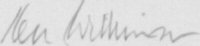
Wilkinson, Ken | | Flying Officer Ken Wilkinson (deceased) |
Battle of Britain pilot flying Hurricanes, he flew Spitfires with 611 Sqn and then 616 Sqn at Kirton-in-Lindsey and 19 Sqn at Fowlmere during 1940 and after a spell instructing returned to operations on Spitfires, with 234 and 165 Squadrons. After spending time with 53, 24 and 10 Operational Training Units, he left the RAF in November 1945 and served in the RAFVR.
Ken said :
From 1st September 1939 I wrote myself off. I thought, 'you've got no chance' lasting through whatev |
|
Swanwick, George | | Wing Commander George W Swanwick (deceased) |
| George Swanwick was born on 10th November 1915 and was an air-gunner on Wallaces and Hinds with 504 squadron at RAF Hucknall during the 1930s. In May 1936, 504 became part of the Auxiliary Air Force, and in October 1938 converted to a fighter unit, equipped with Gauntlets. In 1938 George re-trained as a pilot, and was promoted to Sergeant Pilot in August 1939. In May 1940 George Swanwick joined 7 BGS, and on 7th September was posted to 54 Squadron at Catterick flying Spitfires. He then went |
|
Hancock, Norman | | Squadron Leader Norman Hancock DFC (deceased) |
| Sqn Ldr Norman Hancock - Battle of Britian pilot who flew Spitfires with 65 and 152 Squadrons. He recieved the DFC on the 23rd of June 1944. Sadly, Norman Hancock passed away on the 8th of December 2010.
|
|
Jones, Richard L | | Flight Lieutenant Richard L Jones (deceased) |
| Richard Jones was born in 1918 and in July 1940 Richard Jones was posted to 64 Squadron at Kenley, flying Spitfires. He was involved in heavy fighting over the Channel during the Battle of Britain, with the squadron suffering many losses during July and August. Towards the end of the Battle of Britain, in October, he moved to 19 Squadron flying Spitfires from Fowlmere, and was heavily involved in the fighter sweeps taking place at that time. Near the end of the Battle of Britain, Pilot Office |
|
Wellum, Geoffrey | | Squadron Leader Geoffrey Wellum DFC (deceased) |
| Joined the RAF with a Short Service Commission in August 1939. He joined 92 Squadron flying Spitfires in June 1940 at the time of Dunkirk. He flew throughout the Battle of Britain, later completing over 50 fighter sweeps and escorts over northern France and Belgium until August 1941. He then joined 65 Squadron as Flight Commander in March 1942 operating over northern France and flew off aircraft carrier HMS Furious on Operation Pedestal, to Malta. Geoff was a Flight Lieutenant during Operati |
|
Pickering, Tony | | Tony Pickering AFC (deceased) |
| With the RAFVR just before the war commenced, Tony Pickering joined 32 Squadron at Biggin Hill in July 1940, flying Hurricanes, and in August 1940 to 501 Squadron at Gravesend. In September he was shot down in Hurricane P5200, but unhurt in a duel with an Me109, destroying another 109 a few weeks later. In December he joined 601 Squadron at Northolt. After a spell instructing, he joined 131 as a Flight Commander in February 1943, and later served as a Squadron Commander in the Middle East. T |
|
Elkington, John | | Wing Commander John Elkington (deceased) |
| John (Tim) Elkington was born in 1920 and joined the RAF in September 1939. Commissioned as a Pilot Officer in July 1940 he was immediately posted to join 1 Squadron flying Hurricanes atTangmere. On 15 August he shot down an Me109 over the Channel, but the following day he was himself shot down over Thorney Island. He baled out injured and was admitted to hospital, his Hurricane crashing at Chidham. He died on 1st February 2019. |
|
Duckenfield, Byron | | Group Captain Byron Duckenfield AFC (deceased) |
| Byron Duckenfield started at Flying Training School on 25th November 1935 in a Blackburn B2 at Brough. As a Sergeant, he joined No.32 Sqn at Biggin Hill on 8th August 1936 and flew Gauntlets and Hurricanes. He joined 74 Squadron at Hornchurch on 11th April 1940, flying Spitfires, and on 5th May was posted to 501 Squadron flying Hurricanes at Tangmere. On the 11th of May at Betheniville, he survived a crash in a passenger transport Bombay aircraft in an aircraft in which he was a passenger, Whil |
|
Millard, Jocelyn G P | | Squadron Leader Jocelyn G P Millard (deceased) |
| Volunteering for the RAFVR in August 1939, J G Millard was called up for full time service the following month. Converting to Hurricanes, he was posted to 1 Squadron at Wittering in October 1940, and shortly after transferred to Dougla Baders 242 Squadron at Coltishall. In November he moved to 615 Squadron at Northolt. After the Battle of Britain he spent time as an instructor, going to Canada. He later became Squadron Commander of 35 SFTS. Sadly, Jocelyn Millard passed away on the 10th of |
|
Appleford, Alexander N R L | | Flight Lieutenant Alexander N R L Appleford (deceased) |
| Born in September 1921, Robin Appleford was one of the youngest pilots to take part in the Battle of Britain. He joined 66 Squadron at Duxford on 13th May 1940, flying Spitfires. He was shot down over the Thames Estuary during a dogfight on 4th September 1940, but baled out slightly wounded. After a spell as an instructor, in 1943 he flew another combat tour, this time with 274 Squadron, flying Hurricanes on coastal defence in North Africa. After a spell with the Aircraft Delivery Unit, he w |
|
Gregory, Albert E | | Flight Lieutenant Albert E Gregory DFC (deceased) |
| Albert Gregory was born in Derby on 9th May 1917. Gregory joined the Royal Air Force Volunteer Reserve in April 1939 as an Airman u/t Wop/Air Gunner. Called up on 1st September and posted to Aldegrove in October to commence Air Gunnery training in December 1939, Albert joined 141 Squadron at Grangemouth as an Air Gunner flying in Blenheims before the squadron converted to Defiants. He could not fly in the Defiant because he was too tall for the turret, so transferred to 219 squadron based at |
|
Nicholls, Doug | | Squadron Leader Doug Nicholls DFC (deceased) |
| A pre-war RAFVR pilot, in June 1940 Nicholls converted to Hurricanes at 7 OTU, Hawarden. Nicholls flew during the Battle of Britain with 85 and 242 and in September joined 151 Squadron.at Digby On September 30, 1940, he shared in the destruction of a Ju 88 and returned to Digby with his Hurricane P 5182 severely damaged by return fire. Nicholls spent only a brief time with 242 but Bader made a considerable impression. After a hard day Nicholls remembers Bader taking off his legs and dressing t |
|
Gray, Trevor | | Flight Lieutenant Trevor Gray (deceased) |
| Trevor Gray joined the RAFVR in 1939 and was called for service on the outbreak of war. As he was only partially trained, he completed his flying training and after being awarded his wings was posted to 7 OTU at Hawarden After training Trevor Gray was commissioned as a Pilot Officer in August 1940. Converted onto Spitfires, and with the Battle of Britain at its Climax, he was urgently posted to join 64 Squadron at Leconfield, arriving on 16th September 1940. The Squadron had re-equipped from B |
|
Mackenzie, Ken | | Wng Cmdr Ken Mackenzie (deceased) |
| Ken Mackenzie flew 2 ops on Hurricanes with No.43 Sqn before joining No.501 Sqn based at Kenley during the Battle of Britain, again on Hurricanes. During his time with No.501 Sqn, he claimed 7 victories, with a further 4 shared and 3 damaged. In the most remarkable of these, Ken was following what he thought was a damaged Me109 down to sea level. Realising the aircraft was not damaged, he deliberately struck the tailplane of the enemy aircraft with the wing of his Hurricane (V6799), forcing h |
|
Lawrence, Keith | | Squadron Leader Keith Lawrence DFC (deceased) |
| Keith Lawrence was born in New Zealand at Waitara on November 25th 1919. After attending Southland Boys High School at Invercargill, Lawrence went to work in a local bank in December 1936. In November 1938 he applied to join the RAF and was accepted for pilot training in Britain and sailed in February 1939. In November 1939 Keith Lawrence completed his flying training and joined the newly-formed 234 Squadron, which flew Spitfires throughout the Battle of Britain. Whilst based at St Eval in Corn |
|
Chamberlin, Joseph | | Flight Lieutenant Joseph P R Chamberlin |
| Joining the RAFVR in June 1939 he was then called up at the Outbreak of war. He flew Blenheim's with No.235 Sqn during the Battle of Britain On the 14th February 1941 when returning from a dusk patrol over the North Sea. Having to divert to Langham airfield prepared to land The airfield's lights went out and the Blenheim hit a tree. The navigator, P/O ER Phillips, was killed and the air gunner Sgt. Burns slightly injured. Chamberlain himself was seriously injured and spent eight months |
|
Heimes, Leopold | | Sergeant Leopold Heimes (deceased) |
| Already in the Belgian Air Force, he moved to 235 Sqn Coastal Command as an Air Gunner on Blenheims during the Battle of Britain before becoming a pilot, flying Spitfires and Catalinas with 350 Sqn before converting to 76 Sqn on Dakotas in India. Heimes stayed in the RAF until September 1951 having been gazetted as a Master Pilot. Sadly, Leopold Heimes died in 2009. |
|
Kings, Robert | | Squadron Leader Robert Kings (deceased) |
| Robert Austin Kings was born on 22nd October 1914 and joined the RAFVR about July 1938 as an Airman u/t Pilot and began training at 29 E&RFTS at Luton. Called up on 1st September 1939, he was posted to 3 ITW Hastings on 13th December and moved on to 14 FTS Kinloss on 12th March 1940 and finished the course on 2nd August. Kings went to 6 OTU Sutton Bridge on 7th August and after converting to Hurricanes was posted to 238 Squadron at St. Eval on the 31st. He damaged a He111 on 25th September and |
|
Green, Bill | | Flight Lieutenant Bill Green (deceased) |
| In December 1936, Bill Green joined the Auxiliary Air Force as an aero engine fitter with 501 Squadron at Filton, near Bristol. Shortly before the start of the Second World War, he was given a rare chance for an engine fitter. In 1938 he joined a scheme to recruit NCO pilots, qualifying as a Flight Sergeant and re-joined 501 at Bristol in July 1940. Sgt Bill Green had completed just 10 hours of dual flying - with an instructor. In October, he was sent for further flying instruction and on O |
|
Bent, Benjamin | | Flight Lieutenant Benjamin Bent (deceased) |
| Having joined the RAF in 1937, he flew with No.25 Sqn as a Radar and Wireless Operator on Blenheims on night fighter duties throughout the Battle of Britain, assisting in five successful interceptions on his first tour, all with S/Ldr. HP Pleasance. On the night of 4th-5th May 1941 they intercepted and damaged an unidentified enemy aircraft, on the 7-8th and 8-9th two Do17s were destroyed, on the 11th-12th an He111 was damaged and during the night of 13th-14th June a Ju88 was destroyed. Bent re |
|
Brown, Maurice Peter | | Squadron Leader Maurice Peter Brown (deceased) |
| Maurice Peter Brown (known as Peter) was born in London on 17th June 1919. On leaving school he qualified for entry in the civil service with an appointment in the Air Ministry. But in April 1938 he left to join the Royal Air Force with a short service commission. In September 1939 he was posted to 611 West Lancashire Squadron with Spitfires in 12 Group, initially at Duxford and then Digby. His initiation into battle was over Dunkirk. He was at readiness throughout the Battle of Britain, in |
|
Burns, Owen V | | Flight Lieutenant Owen V Burns (deceased) |
| Flight Lieutenant Owen V Burns was born in Birkenhead on 20th November 1915. He flew throughout the Battle of Britain. His Squadron, 235, based at Bircham Newton in Norfolk, was equipped with Mark IV Bristol Blenheims, which had four guns under the nose and two in the mid-upper turret, which he operated. The squadron was attached to Fighter Command to replace its losses in the Battle for France, but because Blenheims lacked the speed of single-engined fighters, squadron duties were mainly aerodr |
|
Lucas, Robin M M D | | Flight Lieutenant Robin M M D Lucas |
| Flight Lt Robin Lucas flew with 141 Squadron flying Boulton-Paul Defiants on night missions and flew Defiants during the Battle of Britain. He died in September 2011. |
|
Pinfold, Herbert M | | Group Captain Herbert M Pinfold (deceased) |
| Group Captain Herbert Moreton Pinfold, Battle of Britian pilot with 56 Squadron flying Hurricanes, he also flew with 6, 64, 502 and 603 Squadrons. Sadly, Herbert Pinfold passed away on 19th October 2009. Group Captain Herbert Moreton Pinfold was born 5th February 1913 and joined the Royal Air Force in August 1934 at the age of 21. In September Herbert Pinfold was posted to 5 FTS, Sealand and with training completed, on the 5th of September he was sent to join 6 Squadron at Ismailia, Egypt. |
|
Lusty, Kenneth R | | Squadron Leader Kenneth R Lusty (deceased) |
| Kenneth Lusty joined the RAF as an Airman u/t Air Gunner on 4th September 1939. After call-up, he did his basic training at Padgate and then went to RAF Aldergrove on 30th December for a gunnery course. On 24th February 1940 Lusty joined 235 Squadron. As a Coastal Command Squadron, the need for WOp/AGs in the crews meant that Lusty was posted away on 14th May to 25 Squadron at North Weald. He served with the squadron throughout the Battle of Britain first flying Blenheims and then Beaufighters. |
|
Haine, Richard | | Group Captain Richard Haine OBE DFC (deceased) |
| Richard Dickie Haine was born in St Stephens in October 1916. In 1936, he qualified as an RAF pilot, and flew the Hawker Fury with No.25 Sqn, which re-equipped with Bristol Blenheims prior to the outbreak of war. In February 1940, he transferred to No.600 Sqn. Shortly afterwards, he piloted one of six Blenheims tasked with attacking an airfield where Ju52 transport aircraft and their cargo of paratroops were reported to be landing during the Blitzkrieg on Holland. During this action he was s |
|
Brown, Bernard W | | Flight Lieutenant Bernard W Brown (deceased) |
| Flight Lieutenant Bernard Walter Brown was accepted for a short service commission in 1938, and after being accepted arrived in England in September, training at 5 E&RFTS, Hanworth and in late January 1939 he was posted to 5FTS, Sealand. He then went to No 1 School of Army Co-Operation at Old Sarum for a course on Lysanders in August 1939, and soon after joined 613 Squadron. Bernard Walker Brown was flying one of six Hectors detailed to dive-bomb gun emplacements near Calais. On the way to the |
|
Duff, Stanley S | | Squadron Leader Stanley S Duff |
| Flew Blenheims with 23 Squadron. |
|
Edmunds, Eric R | | Flight Lieutenant Eric R Edmunds |
| Flew Hurricanes with No.245 Sqn. |
|
Frizell, Charles G | | Squadron Leader Charles G Frizell |
| Squadron Leader Charles George Frizell flew with RAF Squadron No. 257. His Hurricane fighter was shot down on Aug. 15, 1940, but Frizell bailed out of the burning aircraft and landed safely. Subsequently he fought in Africa and flew long-range shipping patrols from Gibraltar. He lives today in Tsawwassen, Canada. |
|
Keatings, John | | Flight Sergeant John Keatings |
| Flew Blenheims with No.234 Squadron |
|
Kellow, Raymond E | | Squadron Leaader Raymond E Kellow |
| Squadron Leader Raymond Alan Kellow, 213 Squadron, Cambridgeshire, Hurricanes |
|
Nutter, Reginald C | | Flight Lieutenant Reginald C Nutter |
| 257 Squadron, Canada, Hurricanes. |
|
Summers, Richard G B | | Wing Commander Richard G B Summers (deceased) |
| Richard G B Summers was a navigator on Blenheims with 219 squadron at the age of 18. He fought throughout the Battle of Britain and after the cmapaign served in West Africa and Gibraltar. After the war he served on V-Bombers and received an OBE for gallant and distinguished service during the Mau Mau emergency in Kenya during the 1950s. Richard Gordon Battensby Summers was born on 18th October 1921 in Beverley, East Yorkshire and was educated at Ermysteds Grammar School at Skipton. In April 1 |
|
Thomson, Thomas R | | Wing Commander Thomas R Thomson (deceased) |
| Battle of Britain Pilot, who flew with 213, 607 and 615 Squadrons during the Battle of Britain. Sadly, he died on 31st March 2008. |
|
Wainwright, Michael Terry | | Squadron Leader Michael Terry Wainwright (deceased) |
| Squadron Leader Michael Terry Wainwright joined 64 Squadron RAF flying Spitfires and in May 1940 during the Battle of Birtain destroyed an Me109. On the 25th of July his section destroyed a Messershmitt Bf109 fighter encountered off the south coast. He went on to become a flight instructor at the Central Flying School at RAF Upavon, Wiltshire, and later flew Douglas Dakotas. Sqd Ldr Michael Terry Wainwright retired form the Royal Air Force in March 1958, but continued his flying as an instruc |
|
Beake, Percival H | | Squadron Leader Percival H. Beake DFC (deceased) |
| Joining the RAFVR in April 1939, Percival Beake was mobilised at the outbreak of war. Posted to 64 Squadron on Spitfires in the summer of 1940 at the height of the Battle of Britain, he flew with them until June 1941 when he was posted first to 92 Squadron at Biggin Hill, and then 601 Squadron at Duxford. After a spell instructing he returned for his second tour in December 1942, joining 193 Squadron as a Flight Commander. In May 1944 he took command of 164 Squadron at Thorney Island flying T |
|
Iveson, Tony | | Squadron Leader Tony Iveson DFC (deceased) |
| Tony Iveson fought in the Battle of Britain with RAF Fighter Command, as a Sergeant pilot, joining 616 Squadron at Kenley flying Spitfires on 2 September 1940. On the 16th of September, he was forced to ditch into the sea after running out of fuel following a pursuit of a Ju88 bomber. His Spitfire L1036 ditched 20 miles off Cromer in Norfolk, and he was picked up by an MTB. He joined No.92 Sqn the following month. Commissioned in 1942, Tony undertook his second tour transferring to RAF Bomber |
|
Hairs, Peter | | Flight Lieutenant Peter Hairs MBE (deceased) |
| Peter Hairs joined the RAFVR in 1937, and was called up at the outbreak of war in September 1939 to complete his training. After being commissioned he converted to Hurricanes, joining 501 Squadron at Tangmere in January 1940. He went to France with the squadron in May, claiming a share in a Dornier Do17 a few days after arriving. 501 covered the evacuation of the BEF from Cherbourg before re-assembling in England. On the 3 June he was shot down, but fortunately not seriously hurt and two days la |
|
Doe, Bob | | Wing Commander Bob Doe, DSO, DFC* (deceased) |
| In 1939 he joined the R.A.F. and upon completion of his training was posted to 234 squadron. During the Battle of Britain he achieved great success. He was one of the very few pilots to successfully fly both Hurricanes and Spitfires and was one of the top scorers of the Battle with 14 and two shared victories. He was awarded the DFC in October and a BAR in November. He joined 66 squadron as a Flight Commander then moving to 130 squadron in August 1943 saw him in 613 squadron flying Mustangs. Oct |
|
Brothers, Peter | | Air Commodore Peter Brothers CBE, DSO, DFC* (deceased) |
| Learnt to fly at the age of 16 and joined the RAF two years later in 1936. He first saw action in 1940 when as a Flight Commander in 32 Squadron, based at Biggin Hill, he flew his Hurricane against the fighters and bombers of the Luftwaffe. He recalls this as an intensely busy period, during which he shot down an Me109 - his first enemy aircraft; by the end of August that same year his tally of enemy aircraft shot down increased to eight. Awarded the DFC, he was transferred to 257 Squadron wh |
|
Dunning-White, Peter | | Wing Commander Peter Dunning-White DFC (deceased) |
| Joining 601 Squadron in 1938, Peter Dunning-White was called up to full-time service in August 1939, being posted to 29 Squadron in May 1940, then a few weeks later to 145 Squadron at Westhampnett, flying Hurricanes. He was soon in action over the Channel, sharing in the destruction of an HeIll on 18 July. Transferring to 615 Squadron in March 1941, on 15 April his victory over an Me109 confirmed him as an Ace. In 1942 he was attached to 409 Squadron RCAF, and then to 255 Squadron on Beaufighter |
|
Drake, Billy | | Group Captain Billy Drake DSO DFC* (deceased) |
| Joined the R.A.F. in 1936. His first posting was to 1 squadron flying Furies then Hurricanes and first saw action over France in the Spring of 1940 and was awarded his first DFC by the end of the year. As a Squadron Leader he was sent to West Africa to command 128 Squadron. 1942 saw his commanding 112 squadron in North Africa, in July saw an immediate BAR to his DFC and in December an immediate DSO. Posted to Malta as Wing Commander he won a US DFC in 1943. Back in the UK he now was flying Typho |
|
Croskell, Michael E | | Flight Lieutenant Michael E Croskell (deceased) |
| Joining the RAFVR in June 1938, Michael Croskell was called up in September 1939 at the outbreak of war. He was posted to join 213 Squadron at Wittering in December flying Hurricanes, and took part in the Battle of France and the operations over Dunkirk in May 1940, where he probably destroyed a Ju87. He flew with 213 Squadron throughout the Battle of Britain, scoring three further victories at the height of the battle in August 1940. Commissioned in 1942, his great fighter skills led to him |
|
Ellacombe, John | | Air Commodore John Ellacombe CB DFC* (deceased) |
| John Ellacombe joined the RAF in 1939 and was posted to 151 Squadron in July 1940, immediately converting to Hurricanes. On 24th August he shot down a He111, but a week later his Hurricane was blown up in combat and he baled out, with burns. Rejoining his squadron a few months later, in February 1941 was posted to 253 Squadron where he took part in the Dieppe operations. On 28th July, flying a Turbinlite Havoc, he probably destroyed a Do217. Converting to Mosquitos, John was posted to 487 Sq |
|
Kane, Terence | | Wing Commander Terence Kane (deceased) |
| Terence Michael Kane was born in London on September 9th 1920 and educated at Varndean School in Brighton. He joined the RAF on a short service commission on July 25th 1938, During his flying training he was injured in an Audax crash and admitted to hospital, however he was able to complete his training and was posted to CFS, Upavon, for an instructor's course, after which he joined the staff at 14 FTS, Kinloss and later Cranfield. He went to 7 OTU, Hawarden in July 1940, converted to Spit |
|
Corbin, William J | | Flight Lieutenant William J. Corbin DFC (deceased) |
| Already a member of the RAFVR, William Corbin was called up for active duty in September 1939. Following training and conversion to Spitfires, in September 1940 he was posted as a Sergeant Pilot to join 66 Squadron at Coltishall. With the exception of a few weeks spent with 610 Squadron he remained with 66 Squadron until September 1941. Commissioned in June 1942, he returned to combat flying in September, joining 72 Squadron with whom he went to North Africa. Here he shared in a probable Me1 |
|
Foster, Bob | | Wing Commander Bob Foster DFC (deceased) |
| Wing Commander Bob Foster, who has died aged 94, flew Hurricane fighters during the Battle of Britain, when he was credited with destroying and damaging a number of enemy aircraft; later in the war he destroyed at least five Japanese aircraft while flying from airfields in northern Australia. For much of the Battle of Britain, Foster was serving with No 605 Squadron in Scotland; but in September, 605 moved to Croydon to join the main action over the south-east of England. It was soon heavily en |
|
Rose, Jack | | Wing Commander Jack Rose CMG MBE DFC (deceased) |
| Jack Rose was born on January 18 1917 at Blackheath, London, and was educated at Shooters Hill School before studying Science at University College London where he represented the university at rugby. He joined the RAF Volunteer Reserve in October 1938, completing his training as a fighter pilot just before the outbreak of war. With the British Expeditionary force under constant air attack, fighter reinforcements were requested and Jack Rose flew one of the Hurricanes sent to Merville to reinfo |
|
+ Artist : Robert Taylor | | SOLD
OUT | NOT
AVAILABLE | | | Limited edition of 30 artist proofs. | Paper size 20 inches x 14 inches (51cm x 36cm) |
Morgan, Tom Dalton | | Group Captain Tom Dalton Morgan DSO, DFC*, OBE (deceased) |
| Tom Dalton-Morgan was born on March 23rd 1917 at Cardiff and educated at Taunton School. He was a descendant of the buccaneer Sir Henry Morgan and the Cromwellian General Sir Thomas Morgan, Thomas Frederick Dalton-Morgan. Tom Dalton-Morgan joined the RAF in 1935, serving with 22 Squadron. Flying the Wildebeeste torpedo bomber, he joined the training staff at the Air Ministry. In April 1940 he applied to return to flying, and was appointed to No.43 Squadron. In June 1940 he was posted to Tang |
|

Johnson, Johnnie | | Air Vice Marshal Johnnie Johnson CB, CBE, DSO**, DFC* (deceased) |
| James Edgar Johnson was born in Barrow on Soar near Loughborough on 9th March 1915. He lived in Melton, the first house on the left of Welby Lane as you leave Nottingham Road, with his parents - his father being a local Police Inspector. Johnnie qualified as a Civil Engineer at Nottingham University in 1937. He joined the RAFVR and did his flying training at 21 E&RFTS, Stapleford before enlisting for full-time service in the RAF at the beginning of WWII. He first went to ITW at Jesus College |
|
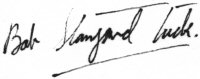
Stanford-Tuck, Bob | | Wing Commander Bob Stanford Tuck DSO DFC** (deceased) |
| Bob Stanford Tuck was a flamboyant fighter pilot, his dashing good looks, courage, and success in the air coming to epitomise the young flyers who fought and won the Battle of Britain. To the British public he was a hero in the mould of the knights of old, and today his name is legend. In the early stages of the Battle of Britain Bob fought with 92 Squadron flying Spitfires, quickly becoming one of the leading aces. Promoted to command 257 Squadron, now flying Hurricanes, Bobs dashing style o |
|
Neil, Tom | | Wing Commander Tom Neil DFC* AFC (deceased) |
| Tom Neil was born on 14th July 1920 in Bootle, Lancashire. Tom Neil (also to become known in the RAF as 'Ginger') joined the RAFVR in October 1938 and began his flying training at 17 E and RFTS, Barton, Manchester. Tom Neil was called up on the 2nd os September 1939 being sent to 4 ITW, Bexhill in early November. On 1st December 1939, he was posted to 8 FTS and on completion of the course he was commissioned and posted to 249 Squadron in May 1940 flying Hurricanes just before the star |
|
Page, Geoffrey | | Wing Commander Geoffrey Page DSO OBE DFC (deceased) |
| Geoffrey Page was born in Boxmoor on 16th May 1920. Geoffrey Page developed an early interest in aviation, which is not surprising as he had an uncle who flew during the Great War and another uncle was Sir Frederick Handley Page, the great aircraft manufacturer. Page went to Dean Close School in Cheltenham, Glouscestershire, and later went to the Imperial College to study engineering. It was at college he joined the University Air Squadron at Northolt. Two weeks after the outbreak of the Se |
|
Wilkinson, Ken | | Flying Officer Ken Wilkinson (deceased) |
Battle of Britain pilot flying Hurricanes, he flew Spitfires with 611 Sqn and then 616 Sqn at Kirton-in-Lindsey and 19 Sqn at Fowlmere during 1940 and after a spell instructing returned to operations on Spitfires, with 234 and 165 Squadrons. After spending time with 53, 24 and 10 Operational Training Units, he left the RAF in November 1945 and served in the RAFVR.
Ken said :
From 1st September 1939 I wrote myself off. I thought, 'you've got no chance' lasting through whatev |
|
Swanwick, George | | Wing Commander George W Swanwick (deceased) |
| George Swanwick was born on 10th November 1915 and was an air-gunner on Wallaces and Hinds with 504 squadron at RAF Hucknall during the 1930s. In May 1936, 504 became part of the Auxiliary Air Force, and in October 1938 converted to a fighter unit, equipped with Gauntlets. In 1938 George re-trained as a pilot, and was promoted to Sergeant Pilot in August 1939. In May 1940 George Swanwick joined 7 BGS, and on 7th September was posted to 54 Squadron at Catterick flying Spitfires. He then went |
|
Hancock, Norman | | Squadron Leader Norman Hancock DFC (deceased) |
| Sqn Ldr Norman Hancock - Battle of Britian pilot who flew Spitfires with 65 and 152 Squadrons. He recieved the DFC on the 23rd of June 1944. Sadly, Norman Hancock passed away on the 8th of December 2010.
|
|
Jones, Richard L | | Flight Lieutenant Richard L Jones (deceased) |
| Richard Jones was born in 1918 and in July 1940 Richard Jones was posted to 64 Squadron at Kenley, flying Spitfires. He was involved in heavy fighting over the Channel during the Battle of Britain, with the squadron suffering many losses during July and August. Towards the end of the Battle of Britain, in October, he moved to 19 Squadron flying Spitfires from Fowlmere, and was heavily involved in the fighter sweeps taking place at that time. Near the end of the Battle of Britain, Pilot Office |
|
Wellum, Geoffrey | | Squadron Leader Geoffrey Wellum DFC (deceased) |
| Joined the RAF with a Short Service Commission in August 1939. He joined 92 Squadron flying Spitfires in June 1940 at the time of Dunkirk. He flew throughout the Battle of Britain, later completing over 50 fighter sweeps and escorts over northern France and Belgium until August 1941. He then joined 65 Squadron as Flight Commander in March 1942 operating over northern France and flew off aircraft carrier HMS Furious on Operation Pedestal, to Malta. Geoff was a Flight Lieutenant during Operati |
|
Pickering, Tony | | Tony Pickering AFC (deceased) |
| With the RAFVR just before the war commenced, Tony Pickering joined 32 Squadron at Biggin Hill in July 1940, flying Hurricanes, and in August 1940 to 501 Squadron at Gravesend. In September he was shot down in Hurricane P5200, but unhurt in a duel with an Me109, destroying another 109 a few weeks later. In December he joined 601 Squadron at Northolt. After a spell instructing, he joined 131 as a Flight Commander in February 1943, and later served as a Squadron Commander in the Middle East. T |
|
Elkington, John | | Wing Commander John Elkington (deceased) |
| John (Tim) Elkington was born in 1920 and joined the RAF in September 1939. Commissioned as a Pilot Officer in July 1940 he was immediately posted to join 1 Squadron flying Hurricanes atTangmere. On 15 August he shot down an Me109 over the Channel, but the following day he was himself shot down over Thorney Island. He baled out injured and was admitted to hospital, his Hurricane crashing at Chidham. He died on 1st February 2019. |
|
Duckenfield, Byron | | Group Captain Byron Duckenfield AFC (deceased) |
| Byron Duckenfield started at Flying Training School on 25th November 1935 in a Blackburn B2 at Brough. As a Sergeant, he joined No.32 Sqn at Biggin Hill on 8th August 1936 and flew Gauntlets and Hurricanes. He joined 74 Squadron at Hornchurch on 11th April 1940, flying Spitfires, and on 5th May was posted to 501 Squadron flying Hurricanes at Tangmere. On the 11th of May at Betheniville, he survived a crash in a passenger transport Bombay aircraft in an aircraft in which he was a passenger, Whil |
|
Millard, Jocelyn G P | | Squadron Leader Jocelyn G P Millard (deceased) |
| Volunteering for the RAFVR in August 1939, J G Millard was called up for full time service the following month. Converting to Hurricanes, he was posted to 1 Squadron at Wittering in October 1940, and shortly after transferred to Dougla Baders 242 Squadron at Coltishall. In November he moved to 615 Squadron at Northolt. After the Battle of Britain he spent time as an instructor, going to Canada. He later became Squadron Commander of 35 SFTS. Sadly, Jocelyn Millard passed away on the 10th of |
|
Appleford, Alexander N R L | | Flight Lieutenant Alexander N R L Appleford (deceased) |
| Born in September 1921, Robin Appleford was one of the youngest pilots to take part in the Battle of Britain. He joined 66 Squadron at Duxford on 13th May 1940, flying Spitfires. He was shot down over the Thames Estuary during a dogfight on 4th September 1940, but baled out slightly wounded. After a spell as an instructor, in 1943 he flew another combat tour, this time with 274 Squadron, flying Hurricanes on coastal defence in North Africa. After a spell with the Aircraft Delivery Unit, he w |
|
Gregory, Albert E | | Flight Lieutenant Albert E Gregory DFC (deceased) |
| Albert Gregory was born in Derby on 9th May 1917. Gregory joined the Royal Air Force Volunteer Reserve in April 1939 as an Airman u/t Wop/Air Gunner. Called up on 1st September and posted to Aldegrove in October to commence Air Gunnery training in December 1939, Albert joined 141 Squadron at Grangemouth as an Air Gunner flying in Blenheims before the squadron converted to Defiants. He could not fly in the Defiant because he was too tall for the turret, so transferred to 219 squadron based at |
|
Nicholls, Doug | | Squadron Leader Doug Nicholls DFC (deceased) |
| A pre-war RAFVR pilot, in June 1940 Nicholls converted to Hurricanes at 7 OTU, Hawarden. Nicholls flew during the Battle of Britain with 85 and 242 and in September joined 151 Squadron.at Digby On September 30, 1940, he shared in the destruction of a Ju 88 and returned to Digby with his Hurricane P 5182 severely damaged by return fire. Nicholls spent only a brief time with 242 but Bader made a considerable impression. After a hard day Nicholls remembers Bader taking off his legs and dressing t |
|
Gray, Trevor | | Flight Lieutenant Trevor Gray (deceased) |
| Trevor Gray joined the RAFVR in 1939 and was called for service on the outbreak of war. As he was only partially trained, he completed his flying training and after being awarded his wings was posted to 7 OTU at Hawarden After training Trevor Gray was commissioned as a Pilot Officer in August 1940. Converted onto Spitfires, and with the Battle of Britain at its Climax, he was urgently posted to join 64 Squadron at Leconfield, arriving on 16th September 1940. The Squadron had re-equipped from B |
|
Mackenzie, Ken | | Wng Cmdr Ken Mackenzie (deceased) |
| Ken Mackenzie flew 2 ops on Hurricanes with No.43 Sqn before joining No.501 Sqn based at Kenley during the Battle of Britain, again on Hurricanes. During his time with No.501 Sqn, he claimed 7 victories, with a further 4 shared and 3 damaged. In the most remarkable of these, Ken was following what he thought was a damaged Me109 down to sea level. Realising the aircraft was not damaged, he deliberately struck the tailplane of the enemy aircraft with the wing of his Hurricane (V6799), forcing h |
|
Carey, Frank | | Group Captain Frank Carey (deceased) |
| Born 7th May 1912. Frank Carey joined the Royal Air Force n 1927 as a 15 year old apprentice. Carey was first employed as a ground crew fitter and metal rigger but in 1935 Frank carey was selected in 1935 for a pilots course. He was then posted as a sergeant pilot to No 43 Squadron, the Fighting Cocks, whose aircraft he had been servicing. Demonstrating exceptional panache in the Hawker Fury biplane fighter, Carey was selected for the squadrons renowned aerobatics team which took part in many |
|
Lawrence, Keith | | Squadron Leader Keith Lawrence DFC (deceased) |
| Keith Lawrence was born in New Zealand at Waitara on November 25th 1919. After attending Southland Boys High School at Invercargill, Lawrence went to work in a local bank in December 1936. In November 1938 he applied to join the RAF and was accepted for pilot training in Britain and sailed in February 1939. In November 1939 Keith Lawrence completed his flying training and joined the newly-formed 234 Squadron, which flew Spitfires throughout the Battle of Britain. Whilst based at St Eval in Corn |
|
Chamberlin, Joseph | | Flight Lieutenant Joseph P R Chamberlin |
| Joining the RAFVR in June 1939 he was then called up at the Outbreak of war. He flew Blenheim's with No.235 Sqn during the Battle of Britain On the 14th February 1941 when returning from a dusk patrol over the North Sea. Having to divert to Langham airfield prepared to land The airfield's lights went out and the Blenheim hit a tree. The navigator, P/O ER Phillips, was killed and the air gunner Sgt. Burns slightly injured. Chamberlain himself was seriously injured and spent eight months |
|
Heimes, Leopold | | Sergeant Leopold Heimes (deceased) |
| Already in the Belgian Air Force, he moved to 235 Sqn Coastal Command as an Air Gunner on Blenheims during the Battle of Britain before becoming a pilot, flying Spitfires and Catalinas with 350 Sqn before converting to 76 Sqn on Dakotas in India. Heimes stayed in the RAF until September 1951 having been gazetted as a Master Pilot. Sadly, Leopold Heimes died in 2009. |
|
Kings, Robert | | Squadron Leader Robert Kings (deceased) |
| Robert Austin Kings was born on 22nd October 1914 and joined the RAFVR about July 1938 as an Airman u/t Pilot and began training at 29 E&RFTS at Luton. Called up on 1st September 1939, he was posted to 3 ITW Hastings on 13th December and moved on to 14 FTS Kinloss on 12th March 1940 and finished the course on 2nd August. Kings went to 6 OTU Sutton Bridge on 7th August and after converting to Hurricanes was posted to 238 Squadron at St. Eval on the 31st. He damaged a He111 on 25th September and |
|
Deere, Alan | | Air Commodore Alan Deere DSO DFC* (deceased) |
| Top scoring New Zealand Ace with 22 victories, Deere was born in Auckland on December 12th 1917. Alan Deere would become one of the RAFs finest pilots. Joining the RAF in 1937, in September 1938 Al Deere was posted to No.54 Sqn at the time flying Gloster Gladiators, then in early 1940 the Squadron converted to Spitfires. His first brush with death happened when his oxygen failed while at altitude and ke blacked out, coming to only in time to pull his aircraft out of a dive and certain death. |
|
Green, Bill | | Flight Lieutenant Bill Green (deceased) |
| In December 1936, Bill Green joined the Auxiliary Air Force as an aero engine fitter with 501 Squadron at Filton, near Bristol. Shortly before the start of the Second World War, he was given a rare chance for an engine fitter. In 1938 he joined a scheme to recruit NCO pilots, qualifying as a Flight Sergeant and re-joined 501 at Bristol in July 1940. Sgt Bill Green had completed just 10 hours of dual flying - with an instructor. In October, he was sent for further flying instruction and on O |
|
Bent, Benjamin | | Flight Lieutenant Benjamin Bent (deceased) |
| Having joined the RAF in 1937, he flew with No.25 Sqn as a Radar and Wireless Operator on Blenheims on night fighter duties throughout the Battle of Britain, assisting in five successful interceptions on his first tour, all with S/Ldr. HP Pleasance. On the night of 4th-5th May 1941 they intercepted and damaged an unidentified enemy aircraft, on the 7-8th and 8-9th two Do17s were destroyed, on the 11th-12th an He111 was damaged and during the night of 13th-14th June a Ju88 was destroyed. Bent re |
|
Brown, Maurice Peter | | Squadron Leader Maurice Peter Brown (deceased) |
| Maurice Peter Brown (known as Peter) was born in London on 17th June 1919. On leaving school he qualified for entry in the civil service with an appointment in the Air Ministry. But in April 1938 he left to join the Royal Air Force with a short service commission. In September 1939 he was posted to 611 West Lancashire Squadron with Spitfires in 12 Group, initially at Duxford and then Digby. His initiation into battle was over Dunkirk. He was at readiness throughout the Battle of Britain, in |
|
Burns, Owen V | | Flight Lieutenant Owen V Burns (deceased) |
| Flight Lieutenant Owen V Burns was born in Birkenhead on 20th November 1915. He flew throughout the Battle of Britain. His Squadron, 235, based at Bircham Newton in Norfolk, was equipped with Mark IV Bristol Blenheims, which had four guns under the nose and two in the mid-upper turret, which he operated. The squadron was attached to Fighter Command to replace its losses in the Battle for France, but because Blenheims lacked the speed of single-engined fighters, squadron duties were mainly aerodr |
|
Lucas, Robin M M D | | Flight Lieutenant Robin M M D Lucas |
| Flight Lt Robin Lucas flew with 141 Squadron flying Boulton-Paul Defiants on night missions and flew Defiants during the Battle of Britain. He died in September 2011. |
|
Pinfold, Herbert M | | Group Captain Herbert M Pinfold (deceased) |
| Group Captain Herbert Moreton Pinfold, Battle of Britian pilot with 56 Squadron flying Hurricanes, he also flew with 6, 64, 502 and 603 Squadrons. Sadly, Herbert Pinfold passed away on 19th October 2009. Group Captain Herbert Moreton Pinfold was born 5th February 1913 and joined the Royal Air Force in August 1934 at the age of 21. In September Herbert Pinfold was posted to 5 FTS, Sealand and with training completed, on the 5th of September he was sent to join 6 Squadron at Ismailia, Egypt. |
|
Lusty, Kenneth R | | Squadron Leader Kenneth R Lusty (deceased) |
| Kenneth Lusty joined the RAF as an Airman u/t Air Gunner on 4th September 1939. After call-up, he did his basic training at Padgate and then went to RAF Aldergrove on 30th December for a gunnery course. On 24th February 1940 Lusty joined 235 Squadron. As a Coastal Command Squadron, the need for WOp/AGs in the crews meant that Lusty was posted away on 14th May to 25 Squadron at North Weald. He served with the squadron throughout the Battle of Britain first flying Blenheims and then Beaufighters. |
|
Haine, Richard | | Group Captain Richard Haine OBE DFC (deceased) |
| Richard Dickie Haine was born in St Stephens in October 1916. In 1936, he qualified as an RAF pilot, and flew the Hawker Fury with No.25 Sqn, which re-equipped with Bristol Blenheims prior to the outbreak of war. In February 1940, he transferred to No.600 Sqn. Shortly afterwards, he piloted one of six Blenheims tasked with attacking an airfield where Ju52 transport aircraft and their cargo of paratroops were reported to be landing during the Blitzkrieg on Holland. During this action he was s |
|
Brown, Bernard W | | Flight Lieutenant Bernard W Brown (deceased) |
| Flight Lieutenant Bernard Walter Brown was accepted for a short service commission in 1938, and after being accepted arrived in England in September, training at 5 E&RFTS, Hanworth and in late January 1939 he was posted to 5FTS, Sealand. He then went to No 1 School of Army Co-Operation at Old Sarum for a course on Lysanders in August 1939, and soon after joined 613 Squadron. Bernard Walker Brown was flying one of six Hectors detailed to dive-bomb gun emplacements near Calais. On the way to the |
|
Duff, Stanley S | | Squadron Leader Stanley S Duff |
| Flew Blenheims with 23 Squadron. |
|
Edmunds, Eric R | | Flight Lieutenant Eric R Edmunds |
| Flew Hurricanes with No.245 Sqn. |
|
Frizell, Charles G | | Squadron Leader Charles G Frizell |
| Squadron Leader Charles George Frizell flew with RAF Squadron No. 257. His Hurricane fighter was shot down on Aug. 15, 1940, but Frizell bailed out of the burning aircraft and landed safely. Subsequently he fought in Africa and flew long-range shipping patrols from Gibraltar. He lives today in Tsawwassen, Canada. |
|
Keatings, John | | Flight Sergeant John Keatings |
| Flew Blenheims with No.234 Squadron |
|
Kellow, Raymond E | | Squadron Leaader Raymond E Kellow |
| Squadron Leader Raymond Alan Kellow, 213 Squadron, Cambridgeshire, Hurricanes |
|
Nutter, Reginald C | | Flight Lieutenant Reginald C Nutter |
| 257 Squadron, Canada, Hurricanes. |
|
Summers, Richard G B | | Wing Commander Richard G B Summers (deceased) |
| Richard G B Summers was a navigator on Blenheims with 219 squadron at the age of 18. He fought throughout the Battle of Britain and after the cmapaign served in West Africa and Gibraltar. After the war he served on V-Bombers and received an OBE for gallant and distinguished service during the Mau Mau emergency in Kenya during the 1950s. Richard Gordon Battensby Summers was born on 18th October 1921 in Beverley, East Yorkshire and was educated at Ermysteds Grammar School at Skipton. In April 1 |
|
Thomson, Thomas R | | Wing Commander Thomas R Thomson (deceased) |
| Battle of Britain Pilot, who flew with 213, 607 and 615 Squadrons during the Battle of Britain. Sadly, he died on 31st March 2008. |
|
Wainwright, Michael Terry | | Squadron Leader Michael Terry Wainwright (deceased) |
| Squadron Leader Michael Terry Wainwright joined 64 Squadron RAF flying Spitfires and in May 1940 during the Battle of Birtain destroyed an Me109. On the 25th of July his section destroyed a Messershmitt Bf109 fighter encountered off the south coast. He went on to become a flight instructor at the Central Flying School at RAF Upavon, Wiltshire, and later flew Douglas Dakotas. Sqd Ldr Michael Terry Wainwright retired form the Royal Air Force in March 1958, but continued his flying as an instruc |
|
Beake, Percival H | | Squadron Leader Percival H. Beake DFC (deceased) |
| Joining the RAFVR in April 1939, Percival Beake was mobilised at the outbreak of war. Posted to 64 Squadron on Spitfires in the summer of 1940 at the height of the Battle of Britain, he flew with them until June 1941 when he was posted first to 92 Squadron at Biggin Hill, and then 601 Squadron at Duxford. After a spell instructing he returned for his second tour in December 1942, joining 193 Squadron as a Flight Commander. In May 1944 he took command of 164 Squadron at Thorney Island flying T |
|
Iveson, Tony | | Squadron Leader Tony Iveson DFC (deceased) |
| Tony Iveson fought in the Battle of Britain with RAF Fighter Command, as a Sergeant pilot, joining 616 Squadron at Kenley flying Spitfires on 2 September 1940. On the 16th of September, he was forced to ditch into the sea after running out of fuel following a pursuit of a Ju88 bomber. His Spitfire L1036 ditched 20 miles off Cromer in Norfolk, and he was picked up by an MTB. He joined No.92 Sqn the following month. Commissioned in 1942, Tony undertook his second tour transferring to RAF Bomber |
|
Hairs, Peter | | Flight Lieutenant Peter Hairs MBE (deceased) |
| Peter Hairs joined the RAFVR in 1937, and was called up at the outbreak of war in September 1939 to complete his training. After being commissioned he converted to Hurricanes, joining 501 Squadron at Tangmere in January 1940. He went to France with the squadron in May, claiming a share in a Dornier Do17 a few days after arriving. 501 covered the evacuation of the BEF from Cherbourg before re-assembling in England. On the 3 June he was shot down, but fortunately not seriously hurt and two days la |
|
Doe, Bob | | Wing Commander Bob Doe, DSO, DFC* (deceased) |
| In 1939 he joined the R.A.F. and upon completion of his training was posted to 234 squadron. During the Battle of Britain he achieved great success. He was one of the very few pilots to successfully fly both Hurricanes and Spitfires and was one of the top scorers of the Battle with 14 and two shared victories. He was awarded the DFC in October and a BAR in November. He joined 66 squadron as a Flight Commander then moving to 130 squadron in August 1943 saw him in 613 squadron flying Mustangs. Oct |
|
Brothers, Peter | | Air Commodore Peter Brothers CBE, DSO, DFC* (deceased) |
| Learnt to fly at the age of 16 and joined the RAF two years later in 1936. He first saw action in 1940 when as a Flight Commander in 32 Squadron, based at Biggin Hill, he flew his Hurricane against the fighters and bombers of the Luftwaffe. He recalls this as an intensely busy period, during which he shot down an Me109 - his first enemy aircraft; by the end of August that same year his tally of enemy aircraft shot down increased to eight. Awarded the DFC, he was transferred to 257 Squadron wh |
|
Dunning-White, Peter | | Wing Commander Peter Dunning-White DFC (deceased) |
| Joining 601 Squadron in 1938, Peter Dunning-White was called up to full-time service in August 1939, being posted to 29 Squadron in May 1940, then a few weeks later to 145 Squadron at Westhampnett, flying Hurricanes. He was soon in action over the Channel, sharing in the destruction of an HeIll on 18 July. Transferring to 615 Squadron in March 1941, on 15 April his victory over an Me109 confirmed him as an Ace. In 1942 he was attached to 409 Squadron RCAF, and then to 255 Squadron on Beaufighter |
|
Drake, Billy | | Group Captain Billy Drake DSO DFC* (deceased) |
| Joined the R.A.F. in 1936. His first posting was to 1 squadron flying Furies then Hurricanes and first saw action over France in the Spring of 1940 and was awarded his first DFC by the end of the year. As a Squadron Leader he was sent to West Africa to command 128 Squadron. 1942 saw his commanding 112 squadron in North Africa, in July saw an immediate BAR to his DFC and in December an immediate DSO. Posted to Malta as Wing Commander he won a US DFC in 1943. Back in the UK he now was flying Typho |
|
Croskell, Michael E | | Flight Lieutenant Michael E Croskell (deceased) |
| Joining the RAFVR in June 1938, Michael Croskell was called up in September 1939 at the outbreak of war. He was posted to join 213 Squadron at Wittering in December flying Hurricanes, and took part in the Battle of France and the operations over Dunkirk in May 1940, where he probably destroyed a Ju87. He flew with 213 Squadron throughout the Battle of Britain, scoring three further victories at the height of the battle in August 1940. Commissioned in 1942, his great fighter skills led to him |
|
Ellacombe, John | | Air Commodore John Ellacombe CB DFC* (deceased) |
| John Ellacombe joined the RAF in 1939 and was posted to 151 Squadron in July 1940, immediately converting to Hurricanes. On 24th August he shot down a He111, but a week later his Hurricane was blown up in combat and he baled out, with burns. Rejoining his squadron a few months later, in February 1941 was posted to 253 Squadron where he took part in the Dieppe operations. On 28th July, flying a Turbinlite Havoc, he probably destroyed a Do217. Converting to Mosquitos, John was posted to 487 Sq |
|
Kane, Terence | | Wing Commander Terence Kane (deceased) |
| Terence Michael Kane was born in London on September 9th 1920 and educated at Varndean School in Brighton. He joined the RAF on a short service commission on July 25th 1938, During his flying training he was injured in an Audax crash and admitted to hospital, however he was able to complete his training and was posted to CFS, Upavon, for an instructor's course, after which he joined the staff at 14 FTS, Kinloss and later Cranfield. He went to 7 OTU, Hawarden in July 1940, converted to Spit |
|
Corbin, William J | | Flight Lieutenant William J. Corbin DFC (deceased) |
| Already a member of the RAFVR, William Corbin was called up for active duty in September 1939. Following training and conversion to Spitfires, in September 1940 he was posted as a Sergeant Pilot to join 66 Squadron at Coltishall. With the exception of a few weeks spent with 610 Squadron he remained with 66 Squadron until September 1941. Commissioned in June 1942, he returned to combat flying in September, joining 72 Squadron with whom he went to North Africa. Here he shared in a probable Me1 |
|
Foster, Bob | | Wing Commander Bob Foster DFC (deceased) |
| Wing Commander Bob Foster, who has died aged 94, flew Hurricane fighters during the Battle of Britain, when he was credited with destroying and damaging a number of enemy aircraft; later in the war he destroyed at least five Japanese aircraft while flying from airfields in northern Australia. For much of the Battle of Britain, Foster was serving with No 605 Squadron in Scotland; but in September, 605 moved to Croydon to join the main action over the south-east of England. It was soon heavily en |
|
Rose, Jack | | Wing Commander Jack Rose CMG MBE DFC (deceased) |
| Jack Rose was born on January 18 1917 at Blackheath, London, and was educated at Shooters Hill School before studying Science at University College London where he represented the university at rugby. He joined the RAF Volunteer Reserve in October 1938, completing his training as a fighter pilot just before the outbreak of war. With the British Expeditionary force under constant air attack, fighter reinforcements were requested and Jack Rose flew one of the Hurricanes sent to Merville to reinfo |
|
+ Artist : Robert Taylor | | SOLD
OUT | NOT
AVAILABLE | | | Limited edition of 5 publisher proofs. | Paper size 28 inches x 20 inches (71cm x 51cm) plus mount. |
Morgan, Tom Dalton | | Group Captain Tom Dalton Morgan DSO, DFC*, OBE (deceased) |
| Tom Dalton-Morgan was born on March 23rd 1917 at Cardiff and educated at Taunton School. He was a descendant of the buccaneer Sir Henry Morgan and the Cromwellian General Sir Thomas Morgan, Thomas Frederick Dalton-Morgan. Tom Dalton-Morgan joined the RAF in 1935, serving with 22 Squadron. Flying the Wildebeeste torpedo bomber, he joined the training staff at the Air Ministry. In April 1940 he applied to return to flying, and was appointed to No.43 Squadron. In June 1940 he was posted to Tang |
|
Johnson, Johnnie | | Air Vice Marshal Johnnie Johnson CB, CBE, DSO**, DFC* (deceased) |
| James Edgar Johnson was born in Barrow on Soar near Loughborough on 9th March 1915. He lived in Melton, the first house on the left of Welby Lane as you leave Nottingham Road, with his parents - his father being a local Police Inspector. Johnnie qualified as a Civil Engineer at Nottingham University in 1937. He joined the RAFVR and did his flying training at 21 E&RFTS, Stapleford before enlisting for full-time service in the RAF at the beginning of WWII. He first went to ITW at Jesus College |
|
Stanford-Tuck, Bob | | Wing Commander Bob Stanford Tuck DSO DFC** (deceased) |
| Bob Stanford Tuck was a flamboyant fighter pilot, his dashing good looks, courage, and success in the air coming to epitomise the young flyers who fought and won the Battle of Britain. To the British public he was a hero in the mould of the knights of old, and today his name is legend. In the early stages of the Battle of Britain Bob fought with 92 Squadron flying Spitfires, quickly becoming one of the leading aces. Promoted to command 257 Squadron, now flying Hurricanes, Bobs dashing style o |
|
David, Dennis | | Group Captain Dennis David CBE DFC AFC (deceased) |
| Dennis David served with distinction in both the Battle of France and Battle of Britain. He regards the RAFs success in the former - during which he was credited with 11.5 victories - as crucial to victory in the Battle of Britain. He was a member of 87 Squadron at the outbreak of war and was posted to France in 1939 as part of the Air Component. When the Blitzkrieg began on 10th May 1940, he was a Flying Officer. He destroyed a Do17 and shared a He111 on the first day, and by the time the s |
|
Cunningham, John | | Group Captain John Cunningham CBE DSO DFC AE DL FRAeS (deceased) |
| John Cunningham joined the RAF in 1935 with 604 Squadron. At the outbreak of World War Two he was based at North Weald flying Blenheims on day escort and night fighter operations. In September 1940 he converted onto Beaufighters equipped with radar, the first aircraft that made night fighting really possible. In November he had the Squadrons first successful night combat. He took command of 604 Squadron in August 1941. After a period at HQ81 Group, he was posted on his second tour to command 85 |
|
Neil, Tom | | Wing Commander Tom Neil DFC* AFC (deceased) |
| Tom Neil was born on 14th July 1920 in Bootle, Lancashire. Tom Neil (also to become known in the RAF as 'Ginger') joined the RAFVR in October 1938 and began his flying training at 17 E and RFTS, Barton, Manchester. Tom Neil was called up on the 2nd os September 1939 being sent to 4 ITW, Bexhill in early November. On 1st December 1939, he was posted to 8 FTS and on completion of the course he was commissioned and posted to 249 Squadron in May 1940 flying Hurricanes just before the star |
|
Page, Geoffrey | | Wing Commander Geoffrey Page DSO OBE DFC (deceased) |
| Geoffrey Page was born in Boxmoor on 16th May 1920. Geoffrey Page developed an early interest in aviation, which is not surprising as he had an uncle who flew during the Great War and another uncle was Sir Frederick Handley Page, the great aircraft manufacturer. Page went to Dean Close School in Cheltenham, Glouscestershire, and later went to the Imperial College to study engineering. It was at college he joined the University Air Squadron at Northolt. Two weeks after the outbreak of the Se |
|
Wilkinson, Ken | | Flying Officer Ken Wilkinson (deceased) |
Battle of Britain pilot flying Hurricanes, he flew Spitfires with 611 Sqn and then 616 Sqn at Kirton-in-Lindsey and 19 Sqn at Fowlmere during 1940 and after a spell instructing returned to operations on Spitfires, with 234 and 165 Squadrons. After spending time with 53, 24 and 10 Operational Training Units, he left the RAF in November 1945 and served in the RAFVR.
Ken said :
From 1st September 1939 I wrote myself off. I thought, 'you've got no chance' lasting through whatev |
|
Swanwick, George | | Wing Commander George W Swanwick (deceased) |
| George Swanwick was born on 10th November 1915 and was an air-gunner on Wallaces and Hinds with 504 squadron at RAF Hucknall during the 1930s. In May 1936, 504 became part of the Auxiliary Air Force, and in October 1938 converted to a fighter unit, equipped with Gauntlets. In 1938 George re-trained as a pilot, and was promoted to Sergeant Pilot in August 1939. In May 1940 George Swanwick joined 7 BGS, and on 7th September was posted to 54 Squadron at Catterick flying Spitfires. He then went |
|
Hancock, Norman | | Squadron Leader Norman Hancock DFC (deceased) |
| Sqn Ldr Norman Hancock - Battle of Britian pilot who flew Spitfires with 65 and 152 Squadrons. He recieved the DFC on the 23rd of June 1944. Sadly, Norman Hancock passed away on the 8th of December 2010.
|
|
Jones, Richard L | | Flight Lieutenant Richard L Jones (deceased) |
| Richard Jones was born in 1918 and in July 1940 Richard Jones was posted to 64 Squadron at Kenley, flying Spitfires. He was involved in heavy fighting over the Channel during the Battle of Britain, with the squadron suffering many losses during July and August. Towards the end of the Battle of Britain, in October, he moved to 19 Squadron flying Spitfires from Fowlmere, and was heavily involved in the fighter sweeps taking place at that time. Near the end of the Battle of Britain, Pilot Office |
|
Wellum, Geoffrey | | Squadron Leader Geoffrey Wellum DFC (deceased) |
| Joined the RAF with a Short Service Commission in August 1939. He joined 92 Squadron flying Spitfires in June 1940 at the time of Dunkirk. He flew throughout the Battle of Britain, later completing over 50 fighter sweeps and escorts over northern France and Belgium until August 1941. He then joined 65 Squadron as Flight Commander in March 1942 operating over northern France and flew off aircraft carrier HMS Furious on Operation Pedestal, to Malta. Geoff was a Flight Lieutenant during Operati |
|
Pickering, Tony | | Tony Pickering AFC (deceased) |
| With the RAFVR just before the war commenced, Tony Pickering joined 32 Squadron at Biggin Hill in July 1940, flying Hurricanes, and in August 1940 to 501 Squadron at Gravesend. In September he was shot down in Hurricane P5200, but unhurt in a duel with an Me109, destroying another 109 a few weeks later. In December he joined 601 Squadron at Northolt. After a spell instructing, he joined 131 as a Flight Commander in February 1943, and later served as a Squadron Commander in the Middle East. T |
|
Elkington, John | | Wing Commander John Elkington (deceased) |
| John (Tim) Elkington was born in 1920 and joined the RAF in September 1939. Commissioned as a Pilot Officer in July 1940 he was immediately posted to join 1 Squadron flying Hurricanes atTangmere. On 15 August he shot down an Me109 over the Channel, but the following day he was himself shot down over Thorney Island. He baled out injured and was admitted to hospital, his Hurricane crashing at Chidham. He died on 1st February 2019. |
|
Duckenfield, Byron | | Group Captain Byron Duckenfield AFC (deceased) |
| Byron Duckenfield started at Flying Training School on 25th November 1935 in a Blackburn B2 at Brough. As a Sergeant, he joined No.32 Sqn at Biggin Hill on 8th August 1936 and flew Gauntlets and Hurricanes. He joined 74 Squadron at Hornchurch on 11th April 1940, flying Spitfires, and on 5th May was posted to 501 Squadron flying Hurricanes at Tangmere. On the 11th of May at Betheniville, he survived a crash in a passenger transport Bombay aircraft in an aircraft in which he was a passenger, Whil |
|
Millard, Jocelyn G P | | Squadron Leader Jocelyn G P Millard (deceased) |
| Volunteering for the RAFVR in August 1939, J G Millard was called up for full time service the following month. Converting to Hurricanes, he was posted to 1 Squadron at Wittering in October 1940, and shortly after transferred to Dougla Baders 242 Squadron at Coltishall. In November he moved to 615 Squadron at Northolt. After the Battle of Britain he spent time as an instructor, going to Canada. He later became Squadron Commander of 35 SFTS. Sadly, Jocelyn Millard passed away on the 10th of |
|
Appleford, Alexander N R L | | Flight Lieutenant Alexander N R L Appleford (deceased) |
| Born in September 1921, Robin Appleford was one of the youngest pilots to take part in the Battle of Britain. He joined 66 Squadron at Duxford on 13th May 1940, flying Spitfires. He was shot down over the Thames Estuary during a dogfight on 4th September 1940, but baled out slightly wounded. After a spell as an instructor, in 1943 he flew another combat tour, this time with 274 Squadron, flying Hurricanes on coastal defence in North Africa. After a spell with the Aircraft Delivery Unit, he w |
|
Gregory, Albert E | | Flight Lieutenant Albert E Gregory DFC (deceased) |
| Albert Gregory was born in Derby on 9th May 1917. Gregory joined the Royal Air Force Volunteer Reserve in April 1939 as an Airman u/t Wop/Air Gunner. Called up on 1st September and posted to Aldegrove in October to commence Air Gunnery training in December 1939, Albert joined 141 Squadron at Grangemouth as an Air Gunner flying in Blenheims before the squadron converted to Defiants. He could not fly in the Defiant because he was too tall for the turret, so transferred to 219 squadron based at |
|
Nicholls, Doug | | Squadron Leader Doug Nicholls DFC (deceased) |
| A pre-war RAFVR pilot, in June 1940 Nicholls converted to Hurricanes at 7 OTU, Hawarden. Nicholls flew during the Battle of Britain with 85 and 242 and in September joined 151 Squadron.at Digby On September 30, 1940, he shared in the destruction of a Ju 88 and returned to Digby with his Hurricane P 5182 severely damaged by return fire. Nicholls spent only a brief time with 242 but Bader made a considerable impression. After a hard day Nicholls remembers Bader taking off his legs and dressing t |
|
Gray, Trevor | | Flight Lieutenant Trevor Gray (deceased) |
| Trevor Gray joined the RAFVR in 1939 and was called for service on the outbreak of war. As he was only partially trained, he completed his flying training and after being awarded his wings was posted to 7 OTU at Hawarden After training Trevor Gray was commissioned as a Pilot Officer in August 1940. Converted onto Spitfires, and with the Battle of Britain at its Climax, he was urgently posted to join 64 Squadron at Leconfield, arriving on 16th September 1940. The Squadron had re-equipped from B |
|
Mackenzie, Ken | | Wng Cmdr Ken Mackenzie (deceased) |
| Ken Mackenzie flew 2 ops on Hurricanes with No.43 Sqn before joining No.501 Sqn based at Kenley during the Battle of Britain, again on Hurricanes. During his time with No.501 Sqn, he claimed 7 victories, with a further 4 shared and 3 damaged. In the most remarkable of these, Ken was following what he thought was a damaged Me109 down to sea level. Realising the aircraft was not damaged, he deliberately struck the tailplane of the enemy aircraft with the wing of his Hurricane (V6799), forcing h |
|
Carey, Frank | | Group Captain Frank Carey (deceased) |
| Born 7th May 1912. Frank Carey joined the Royal Air Force n 1927 as a 15 year old apprentice. Carey was first employed as a ground crew fitter and metal rigger but in 1935 Frank carey was selected in 1935 for a pilots course. He was then posted as a sergeant pilot to No 43 Squadron, the Fighting Cocks, whose aircraft he had been servicing. Demonstrating exceptional panache in the Hawker Fury biplane fighter, Carey was selected for the squadrons renowned aerobatics team which took part in many |
|
Lawrence, Keith | | Squadron Leader Keith Lawrence DFC (deceased) |
| Keith Lawrence was born in New Zealand at Waitara on November 25th 1919. After attending Southland Boys High School at Invercargill, Lawrence went to work in a local bank in December 1936. In November 1938 he applied to join the RAF and was accepted for pilot training in Britain and sailed in February 1939. In November 1939 Keith Lawrence completed his flying training and joined the newly-formed 234 Squadron, which flew Spitfires throughout the Battle of Britain. Whilst based at St Eval in Corn |
|
Chamberlin, Joseph | | Flight Lieutenant Joseph P R Chamberlin |
| Joining the RAFVR in June 1939 he was then called up at the Outbreak of war. He flew Blenheim's with No.235 Sqn during the Battle of Britain On the 14th February 1941 when returning from a dusk patrol over the North Sea. Having to divert to Langham airfield prepared to land The airfield's lights went out and the Blenheim hit a tree. The navigator, P/O ER Phillips, was killed and the air gunner Sgt. Burns slightly injured. Chamberlain himself was seriously injured and spent eight months |
|
Heimes, Leopold | | Sergeant Leopold Heimes (deceased) |
| Already in the Belgian Air Force, he moved to 235 Sqn Coastal Command as an Air Gunner on Blenheims during the Battle of Britain before becoming a pilot, flying Spitfires and Catalinas with 350 Sqn before converting to 76 Sqn on Dakotas in India. Heimes stayed in the RAF until September 1951 having been gazetted as a Master Pilot. Sadly, Leopold Heimes died in 2009. |
|
Bird-Wilson, HNO
PHOTO
AVAILABLE
 |
| | Air Vice-Marshall H. Bird-Wilson. CBE.DSO.DFC.AFC. (BAR) (deceased) |
| Birdy-Wilson joined the R.A.F. in 1937 and fought with 17 squadron during the Battle of France. Active throughout the Battle of Britain, awarded the DFC in the September of 1940, the same date he was shot down by Major Adolph Galland of JG26, bailing out with severe burns. He took command of 152 squadron in April 1942 and promoted Wing Commander 1943 he led 121 wing then 122 wing. Rested in January 1944 he went to the US command and General Staff College at Fort Leavenworth. Throughout the rest |
|
Kings, Robert | | Squadron Leader Robert Kings (deceased) |
| Robert Austin Kings was born on 22nd October 1914 and joined the RAFVR about July 1938 as an Airman u/t Pilot and began training at 29 E&RFTS at Luton. Called up on 1st September 1939, he was posted to 3 ITW Hastings on 13th December and moved on to 14 FTS Kinloss on 12th March 1940 and finished the course on 2nd August. Kings went to 6 OTU Sutton Bridge on 7th August and after converting to Hurricanes was posted to 238 Squadron at St. Eval on the 31st. He damaged a He111 on 25th September and |
|
Deere, Alan | | Air Commodore Alan Deere DSO DFC* (deceased) |
| Top scoring New Zealand Ace with 22 victories, Deere was born in Auckland on December 12th 1917. Alan Deere would become one of the RAFs finest pilots. Joining the RAF in 1937, in September 1938 Al Deere was posted to No.54 Sqn at the time flying Gloster Gladiators, then in early 1940 the Squadron converted to Spitfires. His first brush with death happened when his oxygen failed while at altitude and ke blacked out, coming to only in time to pull his aircraft out of a dive and certain death. |
|
Green, Bill | | Flight Lieutenant Bill Green (deceased) |
| In December 1936, Bill Green joined the Auxiliary Air Force as an aero engine fitter with 501 Squadron at Filton, near Bristol. Shortly before the start of the Second World War, he was given a rare chance for an engine fitter. In 1938 he joined a scheme to recruit NCO pilots, qualifying as a Flight Sergeant and re-joined 501 at Bristol in July 1940. Sgt Bill Green had completed just 10 hours of dual flying - with an instructor. In October, he was sent for further flying instruction and on O |
|
Bent, Benjamin | | Flight Lieutenant Benjamin Bent (deceased) |
| Having joined the RAF in 1937, he flew with No.25 Sqn as a Radar and Wireless Operator on Blenheims on night fighter duties throughout the Battle of Britain, assisting in five successful interceptions on his first tour, all with S/Ldr. HP Pleasance. On the night of 4th-5th May 1941 they intercepted and damaged an unidentified enemy aircraft, on the 7-8th and 8-9th two Do17s were destroyed, on the 11th-12th an He111 was damaged and during the night of 13th-14th June a Ju88 was destroyed. Bent re |
|
Brown, Maurice Peter | | Squadron Leader Maurice Peter Brown (deceased) |
| Maurice Peter Brown (known as Peter) was born in London on 17th June 1919. On leaving school he qualified for entry in the civil service with an appointment in the Air Ministry. But in April 1938 he left to join the Royal Air Force with a short service commission. In September 1939 he was posted to 611 West Lancashire Squadron with Spitfires in 12 Group, initially at Duxford and then Digby. His initiation into battle was over Dunkirk. He was at readiness throughout the Battle of Britain, in |
|
Burns, Owen V | | Flight Lieutenant Owen V Burns (deceased) |
| Flight Lieutenant Owen V Burns was born in Birkenhead on 20th November 1915. He flew throughout the Battle of Britain. His Squadron, 235, based at Bircham Newton in Norfolk, was equipped with Mark IV Bristol Blenheims, which had four guns under the nose and two in the mid-upper turret, which he operated. The squadron was attached to Fighter Command to replace its losses in the Battle for France, but because Blenheims lacked the speed of single-engined fighters, squadron duties were mainly aerodr |
|
Lucas, Robin M M D | | Flight Lieutenant Robin M M D Lucas |
| Flight Lt Robin Lucas flew with 141 Squadron flying Boulton-Paul Defiants on night missions and flew Defiants during the Battle of Britain. He died in September 2011. |
|
Pinfold, Herbert M | | Group Captain Herbert M Pinfold (deceased) |
| Group Captain Herbert Moreton Pinfold, Battle of Britian pilot with 56 Squadron flying Hurricanes, he also flew with 6, 64, 502 and 603 Squadrons. Sadly, Herbert Pinfold passed away on 19th October 2009. Group Captain Herbert Moreton Pinfold was born 5th February 1913 and joined the Royal Air Force in August 1934 at the age of 21. In September Herbert Pinfold was posted to 5 FTS, Sealand and with training completed, on the 5th of September he was sent to join 6 Squadron at Ismailia, Egypt. |
|
Lusty, Kenneth R | | Squadron Leader Kenneth R Lusty (deceased) |
| Kenneth Lusty joined the RAF as an Airman u/t Air Gunner on 4th September 1939. After call-up, he did his basic training at Padgate and then went to RAF Aldergrove on 30th December for a gunnery course. On 24th February 1940 Lusty joined 235 Squadron. As a Coastal Command Squadron, the need for WOp/AGs in the crews meant that Lusty was posted away on 14th May to 25 Squadron at North Weald. He served with the squadron throughout the Battle of Britain first flying Blenheims and then Beaufighters. |
|
Haine, Richard | | Group Captain Richard Haine OBE DFC (deceased) |
| Richard Dickie Haine was born in St Stephens in October 1916. In 1936, he qualified as an RAF pilot, and flew the Hawker Fury with No.25 Sqn, which re-equipped with Bristol Blenheims prior to the outbreak of war. In February 1940, he transferred to No.600 Sqn. Shortly afterwards, he piloted one of six Blenheims tasked with attacking an airfield where Ju52 transport aircraft and their cargo of paratroops were reported to be landing during the Blitzkrieg on Holland. During this action he was s |
|
Brown, Bernard W | | Flight Lieutenant Bernard W Brown (deceased) |
| Flight Lieutenant Bernard Walter Brown was accepted for a short service commission in 1938, and after being accepted arrived in England in September, training at 5 E&RFTS, Hanworth and in late January 1939 he was posted to 5FTS, Sealand. He then went to No 1 School of Army Co-Operation at Old Sarum for a course on Lysanders in August 1939, and soon after joined 613 Squadron. Bernard Walker Brown was flying one of six Hectors detailed to dive-bomb gun emplacements near Calais. On the way to the |
|
Duff, Stanley S | | Squadron Leader Stanley S Duff |
| Flew Blenheims with 23 Squadron. |
|
Edmunds, Eric R | | Flight Lieutenant Eric R Edmunds |
| Flew Hurricanes with No.245 Sqn. |
|
Frizell, Charles G | | Squadron Leader Charles G Frizell |
| Squadron Leader Charles George Frizell flew with RAF Squadron No. 257. His Hurricane fighter was shot down on Aug. 15, 1940, but Frizell bailed out of the burning aircraft and landed safely. Subsequently he fought in Africa and flew long-range shipping patrols from Gibraltar. He lives today in Tsawwassen, Canada. |
|
Keatings, John | | Flight Sergeant John Keatings |
| Flew Blenheims with No.234 Squadron |
|
Kellow, Raymond E | | Squadron Leaader Raymond E Kellow |
| Squadron Leader Raymond Alan Kellow, 213 Squadron, Cambridgeshire, Hurricanes |
|
Nutter, Reginald C | | Flight Lieutenant Reginald C Nutter |
| 257 Squadron, Canada, Hurricanes. |
|
Summers, Richard G B | | Wing Commander Richard G B Summers (deceased) |
| Richard G B Summers was a navigator on Blenheims with 219 squadron at the age of 18. He fought throughout the Battle of Britain and after the cmapaign served in West Africa and Gibraltar. After the war he served on V-Bombers and received an OBE for gallant and distinguished service during the Mau Mau emergency in Kenya during the 1950s. Richard Gordon Battensby Summers was born on 18th October 1921 in Beverley, East Yorkshire and was educated at Ermysteds Grammar School at Skipton. In April 1 |
|
Thomson, Thomas R | | Wing Commander Thomas R Thomson (deceased) |
| Battle of Britain Pilot, who flew with 213, 607 and 615 Squadrons during the Battle of Britain. Sadly, he died on 31st March 2008. |
|
Wainwright, Michael Terry | | Squadron Leader Michael Terry Wainwright (deceased) |
| Squadron Leader Michael Terry Wainwright joined 64 Squadron RAF flying Spitfires and in May 1940 during the Battle of Birtain destroyed an Me109. On the 25th of July his section destroyed a Messershmitt Bf109 fighter encountered off the south coast. He went on to become a flight instructor at the Central Flying School at RAF Upavon, Wiltshire, and later flew Douglas Dakotas. Sqd Ldr Michael Terry Wainwright retired form the Royal Air Force in March 1958, but continued his flying as an instruc |
|
Foxley-Norris, ChristopherNO
PHOTO
AVAILABLE
 |
| | Air Chief Marshal Christopher Foxley-Norris (deceased) |
| Christopher Neil Foxley-Norris, (DSO 1945; OBE 1956; CB 1966, KCB 1969, GCB 1973 ) was born in Birkenhead, Cheshire 16 March 1917. Initially wanting to become a barrister, Foxley-Norris read Law at Trinity College, Oxford, but after he had learned to fly with the University Air Squadron his academic career was cut short by the outbreak of the Second World War, and in early 1940 he was piloting Lysanders with 13 Squadron in France. Then, having participated in the Battle of Britian, Christopher |
|
Beake, Percival H | | Squadron Leader Percival H. Beake DFC (deceased) |
| Joining the RAFVR in April 1939, Percival Beake was mobilised at the outbreak of war. Posted to 64 Squadron on Spitfires in the summer of 1940 at the height of the Battle of Britain, he flew with them until June 1941 when he was posted first to 92 Squadron at Biggin Hill, and then 601 Squadron at Duxford. After a spell instructing he returned for his second tour in December 1942, joining 193 Squadron as a Flight Commander. In May 1944 he took command of 164 Squadron at Thorney Island flying T |
|
Iveson, Tony | | Squadron Leader Tony Iveson DFC (deceased) |
| Tony Iveson fought in the Battle of Britain with RAF Fighter Command, as a Sergeant pilot, joining 616 Squadron at Kenley flying Spitfires on 2 September 1940. On the 16th of September, he was forced to ditch into the sea after running out of fuel following a pursuit of a Ju88 bomber. His Spitfire L1036 ditched 20 miles off Cromer in Norfolk, and he was picked up by an MTB. He joined No.92 Sqn the following month. Commissioned in 1942, Tony undertook his second tour transferring to RAF Bomber |
|
Hairs, Peter | | Flight Lieutenant Peter Hairs MBE (deceased) |
| Peter Hairs joined the RAFVR in 1937, and was called up at the outbreak of war in September 1939 to complete his training. After being commissioned he converted to Hurricanes, joining 501 Squadron at Tangmere in January 1940. He went to France with the squadron in May, claiming a share in a Dornier Do17 a few days after arriving. 501 covered the evacuation of the BEF from Cherbourg before re-assembling in England. On the 3 June he was shot down, but fortunately not seriously hurt and two days la |
|
Doe, Bob | | Wing Commander Bob Doe, DSO, DFC* (deceased) |
| In 1939 he joined the R.A.F. and upon completion of his training was posted to 234 squadron. During the Battle of Britain he achieved great success. He was one of the very few pilots to successfully fly both Hurricanes and Spitfires and was one of the top scorers of the Battle with 14 and two shared victories. He was awarded the DFC in October and a BAR in November. He joined 66 squadron as a Flight Commander then moving to 130 squadron in August 1943 saw him in 613 squadron flying Mustangs. Oct |
|
Brothers, Peter | | Air Commodore Peter Brothers CBE, DSO, DFC* (deceased) |
| Learnt to fly at the age of 16 and joined the RAF two years later in 1936. He first saw action in 1940 when as a Flight Commander in 32 Squadron, based at Biggin Hill, he flew his Hurricane against the fighters and bombers of the Luftwaffe. He recalls this as an intensely busy period, during which he shot down an Me109 - his first enemy aircraft; by the end of August that same year his tally of enemy aircraft shot down increased to eight. Awarded the DFC, he was transferred to 257 Squadron wh |
|
Dunning-White, Peter | | Wing Commander Peter Dunning-White DFC (deceased) |
| Joining 601 Squadron in 1938, Peter Dunning-White was called up to full-time service in August 1939, being posted to 29 Squadron in May 1940, then a few weeks later to 145 Squadron at Westhampnett, flying Hurricanes. He was soon in action over the Channel, sharing in the destruction of an HeIll on 18 July. Transferring to 615 Squadron in March 1941, on 15 April his victory over an Me109 confirmed him as an Ace. In 1942 he was attached to 409 Squadron RCAF, and then to 255 Squadron on Beaufighter |
|
Drake, Billy | | Group Captain Billy Drake DSO DFC* (deceased) |
| Joined the R.A.F. in 1936. His first posting was to 1 squadron flying Furies then Hurricanes and first saw action over France in the Spring of 1940 and was awarded his first DFC by the end of the year. As a Squadron Leader he was sent to West Africa to command 128 Squadron. 1942 saw his commanding 112 squadron in North Africa, in July saw an immediate BAR to his DFC and in December an immediate DSO. Posted to Malta as Wing Commander he won a US DFC in 1943. Back in the UK he now was flying Typho |
|
Croskell, Michael E | | Flight Lieutenant Michael E Croskell (deceased) |
| Joining the RAFVR in June 1938, Michael Croskell was called up in September 1939 at the outbreak of war. He was posted to join 213 Squadron at Wittering in December flying Hurricanes, and took part in the Battle of France and the operations over Dunkirk in May 1940, where he probably destroyed a Ju87. He flew with 213 Squadron throughout the Battle of Britain, scoring three further victories at the height of the battle in August 1940. Commissioned in 1942, his great fighter skills led to him |
|
Ellacombe, John | | Air Commodore John Ellacombe CB DFC* (deceased) |
| John Ellacombe joined the RAF in 1939 and was posted to 151 Squadron in July 1940, immediately converting to Hurricanes. On 24th August he shot down a He111, but a week later his Hurricane was blown up in combat and he baled out, with burns. Rejoining his squadron a few months later, in February 1941 was posted to 253 Squadron where he took part in the Dieppe operations. On 28th July, flying a Turbinlite Havoc, he probably destroyed a Do217. Converting to Mosquitos, John was posted to 487 Sq |
|
Kane, Terence | | Wing Commander Terence Kane (deceased) |
| Terence Michael Kane was born in London on September 9th 1920 and educated at Varndean School in Brighton. He joined the RAF on a short service commission on July 25th 1938, During his flying training he was injured in an Audax crash and admitted to hospital, however he was able to complete his training and was posted to CFS, Upavon, for an instructor's course, after which he joined the staff at 14 FTS, Kinloss and later Cranfield. He went to 7 OTU, Hawarden in July 1940, converted to Spit |
|
Corbin, William J | | Flight Lieutenant William J. Corbin DFC (deceased) |
| Already a member of the RAFVR, William Corbin was called up for active duty in September 1939. Following training and conversion to Spitfires, in September 1940 he was posted as a Sergeant Pilot to join 66 Squadron at Coltishall. With the exception of a few weeks spent with 610 Squadron he remained with 66 Squadron until September 1941. Commissioned in June 1942, he returned to combat flying in September, joining 72 Squadron with whom he went to North Africa. Here he shared in a probable Me1 |
|
Foster, Bob | | Wing Commander Bob Foster DFC (deceased) |
| Wing Commander Bob Foster, who has died aged 94, flew Hurricane fighters during the Battle of Britain, when he was credited with destroying and damaging a number of enemy aircraft; later in the war he destroyed at least five Japanese aircraft while flying from airfields in northern Australia. For much of the Battle of Britain, Foster was serving with No 605 Squadron in Scotland; but in September, 605 moved to Croydon to join the main action over the south-east of England. It was soon heavily en |
|
Rose, Jack | | Wing Commander Jack Rose CMG MBE DFC (deceased) |
| Jack Rose was born on January 18 1917 at Blackheath, London, and was educated at Shooters Hill School before studying Science at University College London where he represented the university at rugby. He joined the RAF Volunteer Reserve in October 1938, completing his training as a fighter pilot just before the outbreak of war. With the British Expeditionary force under constant air attack, fighter reinforcements were requested and Jack Rose flew one of the Hurricanes sent to Merville to reinfo |
|
+ Artist : Robert Taylor | | SOLD
OUT | NOT
AVAILABLE | |
|
|