Cranston Military Prints .com Home Page
Customer Helpline (UK) : 01436 820269
Subscribe to our Newsletter!

You currently have no items in your basket

Payment Options Display
Buy with confidence and security!
Publishing historical art since 1985


Navigation Menus
Military
Art Index
Aviation
Art Index
Naval
Art Index
Artists
Index
Product Search         
Aviation
History Archive
Naval
History Archive
HALF PRICE AND FREE PRINT SPECIAL OFFERS
ALWAYS GREAT OFFERS :
20% FURTHER PRICE REDUCTIONS ON HUNDREDS OF LIMITED EDITION ART PRINTS
BUY ONE GET ONE HALF PRICE ON THOUSANDS OF PAINTINGS AND PRINTS
FOR MORE OFFERS SIGN UP TO OUR FREE NEWSLETTER
Urban 'Ben' Drew - Good Hunting by Brian Bateman. (P) - Cranston Military Prints

Urban 'Ben' Drew - Good Hunting by Brian Bateman. (P)


Urban 'Ben' Drew - Good Hunting by Brian Bateman. (P)

On August 25th 1944, Ben Drew found himself locked in a stalemate with the Bf109 of an experienced Luftwaffe pilot. Circling each other to try and force an advantage, the two pilots spiraled towards the ground until the German finally broke away from the Lufberry circle to escape the guns of the Mustang. With 5 of his 6 guns jammed from the extreme forces encountered while circling, Ben Drew chased his opponent, raking the fuselage with the one remaining gun. The enemy aircraft started to smoke then nosed into the ground at full throttle. As he flew over the resulting fireball, Ben remembered how his mother always ended her letters - good hunting, son..
Item Code : B0405PUrban 'Ben' Drew - Good Hunting by Brian Bateman. (P) - Editions Available
DESCRIPTIONSIZESIGNATURESOFFERSPRICEPURCHASINGPACKS
Original pencil drawing by Brian Bateman. Paper size 16 inches x 12 inches (41cm x 31cm)
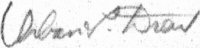
Drew, Urban

Died : 2013
Maj Urban L Drew USAF (deceased)
Urban 'Ben' Drew was born in Detroit, Michigan in 1924. Three months after the attack on Pearl Harbor, at the age of eighteen, Drew joined the USAAF and commenced pilot training. He earned his wings and a commission at Mariana, Florida in October 1943. He remained in the States honing his flying skills as an instructor pilot for the North American P-51 Mustang at Bartow, Florida. In May of 1944 he received his first overseas combat assignment, sailing to England on the Queen Elizabeth. H
Signature Value : £40
CLICK HERE FOR FULL PROFILE
 
+ Artist : Brian Bateman


Signature(s) value alone : £40
£100 Off!Now : £300.00

Quantity:


Some other related items available from this site.

 An American pilot who joined the British Royal Air Force in 1940, he flew Spitfires with the 'Eagle Squadron' No.401 Sqn and No.133 Sqn and became an Ace before America joined the war.  Transferring to the USAAF as Commanding Officer of the 4th Fighter Group, he is shown here in 1944 flying P-51D Mustang 44-13779.  Credited with a total of 14.5 victories, he was regarded as one of the best fighter leaders of the war.  He died in 2008.

Tribute to Don Blakeslee by Ivan Berryman.
 The Focke-Wulf 190 development project began in 1937. Conceived as a hedge against total dependence on the Messerchmitt 109, the 190 was designed by Kurt Tank utilizing a radial engine. This was against generally accepted design criteria in Germany, and many historians believe that the decision to produce a radial engine fighter was largely due to the limited manufacturing capacity for in-line, water-cooled engines which were widely used on all other Luftwaffe aircraft. Despite these concerns, Tanks design was brilliant, and the 190 would become one of the top fighter aircraft of WW II. The first prototype flew in mid-1939. The aircraft had excellent flying characteristics, a wonderful rate of acceleration, and was heavily armed. By late 1940 the new fighter was ordered into production. Nicknamed the butcher bird,  by Luftwaffe pilots, early 190s were quite successful in the bomber interceptor role, but at this stage of the War many Allied bombing raids lacked fighter escort. As the War dragged on, Allied bombers were increasingly accompanied by fighters, including the very effective P-51 Mustang. The Allies learned from experience that the 190s performance fell off sharply at altitudes above 20,000 feet. As a result, most Allied bombing missions were shifted to higher altitudes when fighter opposition was likely. Kurt Tank had recognized this shortcoming and began working on a high-altitude version of the 190 utilizing an in-line, water-cooled engine. Utilizing a Jumo 12-cylinder engine rated at 1770-HP, and capable of 2,240-HP for short bursts with its methanol injection system, the 190D, or Long Nose or Dora as it was called, had a top speed of 426-MPH at 22,000 feet. Armament was improved with two fuselage and two wing mounted 20mm cannon. To accommodate the changes in power plants the Dora had a longer, more streamlined fuselage, with 24 inches added to the nose, and an additional 19 inches added aft of the cockpit to compensate for the altered center of gravity. By mid 1944 the Dora began to reach fighter squadrons in quantity. Although the aircraft had all the right attributes to serve admirably in the high altitude interceptor role, it was not generally focused on such missions. Instead many 190Ds were assigned to protect airfields where Me-262 jet fighters were based. This was due to the latter aircrafts extreme vulnerability to Allied attack during takeoff and landing. The 190Ds also played a major role in Operation Bodenplatte, the New Years Day raid in 1945 which destroyed approximately 500 Allied aircraft on the ground. The High Command was impressed with the 190Ds record on this raid, and ordered most future production of the Doras to be equipped as fighter-bombers. In retrospect this was a strategic error, and this capable aircraft was not fully utilized in the role for which it was intended.

Long Nose Trouble by Stan Stokes.
 Painted with the black and white markings of the D-Day invasion, P-51 Mustang 43-24823 B6-S 'Old Crow' is the personal aircraft of 'Bud' Anderson.  He flew two tours with the 363rd Fighter Squadron and is credited with 16.25 victories in 116 missions from February to December 1944.  After the war he became a test pilot, flying over 100 different aircraft types before retiring in 1972, often speaking at aviation history events ever since.  As of the time of writing in 2023, he is 101 years old and has just been promoted to the honorary rank of Brigadier General.

Tribute to Clarence 'Bud' Anderson by Ivan Berryman.
 Wherever the GIs went they took their Jeeps with them, and before the war was run the little quarter-ton, 4-wheel drive, utility vehicle was as well known around the world as the Model T Ford. Nicolas Trudgian has painted a compelling image, set back in time when the little Jeep was omnipresent on and around the roads and battlefields of a war-torn world. It is Christmas 1944 and, as a gaggle of 339th FG P-51 Mustangs disturb the peace of this ancient English village, a little Jeep waits patiently outside the pub while her occupants sample the local ale. A wonderfully nostalgic painting that will bring back pleasant memories to many.

Welcome Respite by Nicolas Trudgian.
Signatures on these products
*The value given for each signature has been calculated by us based on the historical significance and rarity of the signature and is for the unmatted version where available. Values of many pilot signatures have risen in recent years and will likely continue to rise as they become more and more rare.
NameInfo


Maj Urban L Drew USAF (deceased)
Died : 2013
*Signature Value : £40

Editions signed :

Original pencil drawing by Brian Bateman.


Drew, Urban
(Maj Urban L Drew USAF (deceased))

Urban 'Ben' Drew was born in Detroit, Michigan in 1924. Three months after the attack on Pearl Harbor, at the age of eighteen, Drew joined the USAAF and commenced pilot training. He earned his wings and a commission at Mariana, Florida in October 1943. He remained in the States honing his flying skills as an instructor pilot for the North American P-51 Mustang at Bartow, Florida. In May of 1944 he received his first overseas combat assignment, sailing to England on the Queen Elizabeth. He was assigned to the 375th Fighter Squadron 'Yellowjackets' of the 361st Fighter Group based in at Bottisham in Cambridgeshire. Later his squadron would be relocated to Little Walden in Essex. During his combat tour Drew would fly a total of seventy-five combat missions, rising to command of X Flight and later to command of the 375th squadron. Drew would be officially credited with six aerial victories during his combat tour. Notable was his downing of two Me-262 jets on October 7, 1944. He was the first fighter pilot to down two of the German jets, and he received the Air Force Cross for this achievement. Also of note was the ace's destruction of the largest aircraft to fly in WW 11, the BV-238, which he destroyed in a strafing pass with two wingman on Lake Schaal on September 18, 1944. Following his successful combat tour, Drew returned to the States where he again served as a flight instructor. In 1945 he was assigned to the 412 th Fighter Squadron of the 414 th Fighter Group based at lwo Jima flying the P-47 Jug. Drew's final victory tally included 6 confirmed aerial victories, 1 damaged, and 1 additional aircraft destroyed on the ground. In addition to the Air Force Cross, Drew was awarded two Distinguished Flying Crosses and 14 Air Medals. Following the War Drew helped organize the 127 th Fighter Group of the Michigan National Guard. He became Deputy Group Commander and later was appointed the first Air Adjutant General of the State of Michigan. After his retirement from the Air Force with the rank of Major, he established an aviation business in Britain and South Africa. He currently resides in Southern California, and remains active in matters involving the American Fighter Aces Association. Sadly we have learned that Ben Drew passed away on 3rd April 2013.
Squadrons Related to This Print
375th Fighter Group
Aircraft Related to This Print

Contact Details
Shipping Info
Terms and Conditions
Cookie Policy
Privacy Policy

Sign Up To Our Newsletter!

Stay up to date with all our latest offers, deals and events as well as new releases and exclusive subscriber content!

This website is owned by Cranston Fine Arts.  Torwood House, Torwoodhill Road, Rhu, Helensburgh, Scotland, G848LE

Contact: Tel: (+44) (0) 1436 820269.  Email: cranstonorders -at- outlook.com

Return to Home Page