Cranston Military Prints .com Home Page
Customer Helpline (UK) : 01436 820269
Subscribe to our Newsletter!

You currently have no items in your basket

Payment Options Display
Buy with confidence and security!
Publishing historical art since 1985


Navigation Menus
Military
Art Index
Aviation
Art Index
Naval
Art Index
Artists
Index
Product Search         
Aviation
History Archive
Naval
History Archive
HALF PRICE AND FREE PRINT SPECIAL OFFERS
ALWAYS GREAT OFFERS :
20% FURTHER PRICE REDUCTIONS ON HUNDREDS OF LIMITED EDITION ART PRINTS
BUY ONE GET ONE HALF PRICE ON THOUSANDS OF PAINTINGS AND PRINTS
FOR MORE OFFERS SIGN UP TO OUR FREE NEWSLETTER
Shooting Swallows by Brian Bateman. (P) - Cranston Military Prints

Shooting Swallows by Brian Bateman. (P)


Shooting Swallows by Brian Bateman. (P)

Ben Drew shot down two Me262s in October of 1944. The painting shows the second Me262 as the main subject with Ben's Detroit Miss peeling off at full speed after he showered the aircraft with the fatal bullets. The shoot down action was so quick in occurring, (31 seconds), that Drew never saw what had actually happened to the pilot, Oblt. Paul Bley, who slipped over the side in time to live to fight again. As fate would have it Oblt. Bley was killed 2 weeks later when his 262 developed trouble while taking off and he plowed into a tractor at the end of the field.
Item Code : B0542PShooting Swallows by Brian Bateman. (P) - Editions Available
DESCRIPTIONSIZESIGNATURESOFFERSPRICEPURCHASINGPACKS
Original drawing by Brian Bateman. Paper size 16 inches x 12 inches (41cm x 31cm)
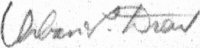
Drew, Urban

Died : 2013
Maj Urban L Drew USAF (deceased)
Urban 'Ben' Drew was born in Detroit, Michigan in 1924. Three months after the attack on Pearl Harbor, at the age of eighteen, Drew joined the USAAF and commenced pilot training. He earned his wings and a commission at Mariana, Florida in October 1943. He remained in the States honing his flying skills as an instructor pilot for the North American P-51 Mustang at Bartow, Florida. In May of 1944 he received his first overseas combat assignment, sailing to England on the Queen Elizabeth. H
Signature Value : £40
CLICK HERE FOR FULL PROFILE
 
+ Artist : Brian Bateman


Signature(s) value alone : £40
SOLD
OUT
NOT
AVAILABLE


Some other related items available from this site.

DHM2707APD. Alpine Scramble by Nicolas Trudgian.

Alpine Scramble by Nicolas Trudgian.
 The ubiquitous North American P-51 Mustang, which many consider to be the best all-around fighter of WW II, owes its origins to the British Air Ministry. Following Britains entry into WW II in 1939, the RAF was interested in purchasing additional fighter aircraft from American sources, particularly the Curtiss P-40. Curtiss, which was busy, was unable to guarantee timely delivery so the British approached North American Aviation as a possible second source for the P-40. North American chose to propose its own fighter design which would use the same Allison engine as the P-40. Utilizing new laminar flow wings, the North American fighter was expected to have performance better than the P-40. Developed in record time the new aircraft was designated as a Mustang I by the Brits, whereas the USAAF ordered two for evaluation which were designated XP-51 Apaches. Intrigued with the possibility of using this aircraft also as a dive bomber, North American proposed this to the USAAF which decided to order 500 of the P-51 aircraft to be modified for dive bombing use. Designated as the A-36 Invader, this version of the Mustang utilized dive flaps, and bomb racks under each wing. Some reinforcing of the structural members was also required because of the G-forces to be encountered in dive bombing. A-36s entered combat service with the USAAF prior to any P-51s. In early 1943 the 86th and 27th Fighter Bomber Groups of the 12th Air Force began flying A-36s out of Northern Africa. Despite some early problems with instability caused by the dive flaps, the A-36 was effective in light bombing and strafing roles. It was not, however, capable of dog fighting with German fighters, especially at higher altitudes. Despite these drawbacks one USAAF pilot, Captain Michael T. Russo, who served with the 16th Bomb Squadron of the 27th Fighter Bomber Group, was credited with five confirmed aerial victories in the A-36, thereby becoming the first mustang ace. In Stan Stokes painting, Russos third victory is depicted over a JU-52 at the Aversano Airfield in Italy. The early USAAF fighter versions of the Mustang were designated as P-51As. About 650 were delivered to the RAF and 350 to the USAAF. With its Allison engine the early P-51s were no match for German Bf-109s or FW-190s. The performance drawbacks of the Mustang were especially apparent at higher altitudes. The RAF equipped some Mustangs with the more powerful Rolls-Royce Merlin engine. This dramatically enhanced the Mustangs high altitude performance. This new engine was utilized in the P-51B, the first effective fighter version of this aircraft. Also developed were inexpensive wing mounted drop tanks which extended the Mustangs range into the heart of Germany, so it could accompany American bombers on daylight raids. Late in 1943, North American redesigned the top of the rear fuselage of the Mustang, and added a bubble canopy. This variant became the P-51D and proved to be an effective dog fighting aircraft against any of the Luftwaffes propeller driven fighters.

The First Mustang Ace by Stan Stokes.
 Hub Zemke lends his name to <i>'Zemke's Wolf Pack'</i>, the 56th Fighter Group that became deadly with the P-47 Thunderbolt thanks to his tactics with the machine.  He scored a total of 17.75 victories in the war, mostly with this unit, but is depicted here on 26th September 1944 flying a P-51 Mustang with the 479th Fighter Group.  He scored just 2.5 victories with this unit, but the one depicted here is over the German Ace Alfred Grislawski in his Me109 - a victory that injured Grislawski and meant he took no further combat role in the war.  At the end of October, Hub Zemke's airframe failed in turbulence and he bailed out to be taken prisoner for the rest of the war.  Amongst his many decorations are the Distinguished Service Cross and Distinguished Flying Cross as well as the Purple Heart.  He died aged 80 in 1994.

Tribute to Hubert 'Hub' Zemke by Ivan Berryman.
 With their brightly coloured checkertail tails there was no mistaking the P.51 Mustangs of the 325th Fighter Group. Escorting B-24s over Austria in August 1944, tangled with a group of Fw190 fighters. The ensuing dogfight spiraled down below the mountain peaks as Herky Green led the Checkertails in a low-level chase. Herky nails one Fw190. Behind him his pilots will take out the two Fw190. When all is done this day the 325th will be credited with 15 enemy fighters destroyed.

Checkertail Clan by Nicolas Trudgian
Signatures on these products
*The value given for each signature has been calculated by us based on the historical significance and rarity of the signature and is for the unmatted version where available. Values of many pilot signatures have risen in recent years and will likely continue to rise as they become more and more rare.
NameInfo


Maj Urban L Drew USAF (deceased)
Died : 2013
*Signature Value : £40

Editions signed :

Original drawing by Brian Bateman.


Drew, Urban
(Maj Urban L Drew USAF (deceased))

Urban 'Ben' Drew was born in Detroit, Michigan in 1924. Three months after the attack on Pearl Harbor, at the age of eighteen, Drew joined the USAAF and commenced pilot training. He earned his wings and a commission at Mariana, Florida in October 1943. He remained in the States honing his flying skills as an instructor pilot for the North American P-51 Mustang at Bartow, Florida. In May of 1944 he received his first overseas combat assignment, sailing to England on the Queen Elizabeth. He was assigned to the 375th Fighter Squadron 'Yellowjackets' of the 361st Fighter Group based in at Bottisham in Cambridgeshire. Later his squadron would be relocated to Little Walden in Essex. During his combat tour Drew would fly a total of seventy-five combat missions, rising to command of X Flight and later to command of the 375th squadron. Drew would be officially credited with six aerial victories during his combat tour. Notable was his downing of two Me-262 jets on October 7, 1944. He was the first fighter pilot to down two of the German jets, and he received the Air Force Cross for this achievement. Also of note was the ace's destruction of the largest aircraft to fly in WW 11, the BV-238, which he destroyed in a strafing pass with two wingman on Lake Schaal on September 18, 1944. Following his successful combat tour, Drew returned to the States where he again served as a flight instructor. In 1945 he was assigned to the 412 th Fighter Squadron of the 414 th Fighter Group based at lwo Jima flying the P-47 Jug. Drew's final victory tally included 6 confirmed aerial victories, 1 damaged, and 1 additional aircraft destroyed on the ground. In addition to the Air Force Cross, Drew was awarded two Distinguished Flying Crosses and 14 Air Medals. Following the War Drew helped organize the 127 th Fighter Group of the Michigan National Guard. He became Deputy Group Commander and later was appointed the first Air Adjutant General of the State of Michigan. After his retirement from the Air Force with the rank of Major, he established an aviation business in Britain and South Africa. He currently resides in Southern California, and remains active in matters involving the American Fighter Aces Association. Sadly we have learned that Ben Drew passed away on 3rd April 2013.
Squadrons Related to This Print
375th Fighter Squadron
Aircraft Related to This Print
Me262

Contact Details
Shipping Info
Terms and Conditions
Cookie Policy
Privacy Policy

Sign Up To Our Newsletter!

Stay up to date with all our latest offers, deals and events as well as new releases and exclusive subscriber content!

This website is owned by Cranston Fine Arts.  Torwood House, Torwoodhill Road, Rhu, Helensburgh, Scotland, G848LE

Contact: Tel: (+44) (0) 1436 820269.  Email: cranstonorders -at- outlook.com

Return to Home Page