Cranston Military Prints .com Home Page
Customer Helpline (UK) : 01436 820269
Subscribe to our Newsletter!

You currently have no items in your basket

Payment Options Display
Buy with confidence and security!
Publishing historical art since 1985


Navigation Menus
Military
Art Index
Aviation
Art Index
Naval
Art Index
Artists
Index
Product Search         
Aviation
History Archive
Naval
History Archive
HALF PRICE AND FREE PRINT SPECIAL OFFERS
ALWAYS GREAT OFFERS :
20% FURTHER PRICE REDUCTIONS ON HUNDREDS OF LIMITED EDITION ART PRINTS
BUY ONE GET ONE HALF PRICE ON THOUSANDS OF PAINTINGS AND PRINTS
FOR MORE OFFERS SIGN UP TO OUR FREE NEWSLETTER
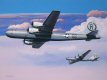
Turning Point by David Pentland. - Cranston Military Prints

Turning Point by David Pentland.


Turning Point by David Pentland.

6th August 1945, Col. Paul Tibbets puts his aircraft, Enola Gay, into a violent turn to evade the blast of the atomic bomb on the Japanese city of Hiroshima. This marked a turning point in the war and history.
Item Code : DHM0796YTurning Point by David Pentland. - Editions Available
DESCRIPTIONSIZESIGNATURESOFFERSPRICEPURCHASINGPACKS
Signed limited edition of 1150 prints. Image size 23 inches x 14 inches (58cm x 36cm)Artist : David Pentland£25 Off!
Add any two items on this offer to your basket, and the lower priced item will be half price in the checkout!
Now : £95.00

Quantity:
In 2 Pairs
View
Tibbets signature edition of 20 prints from the signed limited edition of 1150 prints. ONLY 1 AVAILABLE. Image size 23 inches x 14 inches (58cm x 36cm)
Tibbets, Paul

Died : 2007
Col. Paul Tibbets (deceased)
The pilot of the Enola Gay was born in Quicy, Illinois. Ironically, his love of flying began when, at the age of 12, he dropped Baby Ruth candy bars from a plane as a Curtiss Candy Company advertising gimmick. He was graduated from the Western Military Academy in Alton, Illinois, with an interest in becoming a medical doctor. Although he studied at the universities of Florida and Cincinnati with that in mind, he became a flying cadet in the US Army Air Corps in 1936. Tibbets was commissioned
Signature Value : £120
CLICK HERE FOR FULL PROFILE
 
+ Artist : David Pentland


Signature(s) value alone : £120
£40 Off!Now : £300.00

Quantity:
Original painting by David Pentland. Image size 30 inches x 20 inches (76cm x 51cm)Artist : David Pentland£500 Off!Now : £2600.00

Quantity:
**Signed limited edition of 1150 prints. (One copy reduced to clear) Image size 23 inches x 14 inches (58cm x 36cm)Artist : David PentlandHalf
Price!
Now : £60.00

Quantity:


Some other related items available from this site.

 Assigned to the 393rd Bombardment Squadron, USAAF, <i>Enola Gay</i> was one of 15 Boeing B-29s with the 'Silverplate' modifications necessary to deliver the new atomic weapons.  She is depicted here in company with <i>The Great Artiste</i>, one of the other two B-29s that took part in the first nuclear bombing mission against the Japanese city of Hiroshima on 6th August 1945.  The three ship mission consisted of <i>Enola Gay</i> (victor number 82), piloted by Colonel Paul W Tibbets, <i>The Great Artiste</i> (89), piloted by Major Charles W Sweeney and number 91, later named <i>Necessary Evil</i>, piloted by Captain George W Marquardt. Tibbets' aircraft was assigned for weapons delivery, whilst Sweeney's carried blast measurement instrumentation and Marquardt's was the camera ship.  This mission and that against the city of Nagasaki a short time later changed the course of history forever and remain to this day the only time that nuclear bombs have been used in anger.

New Frontiers - Enola Gay by Ivan Berryman.
 Director of training for the B-24 Liberators, he became deputy group commander of the 9th Bomb Group, training on B-29 Superfortress.  Went to the Marianas with the group, becoming commanding officer from March 1945 until the end of the war. After the war, he had a number of positions culminating in the rank of Brigadier General as deputy representative to the NATO Military Committee.  He died in 2005.

Clipped Signature - Henry Huglin.
 The Boeing B-29 Superfortress was undoubtedly the best all-around strategic bomber of WW 11. Because of its fairly late deployment in the War, fewer (3,970) Superfortesses were built than any other U.S. strategic bomber. Because of its large payload, and incredible range, a decision was made to utilize the B-29 exclusively in the Pacific and production models began to arrive in India and China in the spring of 1944. By mid 1945 the B-29 was being operated from bases established in the Mariana Islands, and devastating bombing raids were being flown against Japan on a regular basis. The Texas Doll was a Saipan-based B29 of the 497th Bomb Group, which was under the command of Col. Edward Cutler in 1944 & 1945. In a soon to be published book entitled Flying the Red Carpet, Lt. Col. Don Julin, Cutlers navigator, chronicles in both words and photographs his experiences flying out of Saipan in 1945. The Texas Doll participated in the massive fire bombing raid on Tokyo on March 10, 1945. General Lemay insisted on an all-out low level attack and the Doll was stripped of armor plate and left two of its gunners at home for that mission. Follow-up raids on Nagoya, Osaka, and Kobe followed within days, and it was clear from that point on that Imperial Japans days were numbered. These missions were not without risk. On his first mission with the Doll, Julin recounts how the bomb bay was hit with a 20mm round from a Japanese twin-engine fighter. The concussion from this shell distorted the shape of one of the Dolls fuel tanks, leading to some harrowing fuel shortages on future flights. On Julins first mission from Saipan his B-29 depressurized over Japan. One of the crew members flak jacket, oxygen mask, and shirt were stripped from him, and the pilot was forced to make a emergency dive to 10,000 feet. Returning to Saipan on another mission Cutler and his crewmates watched a B-29 ditch 100 miles short of making it back. In June of 1945 the Dolls crew witnessed two B-29s collide at only 1000 feet in altitude. On April 1, 1945 Cutlers crew watched in terror as the aircraft just ahead of them crashed into the Pacific and exploded upon takeoff. On March 25, 1945 Cutler and his crew flew their final mission with the Doll painted on the nose of their aircraft. It appears that a number of people back at the Pentagon were giving in to pressure, and all the voluptuous nose art which was so inspirational to the crews which risked their lives on each mission, was now deemed inappropriate. In his nostalgic painting entitled Pacific Dolls, award-winning aviation artist Stan Stokes depicts the Texas Doll at Salpan following a mission in March of 1945. This painting is dedicated to all the courageous crews which both flew and serviced all those Pacific Dolls during the War, and is a tribute to this great aircraft which explicitly helped America win the War in the Pacific.

Pacific Dolls by Stan Stokes.
 Boeing B29 Superfortresses of the USAAF 40th Bomb Group come under attack from a Kawasaki Ki64 Hein (Tony) of the Japanese Army Airforces 244th Sentai.

Mission to Yokohama by David Pentland.
Signatures on these products
*The value given for each signature has been calculated by us based on the historical significance and rarity of the signature and is for the unmatted version where available. Values of many pilot signatures have risen in recent years and will likely continue to rise as they become more and more rare.
NameInfo


Col. Paul Tibbets (deceased)
Died : 2007
*Signature Value : £120

Editions signed :

Tibbets signature edition of 20 prints from the signed limited edition of 1150 prints. ONLY 1 AVAILABLE.


Tibbets, Paul
(Col. Paul Tibbets (deceased))

The pilot of the Enola Gay was born in Quicy, Illinois. Ironically, his love of flying began when, at the age of 12, he dropped Baby Ruth candy bars from a plane as a Curtiss Candy Company advertising gimmick. He was graduated from the Western Military Academy in Alton, Illinois, with an interest in becoming a medical doctor. Although he studied at the universities of Florida and Cincinnati with that in mind, he became a flying cadet in the US Army Air Corps in 1936. Tibbets was commissioned as a second lieutenant and rated pilot in 1938. He was promoted to first lieutenant in April 1941 and, during wartime, quickly became a captain and squadron commander, then a major, then a lieutenant colonel. After many combat missions in Europe and Africa, and two special missions, he was assigned to recruit and train personnel to deliver atomic weapons. Tibbets himself flew the first mission that, in his words - convinced the Japanese of the futility of continuing the fight. After the war he studied at the Air Command and Staff College. He was assigned to Operations HQUSAF after graduation in 1947 and later attended the Air War College. Tibbets retired from the Air Force after almost 30 years of active service and lived in Ohio. He received the Distinguished Service Cross, Distinguished Flying Cross with one oak leaf cluster, Purple Heart, Air Medal with 13 oak leaf clusters, and four Air Force Commendation Medals. Paul Tibbets died 1st November 2007.
Aircraft Related to This Print
Superfortress

Contact Details
Shipping Info
Terms and Conditions
Cookie Policy
Privacy Policy

Sign Up To Our Newsletter!

Stay up to date with all our latest offers, deals and events as well as new releases and exclusive subscriber content!

This website is owned by Cranston Fine Arts.  Torwood House, Torwoodhill Road, Rhu, Helensburgh, Scotland, G848LE

Contact: Tel: (+44) (0) 1436 820269.  Email: cranstonorders -at- outlook.com

Return to Home Page