Cranston Military Prints .com Home Page
Customer Helpline (UK) : 01436 820269
Subscribe to our Newsletter!

You currently have no items in your basket

Payment Options Display
Buy with confidence and security!
Publishing historical art since 1985


Navigation Menus
Military
Art Index
Aviation
Art Index
Naval
Art Index
Artists
Index
Product Search         
Aviation
History Archive
Naval
History Archive
HALF PRICE AND FREE PRINT SPECIAL OFFERS
ALWAYS GREAT OFFERS :
20% FURTHER PRICE REDUCTIONS ON HUNDREDS OF LIMITED EDITION ART PRINTS
BUY ONE GET ONE HALF PRICE ON THOUSANDS OF PAINTINGS AND PRINTS
FOR MORE OFFERS SIGN UP TO OUR FREE NEWSLETTER
Hurricane Patrol by Graeme Lothian. (C) - Cranston Military Prints

Hurricane Patrol by Graeme Lothian. (C)


Hurricane Patrol by Graeme Lothian. (C)

After taking part in the Battle of France early in 1940, 85 Squadron moved to Croydon on the 19th August, where, led by renowned squadron leader Peter Townsend DSO DFC, the squadron played a notable part in the Battle of Britain. Thirty Hurricane squadrons participated in the Battle of Britain compared to only eighteen Spitfire squadrons, claiming 80 percent of the RAF victories. Sir Sidney Camms innovative design ensured the Hurricane became a classic fighter. Hurricane Patrol portrays Squadron Leader Peter Townsend leading 85 Squadron on a high altitude sortie during the long hot summer of 1940.
Item Code : DHM1177CHurricane Patrol by Graeme Lothian. (C) - Editions AvailableExtra....

Detail Images :


A photo of an edition of the print :

DESCRIPTIONSIZESIGNATURESOFFERSPRICEPURCHASINGPACKS
Wilkinson signature edition of 100 prints from the signed limited edition of 1150 prints. Image size 25 inches x 16 inches (64cm x 41cm)
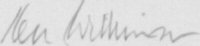
Wilkinson, Ken

Died : 2017
Flying Officer Ken Wilkinson (deceased)
Battle of Britain pilot flying Hurricanes, he flew Spitfires with 611 Sqn and then 616 Sqn at Kirton-in-Lindsey and 19 Sqn at Fowlmere during 1940 and after a spell instructing returned to operations on Spitfires, with 234 and 165 Squadrons. After spending time with 53, 24 and 10 Operational Training Units, he left the RAF in November 1945 and served in the RAFVR.
Ken said :
From 1st September 1939 I wrote myself off. I thought, 'you've got no chance' lasting through whatev
Signature Value : £45
CLICK HERE FOR FULL PROFILE
 
+ Artist : Graeme Lothian


Signature(s) value alone : £45
£75 Off!
Add any two items on this offer to your basket, and the lower priced item will be half price in the checkout!
Now : £125.00

Quantity:
In 3 Pairs
and 3 Packs
View


Some other related items available from this site.

 Squadron Leader H C Sawyer is depicted here flying his 65 Sqn Spitfire Mk.1a R6799 (YT-D) in the skies above Kent on 31st July 1940 at the height of the Battle of Britain.  Chasing him is Major Hans Trubenbach of 1 Gruppe, Lehrgeschwader 2 in his Messerschmitt Vf109E-3 (Red 12) . The encounter lasted eight minutes with both pilots surviving.

High Pursuit by Ivan Berryman.
 A pair of 79 Sqn Hurricanes attacking a Heinkel 111 on 15th August 1940.  The nearest Hurricane is that of F/Lt Owen Tracey, who eventually destroyed the He.111 that was on its way to bomb Newcastle.

One on the Run by Ivan Berryman.
 Having already registered two victories since his arrival at 501 Sqn in the Autumn of 1940, Plt Off  K W Mackenzie found himself again in action against some Messerschmitt Bf.109s on 7th October, sharing in the destruction of one before vigorously pursuing another as it turned to head out across the Channel.  With his ammunition exhausted, Mackenzie was determined not to let the interloper escape and placed his Hurricane's starboard wing over the tail of the Bf.109, bringing it violently down and severing the tail of the German fighter which plunged uncontrollably into the sea. With his own wingtip missing from the impact and his engine now damaged by rounds from other pursuing German aircraft, Mackenzie limped his crippled Hurricane over the cliffs near Folkestone, where he crash-landed. He survived the incident, albeit with some facial injuries sustained when he was thrown against the gunsight, and was awarded the DFC for his gallantry.

Desperate Measures by Ivan Berryman.
With Europe occupied by Nazi forces, Great Britain was the last obstacle in Hitlers plan to rule Europe. Hitlers invasion plan called for his Luftwaffe to gain control of the air over Britain in the first few weeks of attack, which would be followed by pulverizing bombing attacks on the British coastline, and finally by a blitzkrieg style invasion spearheaded by Panzer Divisions supported by fighters and dive bombers. The Germans had assembled over 100 well-equipped divisions by the Summer of 1940 for its invasion of Britain, and on August 8 the Luftwaffe attacks commenced. The Germans had underestimated the capability of the British air defense and both the will and skill of its pilots. In the first ten days of German attacks RAF Hurricanes and Spitfires shot down 697 German aircraft, while losing only 153 aircraft and 93 flight personnel of their own. By months end the German strategists shifted to all out attacks on British airfields, aircraft plants, and munitions factories. Effectively utilizing radar to pinpoint incoming strikes, and by widely dispersing their own aircraft so few could be destroyed during any single attack, the RAF fought back. During this second phase of attack the Germans lost an additional 562 aircraft compared to only 219 for the Brits. However, every German plane shot down resulted in the death or capture of its trained flight crews, but in more than half of the RAF losses the experienced pilot was saved. Forced to react to ever increasing losses, the Germans shifted their strategy to strategic night bombing raids on London and several other major cities. A year after The Battle Of Britain commenced Germany was forced to abandon major air operations directed at Britain marking this conflict the first major battle in the history of warfare fought solely by aircraft, as not a single Nazi soldier voluntarily set foot on British soil. The Hawker Hurricane while less glamorized than the Supermarine Spitfire, was the fighter most widely used by the RAF during the first two years of the War. The Hurricane was the first British fighter to exceed 300 MPH, and the first to carry eight machine guns. In excess of 14,000 Hurricanes were produced through 1944. The Heinkel He. 111 medium bomber pictured in Stan Stokes painting, Hurricane on My Tail!, was widely used by the Luftwaffe (7,300 produced) during the Battle of Britain. The 111 could carry a 5,500 pound bomb load and had a maximum speed of 252 MPH. In total the Germans lost 2,375 aircraft during the Battle of Britain. The inspiration and determination of the RAFs Hurricane and Spitfire pilots during this conflict lead to Winston Churchills often quoted remark, Never in the field of human conflict was so much owed by so many to so few.

Hurricane on my Tail by Stan Stokes.
Signatures on these products
*The value given for each signature has been calculated by us based on the historical significance and rarity of the signature and is for the unmatted version where available. Values of many pilot signatures have risen in recent years and will likely continue to rise as they become more and more rare.
NameInfo


Flying Officer Ken Wilkinson (deceased)
Died : 2017
*Signature Value : £45

Editions signed :

Wilkinson signature edition of 100 prints from the signed limited edition of 1150 prints.


Wilkinson, Ken
(Flying Officer Ken Wilkinson (deceased))

Battle of Britain pilot flying Hurricanes, he flew Spitfires with 611 Sqn and then 616 Sqn at Kirton-in-Lindsey and 19 Sqn at Fowlmere during 1940 and after a spell instructing returned to operations on Spitfires, with 234 and 165 Squadrons. After spending time with 53, 24 and 10 Operational Training Units, he left the RAF in November 1945 and served in the RAFVR.
Ken said :
From 1st September 1939 I wrote myself off. I thought, 'you've got no chance' lasting through whatever is going to be. It was quite obvious, in the way the Germans were moving, they were going to make a hell of a war out of it, so I was ready for war. I can remember saying 'we've got to stop this fellow Hitler'. When you think of all the thousands of citizens that were being killed by this absurd bombing. They had to pay for it didn't they. Yes, we lost people. Friends that didn't come back. I don't think we were the sort of people to brood over it, ever. You have to get into an attitude to make sure that you're as cold as a fish. Once someone has failed to return, that's it. Fortune smiled on me and not on some of the others. I can only say that whoever it was who popped off at me, wasn't a very good marksman. It transpired that we were doing something far more important than we thought. As far as we were concerned, it was just that there were some untidy creatures from over the other side of the channel, trying to bomb England and the United Kingdom. And we didn't want them to bomb us. After all, we never asked the Germans to start this nonsense, did we? But they did, and we had to stop them, and we did. It's our country. You die for you country.
Squadrons Related to This Print
No.85 Sqn
Aircraft Related to This Print
Hurricane

Contact Details
Shipping Info
Terms and Conditions
Cookie Policy
Privacy Policy

Sign Up To Our Newsletter!

Stay up to date with all our latest offers, deals and events as well as new releases and exclusive subscriber content!

This website is owned by Cranston Fine Arts.  Torwood House, Torwoodhill Road, Rhu, Helensburgh, Scotland, G848LE

Contact: Tel: (+44) (0) 1436 820269.  Email: cranstonorders -at- outlook.com

Return to Home Page