|
|
|
|
||
|
|
|
|
||
| Navigation Menus |
|
Military Art Index |
Aviation Art Index |
Naval Art Index |
Artists Index |
Aviation History Archive |
Naval History Archive |
|
| HALF PRICE AND FREE PRINT SPECIAL OFFERS | ||||||
|
| ||||||||||||||||||||||||||||||||||||||||||||||||||||||||||||||||||||||||||||||||||||||||||||||||||||||||||||||||||||||||||||||||||||||||||||||||||||||||||||||||||||||||||||||||||||||||||||||||||||||||||||||||||||||||||||||||||||||||||||||||||||||
Some other related items available from this site. | ||||
  Chariots of Fire by Gerald Coulson. |   The Longest July by Ivan Berryman. |   First Loss by David Pritchard. |   The Hard Way Home by Robert Taylor. | |
| Signatures on these products | |
| *The value given for each signature has been calculated by us based on the historical significance and rarity of the signature and is for the unmatted version where available. Values of many pilot signatures have risen in recent years and will likely continue to rise as they become more and more rare. | |
| Name | Info |
  Wing Commander Bob Foster DFC (deceased) Died : 2014 *Signature Value : £55 Editions signed : Fighter Pilots edition of 100 artist proofs. Fighter Pilots edition of 200 prints. | Foster, Bob (Wing Commander Bob Foster DFC (deceased)) Wing Commander Bob Foster, who has died aged 94, flew Hurricane fighters during the Battle of Britain, when he was credited with destroying and damaging a number of enemy aircraft; later in the war he destroyed at least five Japanese aircraft while flying from airfields in northern Australia. For much of the Battle of Britain, Foster was serving with No 605 Squadron in Scotland; but in September, 605 moved to Croydon to join the main action over the south-east of England. It was soon heavily engaged, but it was not until September 27 that Foster achieved his first success, when he damaged a Messerschmitt Bf 110 fighter over Surrey. During this encounter his Hurricane was hit by return fire, and he was forced to make an emergency landing on Gatwick airfield. On October 7 he shot down a Messerschmitt Bf 109 near Lingfield racecourse, and on the following day he shared in the destruction of a Junkers 88 bomber. By the end of the month he is thought to have destroyed another Bf 109 and damaged a third. In 1941 No 605 moved to Suffolk, from where on one occasion Foster chased a lone German Heinkel bomber well out to sea. His gunfire knocked pieces off the enemy aircraft, but it escaped into cloud before Foster could follow up with a second attack. In September 1941 he was transferred to a fighter training unit as an instructor. Robert William Foster was born on May 14 1920 at Battersea, south-west London. After leaving school he worked for the joint petroleum marketing venture Shell-Mex and BP, and in March 1939 - six months before the outbreak of war - he joined the RAF Volunteer Reserve to train as a pilot. He was called up in August to complete his training before joining No 605. Foster's spell as an instructor lasted six months, and in April 1942 he was posted as a flight commander to No 54 Squadron. Within weeks of his joining, it was sent to Australia to join two other Spitfire squadrons to form No 1 Fighter Wing of the Royal Australian Air Force. The Wing was ready for action by the beginning of 1943, and moved to airfields in the Darwin area to counter Japanese bombing raids mounted from captured airfields in the Dutch East Indies and Timor. On February 26 Foster intercepted a Mitsubishi Dinah reconnaissance aircraft (all Japanese wartime aircraft types were given British names) and shot it down. It was the squadron's first success in Australia, and the first time a Spitfire had shot down a Japanese aircraft. Enemy bombing raids against Darwin continued, and on March 15 Foster was engaged in a fierce fight during which he downed a Mitsubishi Betty bomber and damaged a second. The three squadrons of No 1 Wing were in constant action throughout the spring of 1943, but Foster had to wait until June 20 for his next success. This came when he was leading No 54 Squadron as his formation intercepted a raid by 18 Betty bombers which were accompanied by a fighter escort. Foster attacked the leading bomber and sent it crashing into the sea. A Japanese Zero fighter broke towards him, and in the ensuing encounter Foster damaged the enemy aircraft. In June, the raids on Darwin became even more intense, and on June 30 Foster claimed another Betty destroyed as well as a probable. A week later he achieved his final successes when 30 bombers were reported to be heading for the city from the west. Foster led his formation to intercept the force, and he shot down a Betty and damaged a second near Peron Island, west of Darwin. He was the third pilot to claim five successes over Australia (earning him the title of ace) and a few weeks later he was awarded a DFC. After returning to Britain in early 1944, Foster joined the Air Information Unit with the role of escorting war correspondents. He arrived in Normandy soon after the Allied landings, and was one of the first RAF officers to enter Paris, joining General de Gaulle's triumphant procession down the Champs-Elysées. Foster spent the final months of the war at HQ Fighter Command and as the adjutant of a fighter base in Suffolk. In 1946 he left the RAF, but joined the Auxiliary Air Force on its re-formation in late 1947. He served with No 3613 Fighter Control Unit until its disbandment in March 1957, by which time he was a wing commander commanding the unit. He received the Air Efficiency Award. After the war Foster had rejoined Shell-Mex and BP, where he worked as a marketing executive until his retirement in 1975. In 2004 he was reunited with the Hurricane he had flown during the Battle of Britain. The aircraft, R 4118, had been rescued as a wreck in India by the printer and publisher of academic journals Peter Vacher, who brought it back to Britain in 2002 and had it restored to full flying condition. The aircraft now flies regularly as the only surviving Battle of Britain Hurricane and is the subject of a book by Vacher, Hurricane R 4118. Foster was a keen supporter of the Battle of Britain Fighter Association, becoming its chairman in 2009. He was a life vice-president of the Battle of Britain Memorial Trust, and a dedicated supporter of its initiative to erect The Wing, a new building at the National Memorial to The Few at Capel-le-Ferne, on the Kent coast. Designed in the shape of a Spitfire wing, the museum and educational facility will tell the story of what the Battle of Britain pilots achieved in the summer of 1940. Foster took the controls of the mechanical digger to turn the first turf and start the work. In recent years he had accompanied some of the tours, organised by the Trust, of Battle of Britain sites in east Kent. Wing Commander Bob Foster, born May 14 1920, died July 30 2014. |
  Flight Lieutenant Richard L Jones (deceased) Died : 2012 *Signature Value : £45 Editions signed : Fighter Pilots edition of 100 artist proofs. Fighter Pilots edition of 200 prints. | Jones, Richard L (Flight Lieutenant Richard L Jones (deceased)) Richard Jones was born in 1918 and in July 1940 Richard Jones was posted to 64 Squadron at Kenley, flying Spitfires. He was involved in heavy fighting over the Channel during the Battle of Britain, with the squadron suffering many losses during July and August. Towards the end of the Battle of Britain, in October, he moved to 19 Squadron flying Spitfires from Fowlmere, and was heavily involved in the fighter sweeps taking place at that time. Near the end of the Battle of Britain, Pilot Officer Richard Jones was shot down during a dogfight over Kent with Me 109s. Jones crash landed his Spitfire in a field, colliding with a flock of sheep - he would go on to write in his log book 'Crashed into a load of sheep. What a bloody mess!' After the Battle of Britain, Richard Jones became a test pilot for De Havilland at Witney in Oxfordshire, and test flew thousands of Hawker Hurricanes and other types, including civil types. After the war Richard Jones joined the RAFVR and started a long career in the motor industry. Sadly Richard Jones passed away on 7th March 2012. |
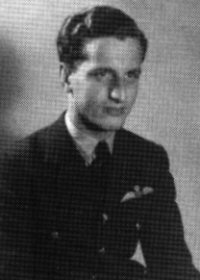  Flying Officer Kurt Taussig (deceased) Died : 2019 *Signature Value : £45 Editions signed : Fighter Pilots edition of 100 artist proofs. Fighter Pilots edition of 200 prints. | Taussig, Kurt (Flying Officer Kurt Taussig (deceased)) Czech Kurt was sent, age 15, by his parents on the Kindertrnsport to England from Czechoslovakia in June 1939 to escape the Nazi persecution of the Jews. Determined to fight the Germans he joined the RAF at eighteen in late 1942, and after training was posted to the Middle East to join 225 Squadron flying Spitfires on photo-reconnaissance duties in Tunisia, the Sicily landings, and in Italy. He died on 19th September 2019. |
  Wing Commander John Elkington (deceased) Died : 2019 *Signature Value : £40 Editions signed : Fighter Pilots edition of 200 prints. | Elkington, John (Wing Commander John Elkington (deceased)) John (Tim) Elkington was born in 1920 and joined the RAF in September 1939. Commissioned as a Pilot Officer in July 1940 he was immediately posted to join 1 Squadron flying Hurricanes atTangmere. On 15 August he shot down an Me109 over the Channel, but the following day he was himself shot down over Thorney Island. He baled out injured and was admitted to hospital, his Hurricane crashing at Chidham. He died on 1st February 2019. |
  Group Captain Byron Duckenfield AFC (deceased) Died : 2010 *Signature Value : £50 Editions signed : Duckenfield signature edition of 200 prints from the edition of 950 prints. Signature edition of 300 prints from the limited edition of 950 prints. Signature edition of 50 prints from the signed limited edition of 950 prints. | Duckenfield, Byron (Group Captain Byron Duckenfield AFC (deceased)) Byron Duckenfield started at Flying Training School on 25th November 1935 in a Blackburn B2 at Brough. As a Sergeant, he joined No.32 Sqn at Biggin Hill on 8th August 1936 and flew Gauntlets and Hurricanes. He joined 74 Squadron at Hornchurch on 11th April 1940, flying Spitfires, and on 5th May was posted to 501 Squadron flying Hurricanes at Tangmere. On the 11th of May at Betheniville, he survived a crash in a passenger transport Bombay aircraft in an aircraft in which he was a passenger, While comin ginto land the aircraft at 200 feet the aircraft stalled and the aircrfat fell backwards just levelly out as it histhe ground. 5 of th epassengers were killed when the centre section collapsed and crushed them. Duckenfield was fortunate as he had moved position during the flight. as the two passengers sitting each side of where he was sitting had died in the crash. (it was found later that the Bombay had beeb loaded with to much weight in the aft sectiion. ) recovering in hospital in Roehampton. On 23rd July 1940, he rejoined No.501 Sqn at Middle Wallop, then moved to to Gravesend two days later, scoring his first victory, a Ju87, on the 29th of July 1940. During August and September he scored three more victories. After a spell as a test pilot from 14th September 1940, he was posted to command 66 Squadron on 20th December 1941, flying Spitfires. On 26th February 1942 he took command of 615 Squadron flying Hurricanes from Fairwood Common, taking the squadron to the Far East. In late December 1942 he was shot down in Burma and captured by the Japanese. He remained a POW until release in May 1945. After a refresher course at the Flying Training School in November 1949, he took command of No.19 Squadron flying Hornets and Meteors from Chruch Fenton. After a series of staff positions, he retired from the RAF as a Group Captain on 28th May 1969. Duckenfield would write later his details : Burma At first light, 12 Hurricanes IIC aircraft of 615 Squadron, myself in the lead, took off from Chittagong for central Burma to attack the Japanese air base at Magwe, 300 miles away on the banks of the River Irrawaddy. Arriving at Yenangyaung, we turned downstream at minimum height for Magwe, 30 miles to the South and jettisoned drop tanks. Just before sighting the enemy base, the squadron climbed to 1200 feet and positioned to attack from up sun. On the ramp at the base, in front of the hangers, were 10 or 12 Nakajima KI - 43 Oscars in a rough line up (not dispersed) perhaps readying for take. These aircraft and the hangars behind them were attacked in a single pass, before withdrawing westward at low level and maximum speed. A few minutes later perhaps 20 miles away form Magwe, I was following the line of a cheung (small creek), height about 250 feet, speed aboput 280 mph, when the aircraft gave a violent shudder, accompanied by a very lound, unusual noise. The cause was instantly apparent: the airscrew has disappeared completely, leaving only the spinning hub. My immediate reaction was to throttle back fully and switch off to stop the violently overspeeding engine. Further action was obvious: I was committed to staying with the aircraft because, with a high initial speed, not enough height to eject could be gained without the help of an airscrew. So I jettisoned the canopy and acknowledged gratefully the fact that I was following a creek; the banks of either side were hillocky ground, hostile to a forced landing aircraft. Flying the course of the creek, I soon found the aircraft to be near the stall (luckily, a lower than normal figure without an airscrew) extended the flaps and touched down wheels-up with minimum impact ( I have done worse landings on a smooth runway!) My luck was holding, if one can talk of luck in such a situation. December is the height of the dry season in that area and the creek had little water, it was shallow and narrow at the point where I came down: shallow enough to support the fusalage and narrow enough to support wing tips. So I released the harness, pushed the IFF Destruct switch, climed out and walked the wing ashore, dryshod. The question may occur -Why did not others in the squadron see their leader go down? - the answer is simple, the usual tatctic of withdrawal from an enemy target was to fly single at high speed and low level on parallel courses until a safe distance from target was attained. Then, the formation would climb to re-assemble. Having left the aircraft, I now faced a formidable escape problem? I was 300 miles from friendly territory: my desired route would be westward but 80% of that 300 miles was covered by steep north-south ridges impenetrably clothed in virgin jungle; these were natural impediments, there was also the enemy to consider. Having thought over my predicament, I decided the best I could do - having heard reports of mean herted plainspeope - was to get as far into the hills as possible and then find a (hopefully sympathetic) village. I suppose I may have covered about 15 miles by nightfall when I came upon this small hill village and walked into the village square. Nobody seemed surprised to see me (I suspect I had been followed for some time) I wa given a quiet welcome, seated at a table in the open and given food. Then exhaustion took over, I fell asleep in the chair and woke later to find myself tied up in it. Next day I was handed over to a Japanese sergeant and escort who took me back to Magwe and, soon after that, 2.5 years captivity in Rangoon jail. Sadly we have learned that Byron Duckenfield passed away on 19th November 2010. |
  Wing Commander John Freeborn DFC* (deceased) Died : 2010 *Signature Value : £70 Editions signed : Signature edition of 300 prints from the limited edition of 950 prints. Signature edition of 50 prints from the signed limited edition of 950 prints. | Freeborn, John (Wing Commander John Freeborn DFC* (deceased)) Wing Commnader John. C. Freeborn was born on the 1st of December 1919 in Middleton, Yorkshire. John left grammar school at 16 and joined the RAF in 1938, where he made 14 shillings a week and shot pheasant in his spare time. He later visited his classmates after flight school by landing his plane on a nearby cricket pitch. In March 1938 John Freeborn was commissioned in the RAFO, and on the 9th of April 1938 went to Montrose and joined 8 FTS, where he completed his training before going to 74 'Tiger' Squadron at Hornchurch on 29th October. He relinquished his RAFO commission on being granted a short service one in the RAF in January 1939. Johnie Freeborn flew Spitfires with 74 Squadron over Dunkirk, and claimed a probable Ju 88 on May 21st 1940. On the 22nd of May 1940 he destroyed a Junkers 88, and a probable Bf 109 on the 24th of May followed soon after on the 27th by a Bf 109 destroyed and another probably destroyed. On one occasion his Spitfire was badly damaged over Dunkirk and he crash-landed on the beach near Calais but managed to get a lift home in a returning aircraft. His squadron flew relentlessly during the Battle of Britain. In one eight-hour period, its pilots flew into combat four times, destroying 23 enemy aircraft (three by John Freeborn) and damaging 14 more. Five kills denoted an Ace and by the end of the Battle of Britain, John had seven to his credit and won the DFC. John claimed a Bf 109 destroyed on 10th July, shared a probable Dornier 17 on the 24th, shot down a Bf 109 on the 28th, destroyed two Bf 110s, a Bf 109 and probably another on 11th August, destroyed a Do 17 on the 13th, destroyed another on 11th September and damaged an He 111 on the 14th. Freeborn was made a Flight Commander on 28th August. He shared a Bf 109 on 17th November, shot down two Bf 109s, shared another and damaged a fourth on 5th December, and damaged a Dornier 17 on 5th February and 4th March 1941. John Freeborn had been with his squadron longer, and flown more hours, than any other Battle of Britain pilot and on the 25th of February 1941 John freeborn was awarded a Bar to the DFC. In January, 1942 John Freeborn was posted to Army Air Force Base in Selma, Alababma which was home to the South East Training Command in America. After two months as RAF liaison officer he went to Eglin Field, Florida where he helped in testing various aircraft, including the new fighters the Thunderbolt and P-51 Mustang. He returned to the UK in December 1942 and went to Harrowbear, Exeter, and then to Bolt Head as Station Commander. John Freeborn joined 602 Squadron in 1942, and commanded 118 Squadron in June 1943 at Coltishall, leading it until January 1944. In June 1944 he was promoted Wing Commander (the youngest Wing Commander in the RAF) of 286 Wing in Italy. John Freeborn scored 17 victories and left the Royal Air Force in 1946. Sadly, we have learned that John Freeborn passed away on 28th August 2010. John Freeborn was truly one of the great Fighter Pilots of world war two and his autograph is certainly a major additon to any signature collection, as he did not sign a great deal of art pieces. |
 Squadron Leader Robert Kings (deceased) Died : 2013 *Signature Value : £45 Editions signed : Signature edition of 50 prints from the signed limited edition of 950 prints. | Kings, Robert (Squadron Leader Robert Kings (deceased)) Robert Austin Kings was born on 22nd October 1914 and joined the RAFVR about July 1938 as an Airman u/t Pilot and began training at 29 E&RFTS at Luton. Called up on 1st September 1939, he was posted to 3 ITW Hastings on 13th December and moved on to 14 FTS Kinloss on 12th March 1940 and finished the course on 2nd August. Kings went to 6 OTU Sutton Bridge on 7th August and after converting to Hurricanes was posted to 238 Squadron at St. Eval on the 31st. He damaged a He111 on 25th September and was himself shot down by a Me110 in combat over the Isle of Wight on the 26th. Kings baled out, unhurt. His Hurricane, P3830, is believed to have crashed on Colemans Farm, Porchfield. He destroyed a He111 in the action. Four days later he baled out again, after colliding with P/O VC Simmonds during a routine patrol. Kings was injured in a heavy landing because of a damaged parachute, which had ripped on the tail of his aircraft. His Hurricane, L1702, crashed near Shaftesbury. Kings was admitted to hospital and did not rejoin 238 until 15th November 1940. However he was judged to be not fully fit and he was put on administrative duties and did not return again to 238 until 22nd December, this time fit to fly. Re-joining the squadron, in 1941 they embarked for North Africa, attached to 274 Squadron in the Western Desert. The squadron embarked on HMS Victorious on 17th May 1941, en route for the Middle East. However they disembarked when the carrier was added to the task force chasing the Bismarck. After returning to Scotland to refuel, it set off again for the Mediterranean. On 14th June Kings flew off south of Majorca, heading for Malta. Refuelled, the squadron flew to Egypt the next day and on the 19th was attached to 274 Squadron in the Western Desert. On 16th September 1941 the 238 pilots were flown to Takoradi, to fly back Hurricane 11cs. On 26th November Kings was shot down in a sweep over Sidi Rezegh and made a forced-landing in the desert where he was spotted and rescued by soldiers from the 22nd Armoured Division en-route to Tobruk, and was able to rejoin his squadron. Kings was posted to the ADU in the Delta on 30th April 1942 and remained with it until 17th May 1945 when he returned to the UK. In November 1945 he was posted to India, served at RAF Poona and Calcutta and returned to the UK in November 1947. Later trained in Air Traffic Control and Radar duties, Kings retired from the RAF on 27th October 1964 as a Flight Lieutenant, retaining the rank of Squadron Leader. Bob Kings was also a test pilot on Typhoons. He died on 1st May 2013. |
  Lieutenant General Avi Baron Mike Donnet CVO DFC FRAeS (deceased) Died : 2013 *Signature Value : £45 Editions signed : Mencel / Donnet Signature edition of 200 prints from the signed limited edition of 950 prints. | Donnet, Mike (Lieutenant General Avi Baron Mike Donnet CVO DFC FRAeS (deceased)) One of Belgiums most distinguished fighter pilots, Mike Donnet led 350 (Belgian) Squadron Spitfires over the D-Day beaches just before dawn, as the invasion was going in. He returned to the beachhead during the day and then finally at sunset. In all he flew 30 sorties over the beaches during the Normandy campaign. Originally a member of the Belgian Air Force, Donnet was captured by the Germans in May 1940 but subsequently made a daring escape to England by air in July 1941. Flying with 69 Squadron he scored three victories before taking command of 350 Squadron. After Normandy Donnet was in action against the V1s and the retreating German ground forces, as well as providing air cover for the Arnhem operation. In October 1944 he took command of the Hawkinge Wing of Spitfires. He rose to high command in the postwar Belgian Air Force. Mike Donnett died on 31st July 2013. |
 Sqn Ldr Jurek Mencel DFC, KM*** AFM*** *Signature Value : £40 Editions signed : Mencel / Donnet Signature edition of 200 prints from the signed limited edition of 950 prints. | Mencel, Jurek (Sqn Ldr Jurek Mencel DFC, KM*** AFM***) Flying with the French Air Force he fought in the Battle of France but was hospitalised after breaking his back in a crash in mid-1940. Returning to operations with 317 Polish Sqn, his first mission was on Spitfires escorting the RAF Bombers taking part in the engagement that lead to the German 'Channel Dash'. He flew Spitfires throughout the Normandy Invasion also flying Hurricanes and Mustangs with 308 and 309 Sqn's scoring victories against Me109's and Me108's and on the 9th April 1945 he shot down an Me262 Jet over Hamburg. |
| Squadrons Related to This Print |
| No.402 Sqn RCAF |
| Aircraft Related to This Print |
| Spitfire |
|
Contact Details |
Sign Up To Our Newsletter!
This website is owned by Cranston Fine Arts. Torwood House, Torwoodhill Road, Rhu, Helensburgh, Scotland, G848LE Contact: Tel: (+44) (0) 1436 820269. Email: cranstonorders -at- outlook.com |


 Signature(s) value alone : £145
 Signature(s) value alone : £50