|
|
|
|
||
|
|
|
|
||
| Navigation Menus |
|
Military Art Index |
Aviation Art Index |
Naval Art Index |
Artists Index |
Aviation History Archive |
Naval History Archive |
|
| HALF PRICE AND FREE PRINT SPECIAL OFFERS | ||||||
|
| ||||||||||||||||||||||||||||||||||||||||||||||||||||||||||||||||||||||||||||||||||||||||||||||||||||||||||||||||||||||||||||
Some other related items available from this site. | ||||
  Fighter Pilot of the Royal Air Force by Graeme Lothian. |   Tribute to Dieter Hrabak by Ivan Berryman. |   September Victory by Nicolas Trudgian. |  Spitfires - Malta Bound by Philip West. | |
| Signatures on these products | |
| *The value given for each signature has been calculated by us based on the historical significance and rarity of the signature and is for the unmatted version where available. Values of many pilot signatures have risen in recent years and will likely continue to rise as they become more and more rare. | |
| Name | Info |
  Flight Lieutenant Richard L Jones (deceased) Died : 2012 *Signature Value : £45 Editions signed : Anniversary edition of 25 artist proofs. | Jones, Richard L (Flight Lieutenant Richard L Jones (deceased)) Richard Jones was born in 1918 and in July 1940 Richard Jones was posted to 64 Squadron at Kenley, flying Spitfires. He was involved in heavy fighting over the Channel during the Battle of Britain, with the squadron suffering many losses during July and August. Towards the end of the Battle of Britain, in October, he moved to 19 Squadron flying Spitfires from Fowlmere, and was heavily involved in the fighter sweeps taking place at that time. Near the end of the Battle of Britain, Pilot Officer Richard Jones was shot down during a dogfight over Kent with Me 109s. Jones crash landed his Spitfire in a field, colliding with a flock of sheep - he would go on to write in his log book 'Crashed into a load of sheep. What a bloody mess!' After the Battle of Britain, Richard Jones became a test pilot for De Havilland at Witney in Oxfordshire, and test flew thousands of Hawker Hurricanes and other types, including civil types. After the war Richard Jones joined the RAFVR and started a long career in the motor industry. Sadly Richard Jones passed away on 7th March 2012. |
  Squadron Leader Doug Nicholls DFC (deceased) Died : 2015 *Signature Value : £55 Editions signed : Anniversary edition of 25 artist proofs. | Nicholls, Doug (Squadron Leader Doug Nicholls DFC (deceased)) A pre-war RAFVR pilot, in June 1940 Nicholls converted to Hurricanes at 7 OTU, Hawarden. Nicholls flew during the Battle of Britain with 85 and 242 and in September joined 151 Squadron.at Digby On September 30, 1940, he shared in the destruction of a Ju 88 and returned to Digby with his Hurricane P 5182 severely damaged by return fire. Nicholls spent only a brief time with 242 but Bader made a considerable impression. After a hard day Nicholls remembers Bader taking off his legs and dressing the stumps with lotion and talcum powder. Few people realise, Nicholls feels, just how much strain combat flying with artificial legs must have been. Later in the war Nicholls flew Hurricanes with 258 Squadron in the Far East to Seletar airfield, Singapore and flew their first operation on January 31 1942. On February 10 1942 the three surviving Hurricanes of 258 were withdrawn to Palembang with the fifteen surviving pilots, six remained behind to fly with 605 Squadron, with Nicholls being one of the nine evacuated from Java to Ceylon. 258 Squadron was reformed at Ratmalana on March 1 1942 and Nicholls rejoined it. Awarded the DFC (19.5.44) he remained with 258 until August 1944, when he was posted to HQ 224 Group, Burma, as Squadron Leader Tactics. Squadron Leader Doug Nicholls, who has died aged 95, flew Hurricanes in the Battle of Britain, avoided capture in Java and earned the DFC flying ground attack missions in Burma. Nicholls and his fellow pilots of No 258 Squadron had just arrived in the Middle East as reinforcements in 1941 when Japan attacked Pearl Harbour. It was decided to rush the squadron to Singapore and it embarked on the aircraft carrier Indomitable before sailing for the Far East. On January 28 1942, 22 Hurricanes took off from the carrier and departed on the three-hour flight to Batavia. After refuelling, Nicholls headed for Palembang in the south of Sumatra. During the hazardous crossings, the squadron had lost a quarter of its aircraft before facing the Japanese. Two pilots were soon lost in combat. On February 6, the airfield at Palembang was attacked. Nicholls managed to damage a Japanese bomber but he was attacked by a Zero fighter and was forced to bail out over the jungle 30 miles from his airfield. Nicholls started walking and eventually commandeered a car, but found that his squadron had been forced to evacuate Palembang. When the car ran out of petrol he traded it for a railway ticket to a nearby port where he escaped to Batavia to rejoin his depleted squadron. It was soon decided to withdraw the squadron and leave six pilots to fly the only remaining Hurricanes. Three volunteered to stay and the remainder cut cards, the three drawing the lowest to remain. Nicholls cut a jack, which was high enough for him to join the party to be evacuated. On February 28, just six of the 22 pilots who had arrived a few weeks earlier sailed for Ceylon on an overcrowded boat. Those left behind were either killed or became PoWs for the next three years. |
 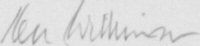 Flying Officer Ken Wilkinson (deceased) Died : 2017 *Signature Value : £45 Editions signed : Anniversary edition of 25 artist proofs. | Wilkinson, Ken (Flying Officer Ken Wilkinson (deceased)) Battle of Britain pilot flying Hurricanes, he flew Spitfires with 611 Sqn and then 616 Sqn at Kirton-in-Lindsey and 19 Sqn at Fowlmere during 1940 and after a spell instructing returned to operations on Spitfires, with 234 and 165 Squadrons. After spending time with 53, 24 and 10 Operational Training Units, he left the RAF in November 1945 and served in the RAFVR. Ken said : From 1st September 1939 I wrote myself off. I thought, 'you've got no chance' lasting through whatever is going to be. It was quite obvious, in the way the Germans were moving, they were going to make a hell of a war out of it, so I was ready for war. I can remember saying 'we've got to stop this fellow Hitler'. When you think of all the thousands of citizens that were being killed by this absurd bombing. They had to pay for it didn't they. Yes, we lost people. Friends that didn't come back. I don't think we were the sort of people to brood over it, ever. You have to get into an attitude to make sure that you're as cold as a fish. Once someone has failed to return, that's it. Fortune smiled on me and not on some of the others. I can only say that whoever it was who popped off at me, wasn't a very good marksman. It transpired that we were doing something far more important than we thought. As far as we were concerned, it was just that there were some untidy creatures from over the other side of the channel, trying to bomb England and the United Kingdom. And we didn't want them to bomb us. After all, we never asked the Germans to start this nonsense, did we? But they did, and we had to stop them, and we did. It's our country. You die for you country. |
 Flight Lieutenant Benjamin Bent (deceased) Died : 2013 *Signature Value : £45 Editions signed : Anniversary edition of 25 artist proofs. | Bent, Benjamin (Flight Lieutenant Benjamin Bent (deceased)) Having joined the RAF in 1937, he flew with No.25 Sqn as a Radar and Wireless Operator on Blenheims on night fighter duties throughout the Battle of Britain, assisting in five successful interceptions on his first tour, all with S/Ldr. HP Pleasance. On the night of 4th-5th May 1941 they intercepted and damaged an unidentified enemy aircraft, on the 7-8th and 8-9th two Do17s were destroyed, on the 11th-12th an He111 was damaged and during the night of 13th-14th June a Ju88 was destroyed. Bent remustered as a Radio Observer on 10th July 1941. Tour expired, he was posted to 54 OTU Charter Hall on 29th April 1942 as an instructor. On 23rd July Bent was reclassified as a Navigator Radio and rejoined No.25 Squadron, then at Church Fenton, on 8th September 1942 for his second tour. He was commissioned from Warrant Officer in April 1943. On 21st March 21 1944 he assisted in destroying two Ju88s and at 00.43 hrs on 6th June a Me110 over the North Sea, possibly the first enemy aircraft shot down on D-Day. Awarded the DFC (gazetted 26th May 1944), Bent finished his tour in July and then served as Night Fighter Liaison Officer in France with a P-61 Black Widow squadron of the USAAF. Bent was released from the RAF on 2nd February 1947 as a Flight Lieutenant. In total he assisted in a total of eight victories. He died on 4th March 2013. |
  Group Captain Byron Duckenfield AFC (deceased) Died : 2010 *Signature Value : £50 Editions signed : Anniversary edition of 25 artist proofs. | Duckenfield, Byron (Group Captain Byron Duckenfield AFC (deceased)) Byron Duckenfield started at Flying Training School on 25th November 1935 in a Blackburn B2 at Brough. As a Sergeant, he joined No.32 Sqn at Biggin Hill on 8th August 1936 and flew Gauntlets and Hurricanes. He joined 74 Squadron at Hornchurch on 11th April 1940, flying Spitfires, and on 5th May was posted to 501 Squadron flying Hurricanes at Tangmere. On the 11th of May at Betheniville, he survived a crash in a passenger transport Bombay aircraft in an aircraft in which he was a passenger, While comin ginto land the aircraft at 200 feet the aircraft stalled and the aircrfat fell backwards just levelly out as it histhe ground. 5 of th epassengers were killed when the centre section collapsed and crushed them. Duckenfield was fortunate as he had moved position during the flight. as the two passengers sitting each side of where he was sitting had died in the crash. (it was found later that the Bombay had beeb loaded with to much weight in the aft sectiion. ) recovering in hospital in Roehampton. On 23rd July 1940, he rejoined No.501 Sqn at Middle Wallop, then moved to to Gravesend two days later, scoring his first victory, a Ju87, on the 29th of July 1940. During August and September he scored three more victories. After a spell as a test pilot from 14th September 1940, he was posted to command 66 Squadron on 20th December 1941, flying Spitfires. On 26th February 1942 he took command of 615 Squadron flying Hurricanes from Fairwood Common, taking the squadron to the Far East. In late December 1942 he was shot down in Burma and captured by the Japanese. He remained a POW until release in May 1945. After a refresher course at the Flying Training School in November 1949, he took command of No.19 Squadron flying Hornets and Meteors from Chruch Fenton. After a series of staff positions, he retired from the RAF as a Group Captain on 28th May 1969. Duckenfield would write later his details : Burma At first light, 12 Hurricanes IIC aircraft of 615 Squadron, myself in the lead, took off from Chittagong for central Burma to attack the Japanese air base at Magwe, 300 miles away on the banks of the River Irrawaddy. Arriving at Yenangyaung, we turned downstream at minimum height for Magwe, 30 miles to the South and jettisoned drop tanks. Just before sighting the enemy base, the squadron climbed to 1200 feet and positioned to attack from up sun. On the ramp at the base, in front of the hangers, were 10 or 12 Nakajima KI - 43 Oscars in a rough line up (not dispersed) perhaps readying for take. These aircraft and the hangars behind them were attacked in a single pass, before withdrawing westward at low level and maximum speed. A few minutes later perhaps 20 miles away form Magwe, I was following the line of a cheung (small creek), height about 250 feet, speed aboput 280 mph, when the aircraft gave a violent shudder, accompanied by a very lound, unusual noise. The cause was instantly apparent: the airscrew has disappeared completely, leaving only the spinning hub. My immediate reaction was to throttle back fully and switch off to stop the violently overspeeding engine. Further action was obvious: I was committed to staying with the aircraft because, with a high initial speed, not enough height to eject could be gained without the help of an airscrew. So I jettisoned the canopy and acknowledged gratefully the fact that I was following a creek; the banks of either side were hillocky ground, hostile to a forced landing aircraft. Flying the course of the creek, I soon found the aircraft to be near the stall (luckily, a lower than normal figure without an airscrew) extended the flaps and touched down wheels-up with minimum impact ( I have done worse landings on a smooth runway!) My luck was holding, if one can talk of luck in such a situation. December is the height of the dry season in that area and the creek had little water, it was shallow and narrow at the point where I came down: shallow enough to support the fusalage and narrow enough to support wing tips. So I released the harness, pushed the IFF Destruct switch, climed out and walked the wing ashore, dryshod. The question may occur -Why did not others in the squadron see their leader go down? - the answer is simple, the usual tatctic of withdrawal from an enemy target was to fly single at high speed and low level on parallel courses until a safe distance from target was attained. Then, the formation would climb to re-assemble. Having left the aircraft, I now faced a formidable escape problem? I was 300 miles from friendly territory: my desired route would be westward but 80% of that 300 miles was covered by steep north-south ridges impenetrably clothed in virgin jungle; these were natural impediments, there was also the enemy to consider. Having thought over my predicament, I decided the best I could do - having heard reports of mean herted plainspeope - was to get as far into the hills as possible and then find a (hopefully sympathetic) village. I suppose I may have covered about 15 miles by nightfall when I came upon this small hill village and walked into the village square. Nobody seemed surprised to see me (I suspect I had been followed for some time) I wa given a quiet welcome, seated at a table in the open and given food. Then exhaustion took over, I fell asleep in the chair and woke later to find myself tied up in it. Next day I was handed over to a Japanese sergeant and escort who took me back to Magwe and, soon after that, 2.5 years captivity in Rangoon jail. Sadly we have learned that Byron Duckenfield passed away on 19th November 2010. |
 Flight Lieutenant William J. Corbin DFC (deceased) Died : 2012 *Signature Value : £50 Editions signed : Anniversary edition of 25 artist proofs. | Corbin, William J (Flight Lieutenant William J. Corbin DFC (deceased)) Already a member of the RAFVR, William Corbin was called up for active duty in September 1939. Following training and conversion to Spitfires, in September 1940 he was posted as a Sergeant Pilot to join 66 Squadron at Coltishall. With the exception of a few weeks spent with 610 Squadron he remained with 66 Squadron until September 1941. Commissioned in June 1942, he returned to combat flying in September, joining 72 Squadron with whom he went to North Africa. Here he shared in a probable Me109 and damaged another, and in August 1943 was awarded the DFC. Sadly he passed away on 8th December 2012. |
  Wing Commander John Elkington (deceased) Died : 2019 *Signature Value : £40 Editions signed : Anniversary edition of 25 artist proofs. | Elkington, John (Wing Commander John Elkington (deceased)) John (Tim) Elkington was born in 1920 and joined the RAF in September 1939. Commissioned as a Pilot Officer in July 1940 he was immediately posted to join 1 Squadron flying Hurricanes atTangmere. On 15 August he shot down an Me109 over the Channel, but the following day he was himself shot down over Thorney Island. He baled out injured and was admitted to hospital, his Hurricane crashing at Chidham. He died on 1st February 2019. |
 Flight Lieutenant Trevor Gray (deceased) Died : 2012 *Signature Value : £55 Editions signed : Anniversary edition of 25 artist proofs. | Gray, Trevor (Flight Lieutenant Trevor Gray (deceased)) Trevor Gray joined the RAFVR in 1939 and was called for service on the outbreak of war. As he was only partially trained, he completed his flying training and after being awarded his wings was posted to 7 OTU at Hawarden After training Trevor Gray was commissioned as a Pilot Officer in August 1940. Converted onto Spitfires, and with the Battle of Britain at its Climax, he was urgently posted to join 64 Squadron at Leconfield, arriving on 16th September 1940. The Squadron had re-equipped from Blenheims to Spitfires earlier that year as it fought in the great air battles over Dunkirk, before seeing hectic action in the Battle of Britain. he damaged a Bf 110 in December 1940. He left the Squadron on April 3 1941 having completed his tour and was posted to 58 OTU at Grangemouth as an instructor from there he was posted to Castletown, the most northerly station on the mainland, to join 124 Squadron which was then being formed. Trevor Gray was then given a post as a research engineer officer at RAE Farnborough and finally left the RAF in 1946 as a flight Lieutenant. He died on 21st January 2012. |
  Squadron Leader Keith Lawrence DFC (deceased) Died : 2016 *Signature Value : £55 Editions signed : Anniversary edition of 25 artist proofs. | Lawrence, Keith (Squadron Leader Keith Lawrence DFC (deceased)) Keith Lawrence was born in New Zealand at Waitara on November 25th 1919. After attending Southland Boys High School at Invercargill, Lawrence went to work in a local bank in December 1936. In November 1938 he applied to join the RAF and was accepted for pilot training in Britain and sailed in February 1939. In November 1939 Keith Lawrence completed his flying training and joined the newly-formed 234 Squadron, which flew Spitfires throughout the Battle of Britain. Whilst based at St Eval in Cornwall, Lawrence shared 234s first victory on 8th July 1940 with the destruction of a Ju88 which was attacking a convoy in the Western Approaches. 234 Squadron was posted to Middle Wallop on 15 August. On 15 September Lawrence was posted to 603 Squadron at Hornchurch, and on 8 October moved to 421 Flight at Gravesend, a unit which early the following year became 91 Squadron. During the Battle of Britain he destroyed two enemy aircraft and damaged four others. Whilst on a weather reconnaissance on 26 November 1940, Lawrences Spitfire was shot down by ME 109s, his Spitfire breaking up and throwing him clear to parachute into the sea. Lawrence was picked up by a RNLI lifeboat, and having suffered severe leg injuries and a dislocated arm, was taken to hospital. He returned to 91 Squadron on the 16th of January 1942. On the 17th of February 1942 Lawrence was posted to 185 Squadron in Malta. At this time, the island's capital Valetta and its airfields were suffering almost constant bombardment from bombers with fighter escorts which generally considerably outnumbered the defending fighters. While in Malta, Lawrence was promoted to squadron commander. The Squadron flew Hurricanes until Spitfires arrived on 9 May. Lawrence returned to the UK from Malta at the end of June 1942, and began a long period as an instructor. He served at three different Operational Training Units, and after receiving training at the Central Gunnery School at Sutton Bridge, became a gunnery instructor flying Spitfires. Lawrence returned to operations with 124 Squadron from early February until the end of April 1945. The unit had been successfully intercepting German reconnaissance aircraft at 50,000 feet plus, using Spitfire VIIs with pressurised cockpits, flying from Manston. As Lawrence arrived, it was re-equipping with Spitfire IX's to carry out dive-bombing attacks on V2 sites around The Hague from RAF Coltishall. After each aircraft had dropped its 1000 lb bomb-load, it flew on to captured airfields in Belgium, and refuelled and re-armed, before bombing targets again during the return flight to Coltishall. The unit also carried out daylight escorts for bombers raiding into Germany. From the end of August 1945 Lawrence flew Meteors with 124 Squadron until he was released from the RAF in March 1946. He returned to New Zealand and settled in Christchurch but later returned to Britain. He died on 2nd June 2016. |
 Flight Lieutenant Robin M M D Lucas Died : 2011 *Signature Value : £50 Editions signed : Anniversary edition of 25 artist proofs. | Lucas, Robin M M D (Flight Lieutenant Robin M M D Lucas) Flight Lt Robin Lucas flew with 141 Squadron flying Boulton-Paul Defiants on night missions and flew Defiants during the Battle of Britain. He died in September 2011. |
  Oberleutnant Gunther Seeger (deceased) Died : 2013 *Signature Value : £50 Editions signed : Anniversary edition of 25 artist proofs. | Seeger, Gunther (Oberleutnant Gunther Seeger (deceased)) In February 1940, Gunther Seeger was an Unteroffizier with 3./JG2, scoring his first victory in the early days of the Battle of Britain. he served on the Channel Front until December 1942, including several months with the Geschwaderstabsschwarm. He transferred to the Mediterranean theatre with II./JG2 before joining 6./JG53. In February 1943 he joined 7./JG53 becoming Staffelkapitan in September 1944. Awarded the Knight's Cross, Gunther Seeger scored 56 victories. |
 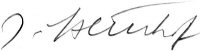 General Johannes Steinhoff (deceased) Died : 1994 *Signature Value : £80 Editions signed : Anniversary edition of 25 artist proofs. | Steinhoff, Johannes (General Johannes Steinhoff (deceased)) By early 1940 Macky Steinhoff was leading 4 / JG-52 during the Battle of Britain. He was then transferred to the eastern front where his success continued. In the final stages of the defence of the Reich he joined JV-44 flying the ME 262 in which he scored 6 victories before being seriously burned in a crash. He flew 939 missions scored 178 victories and was awarded the Knights Cross with Oak leaves and swords. |
| Squadrons Related to This Print |
| JG51 |
| No.54 Sqn |
| Aircraft Related to This Print |
| Me109 |
| Spitfire |
|
Contact Details |
Sign Up To Our Newsletter!
This website is owned by Cranston Fine Arts. Torwood House, Torwoodhill Road, Rhu, Helensburgh, Scotland, G848LE Contact: Tel: (+44) (0) 1436 820269. Email: cranstonorders -at- outlook.com |


 Signature(s) value alone : £620