|
|
|
|
||
|
|
|
|
||
| Navigation Menus |
|
Military Art Index |
Aviation Art Index |
Naval Art Index |
Artists Index |
Aviation History Archive |
Naval History Archive |
|
| HALF PRICE AND FREE PRINT SPECIAL OFFERS | ||||||
|
| ||||||||||||||||||||||||||||||||||||||||||||||||||||||||||||||||||||||||||||
Some other related items available from this site. | ||||
  Battle of Britain by Stan Stokes. | 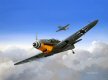  Tribute to Alfred Grislawski by Ivan Berryman. |   Tribute to Wing Commander Brendan 'Paddy' Finucane by Ivan Berryman. |   Jet Legend by Gerald Coulson. | |
| Signatures on these products | |
| *The value given for each signature has been calculated by us based on the historical significance and rarity of the signature and is for the unmatted version where available. Values of many pilot signatures have risen in recent years and will likely continue to rise as they become more and more rare. | |
| Name | Info |
 Air Vice-Marshal Denys Gillam (deceased) Died : 1991 *Signature Value : £75 Editions signed : Signed limited edition of publishers proofs. | Gillam, Denys (Air Vice-Marshal Denys Gillam (deceased)) Battle of Britain Ace who served with 616 and 312 Squadrons. He scored a total of 7 victories, including one of the fastest ever, where he downed a Ju-88 which was making a bombing run, as he took off from the airfield. He took command of the Typhoon Wing at Duxford in March 1942, which flew their first combat operation in June 1942. He died in 1991. |
  Air Commodore James Leathart (deceased) Died : 1998 *Signature Value : £85 Editions signed : Signed limited edition of publishers proofs. | Leathart, James (Air Commodore James Leathart (deceased)) After flight training, he joined No.54 Squadron flying Gauntlets. He became the commanding officer of No.54 Squadron as they re-equipped with Spitfire MkIs. In a remarkable event, he was awarded the DSO when he rescued the stranded CO of No.74 Sqn. Commandeering a Miles Master training aircraft, he flew to France escorted by other pilots from No.54 Sqn, and rescued the CO before returning across the Channel. It was for this action that he was awarded the DSO in June 1940. Died in 1998. |
  General Gunther Rall (deceased) Died : 2009 *Signature Value : £75 Editions signed : Signed limited edition of publishers proofs. | Rall, Gunther (General Gunther Rall (deceased)) A young pilot with III/JG52 at the outbreak of war. He quickly demonstrated his natural ability and leadership qualities, scoring his first air victory early in the Battle of Britain, and by July 1940 was leading 8/JG52. After transfer to the Eastern Front his air victories mounted at an astonishing rate. A crash hospitalised him but within nine months he was back in the cockpit, and, when commanding III/JG52, gained the Wings 500th victory. Gunther fought throughout the war to become the 3rd highest Ace in history with 275 victories. He was awarded the Knights Cross with Oak Leaves and Swords. Gunther Rall was born on March 10, 1918 in the small Bavarian town of Gaggenau, Baden. Immersing himself in Boy Scout activities during the difficult economic times in Germany following WW 1, Rall finished school in 1936 and joined the German Army. Influenced by a friend, who was a young officer in the Luftwaffe, Rall entered pilots school in 1938. His initial posting was with JG52. He attained his first aerial victory during the Battle of France in May of 1940. During the Battle of Britain JG52 absorbed many casualties, and Rall was promoted to Squadron Commander at the young age of 22. With his fair-hair and smooth complexion the young officer looked even younger than his years. But behind this pleasant exterior was a fierce competitor with the heart of a tiger. Later, Ralls squadron would support the attack on Crete, followed by deployment to the Southern Sector on the Eastern Front. Ralls victory totals began to mount. Following his 37 th victory, GiInther was himself shot down. He was lucky to survive the crash, but with a badly broken back he would spend most of the next year in various hospitals. In Vienna at the University Hospital he would meet his future wife, Hertha. Miraculously, Rall recovered and returned to the Luftwaffe in August of 1942. By November his score exceeded 100 and he was awarded the Oak Leaves to accompany the Knights Cross he was awarded only weeks earlier. As the War progressed against Russia, Rall began to encounter ever more experienced Soviet pilots flying better performing aircraft. Despite this fact, and being shot down several more times himself, Ralls victory tally kept rising. By March of 1944 the ace had attained 273 aerial victories. With the War now going badly for Germany, Rall was transferred to the Western Front. He was able to attain only two more victories against the swarms of Allied bombers and fighter escorts which now pounded Germany every day and night. In May of 1944 Rall was shot down by a P-47. Losing his thumb in the battle he remained out of combat until later in 1944. Ralls final assignments included flying 190Ds as Kornmodore of JG300, and flying the Me-262 jet. Ralls 275 aerial victories (attained on less than 700 combat sorties) make him the third highest scoring ace of all time. If not for the down time suffered as a result of his broken back, Rall might have actually equaled or exceeded Erich Hartmanns alltime record of 352 aerial victories. Rall was not much for socializing during the War. He was a fierce competitor with a businessmans attitude about flying. He was an excellent marksman, and possibly the best deflection shot expert of the War. He continued to fly with the Bundeslufwaffe following the War, serving as its Commander-In Chief in 1970-74. Sadly Gunther Rall died on 4th October 2009. |
  Wing Commander Harbourne Stephen CBE, DSO, DFC (deceased) Died : 2001 *Signature Value : £70 Editions signed : Signed limited edition of publishers proofs. | Stephen, Harbourne (Wing Commander Harbourne Stephen CBE, DSO, DFC (deceased)) Flying Spitfires with 605 squadron he took part in the air battles over France and Dunkirk and throughout the thick of the Battle of Britain. He was one of the top scoring R.A.F. pilots at the end of 1940 with 22 and a half air victories. In 1942 he was posted to the far east where he took command of 166 wing, remaining in fighters until the end of the war. After the war he had a successful career in newspapers where he became managing Director of the Daily Telegraph and Sunday Telegraph. He died on 20th August 2001. |
 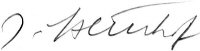 General Johannes Steinhoff (deceased) Died : 1994 *Signature Value : £80 Editions signed : Signed limited edition of publishers proofs. | Steinhoff, Johannes (General Johannes Steinhoff (deceased)) By early 1940 Macky Steinhoff was leading 4 / JG-52 during the Battle of Britain. He was then transferred to the eastern front where his success continued. In the final stages of the defence of the Reich he joined JV-44 flying the ME 262 in which he scored 6 victories before being seriously burned in a crash. He flew 939 missions scored 178 victories and was awarded the Knights Cross with Oak leaves and swords. |
 Colonel Herbert Ihlefeld (deceased) Died : 1995 *Signature Value : £65 Editions signed : Signed limited edition of publishers proofs. | Ihlefeld, Herbert (Colonel Herbert Ihlefeld (deceased)) Born 1st June 1914 in Pinnow Pommern and died 8th August 1995 in Wenningen lower Saxony. Joined the Luftwaffe in 1936 and scored nine victories during the Spanish Civil War. Flew 1000 combat missions and claimed 132 enemy aircraft with 56 on the Western Front including 26 spitfires and 67 on the Russian Front. Participated in the air war over Poland, France and the Battle of Britain. In 1941 Ihlefeld was transferred to the Balkans for the invasion of Yugoslavia. He was shot down by AA fire and captured by the Yugoslavian Army. 8 days lated he was rescued by the German troops. Ihlefeld participated in the assault on Crete, claiming his 36th kill, a Hurricane. He then commanded Jagdgeschwader 77 in time for Operation Barbarossa in June 1941. In April 1942 Ihlefeld became the 5th pilot to reach 100 victories and his unit 1/JG77 was credited with 323 enemy aircraft kills compared to the loss of only 17 Bf109s. Ihlefeld then took command of Jagdgeschwader 52 in June 1942 but he was involved in a landing accident and badly injured and was not ready to return to active service until July 1943. In May 1944 he commanded JG11 and then JG1 during the defence of the Reich. In 1945 he took command of Jagdgeschwader 1 equipped with the Heinkel 162. |
| Squadrons Related to This Print |
| JG2 |
| No.92 Sqn |
| Aircraft Related to This Print |
| Me109 |
| Spitfire |
|
Contact Details |
Sign Up To Our Newsletter!
This website is owned by Cranston Fine Arts. Torwood House, Torwoodhill Road, Rhu, Helensburgh, Scotland, G848LE Contact: Tel: (+44) (0) 1436 820269. Email: cranstonorders -at- outlook.com |



 Signature(s) value alone : £450