|
|
|
|
||
|
|
|
|
||
| Navigation Menus |
|
Military Art Index |
Aviation Art Index |
Naval Art Index |
Artists Index |
Aviation History Archive |
Naval History Archive |
|
| HALF PRICE AND FREE PRINT SPECIAL OFFERS | ||||||
|
| ||||||||||||||||||||||||||||||||||||||||||||||||||||||||||||||||||||
Some other related items available from this site. | ||||
  The Struggle for Malta by Ivan Berryman. |  Return of the Few by Stephen Brown. |   One - Tens Over Kent by Nicolas Trudgian. |   An Early Bath by Ivan Berryman. | |
| Signatures on these products | |
| *The value given for each signature has been calculated by us based on the historical significance and rarity of the signature and is for the unmatted version where available. Values of many pilot signatures have risen in recent years and will likely continue to rise as they become more and more rare. | |
| Name | Info |
  Wing Commander Tom Neil DFC* AFC (deceased) Died : 2018 *Signature Value : £50 Editions signed : Collectors edition of 25 artist proofs. | Neil, Tom (Wing Commander Tom Neil DFC* AFC (deceased)) Tom Neil was born on 14th July 1920 in Bootle, Lancashire. Tom Neil (also to become known in the RAF as 'Ginger') joined the RAFVR in October 1938 and began his flying training at 17 E and RFTS, Barton, Manchester. Tom Neil was called up on the 2nd os September 1939 being sent to 4 ITW, Bexhill in early November. On 1st December 1939, he was posted to 8 FTS and on completion of the course he was commissioned and posted to 249 Squadron in May 1940 flying Hurricanes just before the start of the Battle of Britain flying from North Weald. On 7th September 1940, Tom Neil encountered and claimed a Bf109 destroyed. On the 11th an He111, on the 15th two Bf109s and a Do17 destroyed and another Do17 shared, on the 18th an He111 damaged and on the 27th a Bf110 and a Ju88 destroyed, a Bf110 probably destroyed and a Ju88 shared. On 6th October Tom Neil shared a Do17, on the 25th claimed a Bf109 destroyed, on the 27th a Do17 probably destroyed, on the 28th a Ju88 shared and on 7th November a Ju87 and two Bf109s destroyed. He was awarded a DFC on 8 October, but on 7 November, after claiming 3 victories over the North Sea off the Essex coast, he collided in mid-air with Wing Commander Francis Beamish and his aircraft lost its tail. He baled out of his Hurricane unhurt, Beamish force-landing unscathed. Tom received a Bar to his DFC on 26 November, and on 13 December was promoted flight Commander. The squadron was posted to Malta in May 1941, flying off HMS Ark Royal on the 21st. During a summer of frequent scrambles, he claimed one further victory in June, while on 7th October he led a fighter-bomber attack on Gela station, Sicily. He departed the island in December 1941, returning to the UK via the Middle East, South and West Africa, and Canada, finally arriving in March 1942, when he became tactics officer with 81 Group. A spell as an instructor at 56 OTU, before being posted as a flying liaison officer with the 100th Fighter Wing of the US 9th Air Force in January 1944. He managed to get some flying in over France with this unit, claiming a share in 6 aircraft destroyed on the ground before D-Day, and a dozen or so more later, plus a number of other ground targets. In January 1945 he was sent to the school of Land/Air Warfare as an instructor. In March 1945 he was posted out to Burma, where he undertook some operations with 1 Wing, Indian Air Force, to gain experience of the operations in this area. Returning to the UK in April, he resumed instructing at the school until the end of the year. In January 1946 he attended the Empire Test Pilots School, undertaking No.4 short course and No.5 course, a total of 18 months. Posted briefly to Farnborough, he sought a move to Boscombe Down, where he stayed for some 3 years. In 1948 in went to Wright-Patterson AFB, Dayton, Ohio, to take part in the first high altitude pressure suit experiments, as a precursor to the aerospace programme. 1950-51 he was a staff officer at HQ, Fighter Command, while in 1952 he attended the staff college at Bracknell. He was then given command of 208 Squadron in Egypt, which he led until 1956, leaving just before the Suez operation. He returned to the UK to become W/Cdr Operations, Metropolitan sector, until 1958, when he attended the flying college at Manby. He went to the British Embassy in Washington for 3 years from 1959, returning to the Ministry of Defence but retiring from the service as a Wing Commander in 1964. Meanwhile he had added the US Bronze Star to his decorations in august 1947, and an AFC in January 1956. Tom Neil died on 11th July 2018. |
  Wing Commander John Elkington (deceased) Died : 2019 *Signature Value : £40 Editions signed : Collectors edition of 25 artist proofs. | Elkington, John (Wing Commander John Elkington (deceased)) John (Tim) Elkington was born in 1920 and joined the RAF in September 1939. Commissioned as a Pilot Officer in July 1940 he was immediately posted to join 1 Squadron flying Hurricanes atTangmere. On 15 August he shot down an Me109 over the Channel, but the following day he was himself shot down over Thorney Island. He baled out injured and was admitted to hospital, his Hurricane crashing at Chidham. He died on 1st February 2019. |
  General Gunther Rall (deceased) Died : 2009 *Signature Value : £75 Editions signed : Collectors edition of 25 artist proofs. | Rall, Gunther (General Gunther Rall (deceased)) A young pilot with III/JG52 at the outbreak of war. He quickly demonstrated his natural ability and leadership qualities, scoring his first air victory early in the Battle of Britain, and by July 1940 was leading 8/JG52. After transfer to the Eastern Front his air victories mounted at an astonishing rate. A crash hospitalised him but within nine months he was back in the cockpit, and, when commanding III/JG52, gained the Wings 500th victory. Gunther fought throughout the war to become the 3rd highest Ace in history with 275 victories. He was awarded the Knights Cross with Oak Leaves and Swords. Gunther Rall was born on March 10, 1918 in the small Bavarian town of Gaggenau, Baden. Immersing himself in Boy Scout activities during the difficult economic times in Germany following WW 1, Rall finished school in 1936 and joined the German Army. Influenced by a friend, who was a young officer in the Luftwaffe, Rall entered pilots school in 1938. His initial posting was with JG52. He attained his first aerial victory during the Battle of France in May of 1940. During the Battle of Britain JG52 absorbed many casualties, and Rall was promoted to Squadron Commander at the young age of 22. With his fair-hair and smooth complexion the young officer looked even younger than his years. But behind this pleasant exterior was a fierce competitor with the heart of a tiger. Later, Ralls squadron would support the attack on Crete, followed by deployment to the Southern Sector on the Eastern Front. Ralls victory totals began to mount. Following his 37 th victory, GiInther was himself shot down. He was lucky to survive the crash, but with a badly broken back he would spend most of the next year in various hospitals. In Vienna at the University Hospital he would meet his future wife, Hertha. Miraculously, Rall recovered and returned to the Luftwaffe in August of 1942. By November his score exceeded 100 and he was awarded the Oak Leaves to accompany the Knights Cross he was awarded only weeks earlier. As the War progressed against Russia, Rall began to encounter ever more experienced Soviet pilots flying better performing aircraft. Despite this fact, and being shot down several more times himself, Ralls victory tally kept rising. By March of 1944 the ace had attained 273 aerial victories. With the War now going badly for Germany, Rall was transferred to the Western Front. He was able to attain only two more victories against the swarms of Allied bombers and fighter escorts which now pounded Germany every day and night. In May of 1944 Rall was shot down by a P-47. Losing his thumb in the battle he remained out of combat until later in 1944. Ralls final assignments included flying 190Ds as Kornmodore of JG300, and flying the Me-262 jet. Ralls 275 aerial victories (attained on less than 700 combat sorties) make him the third highest scoring ace of all time. If not for the down time suffered as a result of his broken back, Rall might have actually equaled or exceeded Erich Hartmanns alltime record of 352 aerial victories. Rall was not much for socializing during the War. He was a fierce competitor with a businessmans attitude about flying. He was an excellent marksman, and possibly the best deflection shot expert of the War. He continued to fly with the Bundeslufwaffe following the War, serving as its Commander-In Chief in 1970-74. Sadly Gunther Rall died on 4th October 2009. |
  Tony Pickering AFC (deceased) Died : 2016 *Signature Value : £45 Editions signed : Collectors edition of 25 artist proofs. | Pickering, Tony (Tony Pickering AFC (deceased)) With the RAFVR just before the war commenced, Tony Pickering joined 32 Squadron at Biggin Hill in July 1940, flying Hurricanes, and in August 1940 to 501 Squadron at Gravesend. In September he was shot down in Hurricane P5200, but unhurt in a duel with an Me109, destroying another 109 a few weeks later. In December he joined 601 Squadron at Northolt. After a spell instructing, he joined 131 as a Flight Commander in February 1943, and later served as a Squadron Commander in the Middle East. Tony Pickering died on 24th March 2016. |
 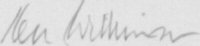 Flying Officer Ken Wilkinson (deceased) Died : 2017 *Signature Value : £45 Editions signed : Collectors edition of 25 artist proofs. | Wilkinson, Ken (Flying Officer Ken Wilkinson (deceased)) Battle of Britain pilot flying Hurricanes, he flew Spitfires with 611 Sqn and then 616 Sqn at Kirton-in-Lindsey and 19 Sqn at Fowlmere during 1940 and after a spell instructing returned to operations on Spitfires, with 234 and 165 Squadrons. After spending time with 53, 24 and 10 Operational Training Units, he left the RAF in November 1945 and served in the RAFVR. Ken said : From 1st September 1939 I wrote myself off. I thought, 'you've got no chance' lasting through whatever is going to be. It was quite obvious, in the way the Germans were moving, they were going to make a hell of a war out of it, so I was ready for war. I can remember saying 'we've got to stop this fellow Hitler'. When you think of all the thousands of citizens that were being killed by this absurd bombing. They had to pay for it didn't they. Yes, we lost people. Friends that didn't come back. I don't think we were the sort of people to brood over it, ever. You have to get into an attitude to make sure that you're as cold as a fish. Once someone has failed to return, that's it. Fortune smiled on me and not on some of the others. I can only say that whoever it was who popped off at me, wasn't a very good marksman. It transpired that we were doing something far more important than we thought. As far as we were concerned, it was just that there were some untidy creatures from over the other side of the channel, trying to bomb England and the United Kingdom. And we didn't want them to bomb us. After all, we never asked the Germans to start this nonsense, did we? But they did, and we had to stop them, and we did. It's our country. You die for you country. |
| Aircraft Related to This Print |
| Hurricane |
|
Contact Details |
Sign Up To Our Newsletter!
This website is owned by Cranston Fine Arts. Torwood House, Torwoodhill Road, Rhu, Helensburgh, Scotland, G848LE Contact: Tel: (+44) (0) 1436 820269. Email: cranstonorders -at- outlook.com |


 Signature(s) value alone : £255