|
|
|
|
||
|
|
|
|
||
| Navigation Menus |
|
Military Art Index |
Aviation Art Index |
Naval Art Index |
Artists Index |
Aviation History Archive |
Naval History Archive |
|
| HALF PRICE AND FREE PRINT SPECIAL OFFERS | ||||||
|
| ||||||||||||||||||||||||||||||||||||||||||||||||||||||||||||
Some other related items available from this site. | ||||
  Tangmere Hurricanes by Nicolas Trudgian. | Tangmere Hurricanes by Nicolas Trudgian. |   Summer of 44 by Nicolas Trudgian. | Summer of 44 by Nicolas Trudgian | |
| Signatures on these products | |
| *The value given for each signature has been calculated by us based on the historical significance and rarity of the signature and is for the unmatted version where available. Values of many pilot signatures have risen in recent years and will likely continue to rise as they become more and more rare. | |
| Name | Info |
  Wing Commander Roland Bee Beamont CBE DSO DFC DL (deceased) Died : 2001 *Signature Value : £65 Editions signed : Signed Ltd. Ed of 525 prints. | Beamont, Roland (Wing Commander Roland Bee Beamont CBE DSO DFC DL (deceased)) One of World War IIs great characters, Bee flew Hurricanes with 87 Squadron, later leading a Tempest Wing. He had 8 victories plus a further 32 VIs destroyed. After the war he became a highly respected Chief Test Pilot.Wing Commander Roland Beamont, one of the RAFs top buzz bomb interceptors, was born in Enfield England on August 10, 1920. Educated at Eastborne College, Beamont accepted a short service commission with the Royal Air Force in 1938. He commenced flying in 1939 at the the No. 13 Reserve Flying School at White Waltham. His initial duty was with the Group Fighter Pool at St. Athan where he learned to fly the Hurricane. Beamont was soon posted with the No. 87 Squadron which was part of the Advanced Air Striking Force in France. Seeing action in both France and Belgium prior to the Allied withdrawl, Beamont rejoined 87 Squadron in England during the Battle of Britain. In the spring of 1941 Beamont was awarded the Distinguished Flying Cross after destroying five enemy aircraft. As Commanding Officer of 609 Squadron, Beamont pioneered both day and night ground attack missions utilizing the Typhoon. Beamont was credited with destroying 25 trains in a three month period. He was then made responsible for organizing and commanding the first Tempest Wing at Newchurch. Three days after D-Day Bearnont shot down an Me-109, marking the first aerial combat victory for the Hawker Tempest. In the summer of 1944 Beamont destroyed 32 buzz bombs prior to leading his wing to a Dutch Airfield at Volkel on the Continent. In October of 1944 Beamont was shot down during a ground attack mission over Germany, and he remained a prisoner of war until wars end. Following repatriation Beamont became an experimental test pilot with the Gloster Aircraft Company, which had developed the RAFs first jet aircraft. Turning down a permanent commission with the RAF, Beamont then joined English Electric Company in Wharton as the Chief Test Pilot for the B3/45 (Canberra) jet bomber program. He managed all prototype testing on the Canberra, and in the process set two Atlantic speed records. Later Beamont was involved with the supersonic P1/Lightning program, and became the first British pilot to fly at twice the speed of sound. From 1965 until 1970 he was a founding member of Britains highly succesful Saudi Arabian export program. For several years prior to his retirement in 1979, Beamont was Director of Operations for British Aerospace and Panavia where he was in charge of flight testing for the Tornado. Since his retirement Beamont has authored nine books, and published numerous magazine articles. He is a Fellow of the Royal Aeronautical Scociety and an Honorary Fellow of the Society of Experimental Test Pilots in America. He died 19th November 2001. |
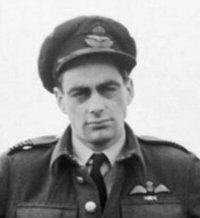 Group Captain Irving Smith (deceased) Died : 2000 *Signature Value : £60 Editions signed : Signed Ltd. Ed of 525 prints. | Smith, Irving (Group Captain Irving Smith (deceased)) Smith joined the RNZAF in 1939 before volunteering to complete his flying training in Britain. After earning his wings, he joined No. 151 Squadron during the Battle of Britain, where he claimed several victories against German aircraft and was awarded the Distinguished Flying Cross (DFC) in 1941. He later commanded the squadron as it transitioned from Hurricanes and Defiants to Mosquito night fighters, earning a Bar to his DFC for further operational success. After a period in staff roles, Smith returned to operational command with No. 487 Squadron, leading the famous Amiens Prison raid in February 1944 as well as other precision Mosquito attacks in occupied France. Following the war he remained in the RAF, serving in a range of command and staff appointments, including command of No. 56 Squadron, RAF Church Fenton and RAF Jever in Germany. His service was recognised with an OBE in 1953 and a CBE in 1960, and he retired in 1966 as a Group Captain. In retirement he farmed in Devon and pursued yacht racing before his death on the 16th of February 2000 |
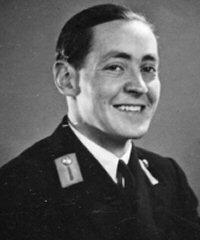 Captain Patrick Chilton (deceased) Died : 1995 *Signature Value : £60 Editions signed : Signed Ltd. Ed of 525 prints. | Chilton, Patrick (Captain Patrick Chilton (deceased)) Patrick Charles Stuart Chilton was born in 1921 and educated at Blundell's School before joining the Royal Navy in 1938 and qualifying as a naval aviator the following year. During the Second World War he flew with several Fleet Air Arm squadrons, beginning with No. 804 Squadron on home defence duties before serving in the Western Desert, aboard HMS Illustrious, and later commanding No. 1843 Squadron in the Far East. After the war he commanded the School of Naval Air Warfare and No. 748 Squadron, became the Royal Navy's senior test pilot, and spent two years conducting test flying with the US Navy. He subsequently commanded No. 806 Squadron, served as Chief Flying Instructor at the Fighter School, led the Flying Wing at Bedford, and concluded his career as Commandant of the Empire Test Pilots' School at Boscombe Down. Awarded the Air Force Cross (AFC) in 1959, Chilton retired in 1971 with the rank of Captain and he died on the 23rd of July 1995. |
  Air Commodore Peter Brothers CBE, DSO, DFC* (deceased) Died : 2008 *Signature Value : £65 Editions signed : Signed Ltd. Ed of 525 prints. | Brothers, Peter (Air Commodore Peter Brothers CBE, DSO, DFC* (deceased)) Learnt to fly at the age of 16 and joined the RAF two years later in 1936. He first saw action in 1940 when as a Flight Commander in 32 Squadron, based at Biggin Hill, he flew his Hurricane against the fighters and bombers of the Luftwaffe. He recalls this as an intensely busy period, during which he shot down an Me109 - his first enemy aircraft; by the end of August that same year his tally of enemy aircraft shot down increased to eight. Awarded the DFC, he was transferred to 257 Squadron where he joined Bob-Stanford Tuck as a Flight Commander. Promoted in 1941 to Squadron Leader, Pete Brothers then took command of 457 Squadron RAAF, equipped with Spitfires. A year later when 457 Squadron returned to Australia, Pete took command of 602 Squadron. In the early autumn of 1942 he went on to become Wing Leader of the Tangmere Wing, succeeding his old friend, Douglas Bader. By the end of the war Pete Brothers had amassed 875 operational hours over a 44-month period. He was credited with having personally shot down 16 enemy aircraft and damaged many more. He later went on to command 57 Squadron during the Malaya campaign. Upon return to the UK Pete Brothers joined the V-Force, flying Valiant-4 jet bombers. He retired in 1973. Sadly, Pete Brothers died 18th December 2008. |
|
Contact Details |
Sign Up To Our Newsletter!
This website is owned by Cranston Fine Arts. Torwood House, Torwoodhill Road, Rhu, Helensburgh, Scotland, G848LE Contact: Tel: (+44) (0) 1436 820269. Email: cranstonorders -at- outlook.com |