|
|
|
|
||
|
|
|
|
||
| Navigation Menus |
|
Military Art Index |
Aviation Art Index |
Naval Art Index |
Artists Index |
Aviation History Archive |
Naval History Archive |
|
| HALF PRICE AND FREE PRINT SPECIAL OFFERS | ||||||
|
| |||||||||||||||||||||||||||||||||||||||||||||||||||||||||||||||||||||||||||||||||||||||||||||||||||||||||||||||||
Some other related items available from this site. | ||||
  Sqn Ldr Maurice Brown - No.41 Sqn by Ivan Berryman. |   Day of the Fighters by Nicolas Trudgian. |   Clipped Signature - Werner Hohenburg. |   Wounded Swallow by Ivan Berryman. | |
| Signatures on these products | |
| *The value given for each signature has been calculated by us based on the historical significance and rarity of the signature and is for the unmatted version where available. Values of many pilot signatures have risen in recent years and will likely continue to rise as they become more and more rare. | |
| Name | Info |
  Major Erich Rudorffer (deceased) Died : 2016 *Signature Value : £70 Editions signed : Limited edition of 30 giclee art prints. Limited edition of 20 artist proofs. Signature edition of 2 prints. Original pencil drawing by David Pentland. | Rudorffer, Erich (Major Erich Rudorffer (deceased)) Erich Rudorffer was born on November 1st 1917 in the town of Zwickau in Saxony. Erich Rudorffer joined the Luftwaffes I./JG2 Richthofen in November 1939, and was soon flying combat patrols in January 1940 and was assigned to I/JG 2 Richthofen with the rank of Oberfeldwebel. He took part in the Battle of France, scoring the first of his many victories over a French Hawk 75 on May 14th, 1940. He went on to score eight additional victories during the Battle of France and the Battle of Britain. Rudorffer recalled an incident in August 1940 when he escorted a badly damaged Hurricane across the Channel - ditching in the English Channel was greatly feared by pilots on both sides. As fate often does, Rudorffer found the roles reversed two weeks later, when he was escorted by an RAF fighter after receiving battle damage. By May 1st 1941 Rudorffer had achieved 19 victories, which led to the award of the Knights Cross. In June 1941 Rodorffer became an Adjutant of II./JG2. In 1942 Rudorffer participated in Operation Cerberus (known as the Channel Dash) and flew over the Allied landings at Dieppe. Erich Rudorffer along with JG2 was transferred to North Africa in December 1942. It was in North Africa that Rudorffer showed his propensity for multiple-victory sorties. He shot down eight British aircraft in 32 minutes on February 9th 1943 and seven more in 20 minutes six days later. After scoring a total of 26 victories in Tunisia, Rudorffer returned to France in April 1943 and was posted to command II./JG54 in Russia, after Hauptmann Heinrich Jung, its Kommodore, failed to return from a mission on July 30th 1943. On August 24th 1943 he shot down 5 Russian aircraft on the first mission of the day and followed that up with three more victories on the second mission. He scored seven victories in seven minutes on October 11th but his finest achievement occurred on November 6th when in the course of 17 minutes, he shot down thirteen Russian aircraft. Rudorffer became known to Russian pilots as the fighter of Libau. On October 28th 1944 while about to land, Rudorffer spotted a large formation of Il-2 Sturmoviks. He quickly aborted the landing and moved to engage the Russian aircraft. In under ten minutes, nine of the of the II-2 Sturmoviks were shot down causing the rest to disperse. Rudorffer would later that day go on and shoot down a further two Russian aircraft. These victories took his total to 113 and he was awarded the Oak Leaves on April 11th 1944. Rudorffer would on the 26th January 1945 on his 210th victory receive the addition of the Swords. In February 1945 Rudorffer took command of I./JG7 flying the Me262. He was one of the first jet fighter aces of the war, scoring 12 victories in the Me262. He shot down ten 4-engine bombers during the 'Defense of the Reich missions'. He was the master of multiple scoring - achieving more multiple victories than any other pilot. Erich Rudorffer never took leave, was shot down 16 times having to bail out 9 times, and ended the war with 222 victories from over 1000 missions. He was awarded the Knights Cross, with Oak Leaves and Swords. Erich Rudorffer died on 8th April 2016. |
 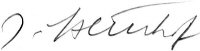 General Johannes Steinhoff (deceased) Died : 1994 *Signature Value : £80 Editions signed : Signature edition of 2 prints. | Steinhoff, Johannes (General Johannes Steinhoff (deceased)) By early 1940 Macky Steinhoff was leading 4 / JG-52 during the Battle of Britain. He was then transferred to the eastern front where his success continued. In the final stages of the defence of the Reich he joined JV-44 flying the ME 262 in which he scored 6 victories before being seriously burned in a crash. He flew 939 missions scored 178 victories and was awarded the Knights Cross with Oak leaves and swords. |
 Kurt Buhligen (deceased) Died : 1985 *Signature Value : £65 Editions signed : Signature edition of 2 prints. | Kurt, Buhligen (Kurt Buhligen (deceased)) Kurt Buhligen was born in 1917. He had a strong desire to fly so he joined the Luftwaffe on its inception. He joined initially as a mechanic but his forceful character soon qualified him as fighter pilot material. The Luftwaffe accepted his request for a transfer, and he underwent pilot training throughout 1938 – 1939. By July 1940 he was assigned to JG2 Richthofen. He scored his first victory on 4th September 1940 during the Battle of Britain, one year later his score had risen to 21. In December 1942 he was transferred to Tunisia, where he showed what a true fighter pilot he was – shooting down no less than forty aircraft. Transferred back to the west in defence of his homeland in early 1943, his score had reached 96. By 1944 he had shot down his 100th victim. While flying over Soviet held territory his engine malfunctioned and he was forced to land. He was captured by the Russians and held as a POW until 1950. He had scored a total of 112 victories. Buhligen loved to fight P-47s. He would let the P-47 get on his tail, then would do an Immelmann Loop, come up on the P-47s tail and shoot it down. He was awarded the Knights Cross with Oak Leaves and Swords. Buhligen died at his home on 11th August 1985. All our signatures of Kurt Buhligen were signed during an interview in the 1980s. |
  General Adolf Galland (deceased) Died : 1996 *Signature Value : £80 Editions signed : Signature edition of 2 prints. | Galland, Adolf (General Adolf Galland (deceased)) Adolf Galland fought in the great Battles of Poland, France and Britain, leading the famous JG26 Abbeville Boys. He flew in combat against the RAFs best including Douglas Bader, Bob Stanford Tuck and Johnnie Johnson. In 1941, at the age of 29, he was promoted to Inspector of the Fighter Arm. In 1942 Hitler personally selected Galland to organise the fighter escort for the Channel Dash. He became the youngest General in the German High Command but open disagreements with Goering led to his dismissal at the end of 1944. He reverted to combat flying, forming the famous JV44 wing flying the Me262 jet fighter, and was the only General in history to lead a squadron into battle. With 104 victories, all in the West, Adolf Galland received the Knights Cross with Oak Leaves, Swords and Diamonds. Born 19th March 1912, died 9th February 1996. Born in 1911, Adolf Galland learned to fly at a state-sponsored flying club in the early 1930s. In 1933 he was selected to go to Italy for secret pilot training. Galland flew for a brief time as a commercial airline pilot prior to joining the clandestine Luftwaffe as a Second Lieutenant. In April of 1935 he was assigned to JG-2, the Richtofen Fighter Wing, and in 1937 he joined the ranks of the Condor Legion flying the He-51 biplane fighter in support of General Franco during the Spanish Civil War. Despite flying 280 missions, Galland attained no aerial victories, a rather inauspicious start for a pilot would go on to attain more than 100 aerial victories - the highest for any pilot who flew on the Western Front. During Germanys invasion of Poland, Galland was assigned to an attack squadron and he flew over fifty ground sorties. He was promoted to Captain for his efforts, but Galland was anxious to return to a fighter squadron, and he got his wish in October of 1939 when he was transferred to JG-27. It was with JG-27 that Galland first learned to fly the Bf-109. In May of 1940 JG-27 flew in support of the invasion of Belgium, and Galland achieved his first combat victory on May 12. Two months later his score had risen to more than a dozen, and at this time he was once again transferred to JG-26 situated on the Channel Coast. Engaging the RAF on a daily basis during the Battle of Britain, Gallands score rose steadily until it exceeded 40 victories by September. After a short leave Galland rejoined JG-26 in Brittany, where the squadron played a defensive role. Following Germanys invasion of Russia in June of 1941, JG-26 became one of only two German fighter squadrons left on the Channel Coast. This resulted in plenty of flying, and by late in 1941 Gallands victory totals had reached 70. Following a near brush with death when the fuel tank of his 109 exploded, Galland was grounded for a time, and sent to Berlin where he was made the General of the Fighter Arm, reporting directly to Goring and Hitler. Galland spent most of the next few years carrying out inspection tours, and was at odds with his superiors about the need for an adequate fighter defense to negate ever-increasing Allied bombing of Germanys cities. He continued to fly combat missions when the opportunity presented itself, despite Gorings orders to the contrary. In January of 1945 almost 300 fighters were lost in an all-out attack on Allied airfields in France, a mission Galland did not support. He was dismissed as General of the Fighter Arm for his insubordination, but reflecting his flying abilities Hitler ordered Galland to organize JV-44, Germanys first jet-equipped fighter squadron. By March of 1945 Galland had recruited 45 of Germanys best surviving fighter pilots, and this new squadron was given the difficult task of trying to counter the daily onslaught of 15th Air Force bombers coming at Germany from the South. Gallands final mission of the War occurred on April 26 when he attained his 102nd and 103rd confirmed aerial victories prior to crash landing his damaged Me262. Several days later the War was over for both Galland and Germany. General Galland died in 1996. |
 Wing Commander Roger Morewood (deceased) Died : 2014 *Signature Value : £55 Editions signed : Original pencil drawing by David Pentland. | Morewood, Roger (Wing Commander Roger Morewood (deceased)) An uncle suggested to Roger Morewood that he should join the RAF so Roger did at the age of 17. Roger said : I was going be a pilot, that was the only reason to join. Roger trained to fly in a Tiger Moth biplane before joining 56 Squadron - regarded within the RAF as an elite unit - flying open cockpit Gauntlet fighters. The squadron were then re-equipped with Gloster Gladiators - the last RAF biplane - then the Hawker Hurricanes that would join Spitfires in fighting off Hitlers Luftwaffe in the Battle of Britain. While serving with 56 Squadron Roger Morewood was assigned the dangerous role of long-range fighter sweeps over the coast of occupied France and Holland but left to help form 248 Sqn at Hendon with whom he served throughout the Battle of Britain flying Blenheims. Roger said: We had a few panic station alerts when we were scrambled. We wouldd be leaping into our aircraft with flying suits over our pyjamas as we tried to get into the air in a minute and a half. In July 1942 Morewood went to 9 OTU and later HQ Transport Command. After a long post-war career in the RAF he retired in 1957. Roger Morewood once said of his squadron: It was damned dodgy. We had a high loss rate on operations. And on one sortie - then aged 21 - he nearly met his maker : I flew across to Den Helder (Northern Holland) in a long-nosed Blenheim to look after this battleship at the entrance to the Zuiderzee. We flew round this thing and sure enough I saw some aircraft coming up. They were twin-engine bombers naturally - Messerschmitt 110s. That was a bit hairy. My two blokes (other pilots) shoved off in a hurry into a cloud, and there was me popping away until I ran out of ammunition. There was just me left. I realised there was no point chasing - I was not going to knock his wings off. So I started flying home. After making hardly any noise all flight the chap (navigator) in the back said you haveve got somebody on your tail now - you had better move swiftly. So I moved to left and right. We got a pretty hefty clobbering. His turret disappeared at the back. My poor navigator wore a tin hat and I dont blame him. He got a bullet half way through his armour. He was alright. I had a dreadful wound. If I shook my hand really hard I could get blood out of one finger. I was hit all over the place. We took dozens of bullets. The aircraft was ruined. That is all there was to it. We were still going home - even with the North Sea to go across. So I trundled off back and ditched the damn thing. Thank God it didnt blow up. We literally got away with it. It was the hairiest trip I ever did. On another occasion, Roger intercepted a German weather forecasting flying boat called Weary Willy : I was in a Beaufighter at this time. I flew upwind and had a shot at him downwind. Then all the guns jammed. So I pulled alongside him - not too close - and waved him good luck lad. Anyway he sank when he got back to Norway. That was that one finished. Flying from Shetland, his squadron attacked German shipping off Norway. Roger was rested and spent two years training new Beaufighter pilots but still managed to go on some operations, mainly attacking convoys off the coast of Holland. Roger Morewood said: job was to attack the flak ships, floating anti-aircraft batteries, so other Beaufighters could attack the cargo ships. It could be pretty hairy as 12 Beaufighters lined up to have a crack at the target. You wouldd see tracer shells from your mates plane whizzing over your head or underneath you. They were a bigger danger than the Germans Wing Commander Roger Morwood was posted to the Mediterranean where he contracted TB. He recalled: "In hospital, they treated you with whisky in milk and a pint of Guinness for breakfast, very primitive stuff." When the war ended and the RAF were scaled down, Roger continued to serve in various postings around the UK until 1947. after leaving the RAF Roger was recalled again as an instructor at the Central Flying School, but with the rank of flight lieutenant. He was posted to Edinburgh and then Glasgow University squadrons. finnaly leaving service in 1957. Wing Commander Roger Morewood notched up more than 5000 flying hours in 32 different types of aircraft. Roger Morewood died in early December 2014. |
| Squadrons Related to This Print |
| JG2 |
| Aircraft Related to This Print |
| Fw190 |
|
Contact Details |
Sign Up To Our Newsletter!
This website is owned by Cranston Fine Arts. Torwood House, Torwoodhill Road, Rhu, Helensburgh, Scotland, G848LE Contact: Tel: (+44) (0) 1436 820269. Email: cranstonorders -at- outlook.com |



 Signature(s) value alone : £70

 Signature(s) value alone : £70
