|
|
|
|
||
|
|
|
|
||
| Navigation Menus |
|
Military Art Index |
Aviation Art Index |
Naval Art Index |
Artists Index |
Aviation History Archive |
Naval History Archive |
|
| HALF PRICE AND FREE PRINT SPECIAL OFFERS | ||||||
|
| ||||||||||||||||||||||||||||||||||||||||||||||||||||||||||||
Some other related items available from this site. | ||||
  A Lucky Escape by Ivan Berryman. |   Clipped Signature - Robert Wintle. |   Attack on the Sorpe by Ivan Berryman. |   Dambusters over the Mohne by Ivan Berryman. | |
| Signatures on these products | |
| *The value given for each signature has been calculated by us based on the historical significance and rarity of the signature and is for the unmatted version where available. Values of many pilot signatures have risen in recent years and will likely continue to rise as they become more and more rare. | |
| Name | Info |
| Warrant Officer John Morrison (deceased) *Signature Value : £40 Editions signed : Aircrew edition of 40 signed prints, signed by the artist Gerald Coulson. | Morrison, John (Warrant Officer John Morrison (deceased)) With 35 Sqn he flew as a WOP/Air Gunner on Halifaxes taking part in 24 'Ops' but was shot down on the attack on the Tirpitz in April 1942. After being captured he spent the rest of the War as a PoW in several camps including Stalag Luft III. We have learned that John Morrison has now sadly passed away. |
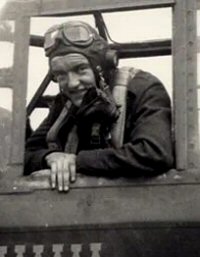  Flt Lt Don Briggs DFM (deceased) Died : 2018 *Signature Value : £45 Editions signed : Aircrew edition of 40 signed prints, signed by the artist Gerald Coulson. | Briggs, Don (Flt Lt Don Briggs DFM (deceased)) Don Briggs spent two years at RAF Halton qualifying as an engine fitter before serving on RAF flying units until he volunteered in December 1943 for the new aircrew trade of Flight Engineer. After a period of training he joined No.156 Squadron equipped with the Lancaster. The unit was part of Bomber Command's Pathfinder Force. The flight engineer was the pilot's mate who managed the engines, fuel systems and the ancillary equipment. He teamed up with Flying Officer Bill Neale and they were to complete sixty-two bombing operations together. Their first sortie was on June 11th, 1944 when Bomber Command was attacking targets in support of the Allied landings in Normandy. Railway marshalling yards, supply dumps and construction sites for the V-1 flying bombs and storage sites for the V-2 rocket were their primary targets. By late August, Bomber Command resumed its campaign against the industrial cities in Germany and Briggs attacked Russelheim, Kiel, Stettin and cities in the Ruhr. His crew marked targets with flares to allow the main force to mount accurate attacks. After the war, Briggs flew long-range transport sorties in York aircraft (based on the Lancaster) before spending three years at the Empire Test Pilot's School at Farnborough. In July 1951 he started training as a pilot and, after converting to jets, he joined the newly-formed No.10 Squadron to fly the twin-engine Canberra bomber. In August 1955 he trained on the first of the RAF's V-bombers, the Valiant. He joined the first squadron, No.138, and a year later he transferred to No.49 Squadron, which was being formed for the task of conducting the nuclear weapons trials in the Pacific. Operation Grapple was mounted in 1957 to test Britain's first thermonuclear megaton weapon, the Hydrogen Bomb. The site chosen for the test was Malden Island 400 miles south of Christmas Island in the South Pacific. Briggs was the second pilot in the crew of Squadron Leader Arthur Steele. They flew their Valiant bomber to the newly constructed airfield on March 18, 1957 and began a period of intensive training. On May 15th, No.49 Sqn's commanding officer, Wing Commander Ken Hubbard, dropped the first weapon successfully. For the second drop on May 31st, Steele, Briggs and their crew flew the reserve aircraft and for the third and final test, they were tasked for the sortie. On June 19th, they took off and climbed to 45,000 feet, and carried out a practice run over the target before clearance to drop the bomb was given. Fifty seconds after release, the bomb exploded at the pre-determined height of 8,000 feet. Steele and Briggs had erected the anti-flash screens in the cockpit of their aircraft before making a precisely executed turn away from the explosion and before the shock wave was felt in the aircraft. The drop was completely successful. A few days after their flight, the squadron returned to Wittering. By the end of the year, Briggs had completed a Valiant captain's course and he transferred to No.138 Squadron where he spent the next three years. This was followed by almost three years as a pilot instructor on Valiants and it was during this period he also converted to the Victor bomber. In 1964 he trained as a flying instructor and spent three years instructing trainee pilots at an RAF flying school near Newark. In January 1967 he converted to the third of the RAF's V-bombers, the Vulcan, and was to spend the next five years as an instructor on the iconic delta-wing aircraft before joining No 9 Squadron shortly before it moved to its new base in Cyprus. After 34 years service, he retired at the end of 1973. There were 88 Vulcan 2s produced and Briggs flew 57 of them during his seven years with the force. He spent 15 years at the Oxford Air Training School training pupils to become commercial airline pilots. He retired aged 65 when he joined the RAF Microlight Association at Halton where his RAF career had begun and where he became the chief flying instructor. Finally, at the age of 84 he decided to finish his flying career having flown 71 different types of aircraft and gliders. He died in July 2018. |
 Warrant Officer Harry Irons DFC (deceased) Died : 2020 *Signature Value : £40 Editions signed : Aircrew edition of 40 signed prints, signed by the artist Gerald Coulson. | Irons, Harry (Warrant Officer Harry Irons DFC (deceased)) Joining the RAF at the age of 16 in 1940, he did 2 full tours as a Rear Gunner with 9 Squadron and took part in nearly all the famous raids of Bomber Command. He finished in 1945 at 158 Squadron flying Halifaxes. 'I had just turned 18 when we went on a gunnery school course. After that six-week training, we usually went for a further three months training to an Operational Training Unit. It so happened that 9 Squadron had just converted from Wellingtons to Lancasters and they were 14 air gunners short on the squadron, so they posted us from gunnery school after six weeks' training straight to the squadron. 'When I got there, I was approached by a Flt Lt Stubbs, who said to me: 'You're my new gunner. We've got a gunner already but he's been flying Wellingtons and he doesn't want to be a rear gunner. He wants to go in the mid-upper turret. You'll be the rear gunner.' But, he said, on my first raid, the best thing for me to do would be to go on the mid-upper turret. 'That way you can see exactly what's going on,' he said. 'My first raid in Lancasters with 9 Squadron was to Dusseldorf on September 10th, 1942. Every time we went on a bombing raid, we had to do an air test first. We would test our guns, test the bomb sight, test the hydraulics, test the engines, and when you landed, if everything was OK, you told the engineers that everything was fine for the raid. As we landed, the armourers arrived with the bomb load. I still remember now, it was one 4,000 pounder - one huge, fat bomb - and 1,200 incendiaries. 'Our bomb aimer was an 'old sweat'. We used to call him 'The Old Boy'. He was 26. He said that with that bomb load we had, we were definitely going to the Happy Valley. When we returned to the mess, we got ready to go to the briefing. We were briefed and the curtain came down off the target and there it was - Dusseldorf. 'That's right,' said the bomb aimer to me, 'that's where we are going, Dusseldorf.' Most of our raids were on the Ruhr Valley and the reason why I am alive now is because - I don't know why - but I never went to Berlin. I wouldn't be talking to you now if I had been to Berlin. I can assure you. 'We put all our gear on. It took about half an hour for the air gunner to get dressed with all the clothing. I clambered into the mid-upper turret and off we went. As we crossed the Dutch coast, I could see we were about 1,400 or 1,500 feet over the coast. I could see a huge number of lights coming up. Far below us there was light flak, in beautiful colours, but it never touched us because we were a little too high. 'We crossed over Holland and the bomb aimer said: 'We are approaching the target, Skipper,' so I decided to swing my turret around and have a look. I was absolutely shocked by what I saw. I could not believe my eyes seeing what was in front of me. The flak, the guns, the lights, the search lights. It was incredible and I was really, really, really frightened. The plane was bouncing about. Then the bomb aimer said: 'Bomb doors open' and in we go straight and level. 'On my left I could see an aircraft on fire going down, and one below us I could see exploding. And I thought to myself: 'We're in for something here!'. I could not believe that we were going to fly through this huge explosion. But we went through it. Then the pilot was talking to the bomb aimer, and the bomb aimer said: 'We have missed the target, Skipper. We're going to have to go round again.' And I thought: 'Dear, oh dear, we've got to go all the way round, come back and go through all that again.' Which we did. And on the second run, we dropped our bombs. 'Bomb doors closed. On the way home. Flying back, there were problems with the oxygen, so the skipper – he was 21 and on his second tour, and old hand – took us down lower. We had to drop below 10,000 feet, and as we crossed the Dutch coast, the light flak opened up. It was absolutely hair-raising. There were hundreds and hundreds of these lights flashing past us but, strangely enough, not one of them hit us. 'When we got back, we landed and had a look at our aircraft. There were about 10 or 15 holes, two or three inches wide, across the fuselage, flak holes caused by shrapnel from the shells. We must have caught them on the Dutch coast. We were lucky but I've seen much worse. We went in for a briefing, had a coffee and went to bed. That was my first raid. Later, I found out, that our skipper, who had finished his tour, unfortunately got killed during training a couple of weeks later.' Harry Irons died on 10th November 2020. |
| Warrant Officer Frank Stone (deceased) *Signature Value : £40 Editions signed : Aircrew edition of 40 signed prints, signed by the artist Gerald Coulson. | Stone, Frank (Warrant Officer Frank Stone (deceased)) Rear Gunner on Hampdens with 83 sqn, he was shot down in August 1940 aged 17 over Ludwigshafen and sent to Stalag Luft III. In Hut 104 he was in charge of the hidden radio that aided the 'Great Escape' and had it been a success he would have been part of the second escape attempt two weeks later. We have learned that Frank Stone has now sadly passed away. |
| Aircraft Related to This Print |
| Lancaster |
|
Contact Details |
Sign Up To Our Newsletter!
This website is owned by Cranston Fine Arts. Torwood House, Torwoodhill Road, Rhu, Helensburgh, Scotland, G848LE Contact: Tel: (+44) (0) 1436 820269. Email: cranstonorders -at- outlook.com |


 Signature(s) value alone : £165