Cranston Military Prints .com Home Page
Customer Helpline (UK) : 01436 820269
Subscribe to our Newsletter!

You currently have no items in your basket

Payment Options Display
Buy with confidence and security!
Publishing historical art since 1985


Navigation Menus
Military
Art Index
Aviation
Art Index
Naval
Art Index
Artists
Index
Product Search         
Aviation
History Archive
Naval
History Archive
HALF PRICE AND FREE PRINT SPECIAL OFFERS
ALWAYS GREAT OFFERS :
20% FURTHER PRICE REDUCTIONS ON HUNDREDS OF LIMITED EDITION ART PRINTS
BUY ONE GET ONE HALF PRICE ON THOUSANDS OF PAINTINGS AND PRINTS
FOR MORE OFFERS SIGN UP TO OUR FREE NEWSLETTER
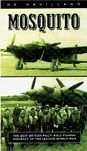
De Havilland Mosquito - The Best British Multi-Role Combat Aircraft of the Second World War. - Cranston Military Prints

De Havilland Mosquito - The Best British Multi-Role Combat Aircraft of the Second World War.


De Havilland Mosquito - The Best British Multi-Role Combat Aircraft of the Second World War.

In 1941 the RAF was being pressed to fill new and ever more demanding roles in the war against Hitler. Although first class modern fighters, Hurricanes and Spitfires, were in abundant supply, the Air Chiefs had a serious problem with the bomber force. This uncomfortable gap was filled by a revolutionary fighter bomber, one of the most original and versatile designs of the entire war - the de Havilland Mosquito.
Item Code : PVD1056BDe Havilland Mosquito - The Best British Multi-Role Combat Aircraft of the Second World War. - Editions Available
DESCRIPTIONSIZESIGNATURESOFFERSPRICEPURCHASINGPACKS
Video. 52 minutes.none£6.50

Quantity:


Some other related items available from this site.

Mosquitos from No 105 Squadron R.A.F. based at Marham, Norfolk, England, on a low-level intruder strike over the Rhine river, Germany in December 1942.
Mosquitos Over the Rhine by Nicolas Trudgian.
 It was one of the fastest operational aircraft in the world, one of the most envied - and one of the most feared. Built almost entirely of wood and assembled by carpenters, the beautifully streamlined de Havilland Mosquito, or <i>Wooden Wonder</i> was a triumph of ingenuity at a time when resources of light alloys were in short supply.  Its greatest attribute was speed.  Powered by two phenomenal Rolls-Royce Merlin engines, the Mosquito became the finest multi-role combat aircraft of World War II.  No other Allied military aircraft was built in so many versions for so many roles - a fast bomber which could carry a huge 4,000lb payload; a day or night fighter; a fighter-bomber; trainer; torpedo bomber; photo reconnaissance aircraft; maritime strike aircraft and U-boat hunter were just some of the 43 different variants produced during a long and distinguished career.  Mosquitos had pioneered the role of daring precision attacks with the September 1942 raid on the Gestapo Headquarters in Oslo and were involved in the first unescorted high-speed bombing raids on Germany.  It was the Mosquito strike wings of Coastal Command, however, that endured some of the fiercest battles of the war.  Flying over the unforgiving icy waters of the North Sea to attack enemy shipping along the coasts of Norway, Denmark and Hollad meant that precision flying was essential for survival; especially in the deep, sheer fjords where even the slightest lapse in concentration could result in instant destruction.  In this painting, Mosquito Mk.VIs from No.143 Sqn, part of the famous Banff Strike Wing, come under intense defensive fire whilst delivering a blistering strike on enemy shipping off the Norwegian coast in early 1945.  Their salvo of rockets, however, will likely be enough to penetrate the hulls of the ships.

Devastating Strike by Robert Taylor.
When De Havilland built the prototype DH.98 Mosquito (E-0234) they did so as an act of the purest faith in their design since the Air Ministry had already dismissed the companys proposal for their all-wood aircraft as impractical and unworkable. However, when E-0234 first flew on 25th November 1940, it demonstrated remarkably smooth handling characteristics and its speed, as expected, was outstanding. Here at last was a bomber which, in a straight line, could outfly even the Spitfire, giving rise to such nicknames as Wooden Wonder and, succicntly The Aeroplane. With such an aircraft, it was soon realised, many new possibilities were laid open to the RAF, among them the chance to initiate precision raids whereupon carefully selected isolated targets could be attacked with pinpoint accuracy. Just such a raid took place on 18th February 1944, involving 18 Mosquitoes of Nos 64 and 487 Squadrons in an operation on the jail at Amiens, France, where a large number of the French Resistance were being held for questioning by the Gestapo. It was thought unlikely that any of them would survive their ordeal at the hands of their inquisitors and it was considered more sensible to try to aid their escape by breaching the prison walls, even if it meant that some of the prisoners might be killed in the process. An accurate model of the jail and the nearby town was constructed and each pilot viewed the model from eye level to familiarise themselves with the view that they would get from a planned height of 50 feet. With this knowledge and some carefully selected reference points such as church spires and chimneys, the Mosquitoes, led by Group Captain Charles Pickard, were able to brush over the rooftops of the town and deliver their bombs with incredible accuracy, breaching the prison walls in four places. 258 prisoners escaped in the ensuing chaos and were quickly spirited away by other Resistance groups who were waiting outside. Sadly, a number of French prisoners were killed in the raid and added to the losses of that day was Group Captain Pickard himself who fell victim to marauding Focke Wulf 190s, but the raid had been a tremendous success and further precision attacks using the most superb Mosquito were carried out throughout 1944 and 1945, each one making its own significant contribution to the downward turn in the fortunes of Hitlers Reich.

Destination Amiens by Ivan Berryman.
 A colourful painting depicting a Mosquito, the fastest Allied aircraft and perhaps the most versatile of all to fly in World War II, dodging between the flak and searchlights on a low-level night attack.

Night Intruder by Robert Taylor.
Aircraft Related to This Print
Mosquito

Contact Details
Shipping Info
Terms and Conditions
Cookie Policy
Privacy Policy

Sign Up To Our Newsletter!

Stay up to date with all our latest offers, deals and events as well as new releases and exclusive subscriber content!

This website is owned by Cranston Fine Arts.  Torwood House, Torwoodhill Road, Rhu, Helensburgh, Scotland, G848LE

Contact: Tel: (+44) (0) 1436 820269.  Email: cranstonorders -at- outlook.com

Return to Home Page