Cranston Military Prints .com Home Page
Customer Helpline (UK) : 01436 820269
Subscribe to our Newsletter!

You currently have no items in your basket

Payment Options Display
Buy with confidence and security!
Publishing historical art since 1985


Navigation Menus
Military
Art Index
Aviation
Art Index
Naval
Art Index
Artists
Index
Product Search         
Aviation
History Archive
Naval
History Archive
HALF PRICE AND FREE PRINT SPECIAL OFFERS
ALWAYS GREAT OFFERS :
20% FURTHER PRICE REDUCTIONS ON HUNDREDS OF LIMITED EDITION ART PRINTS
BUY ONE GET ONE HALF PRICE ON THOUSANDS OF PAINTINGS AND PRINTS
FOR MORE OFFERS SIGN UP TO OUR FREE NEWSLETTER
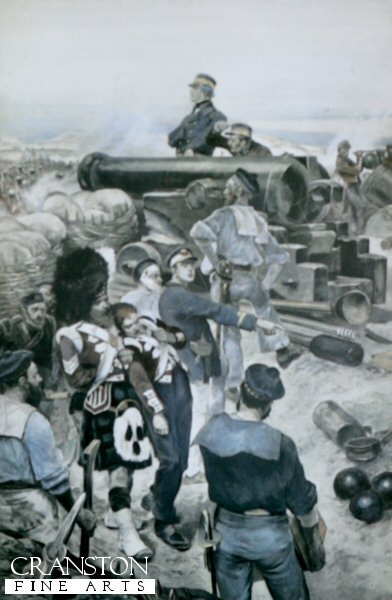
Surgeon General Sir James Mouat VC by Hussaly. - Cranston Military Prints

Surgeon General Sir James Mouat VC by Hussaly.


Surgeon General Sir James Mouat VC by Hussaly.

Winning his VC for voluntarily proceeding to the assistance of Lieutenant Colonel Morris Cb, 17th lancers, who was lying dangerously wounded in an exposed position after the retreat of the Light brigade at balaclava, and having dressed the Officers wounds and under heavy enemy fire assisted in saving that officers life, 26th October 1854.
Item Code : VAR0485YSurgeon General Sir James Mouat VC by Hussaly. - Editions AvailableExtra....
James Mouat was born on 14 April 1815, at Chatham, Kent, the son of Surgeon James Mouat MD who was medical officer to the 23rd, 25th, 21st, 16th,13th, F., 4th and 15th Dragoons. His uncle was Dr F.J. Mouat distinguished in the Indian Civil Medical Service. James Mouat, the son, was educated at University College Hospital, London, became MRCS in 1837, and proceeded FRCS in 1852. One year after qualification he joined the 44th Regiment of Foot as Assistant Surgeon.Ten years later he was promoted Surgeon and served throughout the Crimean Campaign with the 6th Dragoons, where he was also in charge of the General Field Hospital of the 3rd Division. He was present at the Fall of Sebastopol, the Battles of Tehernaya and Inkerman, and at the charge of the Light Brigade at Balaklava his gallantry resulted in the award of the Victoria Cross: Date of act of Bravery: 26th Oct 1854. For having voluntarily proceeded to the assistance of Lieut. Colonel Morris, C>B, 17th Lancers, who was lying dangerously wounded in an exposed position after the retreat of Light Cavalry at the Battle of Balaklava, and having dressed the officer's wounds in the presence and under a heavy fire of the enemy. Thus by stopping a severe haemorrhage, he assisted in saving that officer's life.

During the campaign Surgeon Mouat was appointed to the French Legion of Honour, and gained the Crimean Medal with three clasps. In 1855 he was promoted Surgeon Major, and a year later was appointed a Commander of the Order of the Bath. Aged 43 he was given the rank of Deputy Inspector General of Hospitals whilst serving in Turkey.From 1860 to 1861 and again from 1863 to 1865 he served in New Zealand in the Maori Wars, during the latter campaign as Inspector General of Hospitals, being promoted to Surgeon General in 1864. The New Zealand government voted him special thanks for his valuable Services to the Colony, he was mentioned in despatches and was awarded the campaign medal. Surgeon General Mouat retired in 1876, was appointed an honourary Surgeon to the Queen in 1888, and a Knight Commander of the Order of the Bath in 1894. The British Medical Journal obituary of 1899 described this officer's character: One who served under Sir James and knew him well, furnishes the following reminiscences of him: 'There never was a more thoroughly soldierly medical officer than Mouat; he was always faultlessly dressed, whether in uniform or in mufti; nothing annoyed him more than slovenly or shabby attire, especially among medical officers. He had a very sharp tongue, and as he usually got hold of the right end of an argument, was formidable in dispute. As he set no small value on himself or his military position, he always kept up considerable style, and was the only senior medical officer the writer can recall who made his camp inspections in a well-appointed carriage and pair. Sir James Mouat was held in deserved respect by all branches of the service; and in private life was an attached and sincere friend of those who won his esteem'. Text supplied by Royal Army Medical Corps Historical Museum.
DESCRIPTIONSIZESIGNATURESOFFERSPRICEPURCHASINGPACKS
Open edition print. Image size 12 inches x 8 inches (31cm x 20cm)none£6 Off!
Add any two items on this offer to your basket, and the lower priced item will be half price in the checkout!
Now : £10.00

Quantity:
**Open edition print. (One copy reduced to clear) Image size 12 inches x 8 inches (31cm x 20cm)none£8.00

Quantity:


Some other related items available from this site.

 A column of exhausted and wounded men of the Coldstream Guards and the 20th East Devonshire regiment returning from the heights of Inkerman, 5th November 1854, during the Crimean War.

Return from Inkerman by Lady Elizabeth Butler.
The Inniskilling Dragoons during the Charge of the Heavy Brigade during the Battle of Balaclava, Crimean War. (In the distance, the Scots Greys can also be seen in the charge)

Charge of the Heavy Brigade by G Douglas Giles.
 After the charge up the valley and taking huge losses, The Light Brigade crashed through the Russian guns at the end of the valley. They were counter- charged by Russian cavalry. Shown here are the 11th and 8th Hussars engaging the Russian Uhlans and Dragoons. The losses to the Light Brigade were very high - 113 killed, and 134 wounded. General Pierre Bosquet after witnessing the charge remarked - It is magnificent but it is not war. The battle of Balaclava, finally ended leaving Balalcava still in British Hands.

Into the Valley of Death by Brian Palmer.
Royal Navy guns taken from their ships and used at Sebastopol.  By mid-October 1854, the Allies had some 120 guns ready to use against Sevastopol while the defending Russians had over 300 guns to defend against attacking infantry.  The Russians opened the artillery barrage on the 17th of October 1854 and destroyed the French magazine, which put their guns out of action.  But the British guns began to fire and quickly blew the magazines in the Malakoff redoubt, killing Admiral Kornilov, and  silencing most of the Russian guns, weakening the Sebastopol defences and providing an excellent chance for a British and French assault on the City of Sebastopol, which was not taken.

Sebastopol by Richard Caton Woodville

Contact Details
Shipping Info
Terms and Conditions
Cookie Policy
Privacy Policy

Sign Up To Our Newsletter!

Stay up to date with all our latest offers, deals and events as well as new releases and exclusive subscriber content!

This website is owned by Cranston Fine Arts.  Torwood House, Torwoodhill Road, Rhu, Helensburgh, Scotland, G848LE

Contact: Tel: (+44) (0) 1436 820269.  Email: cranstonorders -at- outlook.com

Return to Home Page