|
|
|
|
||
|
|
|
|
||
| Navigation Menus |
|
Military Art Index |
Aviation Art Index |
Naval Art Index |
Artists Index |
Aviation History Archive |
Naval History Archive |
|
| HALF PRICE AND FREE PRINT SPECIAL OFFERS | ||||||
|
| Aviation Art Collecton - No.248 Sqn |
| |||||||||||||||||||||||||||||||||||||||||||||||||||||||||||||||||||
| |||||||||||||||||||||||||||||||||||||||||||||||||||||||||||||||||||||||||||||||||||||||||||||||||||||||||||||||||||||
| Aircraft for : No.248 Sqn RAF | ||
| A list of all aircraft known to have been flown by No.248 Sqn RAF. A profile page including a list of all art prints for the aircraft is available by clicking the aircraft name. | ||
| Squadron | Info | |
Beaufighter 
Manufacturer : Bristol Production Began : 1940 Number Built : 5564 | Beaufighter BRISTOL BEAUFIGHTER The Bristol Beaufighter was a Torpedo Bomber and had a crew of two. with a maximum speed of 330mph and a ceiling of 29,000 feet. maximum normal range of 1500 miles but could be extended to 1750 miles. The Bristol Beaufighter carried four 20mm cannon in the belly of the aircraft and upto six .303in browning machine guns in the wings. it could also carry eight 3 -inch rockets, 1605 lb torpedo or a bomb load of 1,000 lb. The Bristol Beaufighter first flew in July 1939 and with some modifications entered service with the Royal Air Force in July 1940. In the winter of 1940 - 1941 the Beaufighter was used as a night fighter. and in March 1941 the aircraft was used at Coastal Command as a long range strike aircraft. and in 1941, the Beaufighter arrived in North Africa and used as a forward ground attack aircraft. The Bristol Beaufighter was used also in India, Burma and Australia. A total of 5,564 Beaufighters were built until production in Britain finished in 1945, but a further 364 were built in Australia for the Australian Air Force | |
Blenheim
Manufacturer : Bristol | Blenheim The Bristol Blenheim, the most plentiful aircraft in the RAFs inventory when WWII began, was designed by Frank Barnwell, and when first flown in 1936 was unique with its all metal monoplane design incorporating a retractable undercarriage, wing flaps, metal props, and supercharged engines. A typical bomb load for a Blenheim was 1,000 pounds. In the early stages of the war Blenheims were used on many daylight bombing missions. While great heroism was displayed by the air crews, tremendous losses were sustained during these missions. The Blenhiem was easy pickings at altitude for German Bf-109 fighters who quickly learned to attack from below. To protect the vulnerable bellies of the Blenheims many missions were shifted to low altitude, but this increased the aircrafts exposure to anti-aircraft fire. | |
Hurricane 
Manufacturer : Hawker Production Began : 1936 Number Built : 14533 | Hurricane Royal Air Force Fighter, the Hawker Hurricane had a top speed of 320mph, at 18,200 feet and 340mph at 17,500, ceiling of 34,200 and a range of 935 miles. The Hurricane was armed with eight fixed wing mounted .303 browning machine guns in the Mark I and twelve .303 browning's in the MKIIB in the Hurricane MKIIC it had four 20mm cannon. All time classic fighter the Hurricane was designed in 1933-1934, the first prototype flew in June 1936 and a contract for 600 for the Royal Air Force was placed. The first production model flew ion the 12th October 1937 and 111 squadron of the Royal Air Force received the first Hurricanes in January 1938. By the outbreak of World war two the Royal Air Force had 18 operational squadrons of Hurricanes. During the Battle of Britain a total of 1715 Hurricanes took part, (which was more than the rest of the aircraft of the Royal air force put together) and almost 75% of the Victories during the Battle of Britain went to hurricane pilots. The Hawker Hurricane was used in all theatres during World war two, and in many roles. in total 14,533 Hurricanes were built. | |
Mosquito 
Manufacturer : De Havilland Production Began : 1940 Retired : 1955 Number Built : 7781 | Mosquito Used as a night fighter, fighter bomber, bomber and Photo-reconnaissance, with a crew of two, Maximum speed was 425 mph, at 30,300 feet, 380mph at 17,000ft. and a ceiling of 36,000feet, maximum range 3,500 miles. the Mosquito was armed with four 20mm Hospano cannon in belly and four .303 inch browning machine guns in nose. Coastal strike aircraft had eight 3-inch Rockets under the wings, and one 57mm shell gun in belly. The Mossie at it was known made its first flight on 25th November 1940, and the mosquito made its first operational flight for the Royal Air Force as a reconnaissance unit based at Benson. In early 1942, a modified version (mark II) operated as a night fighter with 157 and 23 squadron's. In April 1943 the first De Haviland Mosquito saw service in the Far east and in 1944 The Mosquito was used at Coastal Command in its strike wings. Bomber Commands offensive against Germany saw many Mosquitos, used as photo Reconnaissance aircraft, Fighter Escorts, and Path Finders. The Mosquito stayed in service with the Royal Air Force until 1955. and a total of 7781 mosquito's were built. | |
| Signatures for : No.248 Sqn RAF | |||||
| A list of all signatures from our database who are associated with this squadron. A profile page is available by clicking their name. | |||||
| Name | Info | ||||
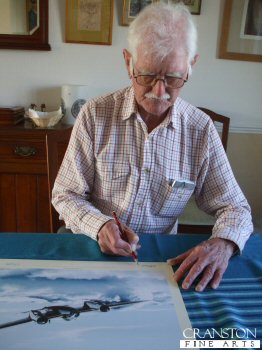
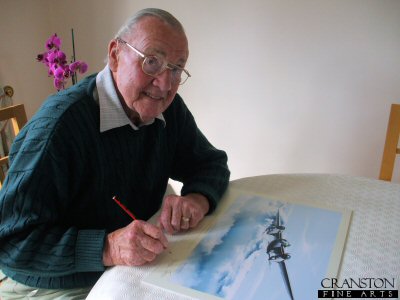
 Flight Lieutenant Brian Beattie Click the name or photo above to see prints signed by Flight Lieutenant Brian Beattie | Flight Lieutenant Brian Beattie Having served at 489 Coastal Command flying torpedo carrying Hampdens, he later joined Des Curtis at 248 Sqn where he also flew the Tse-Tse firing Mosquito. | ||||
Wing Commander David L Cartridge DSO, DFC Click the name above to see prints signed by Wing Commander David L Cartridge DSO, DFC | Wing Commander David L Cartridge DSO, DFC A Strike Wing leader who also excelled as a fighter pilot and was credited with destroying eight enemy aircraft. David Cartridges entire operational career was spent on Beaufighters. Joining on a short service commission in 1938, he spent three years as a flying instructor before joining No.248 Squadron Coastal Command in 1941. A variety of operations under the general classification Long Range Fighter Reconnaissance included detachment in support of Operation Pedestal, the convoy which broke the siege of Malta, and brought both a DFC and bar. After a period as a flying instructor he returned to operations in August 1944, leading No.254 Squadron of the North Coates Strike Wing until the end of the war including its very last operation during which four U-boats were sunk. | ||||
 Flying Officer Harold Corbin CGM Click the name or photo above to see prints signed by Flying Officer Harold Corbin CGM | Flying Officer Harold Corbin CGM Harold Corbin joined the RAF in November 1940 and was sent to the United States to train as a pilot. On completion he returned to England as a Sergeant and after several positions was posted to 235 Squadron at RAF Portreath flying operations on Beaufighters. He completed many missions attacking various ports and enemy shipping on the French coast and in the Bay of Biscay. In 1944 he converted onto Mosquitos and joined 248 Squadron at RAF Banff, part of the Banff Strike Wing. The Banff Wing was to become immortalised for undertaking some of the most dangerous and concentrated attacks on German surface vessels and U-boats in the North Sea and on the Norwegian coastline. He was awarded the CGM in August 1944, and was given a full commission in December 1944. He had flown as co-pilot / observer with Maurice Webb from 1943 until the end of the war.
| ||||
 Flight Lieutenant Des Curtis DFC Click the name or photo above to see prints signed by Flight Lieutenant Des Curtis DFC | Flight Lieutenant Des Curtis DFC Originally a Wireless Operator / Gunner with No.235 Sqn on Beaufighters before converting to Mosquitos as a Navigator. He helped form 618 Sqn for ops against the Tirpitz, and then had success against U-boat pens om the French coast. In September 1944 he joined 248 Sqn Banff Strike Wing in Scotland. | ||||
Warrant Officer Les Doughty DFM Click the name above to see prints signed by Warrant Officer Les Doughty DFM | Warrant Officer Les Doughty DFM Joining the RAF in 1939 as a driver, Les Doughty was posted overseas to serve in Iraq. In 1941 he applied for, and was accepted, to be a pilot and went on to train in Rhodesia. In 1943 his first operational posting was to 248 Squadron flying Beaufighters from RAF Predannack, providing fighter escorts and coastal patrols, with combat strikes mostly against enemy shipping. He moved with 248 Squadron to RAF Portreath and converted to Mosquitos. In early 1944 whilst out on a strike mission, he attacked submarine U-155 whilst under heavy fire as it was entering the French harbour of Lorient. The submarine was put out of action for the duration of the war, and Les was awarded an immediate DFM. | ||||
Sergeant Herbert Luiz Flower Click the name above to see prints signed by Sergeant Herbert Luiz Flower | Sergeant Herbert Luiz Flower Initially joining the RAF as a boy entrant Wireless Operator in 1937 he later trained as an Air Gunner and joined 248 Sqn in July 1940, flying Blenheims during the Battle of Britain. After 126 sorties with Coastal Command he transferred to West African Communication Command, completing a nine year engagement, then joined 27 Sqn as a master signaller and took part in 103 sorties during the Berlin Airlift. | ||||
 Wing Commander Roger Morewood Click the name or photo above to see prints signed by Wing Commander Roger Morewood | Wing Commander Roger Morewood An uncle suggested to Roger Morewood that he should join the RAF so Roger did at the age of 17. Roger said : I was going be a pilot, that was the only reason to join. Roger trained to fly in a Tiger Moth biplane before joining 56 Squadron - regarded within the RAF as an elite unit - flying open cockpit Gauntlet fighters. The squadron were then re-equipped with Gloster Gladiators - the last RAF biplane - then the Hawker Hurricanes that would join Spitfires in fighting off Hitlers Luftwaffe in the Battle of Britain. While serving with 56 Squadron Roger Morewood was assigned the dangerous role of long-range fighter sweeps over the coast of occupied France and Holland but left to help form 248 Sqn at Hendon with whom he served throughout the Battle of Britain flying Blenheims. Roger said: We had a few panic station alerts when we were scrambled. We wouldd be leaping into our aircraft with flying suits over our pyjamas as we tried to get into the air in a minute and a half. In July 1942 Morewood went to 9 OTU and later HQ Transport Command. After a long post-war career in the RAF he retired in 1957. Roger Morewood once said of his squadron: It was damned dodgy. We had a high loss rate on operations. And on one sortie - then aged 21 - he nearly met his maker : I flew across to Den Helder (Northern Holland) in a long-nosed Blenheim to look after this battleship at the entrance to the Zuiderzee. We flew round this thing and sure enough I saw some aircraft coming up. They were twin-engine bombers naturally - Messerschmitt 110s. That was a bit hairy. My two blokes (other pilots) shoved off in a hurry into a cloud, and there was me popping away until I ran out of ammunition. There was just me left. I realised there was no point chasing - I was not going to knock his wings off. So I started flying home. After making hardly any noise all flight the chap (navigator) in the back said you haveve got somebody on your tail now - you had better move swiftly. So I moved to left and right. We got a pretty hefty clobbering. His turret disappeared at the back. My poor navigator wore a tin hat and I dont blame him. He got a bullet half way through his armour. He was alright. I had a dreadful wound. If I shook my hand really hard I could get blood out of one finger. I was hit all over the place. We took dozens of bullets. The aircraft was ruined. That is all there was to it. We were still going home - even with the North Sea to go across. So I trundled off back and ditched the damn thing. Thank God it didnt blow up. We literally got away with it. It was the hairiest trip I ever did. On another occasion, Roger intercepted a German weather forecasting flying boat called Weary Willy : I was in a Beaufighter at this time. I flew upwind and had a shot at him downwind. Then all the guns jammed. So I pulled alongside him - not too close - and waved him good luck lad. Anyway he sank when he got back to Norway. That was that one finished. Flying from Shetland, his squadron attacked German shipping off Norway. Roger was rested and spent two years training new Beaufighter pilots but still managed to go on some operations, mainly attacking convoys off the coast of Holland. Roger Morewood said: job was to attack the flak ships, floating anti-aircraft batteries, so other Beaufighters could attack the cargo ships. It could be pretty hairy as 12 Beaufighters lined up to have a crack at the target. You wouldd see tracer shells from your mates plane whizzing over your head or underneath you. They were a bigger danger than the Germans Wing Commander Roger Morwood was posted to the Mediterranean where he contracted TB. He recalled: "In hospital, they treated you with whisky in milk and a pint of Guinness for breakfast, very primitive stuff." When the war ended and the RAF were scaled down, Roger continued to serve in various postings around the UK until 1947. after leaving the RAF Roger was recalled again as an instructor at the Central Flying School, but with the rank of flight lieutenant. He was posted to Edinburgh and then Glasgow University squadrons. finnaly leaving service in 1957. Wing Commander Roger Morewood notched up more than 5000 flying hours in 32 different types of aircraft.
| ||||
 Flying Officer Maurice Webb DFM Click the name or photo above to see prints signed by Flying Officer Maurice Webb DFM | Flying Officer Maurice Webb DFM Maurice joined the RAF in 1942, and trained as an observer/ wireless operator/ gunner. In October 1943 he was posted to 235 Squadron based at RAF Portreath, flying Beaufighters attacking shipping and harbour installations. In 1944 he converted to Mosquitos, and joined 248 Squadron, moving on to serve with the Banff Strike Wing until March 1945. He was awarded the DFM in August 1944, and then spent time flying in a RAF Walrus on Air Sea Rescue operations. He had flown with Harold Corbin as his co-pilot / observer from 1943 until the end of the war.
| ||||
|
Contact Details |
Sign Up To Our Newsletter!
This website is owned by Cranston Fine Arts. Torwood House, Torwoodhill Road, Rhu, Helensburgh, Scotland, G848LE Contact: Tel: (+44) (0) 1436 820269. Email: cranstonorders -at- outlook.com |