Cranston Military Prints .com Home Page
Customer Helpline (UK) : 01436 820269
Subscribe to our Newsletter!

You currently have no items in your basket

Payment Options Display
Buy with confidence and security!
Publishing historical art since 1985


Navigation Menus
Military
Art Index
Aviation
Art Index
Naval
Art Index
Artists
Index
Product Search         
Aviation
History Archive
Naval
History Archive
HALF PRICE AND FREE PRINT SPECIAL OFFERS
ALWAYS GREAT OFFERS :
20% FURTHER PRICE REDUCTIONS ON HUNDREDS OF LIMITED EDITION ART PRINTS
BUY ONE GET ONE HALF PRICE ON THOUSANDS OF PAINTINGS AND PRINTS
FOR MORE OFFERS SIGN UP TO OUR FREE NEWSLETTER
No.602 Sqn - Cranston-Military-Prints.com Aviation Art Store
Aviation Art Collecton - No.602 Sqn

We have been informed by pilot Ian Blair about one of the aircraft of this squadron : The Spitfire MkVII had the Squadron markings of 312 Sqdn (DU-G) but the aircraft was on the strength of 602 Sqn. and was inherited by 602 Sqn from the Station Flight at Skae Bray, after 312 Sqn had left the area. The time span did not permit the ground personnel sufficient time to paint new letters on the aircraft. This fact has led to the incorrect assumption that I, the pilot of the aircraft, was a member of 312 Sqn.


Gauntlet by Anthony Saunders.


Gauntlet by Anthony Saunders.

Portsmouth August 26th 1940, the lone spitfire of Squadron Leader Sandy Johnstone breaks the ranks and picks off one of the menacing Heinkels only to encounter an equally determined attack from a BF109.

We were brought to readiness in the middle of lunch and scrambled to intercept mixed bag of 100+ Heinkel IIIs and DO 17s approaching Portsmouth from the South. The controller did a first class job and positioned us one thousand feet above the target. with the sun behind us, allowing us to spot the raiders from a long way off. No escorting Messchersmitts were in sight at the time, although a sizable force was to turn up soon after. then something strange happened. I was about to give a ticking off to our chaps for misusing the R/T when I realised I was listening to German voices. It appeared we were both using the same frequency and, although having no knowledge of the language it sounded from the monotonous flow of the conversation that they were unaware of our presence. as .........


More Text...
Item Code : DHM0436Gauntlet by Anthony Saunders. - Editions Available
FULL DETAILS
DESCRIPTIONSIZESIGNATURESOFFERSPRICEPURCHASINGPACKS
Signed limited edition of 950 prints.
Great value : Value of signatures exceeds price of item!
Image size 20 inches x 13 inches (51cm x 33cm)
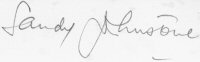
Johnstone, Sandy

Died : 2000
Air Vice Marshal Sandy Johnstone CB DFC AE DL (deceased)
Early in 1938, Alexander Vallance Riddell Johnstone, known as Sandy, was a civilian navigation instructor at Scottish Aviation, moving later to the Civil Air Navigation School at Prestwick. In August 1939 he was called to full-time service with 602 Squadron. After some Spitfire engagements off the Scottish coast, he received command of 602 - he was still only 24 - and led it south to the tiny airfield at West Hampnett, in West Sussex, where it was stationed throughout the Battle of Britain. San
Signature Value : £60
CLICK HERE FOR FULL PROFILE
 
Mount, Micky

Died : 2002
Air Commodore Micky Mount CBE DSO DFC (deceased)
Flying Officer Christopher John (Micky) Mount joined NO.602 squadron on August 8th 1940 after a brief conversion course on Spitfires. On August 18th his Spitfire L1005 was severely damaged in combat with JU 87s and BF109s over Ford. Micky was unhurt. he again escaped injury when his Spitfire X4270 was damaged landing at Tangmere. he served in many of the theatres of WW2 and he flew Hurricanes in Malta and North Africa and Wellingtons in the Middle east. Micky retired and lived in Ascot in Berksh
Signature Value : £65
CLICK HERE FOR FULL PROFILE
 
MacLean, Hector
NO
PHOTO
AVAILABLE

Died : 2007
Wing Commander Hector MacLean (deceased)
Hector was flying with No 602 squadron before war broke out. A gallant young man, his fighter pilot days were drawn to an abrupt halt on August 26th 1940 when his leg was severely injured during battle, but the war was by no means over. After his recovery he was posted to Rosemount for duty as a fighter controller, in the rank of Squadron Leader. Hector retired and lived in Kilmacolm near Glasgow. He died on 19th July 2007.
Signature Value : £65
CLICK HERE FOR FULL PROFILE
 
+ Artist : Anthony Saunders
£40 Off!
Add any two items on this offer to your basket, and the lower priced item will be half price in the checkout!
Now : £160.00

Quantity:
In 2 Pairs
and 3 Packs
View
Bonus signature edition of 10 prints from the signed limited edition of 950 prints.
Great value : Value of signatures exceeds price of item!
Image size 20 inches x 13 inches (51cm x 33cm)
Johnstone, Sandy

Died : 2000
Air Vice Marshal Sandy Johnstone CB DFC AE DL (deceased)
Early in 1938, Alexander Vallance Riddell Johnstone, known as Sandy, was a civilian navigation instructor at Scottish Aviation, moving later to the Civil Air Navigation School at Prestwick. In August 1939 he was called to full-time service with 602 Squadron. After some Spitfire engagements off the Scottish coast, he received command of 602 - he was still only 24 - and led it south to the tiny airfield at West Hampnett, in West Sussex, where it was stationed throughout the Battle of Britain. San
Signature Value : £60
CLICK HERE FOR FULL PROFILE
 
Mount, Micky

Died : 2002
Air Commodore Micky Mount CBE DSO DFC (deceased)
Flying Officer Christopher John (Micky) Mount joined NO.602 squadron on August 8th 1940 after a brief conversion course on Spitfires. On August 18th his Spitfire L1005 was severely damaged in combat with JU 87s and BF109s over Ford. Micky was unhurt. he again escaped injury when his Spitfire X4270 was damaged landing at Tangmere. he served in many of the theatres of WW2 and he flew Hurricanes in Malta and North Africa and Wellingtons in the Middle east. Micky retired and lived in Ascot in Berksh
Signature Value : £65
CLICK HERE FOR FULL PROFILE
 
MacLean, Hector
NO
PHOTO
AVAILABLE

Died : 2007
Wing Commander Hector MacLean (deceased)
Hector was flying with No 602 squadron before war broke out. A gallant young man, his fighter pilot days were drawn to an abrupt halt on August 26th 1940 when his leg was severely injured during battle, but the war was by no means over. After his recovery he was posted to Rosemount for duty as a fighter controller, in the rank of Squadron Leader. Hector retired and lived in Kilmacolm near Glasgow. He died on 19th July 2007.
Signature Value : £65
CLICK HERE FOR FULL PROFILE
 
Thom, Alex

Died : 2016
Flight Lieutenant Alexander Henry Thom DFC (deceased)
Born in Perth, Scotland, Alex Thom joined the RAFVR on June 24th 1939 and flew at the weekends at 11 EARFTS Perth. At the outbreak of World War Two, Thom was called up for full time service with the Royal Air Force and was posted to 3 ITW at Hastings on October 2nd 1939, moving to 15 EFTS at Redhill on April 29th 1940 and on June 15th moved again to 15 FTS, initially at Brize Norton and later to Chipping Norton. Alex Thom went to 6 OTU on September 29th at Sutton Bridge where he converted to
Signature Value : £50
CLICK HERE FOR FULL PROFILE
 
+ Artist : Anthony Saunders
£50 Off!
Add any two items on this offer to your basket, and the lower priced item will be half price in the checkout!
Now : £180.00

Quantity:
Limited edition of 50 giclee canvas prints. Image size 30 inches x 20 inches (76cm x 51cm)Artist : Anthony Saunders
(on separate certificate)
£100 Off!
Add any two items on this offer to your basket, and the lower priced item will be half price in the checkout!
Now : £400.00

Quantity:
Original painting by Anthony Saunders. Image size 30 inches x 20 inches (76cm x 51cm)Artist : Anthony Saunders£2000 Off!Now : £4800.00

Quantity:
Signed limited edition of 950 prints.
Great value : Value of signatures exceeds price of item!
Image size 20 inches x 13 inches (51cm x 33cm)
Johnstone, Sandy

Died : 2000
Air Vice Marshal Sandy Johnstone CB DFC AE DL (deceased)
Early in 1938, Alexander Vallance Riddell Johnstone, known as Sandy, was a civilian navigation instructor at Scottish Aviation, moving later to the Civil Air Navigation School at Prestwick. In August 1939 he was called to full-time service with 602 Squadron. After some Spitfire engagements off the Scottish coast, he received command of 602 - he was still only 24 - and led it south to the tiny airfield at West Hampnett, in West Sussex, where it was stationed throughout the Battle of Britain. San
Signature Value : £60
CLICK HERE FOR FULL PROFILE
 
Mount, Micky

Died : 2002
Air Commodore Micky Mount CBE DSO DFC (deceased)
Flying Officer Christopher John (Micky) Mount joined NO.602 squadron on August 8th 1940 after a brief conversion course on Spitfires. On August 18th his Spitfire L1005 was severely damaged in combat with JU 87s and BF109s over Ford. Micky was unhurt. he again escaped injury when his Spitfire X4270 was damaged landing at Tangmere. he served in many of the theatres of WW2 and he flew Hurricanes in Malta and North Africa and Wellingtons in the Middle east. Micky retired and lived in Ascot in Berksh
Signature Value : £65
CLICK HERE FOR FULL PROFILE
 
MacLean, Hector
NO
PHOTO
AVAILABLE

Died : 2007
Wing Commander Hector MacLean (deceased)
Hector was flying with No 602 squadron before war broke out. A gallant young man, his fighter pilot days were drawn to an abrupt halt on August 26th 1940 when his leg was severely injured during battle, but the war was by no means over. After his recovery he was posted to Rosemount for duty as a fighter controller, in the rank of Squadron Leader. Hector retired and lived in Kilmacolm near Glasgow. He died on 19th July 2007.
Signature Value : £65
CLICK HERE FOR FULL PROFILE
 
+ Artist : Anthony Saunders
£70 Off!
Add any two items on this offer to your basket, and the lower priced item will be half price in the checkout!
Now : £130.00

Quantity:


Head to Head by Nicolas Trudgian


Head to Head by Nicolas Trudgian

A classic head-to-head combat between Squadron Leader Sandy Johnstone in his Spitfire and an Me109 over the south coast of England on 25th August, 1940. With 602 Squadron scrambled to intercept an approaching raid. The Commanding Officer notches up his second victory of the day.

Published 2000.
Item Code : DHM2122Head to Head by Nicolas Trudgian - Editions Available
FULL DETAILS
DESCRIPTIONSIZESIGNATURESOFFERSPRICEPURCHASINGPACKS
Signed limited edition of 500 prints.
Great value : Value of signatures exceeds price of item!
Paper size 26 inches x 21 inches (66cm x 53cm)
MacLean, Hector
NO
PHOTO
AVAILABLE

Died : 2007
Wing Commander Hector MacLean (deceased)
Hector was flying with No 602 squadron before war broke out. A gallant young man, his fighter pilot days were drawn to an abrupt halt on August 26th 1940 when his leg was severely injured during battle, but the war was by no means over. After his recovery he was posted to Rosemount for duty as a fighter controller, in the rank of Squadron Leader. Hector retired and lived in Kilmacolm near Glasgow. He died on 19th July 2007.
Signature Value : £65
CLICK HERE FOR FULL PROFILE
 
Barthropp, Paddy

Died : 2008
Wing Commander Paddy Barthropp DFC AFC (deceased)
At the outbreak of war Paddy flew obsolete Hinds, Hectors and Lysanders in combat, but converted to Spitfires and joined 602 Squadron at Tangmere. During the Battle of Britain he flew with some of the great aces - Douglas Bader, Sailor Malan, and Bob Stanford Tuck. In 1941 he was a Flight Commander with 610 Squadron. Continuing to fly Spitfires, now with 122 Squadron based at Hornchurch, he flew fighter sweeps and escort missions. On 17th May 1942 he was shot down over St Omer. He baled out
Signature Value : £60
CLICK HERE FOR FULL PROFILE
 
Mount, Micky

Died : 2002
Air Commodore Micky Mount CBE DSO DFC (deceased)
Flying Officer Christopher John (Micky) Mount joined NO.602 squadron on August 8th 1940 after a brief conversion course on Spitfires. On August 18th his Spitfire L1005 was severely damaged in combat with JU 87s and BF109s over Ford. Micky was unhurt. he again escaped injury when his Spitfire X4270 was damaged landing at Tangmere. he served in many of the theatres of WW2 and he flew Hurricanes in Malta and North Africa and Wellingtons in the Middle east. Micky retired and lived in Ascot in Berksh
Signature Value : £65
CLICK HERE FOR FULL PROFILE
 
Johnstone, Sandy

Died : 2000
Air Vice Marshal Sandy Johnstone CB DFC AE DL (deceased)
Early in 1938, Alexander Vallance Riddell Johnstone, known as Sandy, was a civilian navigation instructor at Scottish Aviation, moving later to the Civil Air Navigation School at Prestwick. In August 1939 he was called to full-time service with 602 Squadron. After some Spitfire engagements off the Scottish coast, he received command of 602 - he was still only 24 - and led it south to the tiny airfield at West Hampnett, in West Sussex, where it was stationed throughout the Battle of Britain. San
Signature Value : £60
CLICK HERE FOR FULL PROFILE
 
Rose, Stuart Nigel

Died : 2017
Squadron Leader Stuart Nigel Rose (deceased)
Originally from Elswick in the north east of England, Rose moved south to join the RAFVR in March 1939, called up at the outbreak of war he was commissioned in June 1940 joining No.602 Sqn in June 1940 flying Spitfires and serving with the unit throughout the Battle of Britain, claiming three victories. Squadron Leader Nigel Rose was then posted to 54 Sqn at Hornchurch in September 1941 before becoming an instructor in 1942, and also serving in the Middle East. Afterwards he moved to No.54 Sqn
Signature Value : £50
CLICK HERE FOR FULL PROFILE
 
Webb, Paul

Died : 2007
Air Commodore Paul Webb CBE DFC AE (deceased)
Joining 602 Squadron Aux AF L in Scotland in late 1937, Paul Webb was called up full time in August 1939. After initial skirmishes off the Scottish East Coast, 602 came south to Tangmere / Westhampnett. During the Battle of Britain he claimed a Bf110 destroyed on August 16th, on the 25th two more, on the 26th a He59, on September 7th a Bf10 and on the 9th a Do17. In 1941 he was the first Commanding Officer of 416 Squadron RCAF, which he led until 1942 when posted to the Middle East and then M
Signature Value : £60
CLICK HERE FOR FULL PROFILE
 
Niven, Hugh

Died : 2008
Flying Officer Hugh Niven (deceased)
Hugh Glen Niven was born in Toronto, Canada in 1919.Niven joined 602 Squadron, Auxiliary Air Force at Abbotsinch on 7th May 1939 and began his training in Avro Tutors. On the outbrteak of World War Two he was posted to 11 EFTS Perth on 25th October 1939. He went to 15 FTS Lossiemouth on 23rd March 1940 and after completing the course he moved to 5 OTU Aston Down on 17th August to convert to Hurricanes. Niven rejoined 602 Squadron, then at Westhampnett, on 1st September 1940 but, having had no
Signature Value : £60
CLICK HERE FOR FULL PROFILE
 
Jack, Donald M

Died : 2005
Wing Commander Donald M Jack AE (deceased)
Wing Commander Donald M Jack AE. Donald MacFarlane Jack was born on 5th May 1914 at Brookfield, Renfrewshire and educated at John Neilson Institute, Paisley. He joined 602 Squadron, Auxiliary Air Force in 1936 and was called up in September 1939. He flew throughout the Battle of Britain getting in early with a damaged Ju88 on the 9th July and destroying a Bf110 and a Bf109 during August. During 1941 he commanded No 123 Squadron, then when 123 Squadron merged with 80 Squadron and on the 11th Apr
Signature Value : £55
CLICK HERE FOR FULL PROFILE
 
+ Artist : Nicolas Trudgian
£60 Off!
Add any two items on this offer to your basket, and the lower priced item will be half price in the checkout!
Now : £200.00

Quantity:
In 2 Pairs
and 3 Packs
View
Limited edition of artist proofs. Paper size 26 inches x 21 inches (66cm x 53cm)
MacLean, Hector
NO
PHOTO
AVAILABLE

Died : 2007
Wing Commander Hector MacLean (deceased)
Hector was flying with No 602 squadron before war broke out. A gallant young man, his fighter pilot days were drawn to an abrupt halt on August 26th 1940 when his leg was severely injured during battle, but the war was by no means over. After his recovery he was posted to Rosemount for duty as a fighter controller, in the rank of Squadron Leader. Hector retired and lived in Kilmacolm near Glasgow. He died on 19th July 2007.
Signature Value : £65
CLICK HERE FOR FULL PROFILE
 
Barthropp, Paddy

Died : 2008
Wing Commander Paddy Barthropp DFC AFC (deceased)
At the outbreak of war Paddy flew obsolete Hinds, Hectors and Lysanders in combat, but converted to Spitfires and joined 602 Squadron at Tangmere. During the Battle of Britain he flew with some of the great aces - Douglas Bader, Sailor Malan, and Bob Stanford Tuck. In 1941 he was a Flight Commander with 610 Squadron. Continuing to fly Spitfires, now with 122 Squadron based at Hornchurch, he flew fighter sweeps and escort missions. On 17th May 1942 he was shot down over St Omer. He baled out
Signature Value : £60
CLICK HERE FOR FULL PROFILE
 
Mount, Micky

Died : 2002
Air Commodore Micky Mount CBE DSO DFC (deceased)
Flying Officer Christopher John (Micky) Mount joined NO.602 squadron on August 8th 1940 after a brief conversion course on Spitfires. On August 18th his Spitfire L1005 was severely damaged in combat with JU 87s and BF109s over Ford. Micky was unhurt. he again escaped injury when his Spitfire X4270 was damaged landing at Tangmere. he served in many of the theatres of WW2 and he flew Hurricanes in Malta and North Africa and Wellingtons in the Middle east. Micky retired and lived in Ascot in Berksh
Signature Value : £65
CLICK HERE FOR FULL PROFILE
 
Johnstone, Sandy

Died : 2000
Air Vice Marshal Sandy Johnstone CB DFC AE DL (deceased)
Early in 1938, Alexander Vallance Riddell Johnstone, known as Sandy, was a civilian navigation instructor at Scottish Aviation, moving later to the Civil Air Navigation School at Prestwick. In August 1939 he was called to full-time service with 602 Squadron. After some Spitfire engagements off the Scottish coast, he received command of 602 - he was still only 24 - and led it south to the tiny airfield at West Hampnett, in West Sussex, where it was stationed throughout the Battle of Britain. San
Signature Value : £60
CLICK HERE FOR FULL PROFILE
 
Rose, Stuart Nigel

Died : 2017
Squadron Leader Stuart Nigel Rose (deceased)
Originally from Elswick in the north east of England, Rose moved south to join the RAFVR in March 1939, called up at the outbreak of war he was commissioned in June 1940 joining No.602 Sqn in June 1940 flying Spitfires and serving with the unit throughout the Battle of Britain, claiming three victories. Squadron Leader Nigel Rose was then posted to 54 Sqn at Hornchurch in September 1941 before becoming an instructor in 1942, and also serving in the Middle East. Afterwards he moved to No.54 Sqn
Signature Value : £50
CLICK HERE FOR FULL PROFILE
 
Webb, Paul

Died : 2007
Air Commodore Paul Webb CBE DFC AE (deceased)
Joining 602 Squadron Aux AF L in Scotland in late 1937, Paul Webb was called up full time in August 1939. After initial skirmishes off the Scottish East Coast, 602 came south to Tangmere / Westhampnett. During the Battle of Britain he claimed a Bf110 destroyed on August 16th, on the 25th two more, on the 26th a He59, on September 7th a Bf10 and on the 9th a Do17. In 1941 he was the first Commanding Officer of 416 Squadron RCAF, which he led until 1942 when posted to the Middle East and then M
Signature Value : £60
CLICK HERE FOR FULL PROFILE
 
Niven, Hugh

Died : 2008
Flying Officer Hugh Niven (deceased)
Hugh Glen Niven was born in Toronto, Canada in 1919.Niven joined 602 Squadron, Auxiliary Air Force at Abbotsinch on 7th May 1939 and began his training in Avro Tutors. On the outbrteak of World War Two he was posted to 11 EFTS Perth on 25th October 1939. He went to 15 FTS Lossiemouth on 23rd March 1940 and after completing the course he moved to 5 OTU Aston Down on 17th August to convert to Hurricanes. Niven rejoined 602 Squadron, then at Westhampnett, on 1st September 1940 but, having had no
Signature Value : £60
CLICK HERE FOR FULL PROFILE
 
Jack, Donald M

Died : 2005
Wing Commander Donald M Jack AE (deceased)
Wing Commander Donald M Jack AE. Donald MacFarlane Jack was born on 5th May 1914 at Brookfield, Renfrewshire and educated at John Neilson Institute, Paisley. He joined 602 Squadron, Auxiliary Air Force in 1936 and was called up in September 1939. He flew throughout the Battle of Britain getting in early with a damaged Ju88 on the 9th July and destroying a Bf110 and a Bf109 during August. During 1941 he commanded No 123 Squadron, then when 123 Squadron merged with 80 Squadron and on the 11th Apr
Signature Value : £55
CLICK HERE FOR FULL PROFILE
 
+ Artist : Nicolas Trudgian
SOLD
OUT
NOT
AVAILABLE
Limited edition of 25 publishers proofs.
Great value : Value of signatures exceeds price of item!
Paper size 26 inches x 21 inches (66cm x 53cm)
MacLean, Hector
NO
PHOTO
AVAILABLE

Died : 2007
Wing Commander Hector MacLean (deceased)
Hector was flying with No 602 squadron before war broke out. A gallant young man, his fighter pilot days were drawn to an abrupt halt on August 26th 1940 when his leg was severely injured during battle, but the war was by no means over. After his recovery he was posted to Rosemount for duty as a fighter controller, in the rank of Squadron Leader. Hector retired and lived in Kilmacolm near Glasgow. He died on 19th July 2007.
Signature Value : £65
CLICK HERE FOR FULL PROFILE
 
Barthropp, Paddy

Died : 2008
Wing Commander Paddy Barthropp DFC AFC (deceased)
At the outbreak of war Paddy flew obsolete Hinds, Hectors and Lysanders in combat, but converted to Spitfires and joined 602 Squadron at Tangmere. During the Battle of Britain he flew with some of the great aces - Douglas Bader, Sailor Malan, and Bob Stanford Tuck. In 1941 he was a Flight Commander with 610 Squadron. Continuing to fly Spitfires, now with 122 Squadron based at Hornchurch, he flew fighter sweeps and escort missions. On 17th May 1942 he was shot down over St Omer. He baled out
Signature Value : £60
CLICK HERE FOR FULL PROFILE
 
Mount, Micky

Died : 2002
Air Commodore Micky Mount CBE DSO DFC (deceased)
Flying Officer Christopher John (Micky) Mount joined NO.602 squadron on August 8th 1940 after a brief conversion course on Spitfires. On August 18th his Spitfire L1005 was severely damaged in combat with JU 87s and BF109s over Ford. Micky was unhurt. he again escaped injury when his Spitfire X4270 was damaged landing at Tangmere. he served in many of the theatres of WW2 and he flew Hurricanes in Malta and North Africa and Wellingtons in the Middle east. Micky retired and lived in Ascot in Berksh
Signature Value : £65
CLICK HERE FOR FULL PROFILE
 
Johnstone, Sandy

Died : 2000
Air Vice Marshal Sandy Johnstone CB DFC AE DL (deceased)
Early in 1938, Alexander Vallance Riddell Johnstone, known as Sandy, was a civilian navigation instructor at Scottish Aviation, moving later to the Civil Air Navigation School at Prestwick. In August 1939 he was called to full-time service with 602 Squadron. After some Spitfire engagements off the Scottish coast, he received command of 602 - he was still only 24 - and led it south to the tiny airfield at West Hampnett, in West Sussex, where it was stationed throughout the Battle of Britain. San
Signature Value : £60
CLICK HERE FOR FULL PROFILE
 
Rose, Stuart Nigel

Died : 2017
Squadron Leader Stuart Nigel Rose (deceased)
Originally from Elswick in the north east of England, Rose moved south to join the RAFVR in March 1939, called up at the outbreak of war he was commissioned in June 1940 joining No.602 Sqn in June 1940 flying Spitfires and serving with the unit throughout the Battle of Britain, claiming three victories. Squadron Leader Nigel Rose was then posted to 54 Sqn at Hornchurch in September 1941 before becoming an instructor in 1942, and also serving in the Middle East. Afterwards he moved to No.54 Sqn
Signature Value : £50
CLICK HERE FOR FULL PROFILE
 
Webb, Paul

Died : 2007
Air Commodore Paul Webb CBE DFC AE (deceased)
Joining 602 Squadron Aux AF L in Scotland in late 1937, Paul Webb was called up full time in August 1939. After initial skirmishes off the Scottish East Coast, 602 came south to Tangmere / Westhampnett. During the Battle of Britain he claimed a Bf110 destroyed on August 16th, on the 25th two more, on the 26th a He59, on September 7th a Bf10 and on the 9th a Do17. In 1941 he was the first Commanding Officer of 416 Squadron RCAF, which he led until 1942 when posted to the Middle East and then M
Signature Value : £60
CLICK HERE FOR FULL PROFILE
 
Niven, Hugh

Died : 2008
Flying Officer Hugh Niven (deceased)
Hugh Glen Niven was born in Toronto, Canada in 1919.Niven joined 602 Squadron, Auxiliary Air Force at Abbotsinch on 7th May 1939 and began his training in Avro Tutors. On the outbrteak of World War Two he was posted to 11 EFTS Perth on 25th October 1939. He went to 15 FTS Lossiemouth on 23rd March 1940 and after completing the course he moved to 5 OTU Aston Down on 17th August to convert to Hurricanes. Niven rejoined 602 Squadron, then at Westhampnett, on 1st September 1940 but, having had no
Signature Value : £60
CLICK HERE FOR FULL PROFILE
 
Jack, Donald M

Died : 2005
Wing Commander Donald M Jack AE (deceased)
Wing Commander Donald M Jack AE. Donald MacFarlane Jack was born on 5th May 1914 at Brookfield, Renfrewshire and educated at John Neilson Institute, Paisley. He joined 602 Squadron, Auxiliary Air Force in 1936 and was called up in September 1939. He flew throughout the Battle of Britain getting in early with a damaged Ju88 on the 9th July and destroying a Bf110 and a Bf109 during August. During 1941 he commanded No 123 Squadron, then when 123 Squadron merged with 80 Squadron and on the 11th Apr
Signature Value : £55
CLICK HERE FOR FULL PROFILE
 
+ Artist : Nicolas Trudgian
£80 Off!Now : £220.00

Quantity:
In 1 Pair
and 1 Pack
View


Combat Over Beachy Head by Nicolas Trudgian.


Combat Over Beachy Head by Nicolas Trudgian.

Mickey Mount, flying his 602 Squadron MkII Spitfire, successfully attacks a Messerschmitt Me109 low over the cliffs of Beachy Head on the south coast during the Battle of Britain in the summer of 1940. Spitfires and Me109s were so evenly matched at this early point in the war that the outcome of such contests were usually decided by the skill of the competing pilots.
Item Code : DHM2110Combat Over Beachy Head by Nicolas Trudgian. - Editions Available
FULL DETAILS
DESCRIPTIONSIZESIGNATURESOFFERSPRICEPURCHASINGPACKS
Signed limited edition of 800 prints. Paper size 16 inches x 14 inches (41cm x 36cm)
Mount, Micky

Died : 2002
Air Commodore Micky Mount CBE DSO DFC (deceased)
Flying Officer Christopher John (Micky) Mount joined NO.602 squadron on August 8th 1940 after a brief conversion course on Spitfires. On August 18th his Spitfire L1005 was severely damaged in combat with JU 87s and BF109s over Ford. Micky was unhurt. he again escaped injury when his Spitfire X4270 was damaged landing at Tangmere. he served in many of the theatres of WW2 and he flew Hurricanes in Malta and North Africa and Wellingtons in the Middle east. Micky retired and lived in Ascot in Berksh
Signature Value : £65
CLICK HERE FOR FULL PROFILE
 
+ Artist : Nicolas Trudgian
£20 Off!
Add any two items on this offer to your basket, and the lower priced item will be half price in the checkout!
Now : £80.00

Quantity:
In 3 Pairs
and 3 Packs
View
Limited edition of artist proofs. Paper size 16 inches x 14 inches (41cm x 36cm)
Mount, Micky

Died : 2002
Air Commodore Micky Mount CBE DSO DFC (deceased)
Flying Officer Christopher John (Micky) Mount joined NO.602 squadron on August 8th 1940 after a brief conversion course on Spitfires. On August 18th his Spitfire L1005 was severely damaged in combat with JU 87s and BF109s over Ford. Micky was unhurt. he again escaped injury when his Spitfire X4270 was damaged landing at Tangmere. he served in many of the theatres of WW2 and he flew Hurricanes in Malta and North Africa and Wellingtons in the Middle east. Micky retired and lived in Ascot in Berksh
Signature Value : £65
CLICK HERE FOR FULL PROFILE
 
+ Artist : Nicolas Trudgian
£30 Off!
Add any two items on this offer to your basket, and the lower priced item will be half price in the checkout!
Now : £110.00

Quantity:
Limited edition of 50 publishers proofs. Paper size 16 inches x 14 inches (41cm x 36cm)
Mount, Micky

Died : 2002
Air Commodore Micky Mount CBE DSO DFC (deceased)
Flying Officer Christopher John (Micky) Mount joined NO.602 squadron on August 8th 1940 after a brief conversion course on Spitfires. On August 18th his Spitfire L1005 was severely damaged in combat with JU 87s and BF109s over Ford. Micky was unhurt. he again escaped injury when his Spitfire X4270 was damaged landing at Tangmere. he served in many of the theatres of WW2 and he flew Hurricanes in Malta and North Africa and Wellingtons in the Middle east. Micky retired and lived in Ascot in Berksh
Signature Value : £65
CLICK HERE FOR FULL PROFILE
 
+ Artist : Nicolas Trudgian
£10 Off!
Add any two items on this offer to your basket, and the lower priced item will be half price in the checkout!
Now : £120.00

Quantity:
Pilot Signature edition of 100 prints from the signed limited edition of 800 prints.
Great value : Value of signatures exceeds price of item!
Paper size 16 inches x 14 inches (41cm x 36cm)
Sizer, Wilfred M

Died : 2006
Wing Commander Wilfred M Sizer DFC* (deceased)
Born on 23rd February 1920, at the outbreak of war Bill Sizer was flying Hurricanes with 213 Squadron, after flying Guantlets with No.17 Squadron. The squadron flew to France in May 1940, where he scored his first victories, before being attacked by five Me109s and shot down. Rejoining his squadron soon after, he took part in the air battles over Dunkirk before again being shot down and escaping back to England. He flew throughout the Battle of Britain. Based at Exeter, on the 11th of August
Signature Value : £55
CLICK HERE FOR FULL PROFILE
 
Jones, Richard L

Died : 2012
Flight Lieutenant Richard L Jones (deceased)
Richard Jones was born in 1918 and in July 1940 Richard Jones was posted to 64 Squadron at Kenley, flying Spitfires. He was involved in heavy fighting over the Channel during the Battle of Britain, with the squadron suffering many losses during July and August. Towards the end of the Battle of Britain, in October, he moved to 19 Squadron flying Spitfires from Fowlmere, and was heavily involved in the fighter sweeps taking place at that time. Near the end of the Battle of Britain, Pilot Office
Signature Value : £45
CLICK HERE FOR FULL PROFILE
 
Millard, Jocelyn G P

Died : 2010
Squadron Leader Jocelyn G P Millard (deceased)
Volunteering for the RAFVR in August 1939, J G Millard was called up for full time service the following month. Converting to Hurricanes, he was posted to 1 Squadron at Wittering in October 1940, and shortly after transferred to Dougla Baders 242 Squadron at Coltishall. In November he moved to 615 Squadron at Northolt. After the Battle of Britain he spent time as an instructor, going to Canada. He later became Squadron Commander of 35 SFTS. Sadly, Jocelyn Millard passed away on the 10th of
Signature Value : £45
CLICK HERE FOR FULL PROFILE
 
Mount, Micky

Died : 2002
Air Commodore Micky Mount CBE DSO DFC (deceased)
Flying Officer Christopher John (Micky) Mount joined NO.602 squadron on August 8th 1940 after a brief conversion course on Spitfires. On August 18th his Spitfire L1005 was severely damaged in combat with JU 87s and BF109s over Ford. Micky was unhurt. he again escaped injury when his Spitfire X4270 was damaged landing at Tangmere. he served in many of the theatres of WW2 and he flew Hurricanes in Malta and North Africa and Wellingtons in the Middle east. Micky retired and lived in Ascot in Berksh
Signature Value : £65
CLICK HERE FOR FULL PROFILE
 
Hutchinson, Iain

Died : 2007
Squadron Leader Iain Hutchinson (deceased)
Squadron Leader Iain Hutchinson was born in Charminster. Posted to join 222 Squadron at Hornchurch, Iain Hutchinson flew with them from June 1940 throughout the Battle of Britain. He said of his experience; 'On our first sortie we lost half the squadron. I myself was shot down the next day. I was flying again the next day but I was shot down five times during the next month, though I didn't end up in hospital until the last time.' That happened when he was shot down in flames ov
Signature Value : £50
CLICK HERE FOR FULL PROFILE
 
+ Artist : Nicolas Trudgian
£50 Off!
Add any two items on this offer to your basket, and the lower priced item will be half price in the checkout!
Now : £180.00

Quantity:
In 1 Pair
and 1 Pack
View
Duckenfield Signature edition of 50 prints (Nos 201 - 250) from the signed limited edition of 800 prints.
Great value : Value of signatures exceeds price of item!
Paper size 16 inches x 14 inches (41cm x 36cm)
Mount, Micky

Died : 2002
Air Commodore Micky Mount CBE DSO DFC (deceased)
Flying Officer Christopher John (Micky) Mount joined NO.602 squadron on August 8th 1940 after a brief conversion course on Spitfires. On August 18th his Spitfire L1005 was severely damaged in combat with JU 87s and BF109s over Ford. Micky was unhurt. he again escaped injury when his Spitfire X4270 was damaged landing at Tangmere. he served in many of the theatres of WW2 and he flew Hurricanes in Malta and North Africa and Wellingtons in the Middle east. Micky retired and lived in Ascot in Berksh
Signature Value : £65
CLICK HERE FOR FULL PROFILE
 
Duckenfield, Byron

Died : 2010
Group Captain Byron Duckenfield AFC (deceased)
Byron Duckenfield started at Flying Training School on 25th November 1935 in a Blackburn B2 at Brough. As a Sergeant, he joined No.32 Sqn at Biggin Hill on 8th August 1936 and flew Gauntlets and Hurricanes. He joined 74 Squadron at Hornchurch on 11th April 1940, flying Spitfires, and on 5th May was posted to 501 Squadron flying Hurricanes at Tangmere. On the 11th of May at Betheniville, he survived a crash in a passenger transport Bombay aircraft in an aircraft in which he was a passenger, Whil
Signature Value : £50
CLICK HERE FOR FULL PROFILE
 
+ Artist : Nicolas Trudgian
£30 Off!
Add any two items on this offer to your basket, and the lower priced item will be half price in the checkout!
Now : £110.00

Quantity:
In 1 Pair
and 1 Pack
View
Signed limited edition of 800 prints. Paper size 16 inches x 14 inches (41cm x 36cm)
Mount, Micky

Died : 2002
Air Commodore Micky Mount CBE DSO DFC (deceased)
Flying Officer Christopher John (Micky) Mount joined NO.602 squadron on August 8th 1940 after a brief conversion course on Spitfires. On August 18th his Spitfire L1005 was severely damaged in combat with JU 87s and BF109s over Ford. Micky was unhurt. he again escaped injury when his Spitfire X4270 was damaged landing at Tangmere. he served in many of the theatres of WW2 and he flew Hurricanes in Malta and North Africa and Wellingtons in the Middle east. Micky retired and lived in Ascot in Berksh
Signature Value : £65
CLICK HERE FOR FULL PROFILE
 
+ Artist : Nicolas Trudgian
£80.00

Quantity:
** (Ex Display) Signed limited edition of 800 prints. (Two copies reduced to clear) Paper size 16 inches x 14 inches (41cm x 36cm)
Mount, Micky

Died : 2002
Air Commodore Micky Mount CBE DSO DFC (deceased)
Flying Officer Christopher John (Micky) Mount joined NO.602 squadron on August 8th 1940 after a brief conversion course on Spitfires. On August 18th his Spitfire L1005 was severely damaged in combat with JU 87s and BF109s over Ford. Micky was unhurt. he again escaped injury when his Spitfire X4270 was damaged landing at Tangmere. he served in many of the theatres of WW2 and he flew Hurricanes in Malta and North Africa and Wellingtons in the Middle east. Micky retired and lived in Ascot in Berksh
Signature Value : £65
CLICK HERE FOR FULL PROFILE
 
+ Artist : Nicolas Trudgian
Half
Price!
Now : £70.00

Quantity:


Beware of the Lion by Geoff Lea.


Beware of the Lion by Geoff Lea.

Spitfires of 602 City of Glasgow Squadron in the disitnctive white stripe marking of the d- day invasion patrol the Normandy beaches. Seen below are the landing craft and ships of the invasion force as the troops form Britian, America, Canada invade the Normandy Beaches, coded Juno. Gold, Sword and Utah.
Item Code : DHM0401Beware of the Lion by Geoff Lea. - Editions Available
FULL DETAILS
DESCRIPTIONSIZESIGNATURESOFFERSPRICEPURCHASINGPACKS
Open edition print. Image size 23 inches x 15 inches (59cm x 38cm)none£20 Off!
Add any two items on this offer to your basket, and the lower priced item will be half price in the checkout!
Now : £40.00

Quantity:
Signed edition. Image size 23 inches x 15 inches (59cm x 38cm)Artist : Geoff Lea£20 Off!
Add any two items on this offer to your basket, and the lower priced item will be half price in the checkout!
Now : £70.00

Quantity:
Signature edition of 60 prints from the open edition. Image size 23 inches x 15 inches (59cm x 38cm)
Johnson, Johnnie

Died : 2001
Air Vice Marshal Johnnie Johnson CB, CBE, DSO**, DFC* (deceased)
James Edgar Johnson was born in Barrow on Soar near Loughborough on 9th March 1915. He lived in Melton, the first house on the left of Welby Lane as you leave Nottingham Road, with his parents - his father being a local Police Inspector. Johnnie qualified as a Civil Engineer at Nottingham University in 1937. He joined the RAFVR and did his flying training at 21 E&RFTS, Stapleford before enlisting for full-time service in the RAF at the beginning of WWII. He first went to ITW at Jesus College
Signature Value : £70
CLICK HERE FOR FULL PROFILE
 
£20 Off!
Add any two items on this offer to your basket, and the lower priced item will be half price in the checkout!
Now : £120.00

Quantity:
In 1 Pair
View
Open edition print. Image size 12 inches x 8 inches (31cm x 20cm)none£6 Off!
Add any two items on this offer to your basket, and the lower priced item will be half price in the checkout!
Now : £10.00

Quantity:
Signed edition. Image size 12 inches x 8 inches (31cm x 20cm)Artist : Geoff Lea£5 Off!
Add any two items on this offer to your basket, and the lower priced item will be half price in the checkout!
Now : £30.00

Quantity:
Original painting by Geoff Lea. Size 36 inches x 24 inches (91cm x 61cm)Artist : Geoff LeaSOLD
OUT
NOT
AVAILABLE
**Open edition print. (1 copy reduced to clear) Image size 23 inches x 15 inches (59cm x 38cm)none£31.00

Quantity:


Spitfire Special Delivery by Michael Turner.


Spitfire Special Delivery by Michael Turner.

Flt. Lt. Raymond Baxters Spitfire Mk. XVI narrowly avoids a church spire as 602 Sqn. make a precision low level attack on the V1/V2 headquarters in The Hague on March 18th 1945.
Item Code : GT0071Spitfire Special Delivery by Michael Turner. - Editions Available
FULL DETAILS
DESCRIPTIONSIZESIGNATURESOFFERSPRICEPURCHASINGPACKS
Limited edition of 500 prints. Paper size 21 inches x 17 inches (54cm x 43cm)
Baxter, Raymond

Died : 2006
Raymond Baxter (deceased)
Spitfire pilot, and the voice of British aviation broadcasting. Raymond Baxter was born on January 25, 1922 in Ilford, Essex. In 1940 at the age of 18, Baxter joined the Royal Air Force and became a Spitfire pilot with the celebrated 602 (City of Glasgow) Squadron, rising to the rank of Flight Lieutenant and being mentioned in despatches for his part in Operation Big Ben, when six of 602s Spitfires, converted to carry small bombs, attacked the Bataafsche petrol company in Holland to try to wip
Signature Value : £50
CLICK HERE FOR FULL PROFILE
 
+ Artist : Michael Turner
SOLD
OUT
NOT
AVAILABLE


Aircraft for : No.602 Sqn RAF
A list of all aircraft known to have been flown by No.602 Sqn RAF. A profile page including a list of all art prints for the aircraft is available by clicking the aircraft name.
SquadronInfo

Hurricane


Click the name above to see prints featuring Hurricane aircraft.

Manufacturer : Hawker
Production Began : 1936
Number Built : 14533

Hurricane

Royal Air Force Fighter, the Hawker Hurricane had a top speed of 320mph, at 18,200 feet and 340mph at 17,500, ceiling of 34,200 and a range of 935 miles. The Hurricane was armed with eight fixed wing mounted .303 browning machine guns in the Mark I and twelve .303 browning's in the MKIIB in the Hurricane MKIIC it had four 20mm cannon. All time classic fighter the Hurricane was designed in 1933-1934, the first prototype flew in June 1936 and a contract for 600 for the Royal Air Force was placed. The first production model flew ion the 12th October 1937 and 111 squadron of the Royal Air Force received the first Hurricanes in January 1938. By the outbreak of World war two the Royal Air Force had 18 operational squadrons of Hurricanes. During the Battle of Britain a total of 1715 Hurricanes took part, (which was more than the rest of the aircraft of the Royal air force put together) and almost 75% of the Victories during the Battle of Britain went to hurricane pilots. The Hawker Hurricane was used in all theatres during World war two, and in many roles. in total 14,533 Hurricanes were built.

Meteor

Click the name above to see prints featuring Meteor aircraft.

Manufacturer : Gloster
Production Began : 1944
Number Built : 3947

Meteor

The Gloster Meteor was the first British jet fighter and the Allies' first operational jet. Designed by George Carter, and built by the Gloster Aircraft Company, Armstrong-Whitworth, the Meteor first flew in 1943 and commenced operations on 27 July 1944 with 616 Squadron of the Royal Air Force (RAF). The Gloster Meteor was not an aerodynamically advanced aircraft but the Gloster design team succeeded in producing an effective jet fighter that served the RAF and other air forces for decades. Meteors saw action with the Royal Australian Air Force (RAAF) in the Korean War and other air forces used the Meteor. The Royal Danish Air Force, The Belgian Air Force and Isreali Air Force kept the Meteor in service until the early 1970's. A Total of 3947 meteors were built and two Meteors, WL419 and WA638, remain in service with the Martin-Baker company as ejection seat testbeds.

Spitfire


Click the name above to see prints featuring Spitfire aircraft.

Manufacturer : Supermarine
Production Began : 1936
Retired : 1948
Number Built : 20351

Spitfire

Royal Air Force fighter aircraft, maximum speed for mark I Supermarine Spitfire, 362mph up to The Seafire 47 with a top speed of 452mph. maximum ceiling for Mk I 34,000feet up to 44,500 for the mark XIV. Maximum range for MK I 575 miles . up to 1475 miles for the Seafire 47. Armament for the various Marks of Spitfire. for MK I, and II . eight fixed .303 browning Machine guns, for MKs V-IX and XVI two 20mm Hispano cannons and four .303 browning machine guns. and on later Marks, six to eight Rockets under the wings or a maximum bomb load of 1,000 lbs. Designed by R J Mitchell, The proto type Spitfire first flew on the 5th March 1936. and entered service with the Royal Air Force in August 1938, with 19 squadron based and RAF Duxford. by the outbreak of World war two, there were twelve squadrons with a total of 187 spitfires, with another 83 in store. Between 1939 and 1945, a large variety of modifications and developments produced a variety of MK,s from I to XVI. The mark II came into service in late 1940, and in March 1941, the Mk,V came into service. To counter the Improvements in fighters of the Luftwaffe especially the FW190, the MK,XII was introduced with its Griffin engine. The Fleet Air Arm used the Mk,I and II and were named Seafires. By the end of production in 1948 a total of 20,351 spitfires had been made and 2408 Seafires. The most produced variant was the Spitfire Mark V, with a total of 6479 spitfires produced. The Royal Air Force kept Spitfires in front line use until April 1954.

Vampire

Click the name above to see prints featuring Vampire aircraft.


Vampire

Full profile not yet available.
Signatures for : No.602 Sqn RAF
A list of all signatures from our database who are associated with this squadron. A profile page is available by clicking their name.
NameInfo


Wing Commander Paddy Barthropp DFC AFC
Click the name or photo above to see prints signed by or with the mounted signature of Wing Commander Paddy Barthropp DFC AFC

16 / 4 / 2008Died : 16 / 4 / 2008
Wing Commander Paddy Barthropp DFC AFC

At the outbreak of war Paddy flew obsolete Hinds, Hectors and Lysanders in combat, but converted to Spitfires and joined 602 Squadron at Tangmere. During the Battle of Britain he flew with some of the great aces - Douglas Bader, Sailor Malan, and Bob Stanford Tuck. In 1941 he was a Flight Commander with 610 Squadron. Continuing to fly Spitfires, now with 122 Squadron based at Hornchurch, he flew fighter sweeps and escort missions. On 17th May 1942 he was shot down over St Omer. He baled out but was captured, spending the next three years as a POW. One of the RAFs best known and best loved characters, though the bane of certain senior officers, Paddy Barthropps RAF service spanned the period from bi-planes to supersonic jets. Joining the RAF in 1938, his first squadron was 613 flying Hinds, Hectors and Lysanders. In 1940 he was released to fly Spitfires with 602 Squadron where he shared in the destruction of two aircraft. He was posted to 610 Squadron, and then to 91 Squadron, shooting down two Bf 109s during summer 1941 and receiving the DFC. In August 1941 he returned to 610 Squadron as a flight commander. He was shot down three times, the third time being taken prisoner ofwar. He had by then brought his total to 9. Scraps in the air were accompanied by scrapes on the ground, and appearances in Magistrates Courts for disorderly conduct. Addicted to fast cars and lively ladies - and the sworn enemy of stuffed shirts everywhere - he was the irrepressible life and soul of any party, and a persistant thorn in the side of overweening authority as the Germans were to discover. The war over, he was posted to the Empire Test Pilots School where he flew over a hundred different types of plane in ten months. Soon, he was out in the Sudan and in serious trouble again - under arrest after taking a hippo to an upper-crust party. As a boy, he had been taught to ride by champion jockey Steve Donaghue and now, posted to Hong Kong, he rode winners on the track at Happy Valley, and seriously thought of turning professional. Then it was back to the U.K. to take up an appointment as a Fighter Station Commander, and to lead the Coronation fly-past over Buckingham Palace. He left the RAF to set up his own luxury car-hire firm. He died on 16th April 2008.

Paddy Barthropp with Archie Winskill, signing prints of - Fighting Lady - by Graeme Lothian. In the background are the original paintings Fighting Lady and Fighter General, both by Graeme Lothian.

Paddy Barthropp signing the print - Defence of the Realm - by Adrian Rigby.


Squadron Leader Ian Blair DFM
Click the name or photo above to see prints signed by Squadron Leader Ian Blair DFM
Squadron Leader Ian Blair DFM

Ian Blair joined 113 Squadron in 1938 as a AC1/Armourer AG. on Hawker Hind and later Blenheim Mk 1s. He took part in the heavy fighting of the first Lybian campaign. He was forced to take control and fly the Blenheim airceaft after his pilot was killed following an attack by an Italian Fiat CR 42. Remarkably he managed not only to evade the enemy aircraft, but fly to fly the Blenheim 350 miles back to his base where he made a succesful textbook landing. This extraordinary action earned him the award of an immediate DFM. The experience led him to train as a pilot at No 4 SFTS RAF Habbaniya, where the No 6 War Course were heavily engaged in operations to raize the siege of the base from the Iraqi Army. He was finally awarded his wings in May 1941. On return to the UK he served with 501 Squadron on combat duties on Spitfire Mk V's until injured as a result of enemy action. On return to flying duties he was posted to 602 Squadron flying MkV's and MkIX's until June 1944. In February 1944, he claimed a high altitude victory by destroying a Me.109 F at an altitude of 35,000 feet, flying a Spitfire Mk.VII H.F.

Ian Blair signing prints of - Returning From Caen - by Graeme Lothian.


Air Commodore Peter Brothers CBE, DSO, DFC*
Click the name or photo above to see prints signed by or with the mounted signature of Air Commodore Peter Brothers CBE, DSO, DFC*

18 / 12 / 2008Died : 18 / 12 / 2008
Air Commodore Peter Brothers CBE, DSO, DFC*

Learnt to fly at the age of 16 and joined the RAF two years later in 1936. He first saw action in 1940 when as a Flight Commander in 32 Squadron, based at Biggin Hill, he flew his Hurricane against the fighters and bombers of the Luftwaffe. He recalls this as an intensely busy period, during which he shot down an Me109 - his first enemy aircraft; by the end of August that same year his tally of enemy aircraft shot down increased to eight. Awarded the DFC, he was transferred to 257 Squadron where he joined Bob-Stanford Tuck as a Flight Commander. Promoted in 1941 to Squadron Leader, Pete Brothers then took command of 457 Squadron RAAF, equipped with Spitfires. A year later when 457 Squadron returned to Australia, Pete took command of 602 Squadron. In the early autumn of 1942 he went on to become Wing Leader of the Tangmere Wing, succeeding his old friend, Douglas Bader. By the end of the war Pete Brothers had amassed 875 operational hours over a 44-month period. He was credited with having personally shot down 16 enemy aircraft and damaged many more. He later went on to command 57 Squadron during the Malaya campaign. Upon return to the UK Pete Brothers joined the V-Force, flying Valiant-4 jet bombers. He retired in 1973. Sadly, Pete Brothers died 18th December 2008.

Peter Brothers signing the print - Combat Over Normandy - by Graeme Lothian

Peter Brothers signing the print - Fighting Lady - by Graeme Lothian


Squadron Leader A M Charlesworth DFC
Click the name above to see prints signed by Squadron Leader A M Charlesworth DFC
Squadron Leader A M Charlesworth DFC

Joined the RAF straight from school just before his 18th birthday in the summer of 1940 with the sole purpose of becoming a fighter pilot. After training, at age just 18, he was posted to RAF Ibsley, Hampshire, to 118 Sqdn, flying Spitfire 2Bs. Here he took part in his first scramble. After a month he was posted where the action was thickest, to a 11 Group Station, RAF Kenley, where he joined 602 Sqdn. His Squadron Commander was Al Deere, by this time a highly decorated ace; Al was 23 then and had already been shot down nine times. 602 Squadron was equipped with the more advanced Spitfire VBs which had two 20mm cannons, firing at 1200 rounds a minute, plus four very useful Browning 50mm machine guns firing at an even higher rate per minute. Al Deere was eventually posted to another squadron and Paddy Finucane took over - possibly the finest fighter pilot 1 came across, Max. Charlesworth continues, I remember him trying to get his 21st victory before his birthday and I often flew No. 2 to him. These were twitchy and tiring days when three sweeps a over occupied France day were the norm, to be met each time by several hundred Me 109s and Focke Wolf 190s, at our maximum range, where hectic dog fights ensued. We were normally outnumbered and a day could last from an early morning call at 3.30am to the last landing at 10.30pm in the semi-dark of the long summer of 1941. The average age of the approximately 30 pilots on the squadron was always about 19. During this period they were scrambled to search for and attack the German battleships Scharnhorst and Gneisenau (although they did not know it at the time) which, with escorting vessels had slipped up the Channel from Brest. The weather was awful and Max flew straight across the German battle cruiser Hipper thinking it was a Royal Navy cruiser. The Hipper opened up at Max with guns blazing but he was fortunate to escape with just a hole in one wing. In April 1942 Max was posted to a secret unit called MSFU (Merchant Service Fighter Unit) where he flew Hurricanes from catapults on merchant ships attached to convoys of anything up to fifty merchant men a time. The ships were mainly bringing supplies from America and taking them to Murmansk and Archangel, the hard-pressed Soviets and Gibraltar. Max recalls this as a highly physical and uncomfortable task, apart from also being very scary. The ships were constantly attacked by U Boat packs and aircraft. When they were in range of the latter, if they launched the Hurricane they knew they would ultimately have to bail out and hope to be picked up by either a friendly escort vessel or a sunken ships lifeboat. The North Atlantic route to Canada, north of Iceland and down the Greenland coast at an average sped of six knots in appalling seas was not our idea of a holiday cruise, Max vividly recalls. Having survived this posting Max was then moved to 124 Sq. at West Malting, Near Maidstone, Kent. The squadron was equipped with the much more powerful Spitfire IXs. Their task here was mainly escorting USAF and RAF bombing raids into Europe. With longrange tanks fitted they were able to reach Hamburg and Ludwigshafen; later on they were able to refuel from liberated bases in France. These ops. required them to fly as Top Cover at over 30,000 feet for up to three hours, where it was so cold the pilots returned to base hardly able to climb out of their cockpits. On February 9th 1945 Max was the Senior Flight Commander on 124 Squadron during their move to Cottishall. Here they adapted the Spitfire Ks to dive-bombing. The Spitfires carried either a 500lb. bomb under the fuselage and two 250lbs. under each wing or, a 90-gallon fuel tank under the fuselage and a 250lb. bomb under each wing. Their mission was to destroy V2 sites in Holland - mainly situated in small parks near the centre of the Hague. These V2 sites were launching rockets on London in ever increasing numbers. As well as attacking the V2 sites they were to destroy railway lines used by the Germans to transport V2s into the area. These were dangerous times as the V2s sites were heavily defended by 88mm guns down to 20mm. The flak was horrendous and we lost many recalls Max. As Senior Flight Commander, Max often led the squadron, though identifying targets from 12,000 feet was difficult. After the war Max was one of the first pilots to convert to the Meteor twin-engined jet, later to move on to Vampires and Canberras. His flying career was completed in June 1961 when he was posted to Warsaw, Poland as the Assistant Air Attache. He finally retired from the RAF in 1966.


Colonel Pierre Clostermann CDLL L&H MM CdeG DFC*
Click the name or photo above to see prints signed by Colonel Pierre Clostermann CDLL L&H MM CdeG DFC*

22 / 3 / 2006Died : 22 / 3 / 2006
Colonel Pierre Clostermann CDLL L&H MM CdeG DFC*

One of the RAFs best known fighter pilots, with more than 20 victories, Clostermann was a Free French officer and later the author of a classic book about World War Two flying, The Big Show. Clostermann came to Britain via the United States and was first in action with 341 (Alsace) Squadron on Spitfires in 1943. By D-Day he was with 602 Squadron, also on Spitfires, and flew a patrol over the beaches late in the afternoon of June 6th. On June 14th he became the first French pilot to land in liberated France. Rested in July 1944, Clostermann returned to action in January 1945 and from 4th March was flying Tempests with 274 Squadron. His first Tempest score was a Bf 109 on his second day during a cannon test. In the middle of March 1945 he was posted as a Flight commander to No 56 Squadron. With this unit he destroyed a Bf109 in the air. On 8th April he was transferred to No 3 Squadron as A Flight commander where he on 20th April scored two Fw190D-9s. Clostermanns final score in Tempest is at least 12 destroyed, 6 shared and 2 probables. He was awarded the DSO and DFC and Bar in addition to French, Belgian and American decorations. Post war he achieved world-wide fame with The Big Show, and other books, and enjoyed a substantial career in politics and the aviation industry. Pierre Clostermann passed away on 22nd March 2006.


Final Total : 33 destroyed

19 Fw190
7 Me109
2 Dornier 24
1 Fieseler 156
1 Ju252
1 Ju88
1 Ju290
1 Heinkel 111

On the ground he destroyed :

7 Ju88
6 Do18
4 He177
2 Arado 323
1 Ju252
1 Blom-Voss
,br>Add to it some 72 locomotives , 5 tanks , 1 submarine and 2 destroyers.


Wing Commander Hank Costain MBE
Click the name above to see prints signed by Wing Commander Hank Costain MBE
Wing Commander Hank Costain MBE

Hank Costain was born in Horton on the Gower Coast and was educated at Christ College Brecon. He joined the RAFVR for pilot training in September 1940. He trained in the USA in Arizona at Thunderbird Field and Falcon Field, returning to the UK in 1941 to complete operational training at 53 OTU on Spitfire Mk1s. He flew with No 154 Squadron (Motor Industries Squadron) Spitfire Vbs in the Hornchurch Wing. The Squadron was withdrawn from 11 Group to prepare for the invasion of North Africa, operation Torch. He flew with the Squadron throughout the North African campaign and moved with the Squadron to Malta to prepare for the invasion of Sicily, operation Husky. After moving to Lentini East in Sicily his tour was completed and he was posted back to The Canal Zone 73 OTU Abu Sueir as an instructor. Having completed his instructors tour the Far East were calling for experienced Spitfire pilots and he found himself en route to No 615 Squadron (County of Surrey) R.Aux.A.F. in Burma. He baled out of a Spitfire MkVIII while operating with 615 Squadron and spent several months in hospital in Calcutta before being invalided home. Fit again he became an instructor at 61 OTU Keevil on Spitfires and Mustangs. The next tour was with 245 Squadron at Horsham St Faith flying Meteor 3s. This tour was cut short, as there was a call for the two Spitfire Squadrons in Japan to be reinforced. At the end of 1946 he found himself on No 11 Squadron at Miho in Japan as part of the BCAIR element of BCOF (British Commonwealth Occupation Force). Returning from Japan in 1948 he spent a period ferrying with No 20 Maintenance Unit followed be an appointment as Unit Test Pilot at No9 MU. He completed the CFS Course in 1952 and became Training Officer of No602 (City of Glasgow) Squadron R.Aux.A.F. Promoted to Squadron Leader in 1953, a tour as Chief Ground Instructor and OC Gunnery Squadron at 226 OCU was completed. When 226 OCU was disbanded he took command of No608 (NR) Squadron R.Aux.A.F. at Thornaby on Tees, flying Vampires. He completed his RAF career in Guided Weapons. A tour of Woomera evaluating the Bloodhound Mk2 SAM missile. Then CO of No 33 (SAM) Squadron at Butterworth in Malaysia followed by appointment as CO of No 25 (SAM) Squadron at North Coates and RAF Germany.


Air Commodore Alan Deere DSO DFC*
Click the name or photo above to see prints signed by Air Commodore Alan Deere DSO DFC*

21 / 9 / 1995Died : 21 / 9 / 1995
Air Commodore Alan Deere DSO DFC*

Top scoring New Zealand Ace with 22 victories, Deere was born in Auckland on December 12th 1917. Alan Deere would become one of the RAFs finest pilots. Joining the RAF in 1937, in September 1938 Al Deere was posted to No.54 Sqn at the time flying Gloster Gladiators, then in early 1940 the Squadron converted to Spitfires. His first brush with death happened when his oxygen failed while at altitude and ke blacked out, coming to only in time to pull his aircraft out of a dive and certain death. At the beginning of May 1940 Deere took part in the intensive air war over Dunkirk and on 23rd May 1940 Deere took part in a daring rescue operation. He and Pilot Officer Allen escorted their flight commander, James Leathart, to France where he was to land a Miles Master trainer and pick up the CO of 74 Squadron who had made a forced landing on the airfield at Calais-Marck. While the pick up was made, Alan Deere was at low level with Pilot Officer Allen at 8000 feet. As Flight Commander James Leathart prepared for take off in the Master, Pilot Offcier Allen spotted a flight o Bf109s coming their way.

Deere scored his first victory, as a strafing Bf109 pulled out of its dive, presenting a perfect target. Deere fired a short burst and the aircraft stalled and then crashed into the sea. Deere, climbing to help Allen, crossed the path of two 109’s, one of which turned towards him. Deere also turned, firing at the second one, which rolled over and dived away. Pursuing the first one, he caught up at treetop height and pursued him, firing off his remaining ammunition before the German headed for home. During the whole event Deere and Allen accoutned for three Bf109s shot down and three damaged. All three aircraft returned to their base at RAF Hornchurch.

During four days - 23rd to 29th May - Deere shot down three Bf109’s and three Bf110’s but his luck ran out and he was shot down over Dunkirk while attacking a Dornier Do17 and luckily managed a forced landing in Belgium where he optained a bicycle and cycled to Dunkirk where he managed to get on a destroyer and returned to Hornchurch within 30 hours of taking off. In June he was decorated with the DFC by the King at a special ceremony at Hornchurch. Alan Deere destroyed seven more enemy fighters and one bomber during the Battle of Britian and was awarded a Bar to the DFC. In January 1941 became an Operations Room Controller. He returned to operations on 7th May 1941, joining 602 Squadron in Scotland as a Flight Commander.

On August 1st 1941 Alan Deere took command of 602 Squadron and on that day destroyed a Bf109. When his second operational tour ended in January 1942 Deere went to the USA to lecture on fighter tactics. In May 1942, he took command of 403 Squadron, commanding the squadron until August before being posted to staff duties. During a temporary attachment to 611 Squadron in February 1943 Deere destroyed an Fw190. Some days later he was appointed Wing Leader at Biggin Hill. He flew 121 sorties during his six months leadership and by this time his tally was twenty-two confirmed victories, ten probables and eighteen damaged.

He was also awarded the DSO and a bar to his DFC. Alan Deere was also awarded the Croix de Guerre and the DFC (USA) and in May 1945 He was awarded an OBE. In December 1977 Air Commodore Deere retired form the Royal Air Force. Iin 1959 Air Commodore Alan Deere wrote of his experiences in his book, ’Nine Lives’. Sadly, he passed away on 21st September 1995.


Wing Commander John Freeborn DFC*
Click the name or photo above to see prints signed by or with the mounted signature of Wing Commander John Freeborn DFC*

28 / 8 / 2010Died : 28 / 8 / 2010
Wing Commander John Freeborn DFC*

Wing Commnader John. C. Freeborn was born on the 1st of December 1919 in Middleton, Yorkshire. John left grammar school at 16 and joined the RAF in 1938, where he made 14 shillings a week and shot pheasant in his spare time. He later visited his classmates after flight school by landing his plane on a nearby cricket pitch. In March 1938 John Freeborn was commissioned in the RAFO, and on the 9th of April 1938 went to Montrose and joined 8 FTS, where he completed his training before going to 74 Tiger Squadron at Hornchurch on 29th October. He relinquished his RAFO commission on being granted a short service one in the RAF in January 1939. Johnie Freeborn flew Spitfires with 74 Squadron over Dunkirk, and claimed a probable Ju 88 on May 21st 1940. On the 22nd of May 1940 he destroyed a Junkers 88, and a probable Bf 109 on the 24th of May followed soon after on the 27th by a Bf 109 destroyed and another probably destroyed. On one occasion his Spitfire was badly damaged over Dunkirk and he crash-landed on the beach near Calais but managed to get a lift home in a returning aircraft. His squadron flew relentlessly during the Battle of Britain. In one eight-hour period, its pilots flew into combat four times, destroying 23 enemy aircraft (three by John Freeborn) and damaging 14 more. Five kills denoted an Ace and by the end of the Battle of Britain, John had seven to his credit and won the DFC. John claimed a Bf 109 destroyed on 10th July, shared a probable Dornier 17 on the 24th, shot down a Bf 109 on the 28th, destroyed two Bf 110s, a Bf 109 and probably another on 11th August, destroyed a Do 17 on the 13th, destroyed another on 11th September and damaged an He 111 on the 14th. Freeborn was made a Flight Commander on 28th August. He shared a Bf 109 on 17th November, shot down two Bf 109s, shared another and damaged a fourth on 5th December, and damaged a Dornier 17 on 5th February and 4th March 1941. John Freeborn had been with his squadron longer, and flown more hours, than any other Battle of Britain pilot and on the 25th of February 1941 John freeborn was awarded a Bar to the DFC. In January, 1942 John Freeborn was posted to Army Air Force Base in Selma, Alababma which was home to the South East Training Command in America. After two months as RAF liaison officer he went to Eglin Field, Florida where he helped in testing various aircraft, including the new fighters the Thunderbolt and P-51 Mustang. He returned to the UK in December 1942 and went to Harrowbear, Exeter, and then to Bolt Head as Station Commander. John Freeborn joined 602 Squadron in 1942, and commanded 118 Squadron in June 1943 at Coltishall, leading it until January 1944. In June 1944 he was promoted Wing Commander (the youngest Wing Commander in the RAF) of 286 Wing in Italy. John Freeborn scored 17 victories and left the Royal Air Force in 1946. Sadly, we have learned that John Freeborn passed away on 28th August 2010. John Freeborn was truly one of the great Fighter Pilots of world war two and his autograph is certainly a major additon to any signature collection, as he did not sign a great deal of art pieces.

John Freeborn signing the print In Them We Trust by Ivan Berryman, assisted by Cranston Fine Arts owner David Higgins.

John Freeborn signs the print Close Encounter at a signing session in February 2010.

Cranston Fine Arts would like to extend our many thanks to Wing Commander John Freeborn for spending a day (28/2/2010) with us signing a number of our art prints.


Wing Commander Donald M Jack AE
Click the name above to see prints signed by Wing Commander Donald M Jack AE

22 / 9 / 2005Died : 22 / 9 / 2005
Wing Commander Donald M Jack AE

Battle of Britain pilot, 602 Squadron. A 602 Squadron Battle of Britain pilot, he joined the RAuxAF in 1936 and was called up in September 1939. He flew throughout the Battle of Britain getting in early with a damaged Ju88 on the 9th July and destroying a Bf110 and a Bf109 during August. During 1941 he commanded No 123 Squadron, then when 123 Squadron merged with 80 Squadron in 1942 he took command flying in the Middle East and Western Desert. Then followed a number of staff positions until he was released from the RAF in September 1945. Naturally Donald’s Spitfire bore the Donald Duck motif. Donald Jack passed away 22nd September 2005.


Air Vice Marshal Sandy Johnstone CB DFC AE DL
Click the name or photo above to see prints signed by Air Vice Marshal Sandy Johnstone CB DFC AE DL

13 / 12 / 2000Died : 13 / 12 / 2000
Air Vice Marshal Sandy Johnstone CB DFC AE DL

Early in 1938, Johnstone was a civilian navigation instructor at Scottish Aviation, moving later to the Civil Air Navigation School at Prestwick. In August 1939 he was called to full-time service with 602 Squadron. After some Spitfire engagements off the Scottish coast, he received command of 602 - he was still only 24 - and led it south to the tiny airfield at West Hampnett, in West Sussex, where it was stationed throughout the Battle of Britain. Sandy was in command of no. 602 squadron during the critical days of the Battle of Britain, flying with the squadron before the war though to 1941, when he was posted to the Middle east, he also served with 229 and 249 squadrons in Malta during the Islands most fateful days of the war. Sandy became a successful author and resided near Ipswich in Suffolk. Sandy Johnstone died 13th December 2000, aged 84.

Citation for the award of the Distinguished Flying Cross :

Acting Squadron Leader Alexander Vallance Riddell JOHNSTONE (90163), Auxiliary Air Force.

This officer has proved himself to be a leader of ability and determination and has been mainly responsible for the high standard of morale in his squadron. He has destroyed four enemy aircraft of which one was shot down at night.

(London Gazette – 1 October 1940)


Sandy Johnstone discusses a painting with artist Anthony Saunders.


Squadron Leader Ginger Lacey DFM
Click the name or photo above to see prints signed by Squadron Leader Ginger Lacey DFM

30 / 5 / 1989Died : 30 / 5 / 1989
Squadron Leader Ginger Lacey DFM

James Harry Lacey, from Wetherby, who was destined to become the top scoring RAF fighter pilot in the Battle of Britain, joined the RAFVR. in 1937. After an instructors course in 1938 he became an instructor at the Yorkshire Aeroplane Club. Called up at the outbreak of war, he was posted to 501 Squadron, and in May 1940 was posted with the unit to France. On the 13th he set off late on an early patrol, and shot down a Bf 109 and a He 111. Later in the day he destroyed a Bf 110. On the 27th he destroyed two He 11 Is and then returned to the United Kingdom, in June, having made an emergency landing in a swamp on the 9th and overturned, nearly being drowned. On 20 July he shot down a 13f 109, and was then awarded a DFM. In the Battle of Britain, during August, he destroyed a Ju 87 and a probable on the 12th, damaged a Do 17 on the 15th, probably destroyed a Bf 109 on the 16th, and on the 24th shot down a Ju 88 and damaged a Do 17. On the 29th he destroyed a 13f 109 and next day claimed a He 111 and probablya Bf110. He shot down a Bf109 on the 31st and on 2 September got two Bf 109s and damaged a Do 17. Two days later he destroyed two more Bf 109s, and was then sent on leave for a few days. on his return, on the 13th, he took off in very bad weather to shoot down a lone He 111 which had just bombed Buckingham Palace. Having destroyed it, he found the cloud too thick to return to base and was forced to bale out. On the 15th he shot down another He 111 and two Bf 109s with a third damaged, on the 27th destroyed another Bf 109 and on the 30th damaged a Ju 88. During October he was in action frequently against Bf 109s, getting a probable on the 7th and destroying others on the 12th, 26th, and the 30th, damaging one also on this latter date. His score was now 23, and he had been shot down or forced to bale out nine times. Of his victories 18 were gained during the Battle of Britain, and this was the highest score of any pilot for this period. In December he received a Bar to his DFM and was commissioned the following month. He converted to Spitfires early in 1941, and in June became a flight commander. During July he destroyed a Bf 109 on the 10th, damaged one on the 14th, shot down a He 59 floatplane on the 17th and destroyed two more Bf 109s on the 24th, causing them to collide. He was then posted as an instructor to 57 OTU where he trained, among others, George Beurling. In March 1942 he was posted to 602 Squadron, and on 24th March damaged a Fw 190. On 25 April he damaged two more, but was then posted to HQ 81 Group as Tactics Officer, now as a Sqn. Ldr. He spent some while testing Hurricanes with rocket projectiles and 40 mm. anti-tank guns, and then became Chief Flying Instructor at Millfield. In March 1943 he was sent to India, and first was responsible for converting squadrons to Hurricanes at Madras. He then moved to Bangalore, where he converted Hurricane pilots to Thunderbolts. In September 1944 he was posted to 3 TAC at Komila as Sqn. Ldr. Tactics, and the following month attended an Air Fighting Instructors Course at Armarda Road, which was run by Wg. Cdr. F.R. Carey. In November he became temporary commanding officer of 155 Squadron, flying Spitfire 8s in Burma, but later that month took command of 17 Squadron, equipped with the same aircraft. His squadron was responsible for giving ground support to a Gurkha regiment, so he ordered his pilots to have their heads shaved in the Gurkha fashion, which proved to be a very popular move. On 19 February 1945 he shot down a Nakajima Ki 43 Oscar, his twenty-eighth and last victory. He died on 30th May 1989.

Citation for award of Distinguished Flying Medal, awarded 23rd August 1940 :

Sergeant Lacey has taken part in numerous patrols against the enemy. He has displayed great determination and coolness in combat, and has destroyed six enemy aircraft.

Citation for award of Bar to the Distinguished Flying Medal, awarded 26th November 1940 :

Sergeant Lacey has shown consistent efficiency and great courage. He has led his section on many occasions and his splendid qualities as a fighter pilot have enabled him to destroy at least 19 enemy aircraft.


Wing Commander Hector MacLean
Click the name above to see prints signed by Wing Commander Hector MacLean

19 / 7 / 2007Died : 19 / 7 / 2007
Wing Commander Hector MacLean

Hector was flying with No 602 squadron before war broke out. A gallant young man, his fighter pilot days were drawn to an abrupt halt on August 26th 1940 when his leg was severely injured during battle, but the war was by no means over. After his recovery he was posted to Rosemount for duty as a fighter controller, in the rank of Squadron Leader. Hector retired and lived in Kilmacolm near Glasgow. He died on 19th July 2007.


Air Commodore Mickey Mount CBE DSO DFC
Click the name or photo above to see prints signed by Air Commodore Mickey Mount CBE DSO DFC

4 / 8 / 2002Died : 4 / 8 / 2002
Air Commodore Mickey Mount CBE DSO DFC

Flying Officer C.J Mount joined NO.602 squadron on August 8th 1940 after a brief conversion course on Spitfires. On August 18th his Spitfire L1005 was severely damaged in combat with JU 87s and BF109s over Ford. Micky was unhurt. he again escaped injury when his Spitfire X4270 was damaged landing at Tangmere. he served in many of the theatres of WW2 and he flew Hurricanes in Malta and North Africa and Wellingtons in the Middle east. Micky retired and lived in Ascot in Berkshire. He died 4th August 2002.


Flying Officer Hugh Niven
Click the name above to see prints signed by Flying Officer Hugh Niven

8 / 4 / 2008Died : 8 / 4 / 2008
Flying Officer Hugh Niven

Canadian who flew with No.602 Sqn during the Battle of Britain. Died 8th April 2008.


Flight Lieutenant Colin Parkinson DFC
Click the name or photo above to see prints signed by or with the mounted signature of Flight Lieutenant Colin Parkinson DFC

31 / 3 / 2006Died : 31 / 3 / 2006
Flight Lieutenant Colin Parkinson DFC

Australian Colin Parkinson joined the RAAF in 1940, arriving in England to join 19 Squadron flyin Spitfires. In March 1942 he shot down a Do217. In May he was posted to Malta, flying his Spitfire off HMS Eagle on 9th June, with 602 Squadron. After scoring several victories he flew to Gibraltar to lead in further Spitfires, taking off from HMS Furious to the island on 17th August. Commissioned, he now flew with 229 Squadron. On 9th October with Winco Donaldson and Screwball Beurling, he performed a low level beat up and acrobatics over the presentation of the George Cross to the people of Malta. He ended his tour of Malta in November 1942 with the DFC and 10.5 victories, plus probably 2 more. Colin Parkinson passed away aged 89 on 31st March 2006.


Flt. Lt. Michael Penny
Click the name above to see prints signed by Flt. Lt. Michael Penny
Flt. Lt. Michael Penny

His war service began in October 1940 at I.TW. Newquay. On completion of his training he was posted to No. 24 E. F.T.S. Luton. After 11 hours dual flying he first flew solo in a Miles Magister. After forty hours instruction he was posted to No. 9 S.F.T.S. Hullavington for advanced flying on Miles Masters and Hurricanes. On completing this course he was presented with his Wings, having now flown 62 hours. His next posting was to No. 60 O.T.U. at East Fortune where he converted to B & P Defiants. The Defiant was a very unpleasant aircraft to fly, very heavy and I did not like the idea of becoming a night fighter in this aircraft said Michael. He was then posted to No. 153 Squadron in Northern Ireland; after only a few days the Squadron was disbanded and he was given a chance to convert to Beaufighters or stay on 'singles'. Michael requested training for Spitfires but was informed that there were no vacancies at that moment in time. He then asked if he could fly Lysanders being used to tow drogues. His request was granted and he flew Lysanders until January 1943 when his posting came through to 58 O.T.U. Grangemouth. He completed 50 hours on Spitfires and was posted to 602 (City of Glasgow) Squadron 124 Airfield, Lasham. Michael recalls, Although we were operational, we were now in 2 nd T. A. F. and most of our flying was done in cooperation with the Army and Tank Cor. This involved continual very low flying and demanded very strict air flying discipline - this held me in good stead as time went on. In May 1943 the Squadron moved to 121 Airfield Fairlop where he flew his first operation over occupied Europe on a fighter sweep over Rouen, followed by an escort op. with Ventura bombers to Zeebruger; this was his first experience of enemy antiaircraft fire. Various escort and fighter sweeps followed. There followed a series of moves to various airfields in Sussex and Kent. In early 1944 the Squadron, then stationed at Ford, had bombs fitted to our aircraft for dropping on V1 launch sites. We began our dive at about 10,000 feet and released our bomb at 5000 feet - a most unpleasant experience. This brought us into range from all kinds of anti-aircraft fire, but fortunately we suffered very few direct hits, Michael recalls. After completing over 120 operations Michael was posted tour expired by the Air Comm. and went on to become a Spitfire flying instructor. He was demobilised in November 1945.


Squadron Leader Stuart Nigel Rose
Click the name or photo above to see prints signed by Squadron Leader Stuart Nigel Rose
Squadron Leader Stuart Nigel Rose

Originally from Elswick in the north east of England, Rose moved south to join the RAFVR in March 1939, called up at the outbreak of war he was commissioned in June 1940 joining No.602 Sqn in June 1940 flying Spitfires and serving with the unit throughout the Battle of Britain, claiming three victories. Squadron Leader Nigel Rose was then posted to 54 Sqn at Hornchurch in September 1941 before becoming an instructor in 1942, and also serving in the Middle East. Afterwards he moved to No.54 Sqn before taking on positions in training units.


Air Commodore Paul Webb CBE DFC AE
Click the name or photo above to see prints signed by Air Commodore Paul Webb CBE DFC AE

10 / 7 / 2007Died : 10 / 7 / 2007
Air Commodore Paul Webb CBE DFC AE

Joining 602 Squadron Aux AF L in Scotland in late 1937, Paul Webb was called up full time in August 1939. After initial skirmishes off the Scottish East Coast, 602 came south to Tangmere / Westhampnett. During the Battle of Britain he claimed a Bf110 destroyed on August 16th, on the 25th two more, on the 26th a He59, on September 7th a Bf10 and on the 9th a Do17. In 1941 he was the first Commanding Officer of 416 Squadron RCAF, which he led until 1942 when posted to the Middle East and then Malta. He served later in Italy and with the Balkan Air Force in Yugoslavia. He finished the war with 3 victories and 3 shared. He died 10th July 2007.


Contact Details
Shipping Info
Terms and Conditions
Cookie Policy
Privacy Policy

Sign Up To Our Newsletter!

Stay up to date with all our latest offers, deals and events as well as new releases and exclusive subscriber content!

This website is owned by Cranston Fine Arts.  Torwood House, Torwoodhill Road, Rhu, Helensburgh, Scotland, G848LE

Contact: Tel: (+44) (0) 1436 820269.  Email: cranstonorders -at- outlook.com

Return to Home Page