|
|
|
|
||
|
|
|
|
||
| Navigation Menus |
|
Military Art Index |
Aviation Art Index |
Naval Art Index |
Artists Index |
Aviation History Archive |
Naval History Archive |
|
| HALF PRICE AND FREE PRINT SPECIAL OFFERS | ||||||
|
|
NJG1 |
|
Name : NJG1 Country : Germany |
Known Service Details : | |||||||
Pilot or Aircrew | Rank | Start of Service | End of Service | Known Dates | Aircraft | Airframes | Notes |
5th June 1943 | unknown | ||||||
Leutnant | unknown | unknown | 23rd September 1944 | ||||
Unteroffizier | unknown | unknown | 23rd September 1943 | ||||
unknown | unknown | ||||||
unknown | unknown | ||||||
Oberleutnant | unknown | unknown | 08th November 1941 | ||||
Lt | unknown | 18th August 1943 | killed while flying Bf 110G-4 Werk # 5479 G9 + FZ of 12/NJG-1 (Leeuwarden 7/43) against the British raid on Peenemunde. His R/O, Uffz Theophil Bundschu was also killed. The G-4 crashed at Marum, NE of Drachten Holland (DeSwart), shot down by a Beaufighter of RAF No. 141 Sq., piloted by F/O H.E.White and Radar Oper F/O M.S.Allan Killed in Action | ||||
unknown | unknown | ||||||
unknown | unknown | ||||||
Hauptmann | unknown | unknown | 02nd June 1942 | ||||
unknown | unknown | ||||||
| Pilots and Aircrew for : NJG1 | ||
| A list of all aircrew from our database who are associated with this squadron. A profile page is available by clicking their name. | ||
| Name | Info | |
| Abel, Werner Click the name above to see a profile of Abel, Werner | Abel, Werner appointed Offz.z.b.V. in the Ob.d.L. 1941 transferred to Sch/Fl.Ausb.Rgt. 61. 01.03.43 promoted to Oblt. 08.04.43 transferred to Nachtjagdschule 1. 05.06.43 transferred to IV./KG 2. 28.06.43 transferred to Blindflugschule 8. 01.11.43 in 12./KG 2, promoted to Oblt.(RDA 01.03.43). 19.04.44 transferred to Frontflieger-Sammelgruppe. 10.05.44 | |
| Adamski, Theodor Click the name above to see a profile of Adamski, Theodor | Adamski, Theodor | |
| Amsberg, Heinz Click the name above to see a profile of Amsberg, Heinz | Amsberg, Heinz | |
| Apel, Hans Click the name above to see a profile of Apel, Hans | Apel, Hans Shot down near Dorsten by Allied Night Fighters opposing the RAF night raid on Essen the night of 12 December, 1944. Remaining Crew: Gefr Klaas Visser (Dutch), Gunner (KIA on his birthday); Uffz Walter Trenck, R/O; Hptm Erich Zenker, also a pilot, acting as gunner. Visser is buried in the local cemetery at Marl-Brassert. Apel and Trenck survived, but were later KIA on 21 February, 1945 during aerial combat SE of Störmede, by an RCAF fighter piloted by F/L D.A. McFayden of No. 406 Sq. (RCAF Claims List). | |
| Augenstein, Hans-Heinz Click the name above to see a profile of Augenstein, Hans-Heinz
| Augenstein, Hans-Heinz | |
| Baake, Werner Click the name above to see a profile of Baake, Werner
| Baake, Werner | |
| Barte, Walter Click the name above to see a profile of Barte, Walter | Barte, Walter A former Flak Officer, he came to II/NJG-1 in November 1940. He scored 23 victories between September 1941 to 20-21 March, 1945 flew with II/NJG-1 (11/40), Stfkpt 4/NJG-1 (3/41), Kdr III/NJG-3 (10/43) flew Bf 110 D with FuG 202, G9+FM, 4./NJG 1 | |
| Becker, Ludwig Click the name above to see a profile of Becker, Ludwig
| Becker, Ludwig Ludwig Becker was born i Dortmund-Aplerbeck in the Province of Westphalia, Joining the Luftwaffe volunteers in 1934, by 1939 he was a test pilot and a Leutnant in the Luftwaffe reserve. Serving with Nachtjagdgeschwader 1 (NJG 1—1st Night Fighter Wing), he crashed a Messerschmitt Bf 110 near Winterswijk on 30 August 1940 His first victory was a Vickers Wellington on the night of 16/17 October 1940. Becker was flying a Dornier Do 17Z-10 equipped with a gun-camera. The victory recorded the demise of the No. 311 Squadron RAF aircraft piloted by Pilot Officer Bohumil Landa and three of his Czech crew. It was also the first radar-controlled "Dunkle Nachtjagd" (DuNaJa—dark night fighting, without search lights) victory of the war. He was later equipped with the Dornier Do 215B night fighter (code G9+OM) equipped with Lichtenstein radar. He achieved six victories between 10 August and 30 September 1941 in this machine. Becker developed his own tactics for attacking a bomber. He would trail the aircraft from the stern, just below the height shown on the radar. After sighting the bomber, he dived and accelerated to avoid being spotted by the tail gunner. Once underneath the enemy, Becker reduced the throttle and matched the speed of the unsuspecting pilot. Becker then climbed steadily to 50 ft (164 m) from the target before he pulled up and opened fire. Because the Do 215 lost speed the bomber would fly ahead and the through the stream of shells. With this method, the gun sight was rarely needed He was awarded the Knight's Cross of the Iron Cross in July 1942, he then served as a Staffelkapitän (squadron leader) in 12./NJG 1. By the end of the year, Becker had some 40 victories to his credit. Becker and his Radar Operator Oberfeldwebel Josef Straub (who had taken part in 40 victories) were posted missing in action on 26 February 1943 in a Bf 110G-4 while on a daylight mission intercepting a Boeing B-17 formation over the North Sea, and crashing north of Schiermonnikoog in the Netherlands. All his 46 victories were at night. | |
| Beier, Wilhelm Click the name above to see a profile of Beier, Wilhelm | Beier, Wilhelm | |
| Bergmann, Helmut Click the name above to see a profile of Bergmann, Helmut
| Bergmann, Helmut | |
| Bonin, Eckart-Wilhelm von Click the name above to see a profile of Bonin, Eckart-Wilhelm von | Bonin, Eckart-Wilhelm von | |
| Borchers, Walter Click the name above to see a profile of Borchers, Walter
| Borchers, Walter | |
| Carstens, Fritz Click the name above to see a profile of Carstens, Fritz | Carstens, Fritz | |
| Dittmann, Gerhard Click the name above to see a profile of Dittmann, Gerhard
| Dittmann, Gerhard KIA 18 August,1943 while flying Bf 110G-4 Werk # 5479 G9 + FZ of 12/NJG-1 (Leeuwarden 7/43) against the British raid on Peenemunde. His R/O, Uffz Theophil Bundschu was also killed. The G-4 crashed at Marum, NE of Drachten Holland (DeSwart), shot down by a Beaufighter of RAF No. 141 Sq., piloted by F/O H.E.White and Radar Oper F/O M.S.Allan. Dittmann has no known grave, while Bundschu (geb 12/18/22) washed ashore on the island of Mando on 28 September, 1943, and was buried in the Fovrfelt Cemetery, Gr 22, on 4 October, 1943 (Source: Air War over Denmark). One known victory, a B-17 into the North Sea NW of Vlieland on 25 July, 1943. Another B-17 into the sea near helgoland on 26 July, 1943. " | |
| Drewes, Martin Click the name above to see a profile of Drewes, Martin
| Drewes, Martin One of the great Luftwaffe night fighter pilots; between 1941-45 he completed 235 combat missions flying the Me110, and with 52 aerial victories was one of the highest scoring night fighter Aces. After serving as a Destroyer pilot with II./ZG76, he was posted to Iraq, where he shot down a Gloster Gladiator, before transferring to night fighters. In March 1944 he was promoted to Kommandeur III./NJG1, a post he held until the end of the was. Martin Drewes flew total of 235 missions, and was awarded the Knight's Cross with Oak Leaves. | |
| Drunkler, Ernst-Georg Click the name above to see a profile of Drunkler, Ernst-Georg | Drunkler, Ernst-Georg | |
| Ebhardt, Rolf Click the name above to see a profile of Ebhardt, Rolf | Ebhardt, Rolf Joined Luftwaffe in December 1941 and began flight training at Dresden in February 1942. Joined NJG 101 in December 1942 (night training unit) where he completed his specialist training. (In training flew Ju52, He111, Ju88, Do217 and Me109) As a newly promoted Leutnant he joined III/NJG 1 in Holland on 1st November 1943 and achieved his first night time victory on 26 April 1944. By the time of his eighth and last victory on 5 January 1945 he had flown 82 operations and been awarded the Iron Cross First and Second Class. All his ops were flown in Me110s. | |
| Eckardt, Reinhold Click the name above to see a profile of Eckardt, Reinhold
| Eckardt, Reinhold | |
| Ehle, Walter Click the name above to see a profile of Ehle, Walter | Ehle, Walter | |
| Falck, Wolfgang Click the name above to see a profile of Falck, Wolfgang
| Falck, Wolfgang At the outbreak of war Wolfgang Falck was Staffelkapitan of 8,/JG132 flying the Bf110 Zerstorer in the Polish Campaign. In Feb 1940 he became Kommandeur 1./ZG1 and led it during the Western campaign. From June 1940 Falck was appointed Kommodore NJG1, the largest Geschwader in the Luftwaffe. During this time the greatest Luftwaffe night Aces were under his command. In July 1943 he joined the staff of Luftflotte Recih where he was responsible for the day and night fighter defence of the Reich. In the autumn of 1944 he was made Fighter Leader in the Balkans, and later became head of staff for flying training. Wolfgang Falck flew 90 operations and was awarded the Knight's Cross. Died 13th March 2007. | |
| Fellerer, Leopold Click the name above to see a profile of Fellerer, Leopold | Fellerer, Leopold | |
| Fengler, Georg Click the name above to see a profile of Fengler, Georg | Fengler, Georg | |
| Fenske, Walter Erich Click the name above to see a profile of Fenske, Walter Erich
| Fenske, Walter Erich 09.39 in 2.(Z)/LG 1. 08.10.39 now in 14.(Z)/LG 1. 21.07.40 trf to 3./NJG 1. 10.40 Lt., assigned to 3./NJG 1. 11.02.41 Oblt., appt Staka of 3./NJG 1 (to 10.41). 10.41 appt Staka 9./NJG 2. 06.43 Hptm., Staka 11./NJG 5. †28.03.44 Hptm., KIA during operational mission or died at Brodenbach in Bf 110 G-4 test flight crash Brodenbach on 26.03.44 with 3./NJGr. 10. | |
| Forster, Hermann Click the name above to see a profile of Forster, Hermann | Forster, Hermann | |
| Frank, Hans-Dieter Click the name above to see a profile of Frank, Hans-Dieter
| Frank, Hans-Dieter | |
| Frank, Rudolf Click the name above to see a profile of Frank, Rudolf | Frank, Rudolf | |
| Friedrich, Gerhard Click the name above to see a profile of Friedrich, Gerhard | Friedrich, Gerhard | |
| Geiger, August Click the name above to see a profile of Geiger, August
| Geiger, August | |
| Gienanth, Hans-Eugen von Click the name above to see a profile of Gienanth, Hans-Eugen von | Gienanth, Hans-Eugen von | |
| Gildner, Paul Click the name above to see a profile of Gildner, Paul
| Gildner, Paul | |
| Greiner, Hermann Click the name above to see a profile of Greiner, Hermann | Greiner, Hermann | |
| Grimm, Heinz Click the name above to see a profile of Grimm, Heinz | Grimm, Heinz | |
| Hadeball, Heinz-Martin Click the name above to see a profile of Hadeball, Heinz-Martin | Hadeball, Heinz-Martin | |
| Hager, Johannes Click the name above to see a profile of Hager, Johannes | Hager, Johannes | |
| Herget, Wilhelm Click the name above to see a profile of Herget, Wilhelm | Herget, Wilhelm | |
| Herzog, Gerhard Click the name above to see a profile of Herzog, Gerhard | Herzog, Gerhard | |
| Holler, Kurt Click the name above to see a profile of Holler, Kurt
| Holler, Kurt | |
| Husemann, Werner Click the name above to see a profile of Husemann, Werner
| Husemann, Werner | |
| Jabs, Hans-Joachim Click the name above to see a profile of Jabs, Hans-Joachim
| Jabs, Hans-Joachim After seeing combat as a pilot in Czechoslovakia and the great air battles over France and Belgium, Hans-Joachim Jabs flew the Messerschmitt Me110 Zerstorer throughout the Battle of Britain with II./ZG76 Sharks Gruppe. During this time he shot down eight Spitfires and four Hurricanes and was awarded the Knights Cross in October 1940. Hans-Joachim Jabs retrained as a night fighter pilot, briefly returning to daylight operations to escort the German capital ships on the famous Channel Dash. He became Kommandeur of IV./NJG1, and from March 1944, Kommodore. He was awarded Oak Leaves to the Knights Cross in March 1944. In April 1944 he acheived two remarkable day victories, both over Spitfires. Hans-Joachim Jabs flew 710 missions and scored 22 day and 28 night victories. Born 14th November 1917, died 26th October 2003. Born in Lubeck Germany in 1917, Han-Joachim Jabs, one of the highest scoring Bf- 110 aces to survive the War, joined the Luftwaffe in late 1936. He was originally trained as a Bf-109 pilot, but in March of 1940 he was transferred to ZG-76 which flew the Bf- 100, twin-engine fighter. Jabs honed his fighter pilot skills during the Battle of France, during which he downed four French fighters and two Spitfires, making him an ace. As the Battle of Britain commenced, most Bf-110s were initially assigned the role of escort for German bombers. Pitted against large numbers of Hurricanes and Spitfires flown by well-trained pilots of the RAF, many of these Zerstorer pilots would not survive the Battle of Britain. Hans-Joachim Jabs was an exception. He was one of the few German Bf-110 aces to attain numerous victories against Hurricanes and Spitfires during the Battle of Britain, during which he downed eight Spitfires and four Hurricanes. Downing the superior-performing Spitfires and Hurricanes in the twin-engine Bf-110 was considered by fellow Zerstorer pilots as the ultimate achievement of a fighter pilot. However, by mid 1941 it was very clear that the Bf-110 needed to be withdrawn from front-line daytime fighter service. Many 110s were retrofitted for the night fighter role, where the aircraft would not encounter fighter opposition. Jabs was retrained in late 1941, and he joined NJG-3 in the defense of Hamburg from the RAF night bombing attacks. He did participate in a daylight mission to provide air cover for the famed Channel Dash of the Prinz Eugen and several other capital ships. Jabs had few good scoring opportunities until he was transferred to NJG-1 operating in Holland. This unit was equipped with a later variant of the 110 with better radar and with heavier armament. Jabs night fighter score began to mount, with most of his victims being RAF bombers. By January of 1944 he had attained a total of 44 victories. He was promoted to Kommodore of NJG-1, but continued to fly missions with the men under his command. Major Heinz Schnaufer, the top-scoring night fighter ace of all-time, with 121 victories, served for a while under Jabs' command. While preparing to return from a mission on April 29, 1944, Jabs' 110 was jumped by several Spitfires. Turning into the enemy and firing with his long range cannons, Jabs bagged one the Spitfires, and temporarily sent the others scurrying. The Spitfires regrouped and once again Jabs turned into them and downed one of his pursuers. The ace's 110 had taken quite a few hits and Jabs now desperately tried to return to his base. He was able to land the badly shot-up aircraft and seek cover before the remaining Spitfires strafed his Zerstorer into a burning piece of rubble. Jabs' final victories came on the night of February 21, 1945, when he downed two Lancasters. Jabs total of fifty aerial victories, which included twenty-two daytime victories and twenty-eight night fighter victories were all attained in the Bf-110. Following the end of the War, Jabs began a new life as a businessman and public servant. Jabs married in 1940 and has two sons. He died 23th October 2003. | |
| Johnen, Wilhelm Click the name above to see a profile of Johnen, Wilhelm | Johnen, Wilhelm | |
| Kamp, Hans-Karl Click the name above to see a profile of Kamp, Hans-Karl | Kamp, Hans-Karl | |
| Knacke, Reinhold Click the name above to see a profile of Knacke, Reinhold
| Knacke, Reinhold | |
| Kollak, Reinhard Click the name above to see a profile of Kollak, Reinhard | Kollak, Reinhard | |
| Kraft, Georg Click the name above to see a profile of Kraft, Georg | Kraft, Georg | |
| Kraft, Josef Click the name above to see a profile of Kraft, Josef
| Kraft, Josef 8 February 1921 – 16 October 1994 | |
| Lau, Fritz Click the name above to see a profile of Lau, Fritz | Lau, Fritz | |
| Lent, Helmut Click the name above to see a profile of Lent, Helmut
| Lent, Helmut | |
| Linke, Lothar Click the name above to see a profile of Linke, Lothar
| Linke, Lothar | |
| Lippe-Weissenfeld, Egmont Prinz zur Click the name above to see a profile of Lippe-Weissenfeld, Egmont Prinz zur
| Lippe-Weissenfeld, Egmont Prinz zur | |
| Lutje, Herbert Click the name above to see a profile of Lutje, Herbert
| Lutje, Herbert | |
| Matzak, Kurt Click the name above to see a profile of Matzak, Kurt | Matzak, Kurt | |
| Meister, Ludwig Click the name above to see a profile of Meister, Ludwig
| Meister, Ludwig | |
| Meurer, Manfred Click the name above to see a profile of Meurer, Manfred
| Meurer, Manfred | |
| Modrow, Ernst-Wilhelm Click the name above to see a profile of Modrow, Ernst-Wilhelm | Modrow, Ernst-Wilhelm | |
| Nabrich, Josef Click the name above to see a profile of Nabrich, Josef | Nabrich, Josef | |
| Neumann, Karl Click the name above to see a profile of Neumann, Karl
| Neumann, Karl Born in Breslau, Karl Neumann was married in May 1942 to his wife Ottilie, and they had their only son Peter in January 1944. Karl Neumann was in NJG1 in the Luftwaffe, and scored all of his 75 victories with this unit, before transferring to JG300 around December 1943. He flew Bf109G6 Gelbe 5 (Yellow 5) with this squadron. On 6th March 1944, his unit began assembling to intercept American bombers and at 1.50pm he powered up his Messerschmitt on the runway. His aircraft became caught up in the slipstream of another aircraft and he lost control, crashing into a house. This not only killed the pilot, but sadly also claimed the lives of four occupants of the house. He is buried in Marienbad. Thanks to Marshall Peters for supplying the above information. | |
| Ney, Siegfried Click the name above to see a profile of Ney, Siegfried
| Ney, Siegfried | |
| Pfeiffer, Karl Click the name above to see a profile of Pfeiffer, Karl | Pfeiffer, Karl | |
| Radusch, Gunther Click the name above to see a profile of Radusch, Gunther
| Radusch, Gunther | |
| Raht, Gerhard Click the name above to see a profile of Raht, Gerhard | Raht, Gerhard | |
| Rauh, Hubert Click the name above to see a profile of Rauh, Hubert
| Rauh, Hubert | |
| Rumpelhardt, Fritz Click the name above to see a profile of Rumpelhardt, Fritz
| Rumpelhardt, Fritz From 1942 as an Unteroffizier, Fritz Rumpelhardt was radio operator to Heinz Wolfgang Schnaufer with NJG1 and NJG4. He participated in 100 night fighter victories with Schnaufer, and was the most successful night fighter radio-operator in the Luftwaffe. Fritz Rumpelhardt flew over 130 combat missions and was awarded the Knight's Cross in July 1944, and was nominated for the Oak Leaves in March 1945. Fritz Rumpelhardt passed away on 20th January 2011. | |
| Sayn-Wittgenstein, Heinrich zu Click the name above to see a profile of Sayn-Wittgenstein, Heinrich zu
| Sayn-Wittgenstein, Heinrich zu | |
| Scherfling, Karl-Heinz Click the name above to see a profile of Scherfling, Karl-Heinz
| Scherfling, Karl-Heinz Shot down by an RAF night fighter on 21st July 1944. He was flying Me110 G-4 G9+EZ, with wing number 730 218. | |
| Schmale, Wilhelm Click the name above to see a profile of Schmale, Wilhelm | Schmale, Wilhelm | |
| Schmidt, Dietrich Click the name above to see a profile of Schmidt, Dietrich | Schmidt, Dietrich | |
| Schmitz, Hans Click the name above to see a profile of Schmitz, Hans | Schmitz, Hans | |
| Schnaufer, Heinz-Wolfgang Click the name above to see a profile of Schnaufer, Heinz-Wolfgang
| Schnaufer, Heinz-Wolfgang Major Heinz Schnaufer, with 121 victories, was the top-scoring night fighter ace of all time. He became a Luftwaffe pilot in 1942 and obtained his first victory in June of that year. By August his victory count had reached twenty-two and he was put in command of the 9th Staffel of the IV/BJG1. On the evening of December 16, 1943 Schnaufer downed four RAF Lancaster 4-engine bombers, and on February 21, 1945 he claimed a total of nine Lancasters in one evening. He received the highest award which could be obtained, the Diamonds to the Knights Cross, upon attainment of his 100th victory. Schnaufer survived the War, but was killed in a motoring accident in 1950. | |
| Schoenemann, Karl-Heinz Click the name above to see a profile of Schoenemann, Karl-Heinz | Schoenemann, Karl-Heinz Karl-Heinz Schoenemann joined the Luftwaffe in 1942, straight out of college. His aptitude led him to be chosen for training as a wireless operator and airborne radar specialist. After training on various types, including the Junkers Ju86 and Heinkel He219, he eventually became operational as the electronics operator aboard the Messerschmitt 110G. Posted to join NJGI, he served on Me110s until late 1944 when his aircraft crash-landed near the town of Sedan in northern France, where he was captured by the Americans. He spent the remainder of the war as a POW. | |
| Schoenert, Rudolf Click the name above to see a profile of Schoenert, Rudolf | Schoenert, Rudolf | |
| Sigmund, Rudolf Click the name above to see a profile of Sigmund, Rudolf | Sigmund, Rudolf | |
| Sommer, Hermann Click the name above to see a profile of Sommer, Hermann | Sommer, Hermann | |
| Staffa, Alfred Click the name above to see a profile of Staffa, Alfred | Staffa, Alfred Born in the Czech Republic, Alfred Staffa qualified as a Luftwaffe radio-operator in November 1941. In January 1942 he was posted to II. Gruppe, NJG I as radio-operator to Otto Fries flying the Me110. On 28 August, 1942, they were shot down in flames by the rear-gunner of an RAF Stirling bomber, and again shot down in May 1944. In June 1944 he joined 6./NJG 1, and later l./NJG 1. flying in the Heinkel 219. He also survived an ejector seat escape out of this burning aircraft. Alfred Staffa flew 102 night missions, 5 day missions and shared 18 air victories. | |
| Streib, Werner Click the name above to see a profile of Streib, Werner
| Streib, Werner Werner Streib (13 June 1911 – 15 June 1986) was a German Luftwaffe military aviator during World War II, a night fighter ace credited with 68—one daytime and 67 nighttime—enemy aircraft shot down in about 150 combat missions. All of his nocturnal victories were claimed over the Western Front in Defense of the Reich missions against the Royal Air Force's Bomber Command. Born in Pforzheim, Streib grew up in the Weimar Republic and Third Reich. Following graduation from school, he began military service in the Reichswehr in 1934 and in 1936, transferred to the Luftwaffe. After training at various postings, he served with Zerstörergeschwader 1 (ZG 1—1st Destroyer Wing) flying a Messerschmitt Bf-110 heavy fighter at the outbreak of World War II. On 10 May 1940, Streib claimed his first aerial victory. In June 1940, he was appointed Staffelkapitän (squadron leader) of the 2. Staffel (2nd squadron) of ZG 1. Shortly later, this squadron became 2. Staffel of Nachtjagdgeschwader 1 (NJG 1—1st Night Fighter Wing). On the night of 19/20 July, Streib claimed his first nocturnal aerial victory. In October 1940, he was appointed Gruppenkommandeur (group commander) of the I. Gruppe of NJG 1 and by end-1940 was credited with nine aerial victories. In 1943, Streib was involved in evaluating the then new Heinkel He 219. Flying the He 219, he claimed five aircraft destroyed on 11/12 June 1943. Streib was appointed Geschwaderkommodore (wing commander) of NJG 1 on 1 July 1943. On 11 March 1944, he was awarded the Knight's Cross of the Iron Cross with Oak Leaves and Swords, an award to recognise extreme battlefield bravery or successful military leadership, for 66 confirmed victories. In March 1944, he was made Inspector of Night Fighters and he would stay in this post until the end of the war. Streib was involved in evaluating the then new Heinkel He 219 for its suitability as night fighter. On 25 March 1943, Streib flew He 219 V1 in mock combat combat against a Junkers Ju 188 E-1, piloted by Oberst Viktor von Loßberg, at the Erprobungstelle Rechlin, the Luftwaffe test facility at Rechlin. In this test the He 219 proved itself to be more than 25 kilometers per hour (16 miles per hour) faster than the Ju 188. The He 219 also easily outmaneuvered the Ju 188 in this test. The theoretically greater rate of climb of the Ju 188 proved to be incorrect. On the night of 11/12 June 1943, Streib, together with radio operator (Bordfunker) Unteroffizier Helmut Fischer, flew the prototype version He 219 V9, with the pre-production label A-0/R2 "G9+FB" (Werknummer 190009—factory number), in combat against the RAF and claimed five aerial victories. That night, Bomber Command had sent a force of 783 heavy bombers on an attack against Düsseldorf. Of this attack force, made up of Wellington, Handley Page Halifax, Short Stirling and Avro Lancaster bombers, 693 aircraft actually hit the target.[32] His five victory claims included a Halifax shot down at 01:05 in location 14 km (8.7 mi) southeast of Roermond, a second Halifax shot down at 01:20 in location 2 km (1.2 mi) southwest of Rheinberg, a third Halifax shot down at 01:55 in location 3 km (1.9 mi) north of Mook, a Lancaster shot down at 02:16 in location 18 km (11 mi) southwest of Nijmegen, and a fourth Halifax shot down at 02:22 in location 3 km (1.9 mi) west of Sambeek. This "ace-in-a-day" achievement took his total to 55 nocturnal aerial victories However, when returning to Venlo, Streib crashed the He 219 during landing. Low on fuel, Streib reported that during the landing approach the cockpit iced up, impairing his vision, necessitating an instrument approach. He activated the electrically controlled flaps and lowered the landing gear. Unnoticed by Streib, the flaps did not lock down and the electrically controlled flaps retracted themselves. Subsequently his airspeed was too high during the final approach. Streib, misjudging his airspeed, flared the aircraft and slammed it into the runway. The resulting shockwave ruptured the tires; the starboard engine and cockpit were torn off the aircraft. Both Streib and Fischer escaped with minor injuries | |
| Thimmig, Wolfgang Click the name above to see a profile of Thimmig, Wolfgang | Thimmig, Wolfgang | |
| Vinke, Heinz Click the name above to see a profile of Vinke, Heinz
| Vinke, Heinz | |
| Wandam, Siegfried Click the name above to see a profile of Wandam, Siegfried
| Wandam, Siegfried | |
| Weissflog, Erich Click the name above to see a profile of Weissflog, Erich
| Weissflog, Erich Erich Weissflog flew in the Me110 Zerstorer during the Battle of Britain with II./ZG76, the Sharks Gruppe. He was also radio operator to Hans-Joachim Jabs on almost all his Destroyer, and later, night fighter missions in NG1. He was awarded the Knights Cross in 1944 and participated in a total of 48 day and night air victories. He passed away in 1999. | |
| Wohlers, Heinrich Click the name above to see a profile of Wohlers, Heinrich | Wohlers, Heinrich | |
| Woltersdorf, Emil Click the name above to see a profile of Woltersdorf, Emil
| Woltersdorf, Emil | |
| Aircraft for : NJG1 | ||
| A list of all aircraft associated with NJG1. A profile page including a list of all art prints for the aircraft is available by clicking the aircraft name. | ||
| Aircraft | Info | |
He219 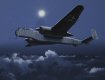
Manufacturer : Heinkel Production Began : 1942 Retired : 0 Number Built : 300 | He219 The He 219 had an auspicious combat debut. On the night of 11–12 June 1943, Werner Streib flew the V9 and shot down five bombers between 01:05 and 02:22 hours, before crashing on landing. Claims have been made that, "In the next ten days the three Heinkel He 219A-0 pre-production aircraft [shot] down a total of 20 RAF aircraft, including six of the previously "untouchable" de Havilland Mosquito fighter-bombers. Greatly encouraged, Kammhuber continued to press for immediate production."[15] No record of corresponding Mosquito losses or any documentary evidence exists that He 219 pilots claimed six Mosquitos The first major production series was the He 219 A-0, although initially the pre-production series, it matured into a long running production series, due to numerous changes incorporated into the design, along with the cancellation of several planned variants. Production problems as a result of Allied bombing in March meant the A-0 did not reach Luftwaffe units until October 1943. The A-0 was usually armed with two 20 mm MG 151/20 cannon in the wing roots and up to four 20 mm or 30 mm cannon in a ventral weapons bay. The first 10–15 aircraft were delivered with the 490 MHz UHF-band FuG 212 "Lichtenstein" C-1 radar with a 4 × 8-dipole element Matratze antenna array. 104 He 219 A-0s were built until the summer of 1944, the majority of them at EHW (Ernst Heinkel Wien) or Heinkel-Süd in Wien-Schwechat. The first planned version to reach production was the He 219 A-2 model, which had longer engine nacelles containing extra fuel tanks, unitized 1670 PS DB 603AA engines with higher critical altitude and often also two 30 mm (1.18 in) MK 108 cannon, as an offensive Schräge Musik upward-firing system in the rear fuselage. With Schräge Musik, the ventral weapons bay held two cannon due to space limitations.[21] The A-2 featured an updated, 90 MHz VHF-band Telefunken FuG 220 Lichtenstein SN-2 radar system, complete with its larger, high-drag 4 × 2-dipole element Hirschgeweih aerials. It initially had a longer minimum range than the C-1 radar, but had improved accuracy and resolution and was also less vulnerable to chaff jamming, through the late summer of 1944. A total of 85 He 219 A-2s were built until November 1944, most at EHR (Ernst Heinkel Rostock) or Heinkel-Nord in Rostock-Marienehe (now Rostock-Schmarl). The He 219 was a capable fighter aircraft and the pilots were free to hunt down any detected Allied bombers. Ground control sent the aircraft into the right area, where the pilots took over and guided themselves towards the bombers with the Lichtenstein VHF radar's information. The SN-2 radar's 4 km (3 mi) maximum detection range was greater than the distance between the bombers. While the performance of the A-2 was not extraordinary—approximately 580 km/h (360 mph) speed—it was enough of an advance over the Messerschmitt Bf 110Gs and Dornier Do 217Ns, for the crew to chase several bombers in a single sortie On the night of 11--12 June 1943, Werner Streib flew the The He 219 V9 and shot down five bombers.In the next 10 days the three Heinkel He 219A-0 pre-production aircraft would shoot down a total of 20 RAF aircraft, including six of the previously "untouchable" de Havilland Mosquito fighter-bombers. To improve its ability to intercept the Mosquito, the He 219 had excess weight removed. With some weapon and radio systems deleted, the aircraft was able to attain a speed of 650 km/h (400 mph). This version was given the designation A-6. None of these were produced, but similar weight saving measures could be done at the unit level. The last major production version was the A-7 with improved, unitized DB 603E engines. The A-7 typically had two 20 mm MG 151/20 cannon in the wing roots (inboard of the propeller arcs), two 20 mm MG 151/20 in the ventral weapons bay and two 30 mm (1.18 in) MK 108s as Schräge Musik. Production of 210 aircraft was to start November/December 1944, but the number produced is not known as original documents have been lost or contained no sub-version number. | |
Me110 
Manufacturer : Messerschmitt Production Began : 1938 | Me110 The Bf-110 grew out of Herman Gorings specifications for a multipurpose aircraft capable of penetrating deep into enemy airspace to clear the sky of enemy fighters in advance of German bomber formations. The aircraft would also be utilized as a long range interceptor, and as a ground support and ground attack bomber. The Bf-110 prototype first flew in 1936. The prototype was under powered with its Daimier Benz DB 600A engines. Several months passed before a go ahead was given for large scale production which commenced in 1938. Utilizing improved DB 601 engines, the early production 110s were as fast as any single engine fighter at that time, and had superior fire power. Their biggest apparent weakness was in the areas of armor protection for the crew, and in terms of maneuverability when compared to single seat fighters. The 110 was produced in large numbers and in many different variants. The 110D was the long range model. An additional belly tank was fitted to that aircraft, with several later variants having the more traditional drop tanks. The first serious test for the Bf-110 came during the Battle of Britain. About 300 Bf-110s were involved. They became easy prey for Hurricane and Spitfire pilots, and Bf-109s were often required to assist the 110s in their own defense. On August 15, 1940, which became known as Black Tuesday, the Bf-110s were ravaged by the RAF, and for the month over 100 aircraft were lost. On the Eastern Front the Bf-110 performed admirably in the early stages of Operation Barbarossa. With the Soviet Air Force weakened in the first several weeks of the attack, 110s were effectively utilized in a ground attack role. Ultimately, the Luftwaffe re-equipped a significant number of its 110s as night fighters. The aircraft performed well in this role because it was a good gun platform with sufficient speed to overtake the RAF night bombers. Such night missions were typically carried out with no Allied fighter escort, so the 110 night fighters would not have to engage or elude Allied fighters in this role. | |
NJG1 Artwork |
  Clipped Signature - Wolfgang Falck. |   Clipped Signature - Fritz Rumpelhardt. |   Clipped Signature - Otto Fries. |
  Into The Cloak of Darkness by Nicolas Trudgian |  Menace - Heinkel 219A-7/R2 by Ivan Berryman. |
Return to Aviation Directory Search Home
|
Contact Details |
Sign Up To Our Newsletter!
This website is owned by Cranston Fine Arts. Torwood House, Torwoodhill Road, Rhu, Helensburgh, Scotland, G848LE Contact: Tel: (+44) (0) 1436 820269. Email: cranstonorders -at- outlook.com |


 Died : 6 / 12 / 1944