|
|
|
|
||
|
|
|
|
||
| Navigation Menus |
|
Military Art Index |
Aviation Art Index |
Naval Art Index |
Artists Index |
Aviation History Archive |
Naval History Archive |
|
| HALF PRICE AND FREE PRINT SPECIAL OFFERS | ||||||
|
| |||||||||||||||||||||||||||||||||||||||||||||||||||||||||||||||||||||||||||||||||||||||||||||||||
Some other related items available from this site. | ||||
  Guardian Angel by Anthony Saunders |   The First Mustang Ace by Stan Stokes. |   Dogfight over Asch, Belgium, 09.20 a.m., New Years Day, 1st January 1945 by David Pentland. |   Mustang Mk.III by Ivan Berryman. | |
| Signatures on these products | |
| *The value given for each signature has been calculated by us based on the historical significance and rarity of the signature and is for the unmatted version where available. Values of many pilot signatures have risen in recent years and will likely continue to rise as they become more and more rare. | |
| Name | Info |
 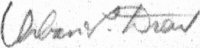 Maj Urban L Drew USAF (deceased) Died : 2013 *Signature Value : £40 Editions signed : Presentation edition of 2 prints. Original pencil drawing by David Pentland. | Drew, Urban (Maj Urban L Drew USAF (deceased)) Urban 'Ben' Drew was born in Detroit, Michigan in 1924. Three months after the attack on Pearl Harbor, at the age of eighteen, Drew joined the USAAF and commenced pilot training. He earned his wings and a commission at Mariana, Florida in October 1943. He remained in the States honing his flying skills as an instructor pilot for the North American P-51 Mustang at Bartow, Florida. In May of 1944 he received his first overseas combat assignment, sailing to England on the Queen Elizabeth. He was assigned to the 375th Fighter Squadron 'Yellowjackets' of the 361st Fighter Group based in at Bottisham in Cambridgeshire. Later his squadron would be relocated to Little Walden in Essex. During his combat tour Drew would fly a total of seventy-five combat missions, rising to command of X Flight and later to command of the 375th squadron. Drew would be officially credited with six aerial victories during his combat tour. Notable was his downing of two Me-262 jets on October 7, 1944. He was the first fighter pilot to down two of the German jets, and he received the Air Force Cross for this achievement. Also of note was the ace's destruction of the largest aircraft to fly in WW 11, the BV-238, which he destroyed in a strafing pass with two wingman on Lake Schaal on September 18, 1944. Following his successful combat tour, Drew returned to the States where he again served as a flight instructor. In 1945 he was assigned to the 412 th Fighter Squadron of the 414 th Fighter Group based at lwo Jima flying the P-47 Jug. Drew's final victory tally included 6 confirmed aerial victories, 1 damaged, and 1 additional aircraft destroyed on the ground. In addition to the Air Force Cross, Drew was awarded two Distinguished Flying Crosses and 14 Air Medals. Following the War Drew helped organize the 127 th Fighter Group of the Michigan National Guard. He became Deputy Group Commander and later was appointed the first Air Adjutant General of the State of Michigan. After his retirement from the Air Force with the rank of Major, he established an aviation business in Britain and South Africa. He currently resides in Southern California, and remains active in matters involving the American Fighter Aces Association. Sadly we have learned that Ben Drew passed away on 3rd April 2013. |
  Colonel Bob Goebel (deceased) Died : 2011 *Signature Value : £55 Editions signed : Presentation edition of 2 prints. | Goebel, Bob (Colonel Bob Goebel (deceased)) December 1943 found Bob Goebel in North Africa flying Spitfires in preparation for joining the 31st Fighter Group. As soon as they arrived they re-equipped with P51 Mustangs and flew to Italy, where Bob flew a total of 62 combat missions, including 16 hazardous trips to the Romanian oilfields. During his combat operations he led his squadron into action seven times, and his entire Group twice, whilst still only aged 21. He ended the war with 11 air victories. Sadly, Bob Goebel passed away on 20th February 2011. |
  Lt Col Bob Curtis (deceased) Died : 2021 *Signature Value : £45 Editions signed : Presentation edition of 2 prints. | Curtis, Bob (Lt Col Bob Curtis (deceased)) Bob Curtis arrived in North Africa in 1943, moving to Sicily soon after, flying Spitfires with the 52nd Fighter Group. He scored his first air victory over an Me109 flying his Spitfire, and later survived a bail out when his fighter was badly damaged after a building he strafed exploded beneath him. Moving across to the 15th Air Force, the 52nd Fighter Group re-equipped with the P-51 and Bob Curtis became a Squadron Commander. He added 13 more to his score flying the P-51, ending his war with 14 victories. He died on 31st March 2021. |
  Lt Gen George Loving (deceased) Died : 2016 *Signature Value : £50 Editions signed : Presentation edition of 2 prints. | Loving, George (Lt Gen George Loving (deceased)) General George Loving was born in Roanoke, Va., in 1923, graduated from E.C. Glass High School in Lynchburg, Va., and attended Lynchburg College. He is a graduate of the University of Alabama and holds a master's degree from The George Washington University. During the academic year 1969-70, he was a research associate with the Council on Foreign Relations. He entered military service in March 1942 as an aviation cadet and graduated from flying school in 1943 with a commission as second lieutenant and his pilot wings. He flew 151 combat missions as a fighter pilot with the 31st Fighter Group during World War II, flying Spitfires and P-51 aircraft over Italy, Southern France, Germany, Czechoslovakia and the other occupied countries of Eastern Europe. He became a fighter ace during this period, shooting down five enemy aircraft and damaging two others. He returned to the United States in October 1944 and served as a P-47 fighter pilot instructor and base armament officer at Millville Army Air Field, N.J. He was next assigned as squadron commander and instructor at Shaw Field, S.C. In July 1946 he went to Itazuke Air Base, Japan, to serve in the occupation forces. Initially assigned as a personnel staff officer, he later served as commander of the 433d Fighter Squadron and as operations officer of the 475th Fighter Group. In January 1949 he became operations officer at the Air Force Reserve Training Center, Byrd Field, Richmond, Va. He was transferred to Headquarters Ninth Air Force, Langley Air Force Base, Va., in June 1949 and assigned as a staff officer in the Personnel Directorate. Shortly after the beginning of the Korean War, he volunteered for combat duty and in July 1950 went to Taegu, Korea, where he served 13 months, initially as base operations officer, and then as commander of the 9th Fighter-Bomber Squadron. He flew 113 missions against North Korean and Communist Chinese forces and participated in five major campaigns. Between September 1951 and July 1955, he was assigned to the Air Proving Ground Command at Eglin Air Force Base, Fla. As a senior project officer, he was responsible for the operational suitability testing of the F-84F, KB-29 Phase II Outing Tanker, KC-97 Drogue Tanker, and various other systems and munitions. After graduation from Air Command and Staff College in June 19569 he joined the faculty as an instructor and curriculum planner with responsibility for the college's correspondence course, which had an enrollment of more than 5,000 students. He was transferred to Taiwan in April 1960 and for two years was U.S. adviser to the Republic of China's National War College. General Loving went to Headquarters Tactical Air Command at Langley Air Force Base, Va., in July 1962 and served for two years as a staff officer with the Policy Division (Plans), during which time he was concerned with formulating tactical air doctrine. He attended the Air War College during 1964-65 and subsequently was assigned to Headquarters U.S. Air Force in the Aerospace Doctrine Division, Office of the Deputy Chief of Staff for Plans and Operations, as a staff officer and branch chief. He was responsible for the development of Air Force and Joint doctrinal publications which form the fundamental basis for war plans and for organizing, training, equipping and employing U.S. military forces. He served as commandant, Air Command and Staff College from June 1970 to January 1973. General Loving was assigned as deputy director of plans in the Office of the Deputy Chief of Staff, Plans and operations at Headquarters U.S. Air Force, in January 1973, and served as director of plans from April 1973 to January 1975. He was appointed Joint Chiefs of Staff Representative for Mutual and Balanced Force Reduction in January 1975 and served as the senior military member of the U.S. delegation to the international conference in Vienna on MBFR. During the period August 1975 to June 1977, he served as commander, Sixth Allied Tactical Air Force, with headquarters at Izmir, Turkey. He was reassigned to Japan and assumed command of U.S. Forces Japan and Fifth Air Force in June 1977. A command pilot, his military decorations and awards include the Distinguished Service Medal with oak leaf cluster, Silver Star, Legion of Merit, Distinguished Flying Cross with oak leaf cluster, Meritorious Service Medal, Air Medal with 24 oak leaf clusters, Air Force Commendation Medal with oak leaf cluster, Army Commendation Medal, Presidential Unit Citation with oak leaf cluster, and the Republic of Korea Presidential Unit Citation. He was promoted to the grade of lieutenant general Sept. 1, 1975, with date of rank Aug. 26, 1975. He died on 31st December 2016. |
  Captain Jim Brooks *Signature Value : £55 Editions signed : Presentation edition of 2 prints. | Brooks, Jim (Captain Jim Brooks) Jim Brooks joined the 31st Fighter Group in Italy in early 1944, flying the P51 against Me109s, Fw190s, and the Italian Macchi Mc202. He scored his first victory on a mission to Ploesti. Later, leading the 307th Fighter Squadron on a Russian shuttle mission, they engaged a large formation of Ju87 Stukas, shooting down 27 enemy aircraft, Jim Brooks accounting for three of them. He ended his tour with 280 combat hours, and 13 confirmed victories. |
| Squadrons Related to This Print |
| 375th Fighter Squadron |
| Aircraft Related to This Print |
| Bv238 |
|
Contact Details |
Sign Up To Our Newsletter!
This website is owned by Cranston Fine Arts. Torwood House, Torwoodhill Road, Rhu, Helensburgh, Scotland, G848LE Contact: Tel: (+44) (0) 1436 820269. Email: cranstonorders -at- outlook.com |


 Signature(s) value alone : £245
 Signature(s) value alone : £40