|
|
|
|
||
|
|
|
|
||
| Navigation Menus |
|
Military Art Index |
Aviation Art Index |
Naval Art Index |
Artists Index |
Aviation History Archive |
Naval History Archive |
|
| HALF PRICE AND FREE PRINT SPECIAL OFFERS | ||||||
|
| |||||||||||||||||||||||||||||||||||||||||||||||||||||||||||||||||||||||||||||||||||||||||||||||||||||||||||||||||||||||||||||||||||||||||||||||||||||||||||||||||||||||||||||||||||||||||||||||||||||||||||||||||
Some other related items available from this site. | ||||
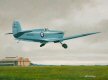  Into History - Spitfire Prototype by Ivan Berryman. |   Spitfire Alley by Ivan Berryman. |   Against the Odds by Michael Turner. |   Normandy Breakout by Nicolas Trudgian | |
| Signatures on these products | |
| *The value given for each signature has been calculated by us based on the historical significance and rarity of the signature and is for the unmatted version where available. Values of many pilot signatures have risen in recent years and will likely continue to rise as they become more and more rare. | |
| Name | Info |
  Air Vice Marshal Johnnie Johnson CB, CBE, DSO**, DFC* (deceased) Died : 2001 *Signature Value : £70 Editions signed : Signed limited edition of 850 prints. Limited edition of 50 artist proofs. Limited edition of 25 remarques. | Johnson, Johnnie (Air Vice Marshal Johnnie Johnson CB, CBE, DSO**, DFC* (deceased)) James Edgar Johnson was born in Barrow on Soar near Loughborough on 9th March 1915. He lived in Melton, the first house on the left of Welby Lane as you leave Nottingham Road, with his parents - his father being a local Police Inspector. Johnnie qualified as a Civil Engineer at Nottingham University in 1937. He joined the RAFVR and did his flying training at 21 E&RFTS, Stapleford before enlisting for full-time service in the RAF at the beginning of WWII. He first went to ITW at Jesus College, Cambridge, completed his ab initio flying at 22 EFTS, Cambridge and his intermediate and advanced flying at 5 FTS, Sealand. Johnnie Johnson joined 92 Spitfire squadron in August 1940, but it was with 616 squadron that he scored his first victory on June 26th 1941 while flying with Douglas Baders Tangmere Wing. He was squadron leader of 610 squadron in July 1942, but it was as Wing Commander of the Kenley Wing in 1943 that his scores really started to mount. He was W/C of 144 wing during D-Day and led 127 and 125 wings until the end of the war when we has the topscoring allied fighter pilot with 38 air victories. Inspired by the great British WW 1 aces like Bishop and Ball, Johnnie Johnson dreamed often as a child of becoming an R.A.F. pilot. The young Johnson enthusiastically joined the Volunteer Reserve at the first opportunity. After completing his initial flight training Johnson was posted to 616 Squadron at Kenley. However, this Squadron had been hit hard with the loss of six pilots and five wounded, and the unit was withdrawn to Coltishall prior to Johnson encountering combat. With only 12 hours of flight time in a Spitfire this was no doubt advantageous. In February 1941 Billy Burton moved the Squadron to Tangmere. Douglas Bader then arrived to take over the Tangmere Wing, and fly with the 616 Squadron. Johnnie, Alan Smith and Cocky Dundas were chosen to fly with Bader. During the summer of 1940 the Battle of Britain was at its peak. Bader took the time to instruct Johnson carefully in both the art of flying and the skills necessary to attain success in aerial combat. Baders idea of an afternoon off duty, according to Johnson, was to take his section over the Channel in hopes of running into Adolph Galland and his Abbeyville Boys. On August 19, 1941 Bader failed to return from a mission when 616 Squadron was hit hard by a group of Messerschmitt 109s. Johnson flew on in Baders absence, and in the summer of 1942 he was promoted to command of the 610 Squadron. In 1943 he was promoted again to Wing Commander of the Canadian Spitfire Wing in Kenley. By that time Johnson had attained eight confirmed victories. During the spring and summer of 1943 Johnnie led the Canadian unit on more than 140 missions over Northwest Europe. Johnsons squadron attained more than 100 victories during this period, and Johnnies own personal score rose to 25. After a short leave, Johnson was posted to lead the 144 Canadian Spitfire Wing. On D-Day Johnson led his Wing on four missions in support of the Allied invasion. On June 8, Johnsons Wing was the first Spitfire group to land in newly liberated France. Johnson continued fighting in France through September 1944 when he achieved his 38th and final victory. Patrolling the Rhine Johnsons unit jumped nine 109s which were flying beneath them in the opposite direction. Five of the 109s were downed. Early in 1945 Johnson was promoted to Group Captain and put in command of the 125 Wing, which was equipped with the Spitfire XIV. Flying from former Luftwaffe airfields the 125 Wing assisted in the final Allied push to Berlin. Johnson attributed much of his aerial combat success to his ability to make tight turning maneuvers. Johnsons tightest call came on August 19, 1942 when he was unable to dislodge an Me-109 from his tail during the raid on Diepppe. Johnson raced his Spitfire flat out at a group of Royal Navy ships. The usual barrage of flak and tracer fire came right at him, and fortunately for the ace, missed his Spitfire but effectively eliminated the brave pilot on his tail. During the Korean War Johnson flew fighter-bombers with the USAF. Following his retirement from the R.A.F. in 1966 Johnson founded the Johnnie Johnson Housing Trust that has provided homes for more than 4000 disabled and elderly persons, and his sixth book Winged Victory was published in 1995. Johnson flew many of the Spitfire models. His favorite was the beautiful Mark IX, the best of them all. Johnnie passed away in 2001 at the age of 85, in Derbyshire, England. |
  Wing Commander George Grumpy Unwin, DSO, DFM* (deceased) Died : 2006 *Signature Value : £75 Editions signed : Limited edition of 50 artist proofs. Limited edition of 25 remarques. | Unwin, George (Wing Commander George Grumpy Unwin, DSO, DFM* (deceased)) George Unwin joined the RAF in 1929, and in 1936 was posted to Duxford with 19 Squadron as a Sergeant Pilot. He was one of the first pilots in the RAF to fly the Spitfire. With the outbreak of war 19 Squadron moved to Hornchurch and George, now one of the Squadrons most experienced pilots, took part in the great air battles over France and Dunkirk, scoring 3 and a half victories. He flew with 19 Squadron continuously during the whole of the Battle of Britain. He was commissioned in 1941. After a period instructing, he resumed operations, flying Mosquitoes with 16 Squadron. George finished the war with 13 victories, 2 shared, 2 unconfirmed, and 2 probables. He died 28th June 2006. |
  Group Captain Desmond Sheen DFC* (deceased) Died : 2001 *Signature Value : £70 Editions signed : Limited edition of 50 artist proofs. Limited edition of 25 remarques. | Sheen, Desmond (Group Captain Desmond Sheen DFC* (deceased)) Desmond Frederick Burt Sheen was born in Sydney, Australia, on October 2 1917. After school, he received a cadetship in the Royal Australian Air Force and in 1937 sailed for Britain, where he was granted a short service commission in the RAF and was posted to No 72 Squadron. During the Battle of Britain, Desmond got his first victories and was shot down twice during the Battle of Britain, in the course of which he accounted for three enemy aircraft destroyed, one shared, two probably destroyed and two damaged. By the summer of 1940, Sheen, was serving as a Spitfire pilot with No 72 Squadron, based at Acklington, Northumberland. Although well to the north of the main area of the Battle of Britain, on August 15 the squadron was heavily engaged with the enemy. Flying from Denmark and Norway, a Luftwaffe force of more than 60 bombers with a 34-strong fighter escort was making for the RAF's fighter bases in north-east England. With two other Spitfire squadrons, No 72 raced to intercept them. In the ensuing action, beyond the Farne Islands, Sheen accounted for two Me 110 fighters, one of which almost did for him. Flames and smoke appeared near the inside of the port engine. he said. The enemy aircraft, either with the pilot shot or in a deliberate attempt to ram me, approached head on left wing low. Sheen took evasive action and saved his neck. A fortnight later, on August 31, No 72 was ordered south to No 11 Group fighter sector station at Biggin Hill, Kent - where they landed as the airfield was being heavily bombed. The next morning, having transferred to Croydon, they were scrambled to intercept a large enemy force approaching London. This time Sheen's aircraft was hit. As his cockpit filled with dense smoke, he released his straps, turned the Spitfire on its back, pushed the stick forward and dropped out. It was a sunny day, and as he drifted to the ground he had a grandstand view of the battle Several dogfights were going on and an Me 109 went past me in flames. I think the pilot baled out but his harness broke and he didn't make it.On reaching the ground, Sheen was confronted by a girl and a young Army officer who, suspicious of the darker blue of Sheen's old Australian uniform, brandished a revolver. The misunderstanding cleared up, the girl took Sheen to a nearby house where a party of guests were enjoying pre-lunch drinks on the lawn as they watched the battle in the sky overhead. Four days later, back with his squadron, Sheen was shot down again. As his Spitfire hurtled towards the ground, Sheen, though wounded, managed to release his harness. He was sucked out of the cockpit, but his boots caught on the windscreen and he was left lying on top of the fuselage. After what seemed an age, he recalled, my feet came free and I pulled the ripcord and my parachute opened with a terrific jerk. I just had time to see treetops underneath when I was in them. These broke my fall and I landed on my feet as light as a feather. A bobby appeared on the proverbial bicycle. He pulled out a flask, bless him, and handed it to me. 'You left it a bit late,' he said. His first real taste of action came on October 21 1939, when he shot down two of some dozen Heinkel 115 floatplanes that were attacking a North Sea convoy off the Yorkshire coast. In early December, north of Arbroath in Scotland, Sheen shared in the destruction of an He 111 bomber. Flying so low that he opened fire at a level below the top of a nearby lighthouse, he was hit by return fire and wounded in the leg. I stopped a couple of bullets, Sheen explained. One went through my earphones and the other got me in the thigh. The most serious was a bullet in my fuel tank. The petrol began to stream into the cockpit. I went in again to attack but I was dizzy and decided to turn for home.After a spell in hospital, in April 1940 Sheen was posted to the embryo photographic-reconnaissance unit which had been formed under Sidney Cotton, another intrepid Australian. The two men flew down to the south of France and to Sardinia where, flying unarmed Spitfires, they made photo-recce sorties over Italy. Sheen resumed with No 72 at the end of July 1940 and later, after the Battle of Britain and a second spell in hospital, took part in a night action over the North Sea which he described in a broadcast on the BBC. In bright moonlight, on the night of March 13-14 1941, he intercepted a Ju 88. As I opened fire I could see my tracer bullets bursting in the Junkers like fireworks . . . when I turned in for my next attack I saw that one of the Hun's engines was beginning to burn but just to make quite sure of him I pumped in a lot more bullets then I had to dive like mad to avoid ramming him. Not long after this, Sheen received command of No 72. Flying from Biggin Hill, he led the squadron - and sometimes the Spitfire Wing - in offensive sweeps over occupied Europe. Subsequently, he held staff appointments and station commands in Britain and in the Middle East. He was awarded a DFC in 1940 and a Bar to it in 1941. Sheen was released from the RAF in 1947, but in 1949, dropping in rank from wing commander to flight lieutenant, he rejoined with a permanent commission. From 1950 to 1952, he commanded No 502, a Royal Auxiliary Air Force fighter squadron equipped with Spitfires, and later with Vampire jets. In 1954, he was posted to the Central Flying Establishment's air fighting unit, and a year later to RAF Leuchars, in Scotland, as Wing Commander Flying. Subsequent appointments included the command of RAF Odiham (1962-64), and Group Captain Organisation at Transport Command. After retirement in 1971, he joined the BAC/British Aerospace to administer the company's BAC 111 and Concorde marketing teams. He died aged 83 in 2001. |
  Air Chief Marshal Sir Harry Broadhurst GCB, KBE, DSO, DFC (deceased) Died : 1995 *Signature Value : £60 Editions signed : Limited edition of 50 artist proofs. Limited edition of 25 remarques. | Broadhurst, Harry (Air Chief Marshal Sir Harry Broadhurst GCB, KBE, DSO, DFC (deceased)) Harry Broadhurst had already made his mark in the RAF by the time war broke out, having been mentioned in dispatches whilst operating over the North West Frontier in India. The outbreak of WWII brought a rapid promotion to Wing Commander, which did not prevent him from flying on operations at every opportunity, playing a very active role in the Battle of Britain. In December 1940 he became commanding officer of Hornchurch, and flew often on the early sweeps in summer 1941. He remained in charge of Hornchurch until May 1942, but flew again in August 1942 over Dieppe, where he claimed four victories. Broadhurst served in the Western Desert from 1942-43 first as Senior Air Staff Officer, the Air Officer Commanding. Recalled to England to participate in preparations for the invasion of Europe, Broadhurst was put in command of 83 Group of the 2nd Tactical Air Force. In Normandy, and during the months that followed, his involvement with Typhoons reached its peak, including the astounding victory over the German 7th Army in the Falaise Gap. His leadership during the aerial assault on German ground forces in Normandy proved decisive in asserting Allied air supremacy at a critical period of the war. Harry Broadhurst, who became the youngest Air Vice-Marshal in the RAF, was later knighted, and rose to the rank of Air Chief Marshal. He continued his RAF career long after the end of the war, eventually becoming Commander Allied Air Forces, Central Europe. He died 29th August 1995. |
 Flight Lieutenant William J. Corbin DFC (deceased) Died : 2012 *Signature Value : £50 Editions signed : Limited edition of 50 artist proofs. Limited edition of 25 remarques. | Corbin, William J (Flight Lieutenant William J. Corbin DFC (deceased)) Already a member of the RAFVR, William Corbin was called up for active duty in September 1939. Following training and conversion to Spitfires, in September 1940 he was posted as a Sergeant Pilot to join 66 Squadron at Coltishall. With the exception of a few weeks spent with 610 Squadron he remained with 66 Squadron until September 1941. Commissioned in June 1942, he returned to combat flying in September, joining 72 Squadron with whom he went to North Africa. Here he shared in a probable Me109 and damaged another, and in August 1943 was awarded the DFC. Sadly he passed away on 8th December 2012. |
  Squadron Leader Arthur Leigh DFC, DFM (deceased) Died : 2004 *Signature Value : £50 Editions signed : Limited edition of 50 artist proofs. Limited edition of 25 remarques. | Leigh, Arthur (Squadron Leader Arthur Leigh DFC, DFM (deceased)) Another RAFVR pilot, The son of a regular soldier, Arthur Leigh was called up at the outbreak of war. After finishing his flying training he was posted to 7 OTU and then on to convert to Spitfires in August 1940. Arthur Leigh flew with 64 Squadron at Leconfield and 72 Squadron at Biggin Hill during the Battle of Britain before transferring to 611 Squadron. Awarded the DFM in September 1941, Leigh had then completed 50 sweeps, had destroyed two Bf 109s, probably destroyed another four and shared in the destruction of a Do 17. After a spell instructing and ferrying Hurricanes from Gibraltar to Cairo, he returned to operations with 56 Squadron flying Typhoons from Manston. He was shot down on his first sweep by flak, near Calais but was picked up by an ASR launch. In late 1943 Leigh was posted to 129 Squadron at Hornchurch and was awarded the DDC on completing his second tour in December 1944, spending the rest of the war as an instructor. He died on 3rd July 2004. |
  Wing Commander Bob Foster DFC (deceased) Died : 2014 *Signature Value : £55 Editions signed : Battle of Britain Signature edition of 5 prints from the signed limited edition of 850 prints. | Foster, Bob (Wing Commander Bob Foster DFC (deceased)) Wing Commander Bob Foster, who has died aged 94, flew Hurricane fighters during the Battle of Britain, when he was credited with destroying and damaging a number of enemy aircraft; later in the war he destroyed at least five Japanese aircraft while flying from airfields in northern Australia. For much of the Battle of Britain, Foster was serving with No 605 Squadron in Scotland; but in September, 605 moved to Croydon to join the main action over the south-east of England. It was soon heavily engaged, but it was not until September 27 that Foster achieved his first success, when he damaged a Messerschmitt Bf 110 fighter over Surrey. During this encounter his Hurricane was hit by return fire, and he was forced to make an emergency landing on Gatwick airfield. On October 7 he shot down a Messerschmitt Bf 109 near Lingfield racecourse, and on the following day he shared in the destruction of a Junkers 88 bomber. By the end of the month he is thought to have destroyed another Bf 109 and damaged a third. In 1941 No 605 moved to Suffolk, from where on one occasion Foster chased a lone German Heinkel bomber well out to sea. His gunfire knocked pieces off the enemy aircraft, but it escaped into cloud before Foster could follow up with a second attack. In September 1941 he was transferred to a fighter training unit as an instructor. Robert William Foster was born on May 14 1920 at Battersea, south-west London. After leaving school he worked for the joint petroleum marketing venture Shell-Mex and BP, and in March 1939 - six months before the outbreak of war - he joined the RAF Volunteer Reserve to train as a pilot. He was called up in August to complete his training before joining No 605. Foster's spell as an instructor lasted six months, and in April 1942 he was posted as a flight commander to No 54 Squadron. Within weeks of his joining, it was sent to Australia to join two other Spitfire squadrons to form No 1 Fighter Wing of the Royal Australian Air Force. The Wing was ready for action by the beginning of 1943, and moved to airfields in the Darwin area to counter Japanese bombing raids mounted from captured airfields in the Dutch East Indies and Timor. On February 26 Foster intercepted a Mitsubishi Dinah reconnaissance aircraft (all Japanese wartime aircraft types were given British names) and shot it down. It was the squadron's first success in Australia, and the first time a Spitfire had shot down a Japanese aircraft. Enemy bombing raids against Darwin continued, and on March 15 Foster was engaged in a fierce fight during which he downed a Mitsubishi Betty bomber and damaged a second. The three squadrons of No 1 Wing were in constant action throughout the spring of 1943, but Foster had to wait until June 20 for his next success. This came when he was leading No 54 Squadron as his formation intercepted a raid by 18 Betty bombers which were accompanied by a fighter escort. Foster attacked the leading bomber and sent it crashing into the sea. A Japanese Zero fighter broke towards him, and in the ensuing encounter Foster damaged the enemy aircraft. In June, the raids on Darwin became even more intense, and on June 30 Foster claimed another Betty destroyed as well as a probable. A week later he achieved his final successes when 30 bombers were reported to be heading for the city from the west. Foster led his formation to intercept the force, and he shot down a Betty and damaged a second near Peron Island, west of Darwin. He was the third pilot to claim five successes over Australia (earning him the title of ace) and a few weeks later he was awarded a DFC. After returning to Britain in early 1944, Foster joined the Air Information Unit with the role of escorting war correspondents. He arrived in Normandy soon after the Allied landings, and was one of the first RAF officers to enter Paris, joining General de Gaulle's triumphant procession down the Champs-Elysées. Foster spent the final months of the war at HQ Fighter Command and as the adjutant of a fighter base in Suffolk. In 1946 he left the RAF, but joined the Auxiliary Air Force on its re-formation in late 1947. He served with No 3613 Fighter Control Unit until its disbandment in March 1957, by which time he was a wing commander commanding the unit. He received the Air Efficiency Award. After the war Foster had rejoined Shell-Mex and BP, where he worked as a marketing executive until his retirement in 1975. In 2004 he was reunited with the Hurricane he had flown during the Battle of Britain. The aircraft, R 4118, had been rescued as a wreck in India by the printer and publisher of academic journals Peter Vacher, who brought it back to Britain in 2002 and had it restored to full flying condition. The aircraft now flies regularly as the only surviving Battle of Britain Hurricane and is the subject of a book by Vacher, Hurricane R 4118. Foster was a keen supporter of the Battle of Britain Fighter Association, becoming its chairman in 2009. He was a life vice-president of the Battle of Britain Memorial Trust, and a dedicated supporter of its initiative to erect The Wing, a new building at the National Memorial to The Few at Capel-le-Ferne, on the Kent coast. Designed in the shape of a Spitfire wing, the museum and educational facility will tell the story of what the Battle of Britain pilots achieved in the summer of 1940. Foster took the controls of the mechanical digger to turn the first turf and start the work. In recent years he had accompanied some of the tours, organised by the Trust, of Battle of Britain sites in east Kent. Wing Commander Bob Foster, born May 14 1920, died July 30 2014. |
 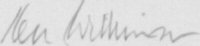 Flying Officer Ken Wilkinson (deceased) Died : 2017 *Signature Value : £45 Editions signed : Battle of Britain Signature edition of 5 prints from the signed limited edition of 850 prints. | Wilkinson, Ken (Flying Officer Ken Wilkinson (deceased)) Battle of Britain pilot flying Hurricanes, he flew Spitfires with 611 Sqn and then 616 Sqn at Kirton-in-Lindsey and 19 Sqn at Fowlmere during 1940 and after a spell instructing returned to operations on Spitfires, with 234 and 165 Squadrons. After spending time with 53, 24 and 10 Operational Training Units, he left the RAF in November 1945 and served in the RAFVR. Ken said : From 1st September 1939 I wrote myself off. I thought, 'you've got no chance' lasting through whatever is going to be. It was quite obvious, in the way the Germans were moving, they were going to make a hell of a war out of it, so I was ready for war. I can remember saying 'we've got to stop this fellow Hitler'. When you think of all the thousands of citizens that were being killed by this absurd bombing. They had to pay for it didn't they. Yes, we lost people. Friends that didn't come back. I don't think we were the sort of people to brood over it, ever. You have to get into an attitude to make sure that you're as cold as a fish. Once someone has failed to return, that's it. Fortune smiled on me and not on some of the others. I can only say that whoever it was who popped off at me, wasn't a very good marksman. It transpired that we were doing something far more important than we thought. As far as we were concerned, it was just that there were some untidy creatures from over the other side of the channel, trying to bomb England and the United Kingdom. And we didn't want them to bomb us. After all, we never asked the Germans to start this nonsense, did we? But they did, and we had to stop them, and we did. It's our country. You die for you country. |
  Flight Lieutenant Richard L Jones (deceased) Died : 2012 *Signature Value : £45 Editions signed : Battle of Britain Signature edition of 5 prints from the signed limited edition of 850 prints. | Jones, Richard L (Flight Lieutenant Richard L Jones (deceased)) Richard Jones was born in 1918 and in July 1940 Richard Jones was posted to 64 Squadron at Kenley, flying Spitfires. He was involved in heavy fighting over the Channel during the Battle of Britain, with the squadron suffering many losses during July and August. Towards the end of the Battle of Britain, in October, he moved to 19 Squadron flying Spitfires from Fowlmere, and was heavily involved in the fighter sweeps taking place at that time. Near the end of the Battle of Britain, Pilot Officer Richard Jones was shot down during a dogfight over Kent with Me 109s. Jones crash landed his Spitfire in a field, colliding with a flock of sheep - he would go on to write in his log book 'Crashed into a load of sheep. What a bloody mess!' After the Battle of Britain, Richard Jones became a test pilot for De Havilland at Witney in Oxfordshire, and test flew thousands of Hawker Hurricanes and other types, including civil types. After the war Richard Jones joined the RAFVR and started a long career in the motor industry. Sadly Richard Jones passed away on 7th March 2012. |
  Flight Lieutenant Ron Smyth DFC AE (deceased) Died : 2017 *Signature Value : £50 Editions signed : Battle of Britain Signature edition of 5 prints from the signed limited edition of 850 prints. | Smyth, Ron (Flight Lieutenant Ron Smyth DFC AE (deceased)) Flight Lieutenant Ronald H Smyth joined the RAFVR in May 1939 as an Airman u/t Pilot. Called up at the outbreak of war he was stationed at several different locations. With his course completed, Smyth had several short term postings, where eventually at 5 OTU, Aston Down, he converted to Hurricanes. Flight Lieutenant Smyth continued flying Hurricanes with 111 Squadron, 249 Squadron, and later with 615 Squadron. In May 1941 Smyth attended an instructors course and was commissioned in August. Later he was posted to No.1 Glider Training Squadron, a newly formed Development Unit. He qualified for his 2nd Class Air Navigators Licence while posted at the School of General Reconnaissance. Ronald H Smyth commanded the PRU in Gibraltar where he was awarded the DFC. He also ferried communications between London and Churchill at Biarritz and Atlee in Berlin for the Postdam Conference. Smyth was released from the RAF in January 1946, as a Flight Lieutenant. He died on 26th October 2017. |
 Air Commodore Eric Ricky Wright CBE DFC DFM (deceased) Died : 2007 *Signature Value : £40 Editions signed : Battle of Britain Signature edition of 5 prints from the signed limited edition of 850 prints. | Wright, Ricky (Air Commodore Eric Ricky Wright CBE DFC DFM (deceased)) 605 Sqn Battle of Britain, Officer Commanding 54(F) Sqn Vampire 1948-1949. Eric William Wright was born on September 21st 1919 at Cherry Hinton, Cambridge, and went to the Cambridge County School and the Technical College. Wright joined the RAF Volunteer Reserve in June 1939 and was called up when he had completed his training as a pilot. As a sergeant pilot Wright flew Hurricanes over south-east England during the Battle of Britain; Wright joined No 605 (County of Warwick) Squadron in July 1940, a few days before it left its Scottish base for Croydon. He saw a great deal of action during the summer of 1940, and in the early days of September he shared in the destruction of a Messerschmitt Bf 110 fighter and a Dornier 17 bomber. On September 15, the climax of the Battle, and a day commemorated as Battle of Britain Day, Wright shot down a Dornier 17 over Maidstone and by the end of the year he had accounted for six enemy aircraft, probably destroyed three more and damaged a further six. At the end of November he was awarded an immediate DFM. Wright was made a flight commander of No.232 Squadron in 1941 and went to India. After the Japanese attacks on Malaya the squadron embarked on the aircraft carrier Indomitable, flying off to Java at the end of January 1942 en route to reinforce the beleaguered squadrons at Singapore. Within a week Wright's CO had been killed and Wright was promoted to squadron leader. He damaged a Japanese bomber off the west coast of Singapore, but 232 was soon forced to evacuate to Sumatra. Wright was made CO of a composite squadron made up of the remaining Hurricanes. They were hopelessly outnumbered, and losses mounted. With only a few aircraft left, on March 1st 1942 Wright was ordered to pass his remaining Hurricanes to a group selected to stay behind and take his remaining pilots to Tjilatjap, on the south coast, from where they were to board a boat for Australia. Two Ford V8s were commandeered, and the party drove through the jungle at night, only to find that the last boat had been sunk. In vain they searched along the coast for other craft. A few days later the island fell to the Japanese, and Wright and his pilots were captured and spent more than three years in Japanese prison camps. After the war Wright was repatriated back to the UK via Guam and the US finally returning to England onboard the liner Queen Mary. Wright resumed his career as a fighter pilot flying the early jets and was a member of the RAFs official aerobatic team, No.247 Squadron, flying Vampires. In April 1948 he flew one of the six single-engine Vampire F3s of No.54 Squadron which made the first Atlantic crossing by jet aircraft. On returning back the the UK, Wright was appointed to command No 54. After spending a year at the Central Fighter Establishment Wright was appointed wing leader at Linton-on-Ouse with command of three fighter squadrons. In late 1956 he converted to the Hunter and took the Tangmere Wing to Cyprus for the Suez operations. He was then given command of the RAFs first Bloodhound ground-to-air missile squadron. In 1960 he was promoted to group captain and spent three years at Headquarters Fighter Command, where he was heavily involved in the introduction into service of the supersonic Lightning fighter. Wright was appointed CBE in 1964. He also received a Kings Commendation for Valuable Services in the Air and the Air Efficiency Award. Air Commodore Ricky Wright CBE DFC DFM retired form the Royal Air Force in 1973. Sadly Air Commodore Ricky Wright passed away on the 5th of November 2007 aged 88. |
  Flight Lieutenant Wallace Cunningham DFC (deceased) Died : 2011 *Signature Value : £45 Editions signed : Battle of Britain Signature edition of 5 prints from the signed limited edition of 850 prints. | Cunningham, Wallace (Flight Lieutenant Wallace Cunningham DFC (deceased)) Wallace Cunningham, known as Jock during his time in the RAF, was born in Glasgow on December 4th 1916. He studied Engineering part-time at the Royal Technical College (later to become the University of Strathclyde) and joined the RAFVR in 1938, learning to fly at Prestwick. When war was declared he was commissioned. He did his flying training at 11 FTS, Shawbury. After converting to Spitfires at 5 OTU, Aston Down, he was posted to 19 Squadron in July 1940. Flew Spitfire Mk.I P8439. On 16th August 1940 he destroyed a Bf110. On September 7th the Duxford Wing of three squadrons flew its first offensive patrol under the leadership of Douglas Bader. The controversial Big Wing took off in the late afternoon to head towards London. A large force of enemy bombers, with their fighter escort, was intercepted and Cunningham shot down a Heinkel 111 bomber over Ramsgate and damaged a second. His next success came two days later when the Big Wing scrambled in the afternoon. After attacking a bomber force, Cunningham found a stray Messerschmitt Bf109, which he shot down. September 15th saw the most intensive fighting and the turning point of the Battle, with all fighter squadrons in the south of England scrambled. Cunningham shared in the destruction of a Bf110 and destroyed a second fighter over the Thames Estuary. Before the battle was over at the end of October, he shared in the destruction of two more enemy aircraft. In October he was awarded the DFC for great personal gallantry and splendid skill in action. After the Battle of Britain, Flight Lieutenant Cunningham remained with No.19 Sqn as a flight commander. In July 1941 he damaged a Bf109 but on August 28th, while escorting a force of Blenheim bombers, he was shot down by flak near Rotterdam and taken prisoner. Flight Lieutenant Cunningham was initially sent to Oflag XC at Lubeck before joining a large RAF contingent at Oflag VIB at Warburg. He was soon involved in escape activities. The tunnelling fraternity he joined was almost ready to break out when its efforts were discovered. Within weeks he was on the digging team of another tunnel and was one of 35 PoWs selected for the escape. But when the tunnel broke the surface on April 18 1942 it was well short of the intended spot. Only five prisoners were able to escape before the tunnel was discovered next morning. Later in the year Cunningham was transferred to Stalag Luft III. At the end of January 1945, the camp was evacuated and the PoWs were forced to march westwards in atrocious winter weather. In late April, British forces liberated the prisoners and Cunningham was flown back to England. He was released from the RAF in 1946. Sadly Wallace Cunningham passed away on October 4th 2011. |
| Tony Whitehouse *Signature Value : £45 Editions signed : Battle of Britain Signature edition of 5 prints from the signed limited edition of 850 prints. | Whitehouse, Tony (Tony Whitehouse) Wing Commander Sydney Anthony Hollingsworth Whitehouse, 501 Squadron, Bristol, Hurricanes. |
| Aircraft Related to This Print |
| Spitfire |
|
Contact Details |
Sign Up To Our Newsletter!
This website is owned by Cranston Fine Arts. Torwood House, Torwoodhill Road, Rhu, Helensburgh, Scotland, G848LE Contact: Tel: (+44) (0) 1436 820269. Email: cranstonorders -at- outlook.com |


 Signature(s) value alone : £70
 Signature(s) value alone : £375
